Artwork
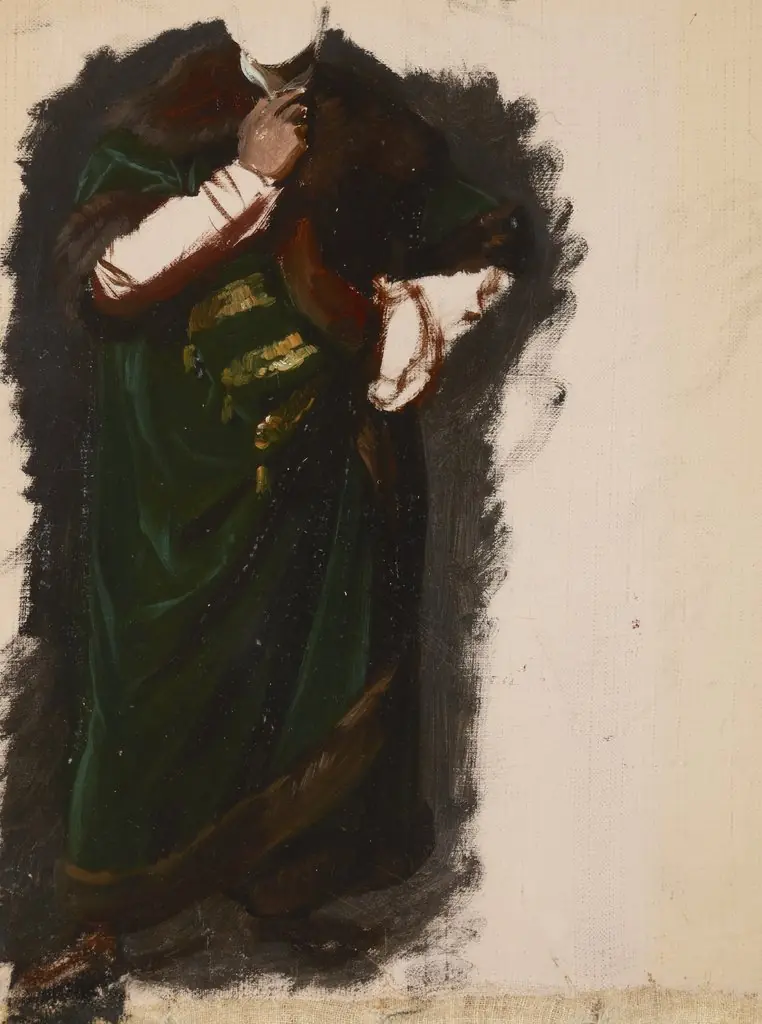
Figure in Turkish Costume
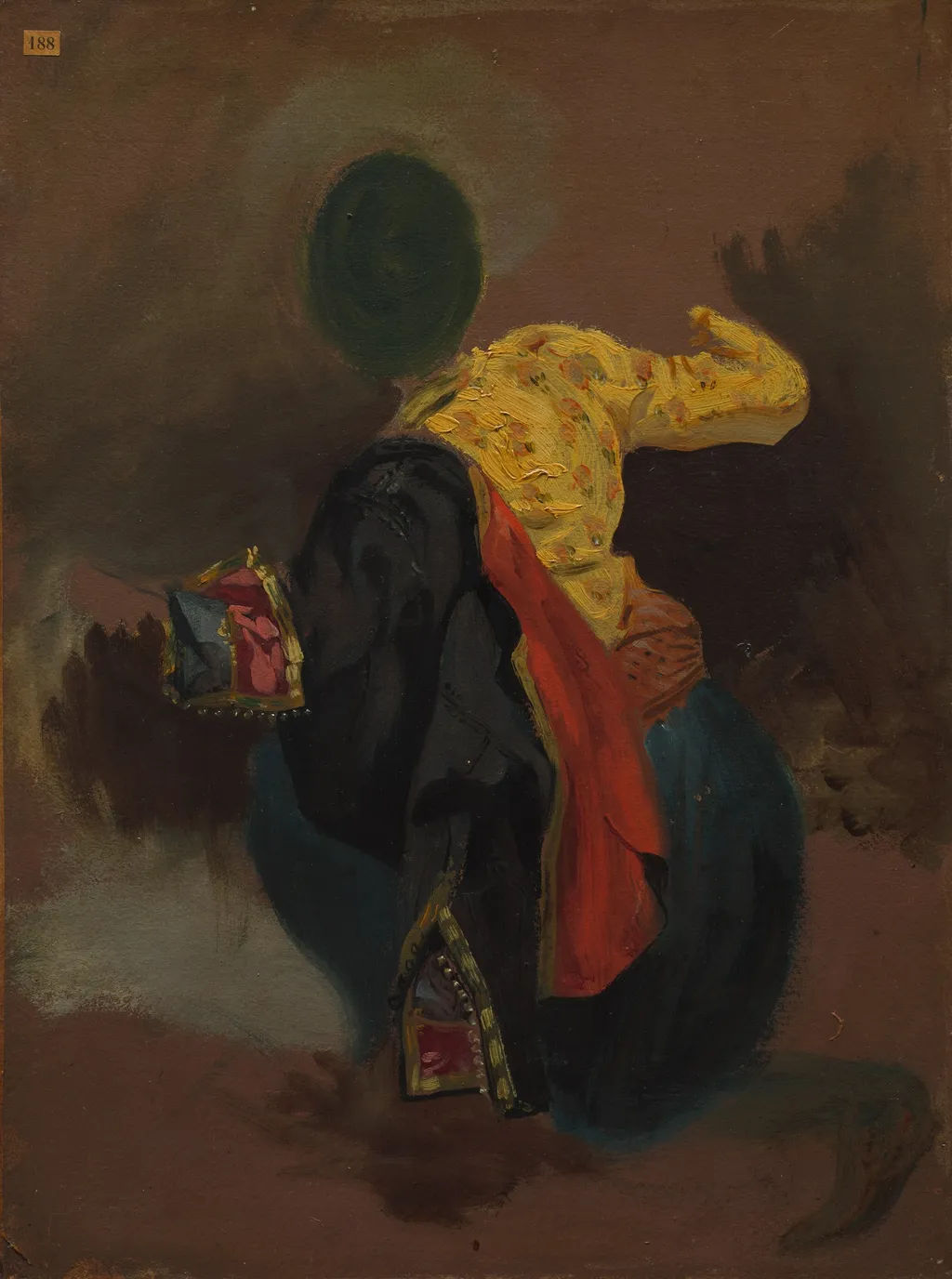
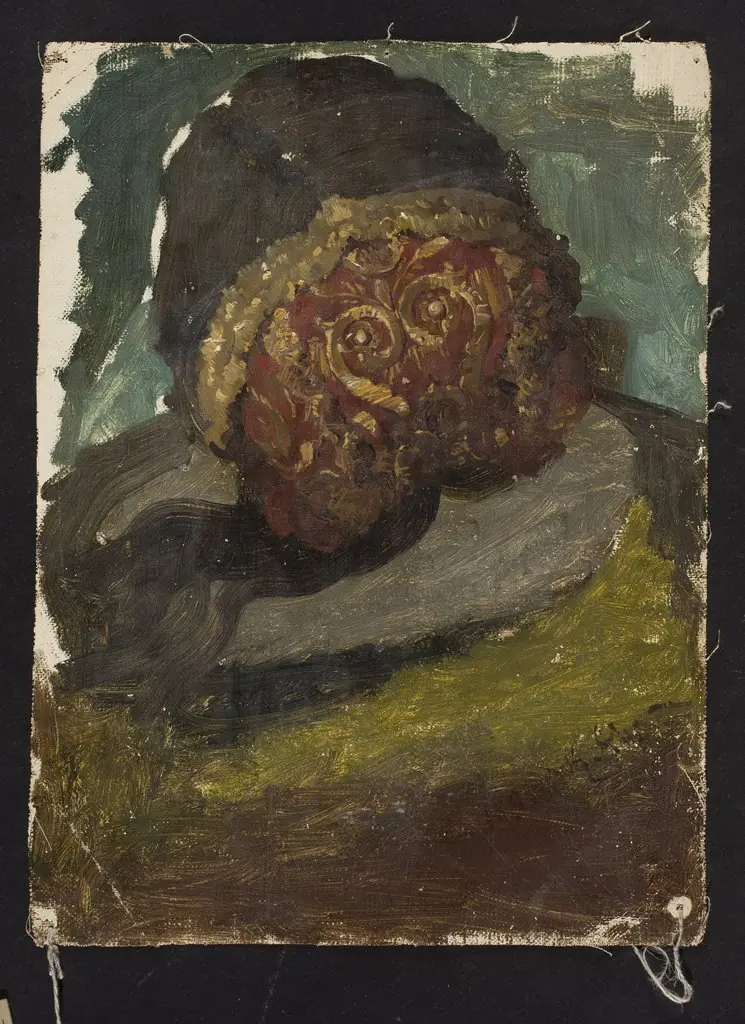
Figure in Turkish Costume is an unspecified painting by the Orientalist artist Eugène Delacroix. It dates from 1859 and is held in the collection of the Cleveland Museum of Art.
About this work
Overview
Eugène Delacroix created the oil painting Figure in Turkish Costume in 1859. Executed during the height of his career, the work exemplifies his Romantic interest in vivid color and dynamic brushwork. It is part of the collection of the Cleveland Museum of Art in Ohio.
Subject & Meaning
The composition presents a solitary figure seen from behind, clothed in a dark mantle trimmed with a striking red sash. A greenish hood covers the head, and the hand holds a small, intricately decorated object, suggesting an exotic or ceremonial context linked to North African or Middle Eastern dress.
Technique & Style
Delacroix employs thick, loose impasto strokes that emphasize texture and immediacy. The palette of deep shadows contrasted with bright accents creates a sense of movement, while the unfinished, sketch‑like surface reflects his preference for expressive color over precise modeling.
Context
The painting belongs to the 19th‑century Orientalist trend, in which European artists portrayed imagined scenes from the Ottoman world and its environs. Delacroix’s interest in such subjects was fueled by his travels and exposure to Eastern cultures, aligning him with contemporary fascination for the exotic.
History & Provenance
After its completion, the canvas entered private collections before being acquired by the Cleveland Museum of Art, where it remains on view as part of the museum’s European paintings department.
Own this work as a print
Artist & collection
Artist
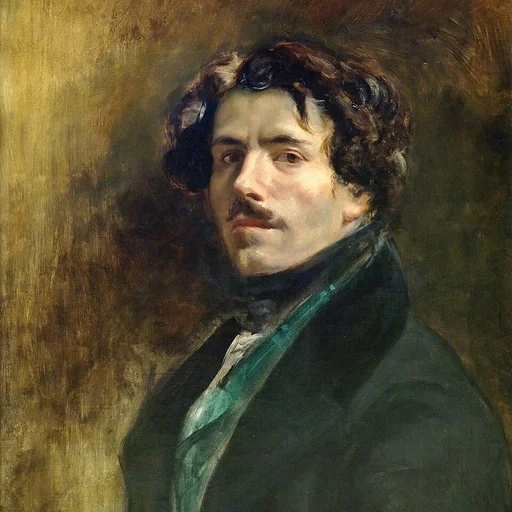
Ferdinand Victor Eugène Delacroix ( DEL-ə-krwah, -KRWAH; French:; 26 April 1798 – 13 August 1863) was a French Romantic artist who was regarded as the leader of the French Romantic school.

 Woman's head in a cap, back view, study for the painting “Defence of Olsztyn by Karliński”
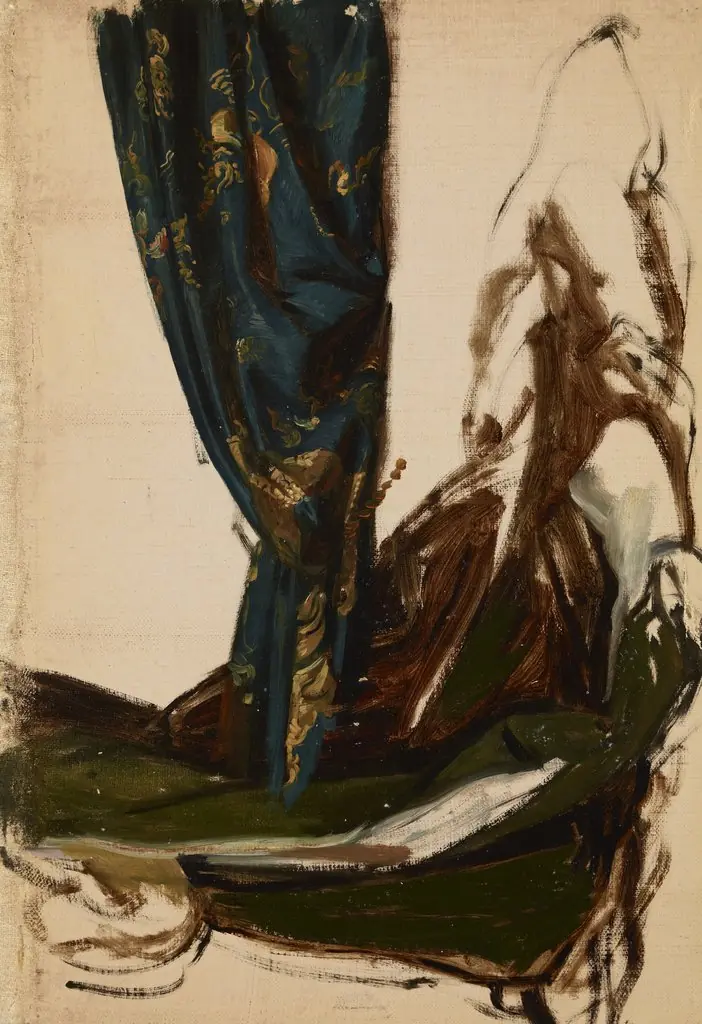 Quinn's Attire and a Drapery. Studies to the Painting "The Oath of Queen Jadwiga"
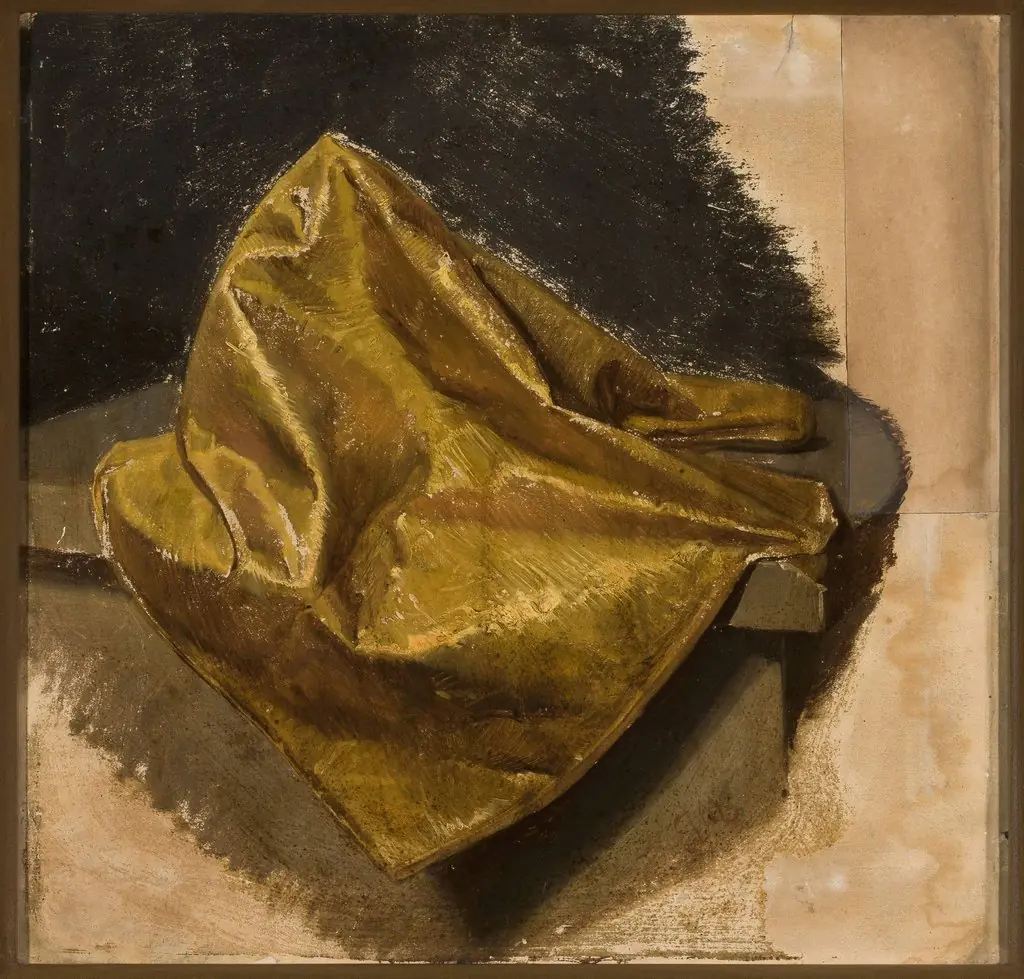 Golden fabric, study for men's attire
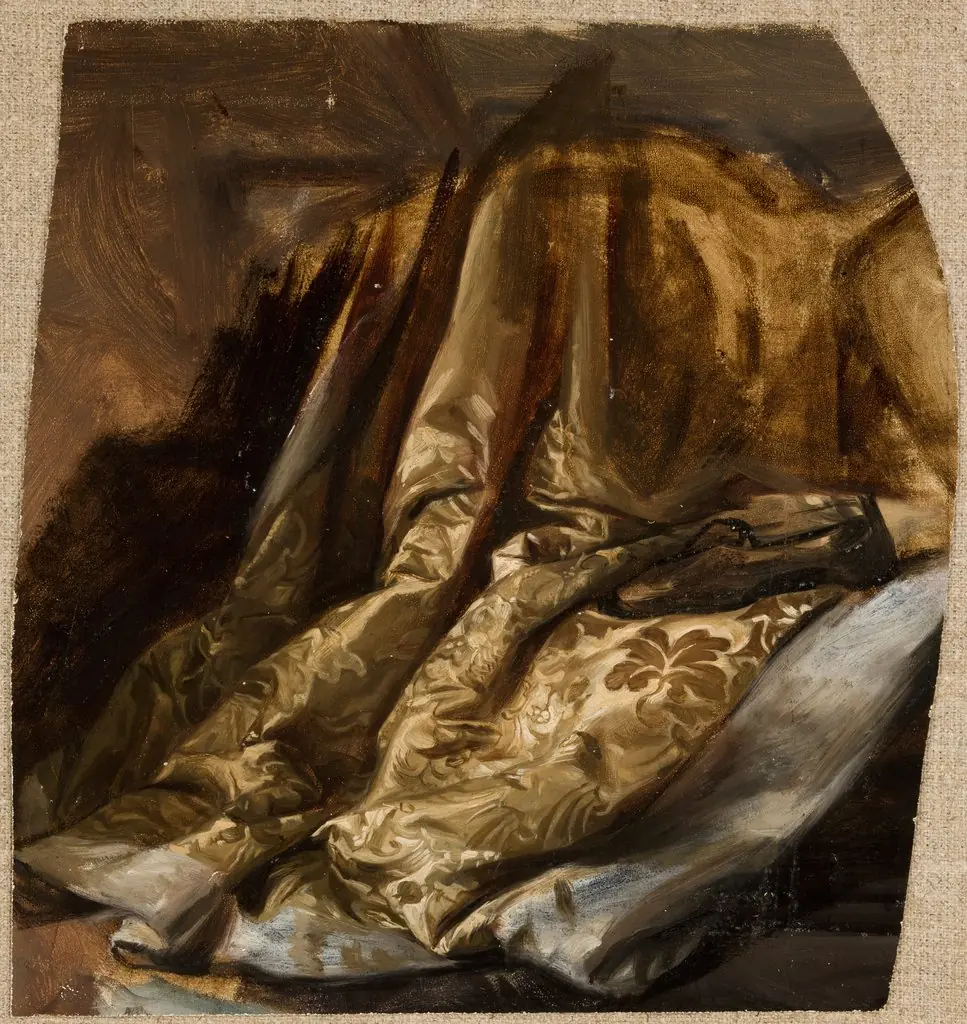 Fragment of the Cover of Quinn's Bed. Study to the Painting "The Death of Barbara Radziwiłł"
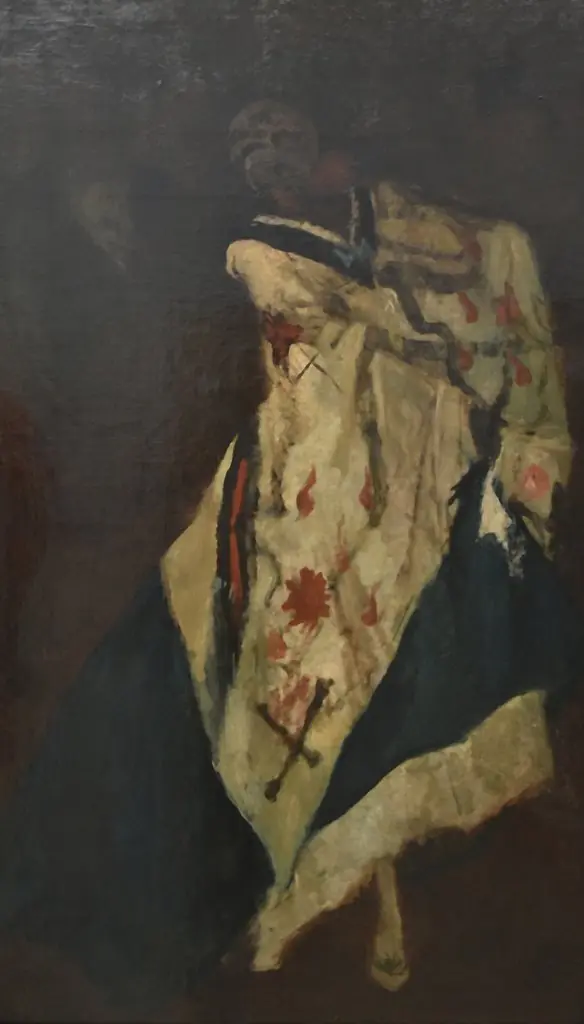 Death at the Ball
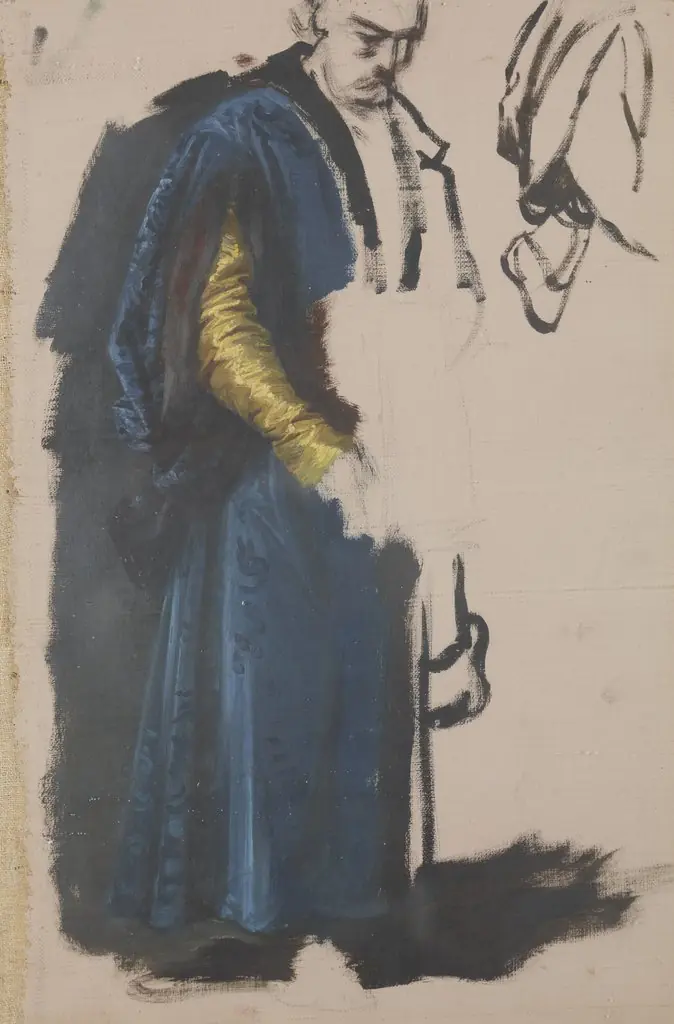 Jaśko of Tenczyn. Study to the Painting "The Oath of Queen Jadwiga"
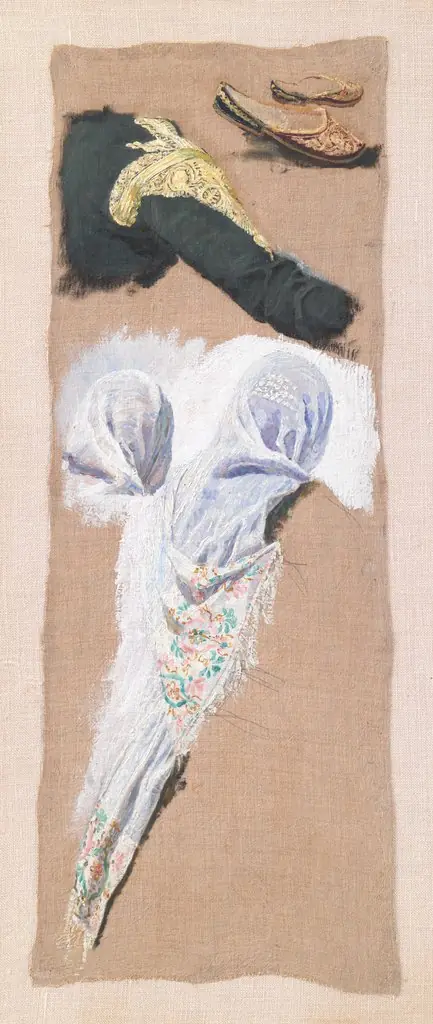 Dragtstudier. Megara
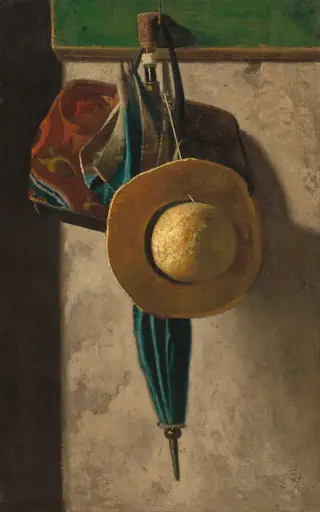 Straw Hat, Bag, and Umbrella
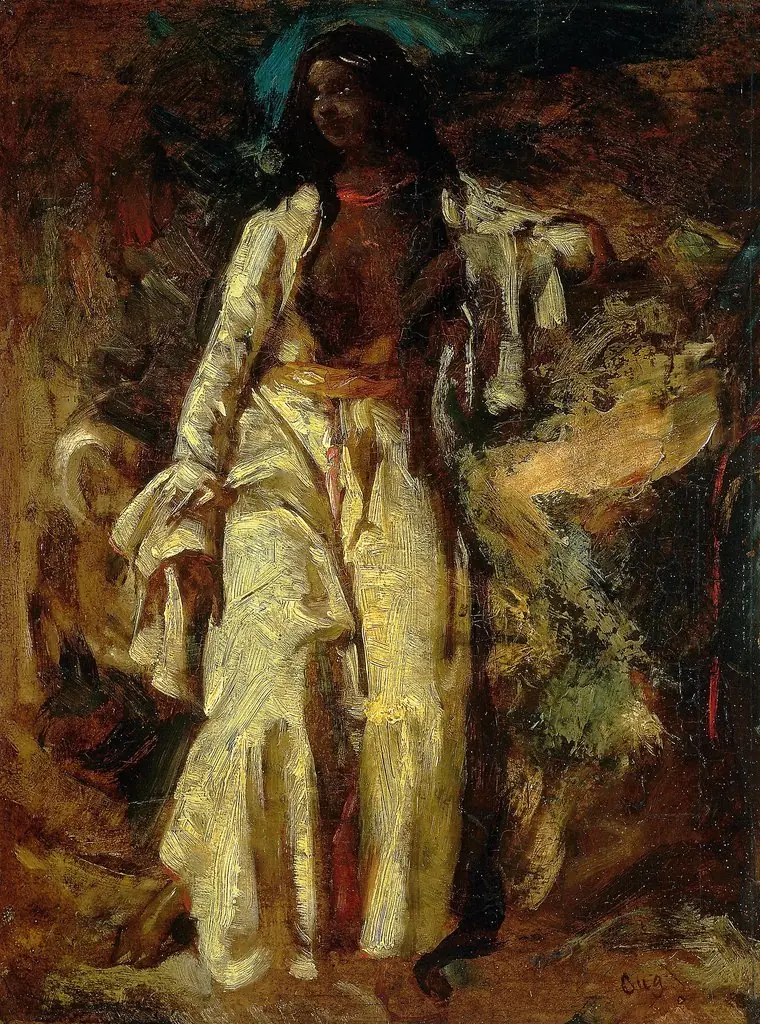 Nubian Woman
 Study of Władysław Jagiełło's Garment to the Painting "The Oath of Queen Jadwiga"
 Theme from Kyiv
- Figure in Turkish Costume