Artwork
Washerwomen near a Bridge
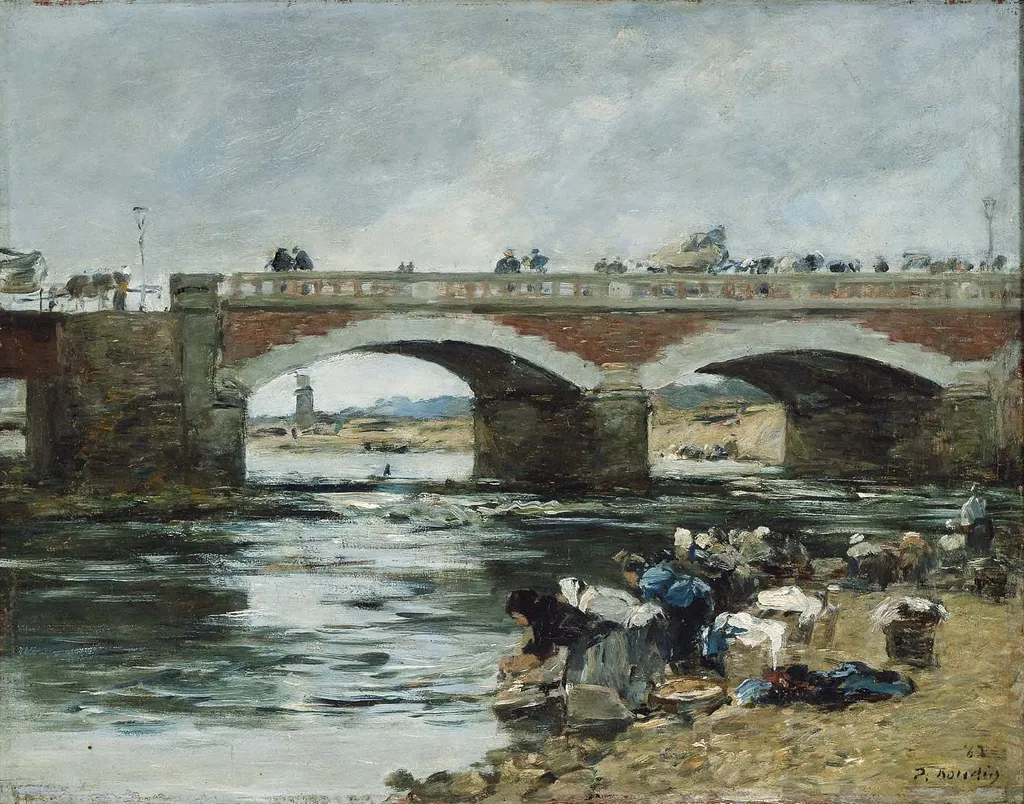
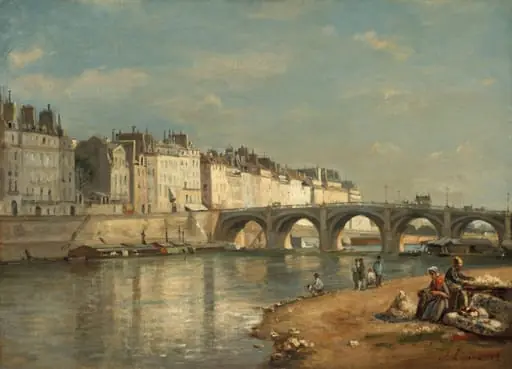
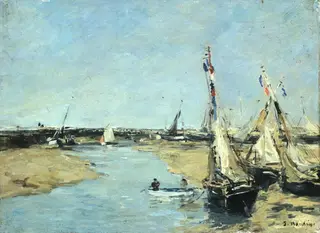
Washerwomen near a Bridge is an oil painting by the Impressionist artist Eugène Louis Boudin. It dates from 1892 and is held in the collection of the Museum of Fine Arts Boston.
About this work
Overview
Eugène Louis Boudin painted Washerwomen near a Bridge in 1892 using oil on canvas. A French artist associated with early Impressionism, he frequently depicted coastal and riverside scenes with attention to natural light and everyday labor. This work captures a quiet moment of domestic routine beside a stone bridge, reflecting his sustained interest in the rhythms of life along waterways.
Subject & Meaning
The bridge and distant buildings frame the scene without dominating it, emphasizing the quiet dignity of routine tasks.
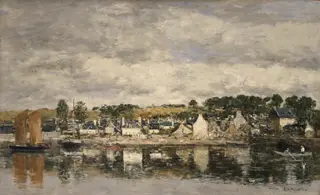
The painting portrays a group of women engaged in the labor of washing clothes at the water’s edge, their postures and attire suggesting the physical demands of their work. The bridge and distant buildings frame the scene without dominating it, emphasizing the quiet dignity of routine tasks. Boudin avoids sentimentality, presenting the figures as integrated elements of a larger, unembellished environment.
Technique & Style
Boudin employed loose, economical brushwork to suggest texture and movement, fabric rippling in water, foliage swaying in wind, clouds drifting overhead. His palette favors muted earth tones and soft grays, harmonizing with the overcast sky. Light is rendered diffusely, enhancing the sense of atmosphere rather than defining sharp forms, a hallmark of his approach to plein air painting.
History & Provenance
The painting entered the collection of the Museum of Fine Arts, Boston, where it remains today. While its early ownership history is not widely documented, its inclusion in the museum’s holdings reflects its recognition as a representative example of Boudin’s later work. It was painted during a period when he was increasingly admired for his observational precision and atmospheric sensitivity.
Context
In the late 19th century, industrialization was reshaping rural labor, yet Boudin chose to depict traditional, unmechanized tasks with quiet persistence. His focus on washerwomen aligns with broader artistic interest in working-class life, though he avoided overt social commentary. The scene reflects a vanishing way of life, rendered not as nostalgia but as observed reality.
Legacy
Boudin’s work, including this painting, helped pave the way for Impressionist concerns with light and everyday subject matter. Though less celebrated than his contemporaries, his commitment to painting outdoors and capturing transient effects influenced artists like Monet. Washerwomen near a Bridge endures as a modest but resonant record of labor and landscape in late 19th-century France.
Artist & collection

Artist
Eugène Louis Boudin (French: ; 12 July 1824 – 8 August 1898) was one of the first French landscape painters to paint outdoors.