Artwork
Auvers (Washerwomen)
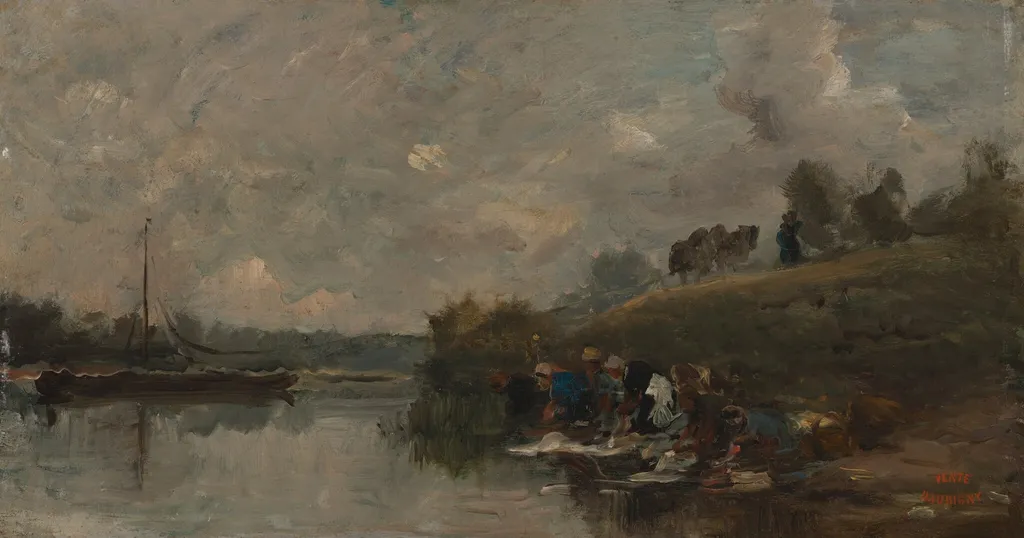
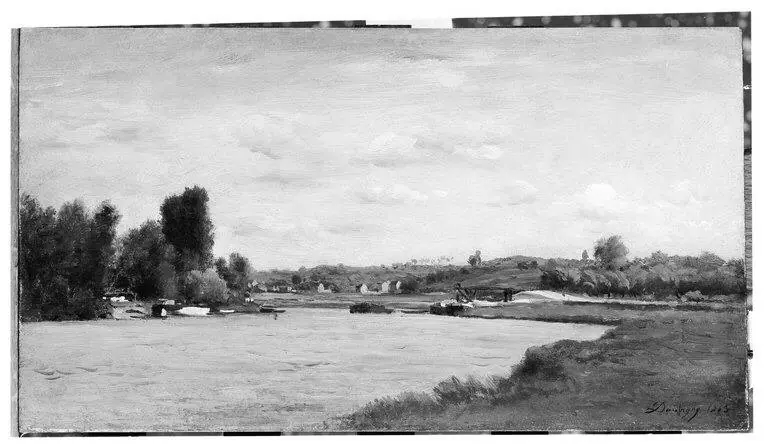
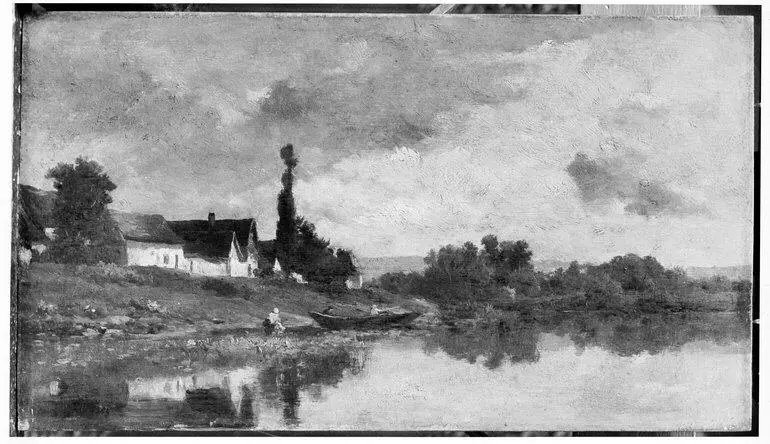
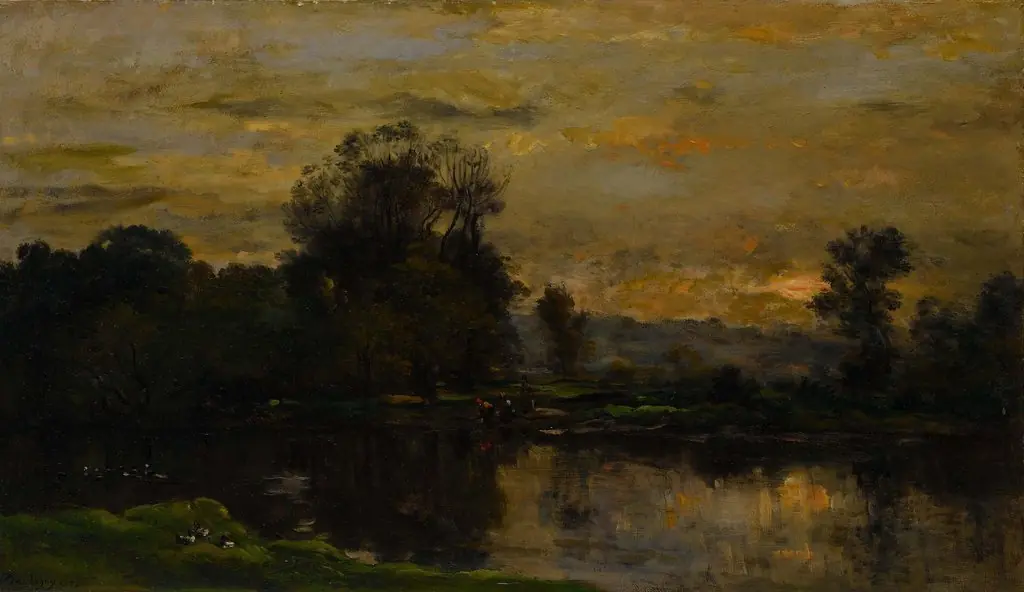
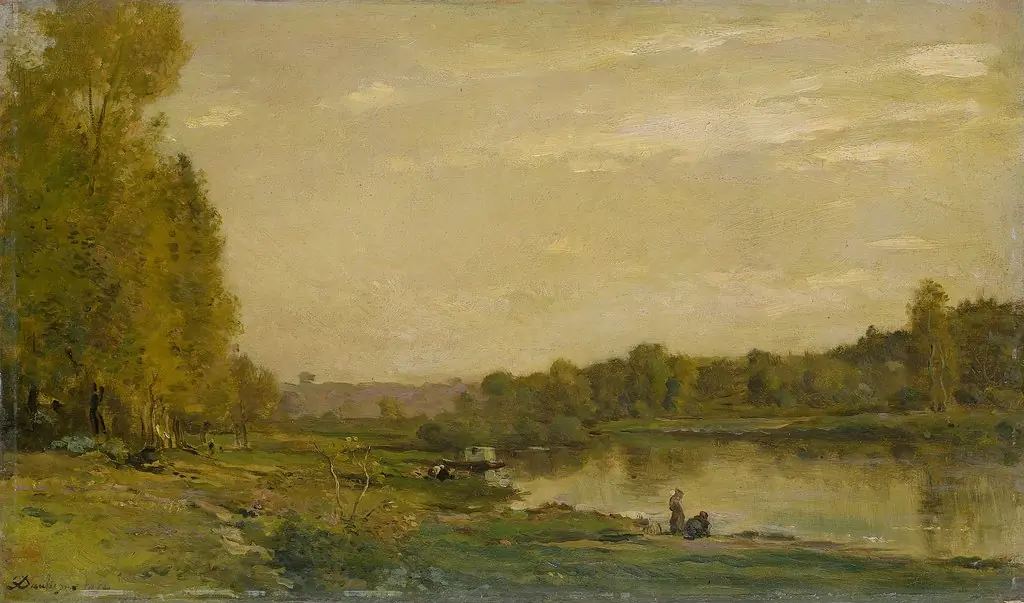
Auvers (Washerwomen) is an oil painting by the Barbizon school artist Charles François Daubigny. It dates from 1861 and is held in the collection of the National Gallery of Art.
About this work
Technique & Style
7 centimeters, indicating a modest, horizontal format typical of the artist's studies.
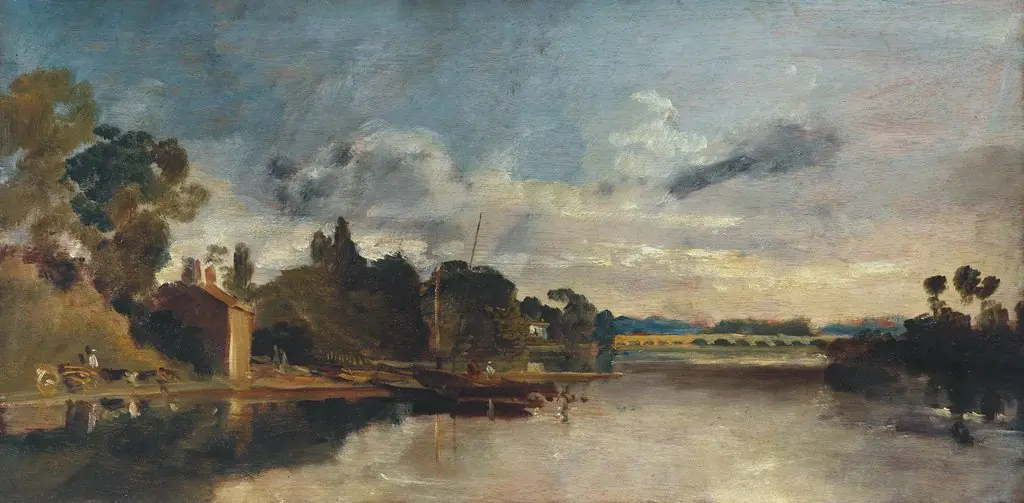
Executed in 1861, this work is an oil painting applied to a wood panel support. The composition measures approximately 24.5 by 46.7 centimeters, indicating a modest, horizontal format typical of the artist's studies. As a landscape depicting washerwomen in Auvers, the piece reflects Daubigny's direct engagement with the natural environment through the fluid handling of oil pigments on a rigid surface.
History & Provenance
Charles-François Daubigny painted Auvers (Washerwomen) in 1861 as an oil on wood work. The piece entered the market at Hotel Drouot in Paris on 6-11 May 1878, listed as lot 110 under the title Auvers (les laveuses). It was subsequently owned by Edward C. and Mary Griffin Walker of Willistead Manor, Ontario, before being bequeathed to the Corcoran Gallery of Art in Washington in 1937.
The National Gallery of Art later acquired the painting in 2014. This provenance is documented in auction records and the artist’s catalogue raisonné.
The work has been part of the National Gallery of Art’s collection since 2014, following its acquisition from the Corcoran’s bequest.
The painting is held by the National Gallery of Art in Washington, D.C., under the accession of the Corcoran Gallery of Art bequest from Edward C. and Mary Griffin Walker in 1937, later acquired by the National Gallery of Art in 2014.
Exhibition history is documented at the National Gallery of Art, though specific exhibition details are not provided in the sources.
Dimensions are recorded as 24.45 cm in height and 46.67 cm in width according to the collection data.
Overview
Charles‑François Daubigny created the oil‑on‑wood painting Auvers (Washerwomen) in 1861. Executed during his mature period, the work presents a quiet riverside scene populated by figures engaged in laundry, a boat, and a horse‑drawn cart, all rendered under a cloudy sky.
Subject & Meaning
The composition captures a moment of everyday rural labor: women and possibly children gather at the water’s edge to wash clothes, while a cart rests on a nearby hill. The focus on ordinary activity reflects an interest in the rhythms of countryside life.
Context
The painting belongs to a period when French artists were turning away from academic idealization toward depictions of real, unembellished scenery. Daubigny’s focus on a working riverside scene parallels similar subjects explored by his contemporaries in the mid‑19th century.
Artist & collection
Artist
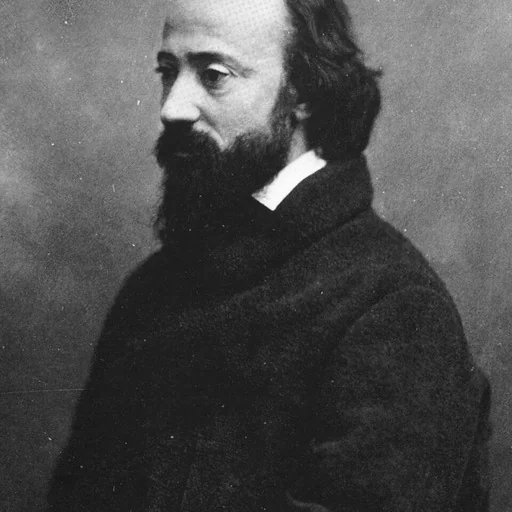
Charles-François Daubigny ( DOH-bin-yee, US: DOH-been-YEE, doh-BEEN-yee, French:; 15 February 1817 – 19 February 1878) was a French painter, one of the members of the Barbizon school, and is considered an important precursor of…