Artwork
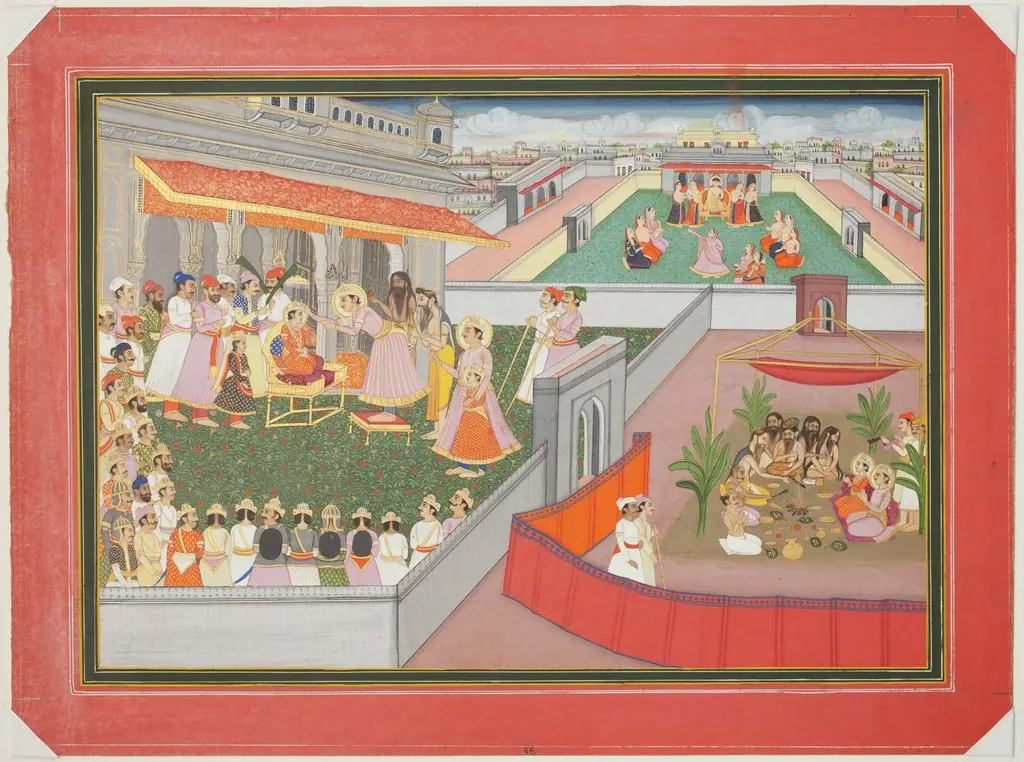
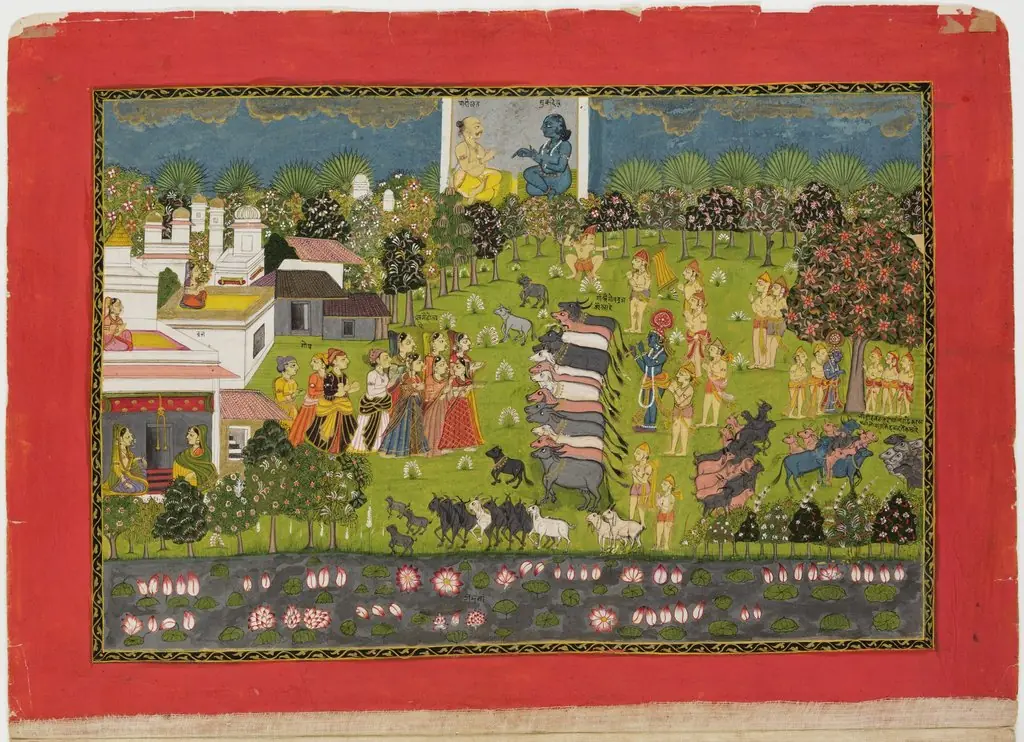
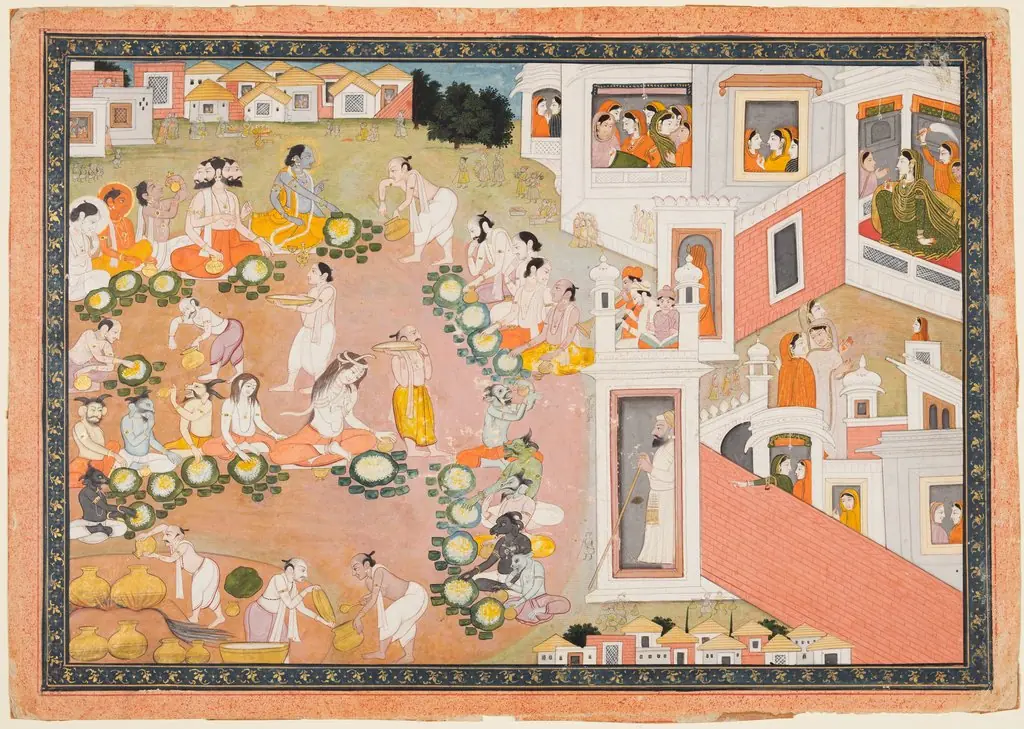
Feast where Vishnu decides he will incarnate as King Dasharatha’s sons, from Chapters 14–15 of the "Bala Kanda" (Book of Childhood) of a Ramayana (Rama’s Journey)
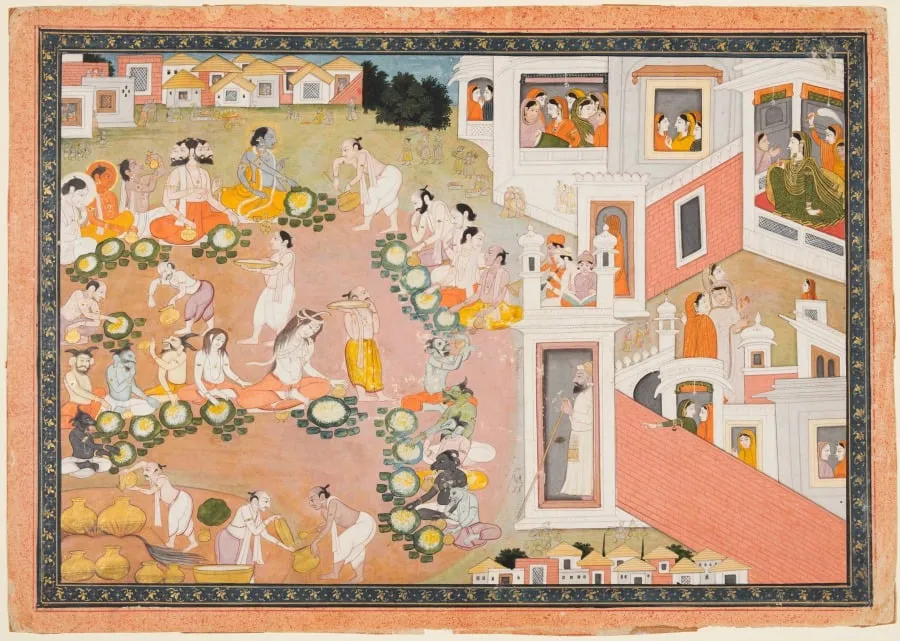
Feast where Vishnu decides he will incarnate as King Dasharatha’s sons, from Chapters 14–15 of the "Bala Kanda" (Book of Childhood) of a Ramayana (Rama’s Journey) is an unspecified painting by the Pahari Painting artist Unknown. It dates from 1810 and is held in the collection of the Cleveland Museum of Art.
- Accession no.
- 2018.121
- Credit line
- Purchase and partial gift from the Catherine and Ralph Benkaim Collection; Severance and Greta Millikin Purchase Fund
About this work
Overview
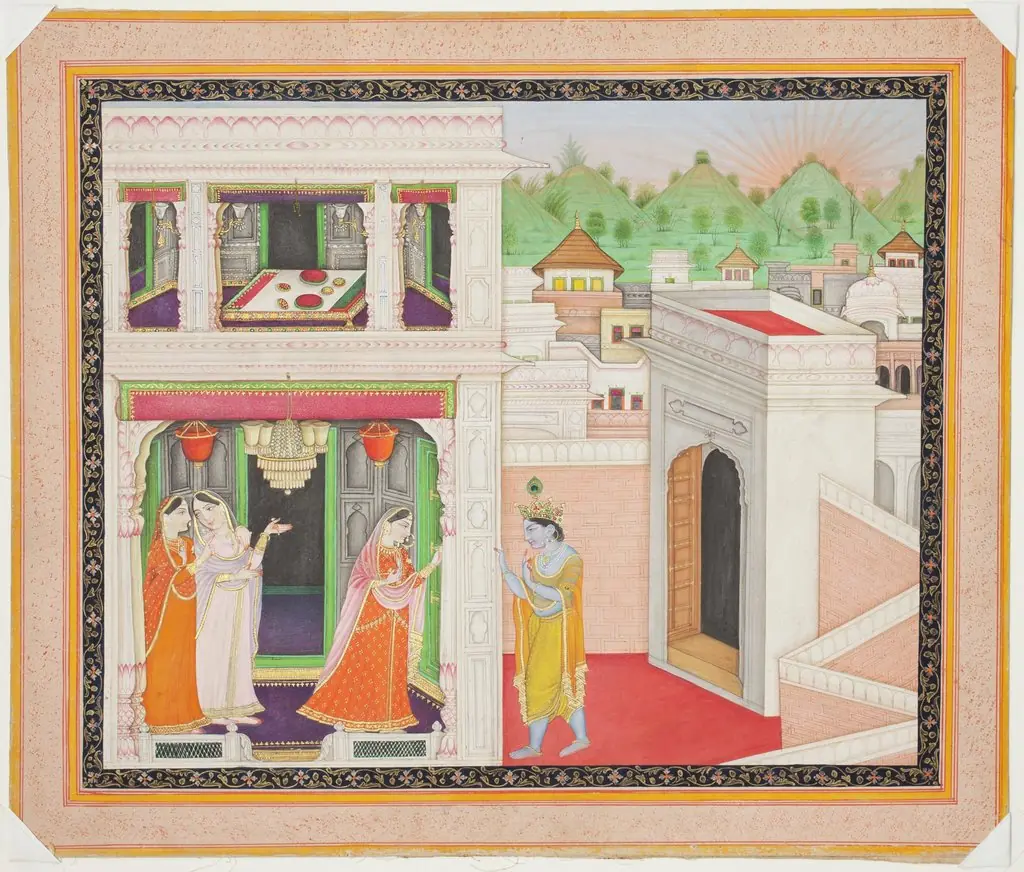
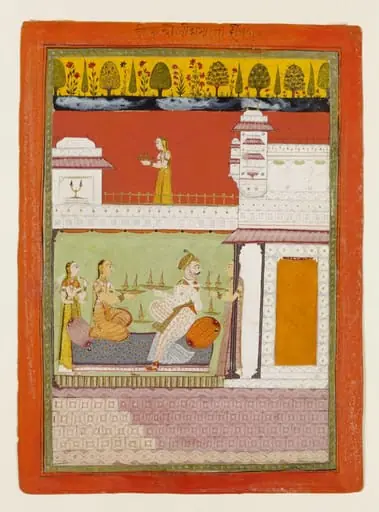
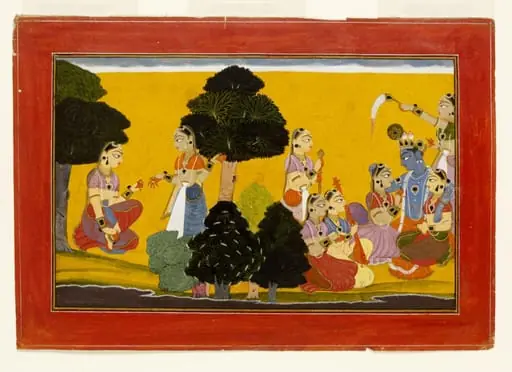
The painting portrays a celestial banquet set in a palace courtyard, with the right side showing the women’s quarters and the left side occupied by a gathering of deities. Under a star‑filled sky, figures such as Vishnu, Brahma, Shiva, Surya, Chandra and Indra share a meal presented on leaf plates, while their crowns lie on platforms in the background.
Subject & Meaning
The scene illustrates a moment from chapters 14–15 of the Bala Kanda, where Vishnu decides to incarnate as the sons of King Dasharatha. By placing the divine assembly in a domestic palace setting, the work emphasizes the accessibility of the gods and the ritual purity required for the impending incarnation.
Technique & Style
Executed in the Pahari tradition, the artist employs delicate brushwork and vibrant mineral pigments to render the figures’ intricate costumes and the luminous night sky. Attention to everyday details, such as the leaf‑served dishes and the careful placement of crowns on raised stands, reflects the regional emphasis on realism within mythological narrative.
History & Provenance
Created for the royal women’s quarters of a Pahari kingdom, the painting was likely commissioned by a court patron to adorn private devotional spaces. Its provenance remains within the lineage of Pahari court collections, where it functioned both as a visual retelling of the Ramayana and as a decorative element in the palace.
Context
The work belongs to a broader corpus of northern Indian Pahari art that blends Hindu myth with courtly life. The depiction of a dhāma, a ritual feast prepared by hereditary priest‑chefs according to strict dietary codes, situates the divine banquet within the cultural practices of the region’s elite.
Artist & collection