Artwork
The Taj Mahal
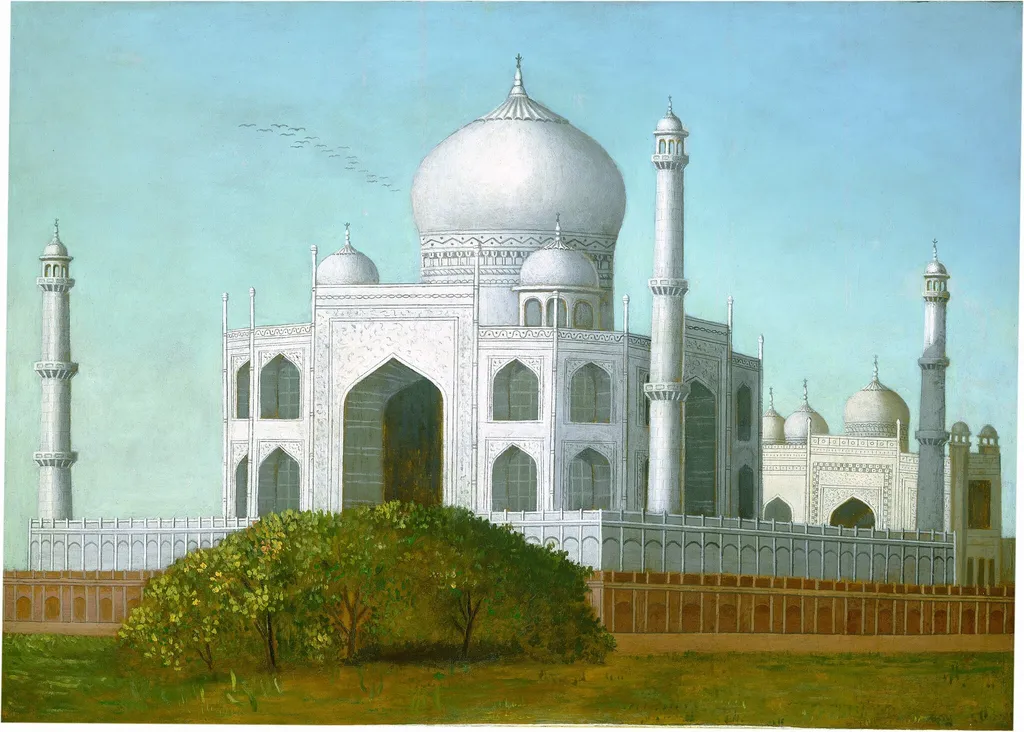
The Taj Mahal is an oil painting by the American Impressionist artist Erastus Salisbury Field. It dates from 1870 and is held in the collection of the National Gallery of Art.
About this work
The Taj Mahal glows in soft pink light, its marble domes and minarets set against a dusky sky. The colors stay quiet rather than flashy. Field painted it in 1870, long after the building went up, treating the scene less as a record than as a memory.
Subject & Meaning
The 1870 oil on canvas by Erastus Salisbury Field presents the Taj Mahal as a solitary monument set against a soft sky, emphasizing its white marble silhouette and symmetrical arches. In the American context of the mid-19th century, the subject functioned as an exotic landmark that evoked notions of timeless beauty and imperial grandeur, reflecting contemporary fascination with Oriental architecture. Field's rendering underscores the building's iconic domes and minarets, using careful perspective to convey both architectural precision and a romanticized aura.
The work's inclusion in the National Gallery of Art's collection, acquired through the Garbisch gift in 1978, affirms its recognized significance as a visual representation of cross-cultural admiration.
Technique & Style
The work is classified as a landscape painting, presenting the Taj Mahal as a topographical and romanticized view rather than an architectural study.
The painting is executed in oil on canvas, a standard medium for mid-nineteenth-century American landscape works. Its physical dimensions are 88.7 cm in height by 116.7 cm in width, giving the composition a horizontal, landscape-oriented format suited to its panoramic subject. The work is classified as a landscape painting, presenting the Taj Mahal as a topographical and romanticized view rather than an architectural study.
It is held in the collection of the National Gallery of Art in Washington, D.C., having entered the institution in 1978 as a gift from Edgar William and Bernice Chrysler Garbisch, who had acquired it in 1949.
History & Provenance
Created in 1870, this oil on canvas landscape by Erastus Salisbury Field depicts the Taj Mahal. The work's documented provenance traces back to Massachusetts, where it was held by Robert Schuyler Tompkins of Sheffield. In 1949, Tompkins sold the painting to the collectors Edgar William and Bernice Chrysler Garbisch.
The couple subsequently donated the artwork to the National Gallery of Art in Washington, D.C., in 1978, where it remains part of the permanent collection. The canvas measures approximately 88.7 by 116.7 centimeters. No specific accession number is provided in the available documentation, and no exhibition history is recorded in the cited sources.
Overview
Erastus Salisbury Field's painting, titled The Taj Mahal, is an oil on canvas created around 1870. This landscape depicts the iconic Indian mausoleum, a subject that has captivated artists for centuries. Field's interpretation offers a distinctive perspective on the renowned architectural marvel, rendered in a style characteristic of his work.
Own this work as a print
Artist & collection



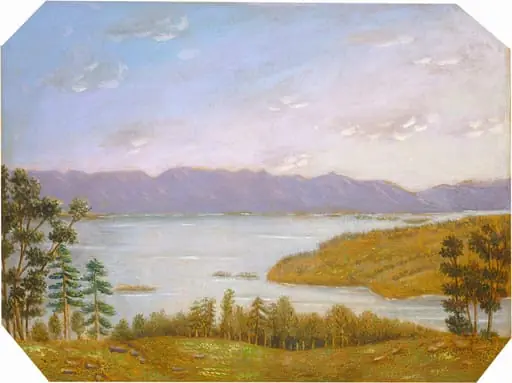
- Taj Mahal
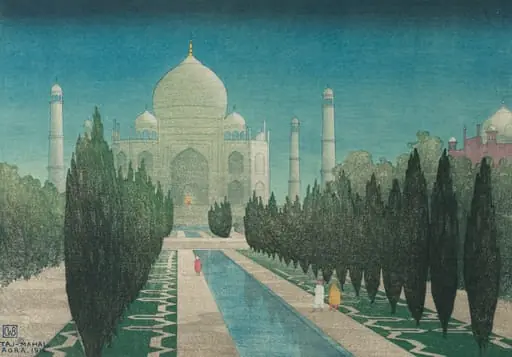 Taj Mahal, Agra
 The Taj Mahal, Agra
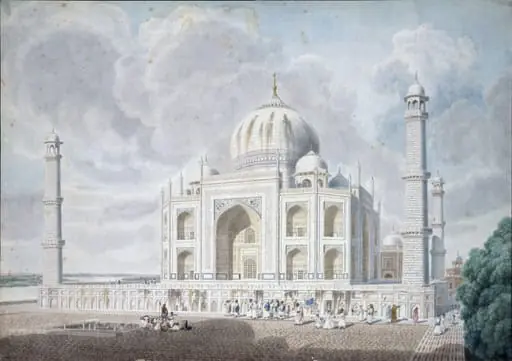 The Taj Mahal on the River Jumna at Agra
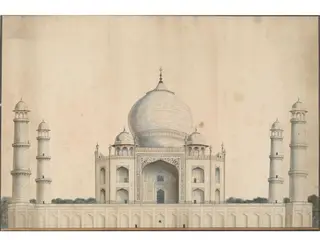 Three drawings of the Taj Mahal
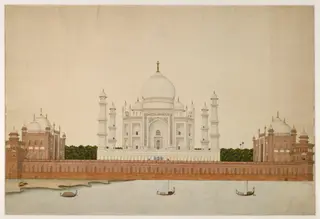 The Taj Mahal
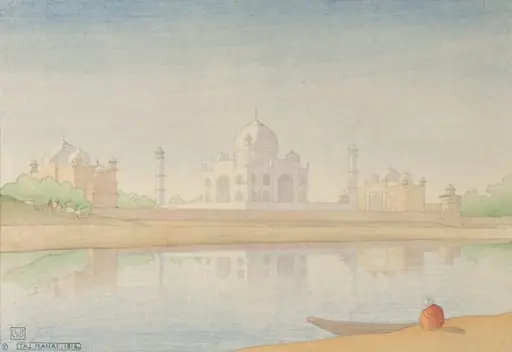 Taj Mahal
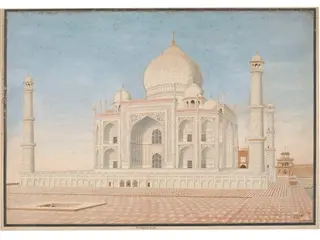 Elevation of the east side of the Taj Mahal, Agra, with part of the surrounding tiled terrace and water-tank in the foreground.
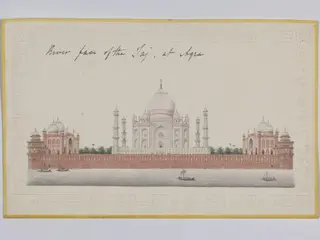 View of the Taj Mahal from across the Jumna river.
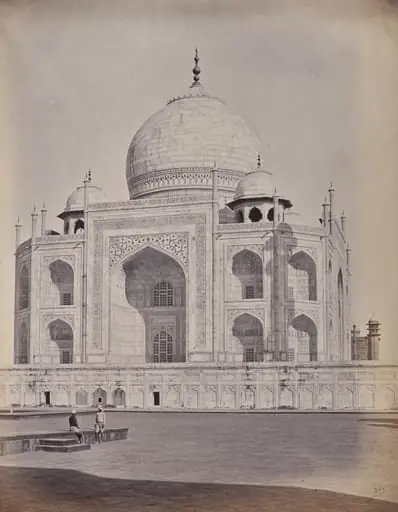 Agra. The Taj, the Central of Principal City
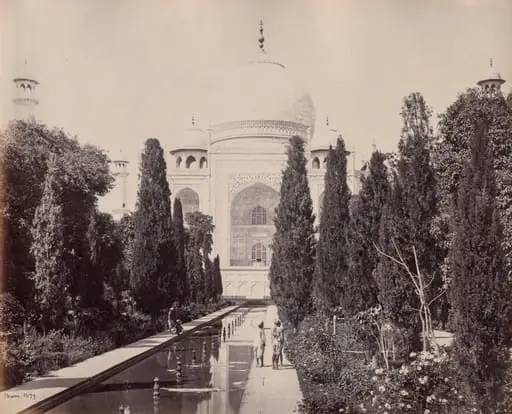 The Taj
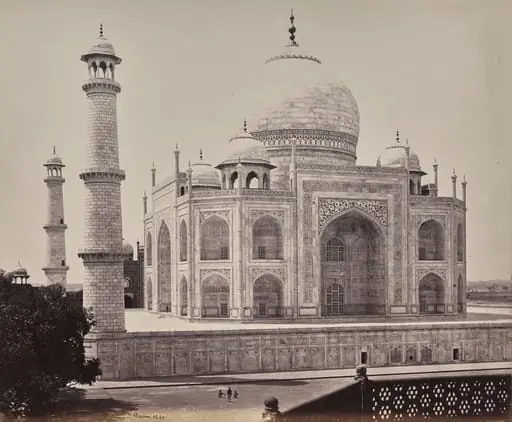 Agra. View of the Taj from a Corner in the Quadrangle