Artwork
The Tomb of Caecilia Metella
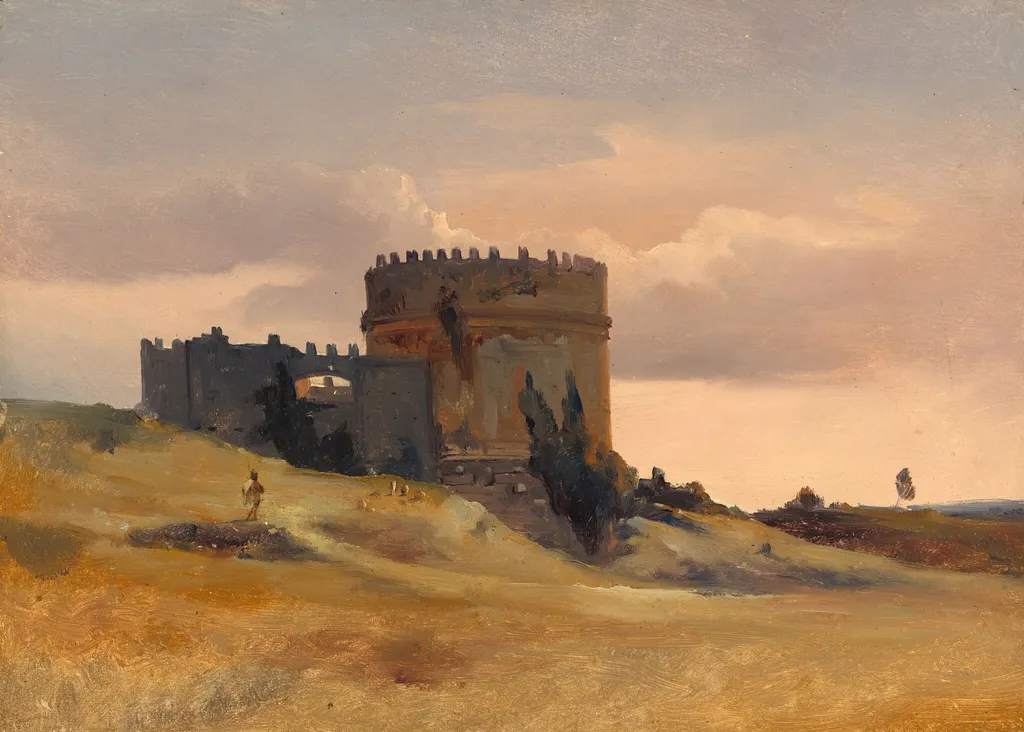
The Tomb of Caecilia Metella is an oil painting by the Romanticist artist Léon-François-Antoine Fleury. It dates from 1830 and is held in the collection of the National Gallery of Art.
About this work
Subject & Meaning
The painting depicts the Tomb of Caecilia Metella, the cylindrical Roman mausoleum on the Via Appia outside Rome and one of the best-known ancient monuments of the Roman Campagna. Léon-François-Antoine Fleury treats the ruin in the Romantic tradition of architectural landscape, presenting the weathered drum of the tomb within its surrounding countryside. The subject is the historic monument itself rather than any figural or narrative scene, reflecting the nineteenth-century interest in recording ancient sites encountered on travels through Italy.
Technique & Style
The composition centers on the cylindrical drum of the tomb, treated with attention to its masonry construction and integration into the surrounding landscape.
The work is executed in oil paint on canvas, a standard medium for Léon-François-Antoine Fleury's easel painting of 1830. The support is a modest canvas measuring 27.9 cm in height by 33 cm in width, consistent with a small-scale cabinet picture rather than a large monumental canvas.
Stylistically, the painting belongs to the Romantic tradition of architectural landscape and ruin painting practiced by Fleury and his contemporaries, who traveled to Italy to record ancient sites. The composition centers on the cylindrical drum of the tomb, treated with attention to its masonry construction and integration into the surrounding landscape.
No condition issues or conservation history are documented in the available sources.
History & Provenance
Léon-François-Antoine Fleury executed this oil on canvas in 1830; it measures 27.9 by 33 centimetres and depicts the Tomb of Caecilia Metella. Its modern provenance begins with Frank Anderson Trapp (1922–2005) of Pittsburgh, who retained the work until 2004, when he gifted it to the National Gallery of Art in Washington, D.C., where it remains.
Legacy
Fleury's 1830 oil painting entered the National Gallery of Art's collection through the 2004 gift of Frank Anderson Trapp, placing the work within a major American institution. Its depiction of the Tomb of Caecilia Metella reflects the nineteenth-century French taste for Romantic landscapes of Roman ruins.
Overview
Léon‑François‑Antoine Fleury’s oil on canvas, dated around 1830, presents a solitary Roman funerary monument known as the Tomb of Caecilia Metella. The composition isolates the ancient structure against a flat, arid landscape under an expansive sky, emphasizing its verticality and the passage of time reflected in the weathered stone.
Context
Fleury worked during a period when French artists often turned to classical antiquity for subject matter, integrating Romantic sensibilities with precise observation. The isolated depiction of a single ancient ruin aligns with contemporary interests in archaeological discovery and the aesthetic of the sublime landscape.
Own this work as a print
Artist & collection


 The Good Samaritan
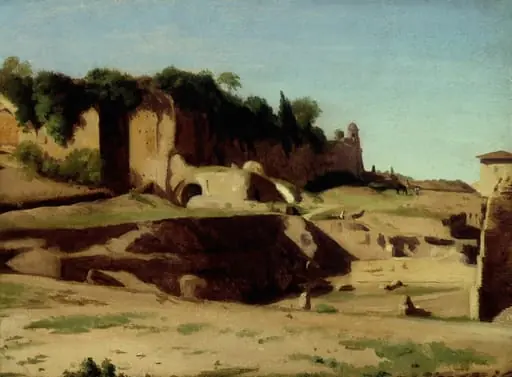 The Imperial Palace on the Palatine, Rome
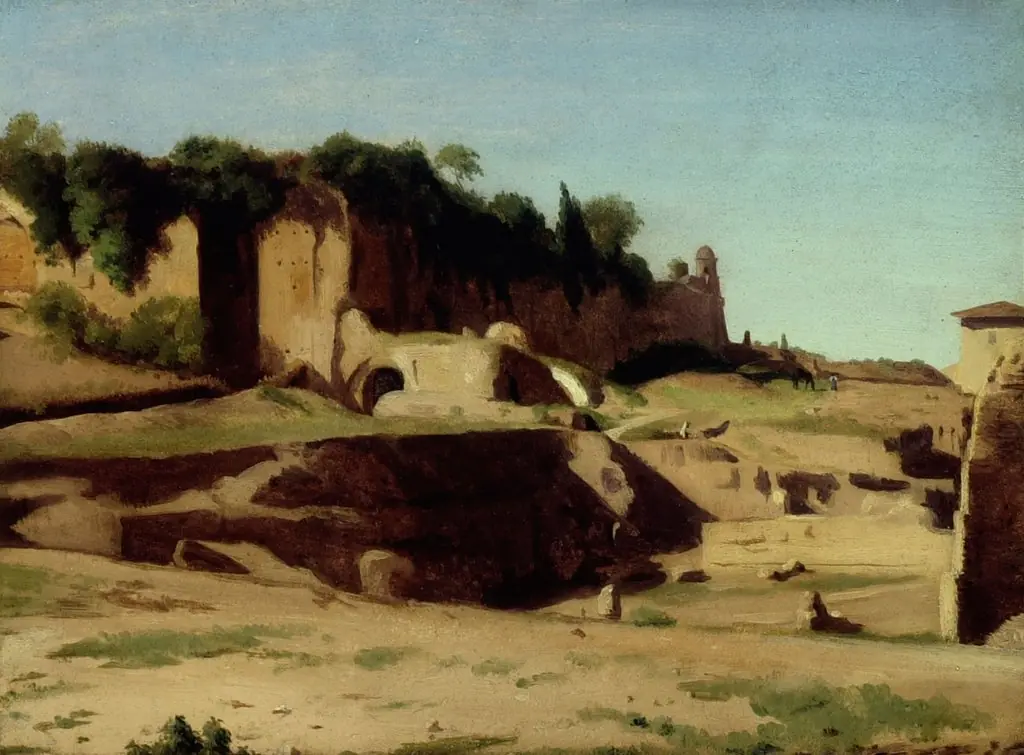 The Imperial Palace on the Palatine, Rome
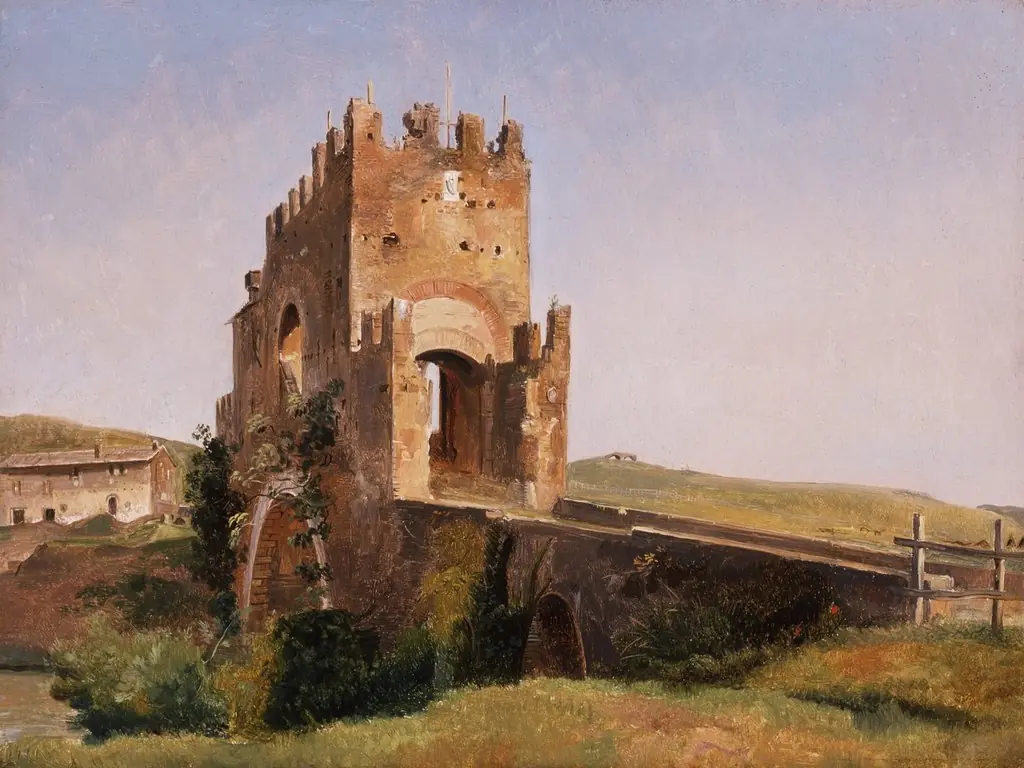 View of the Ponte Nomentano (Roman Campagna)
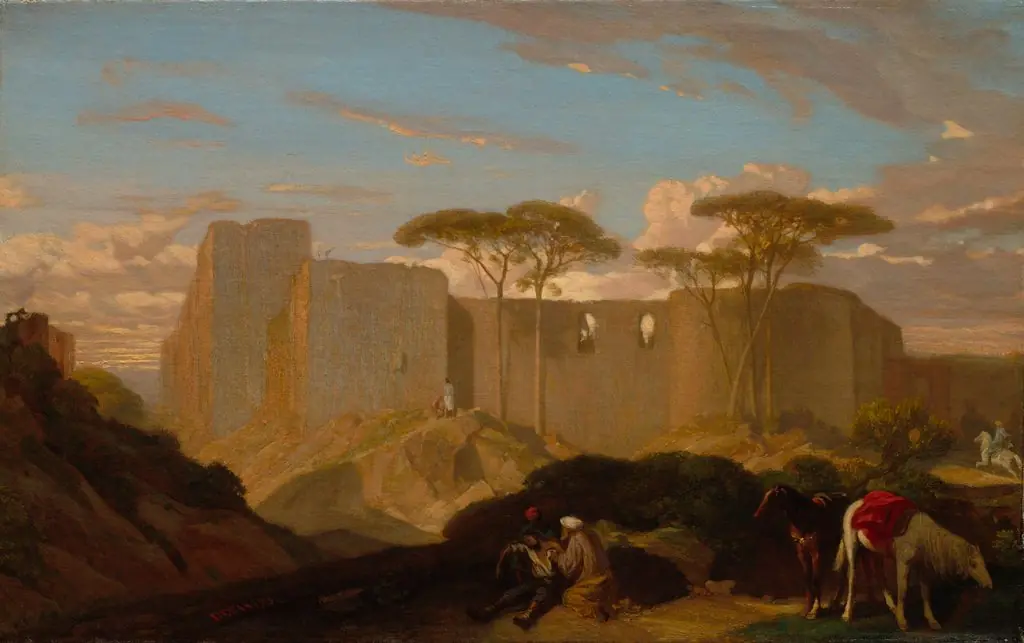 The Good Samaritan
 Landscape with Rock and Fortress
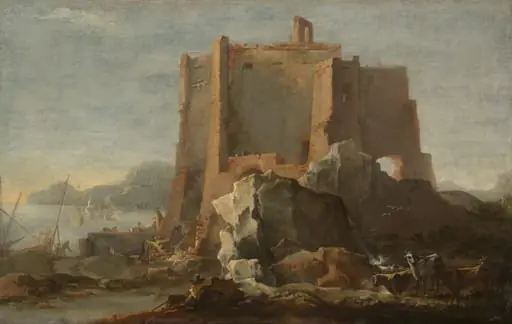 Landscape with Rock and Fortress
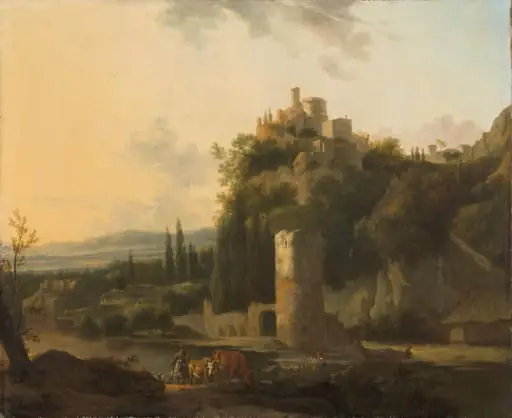 Italina landscape with round tower
 Landscape with Ruins
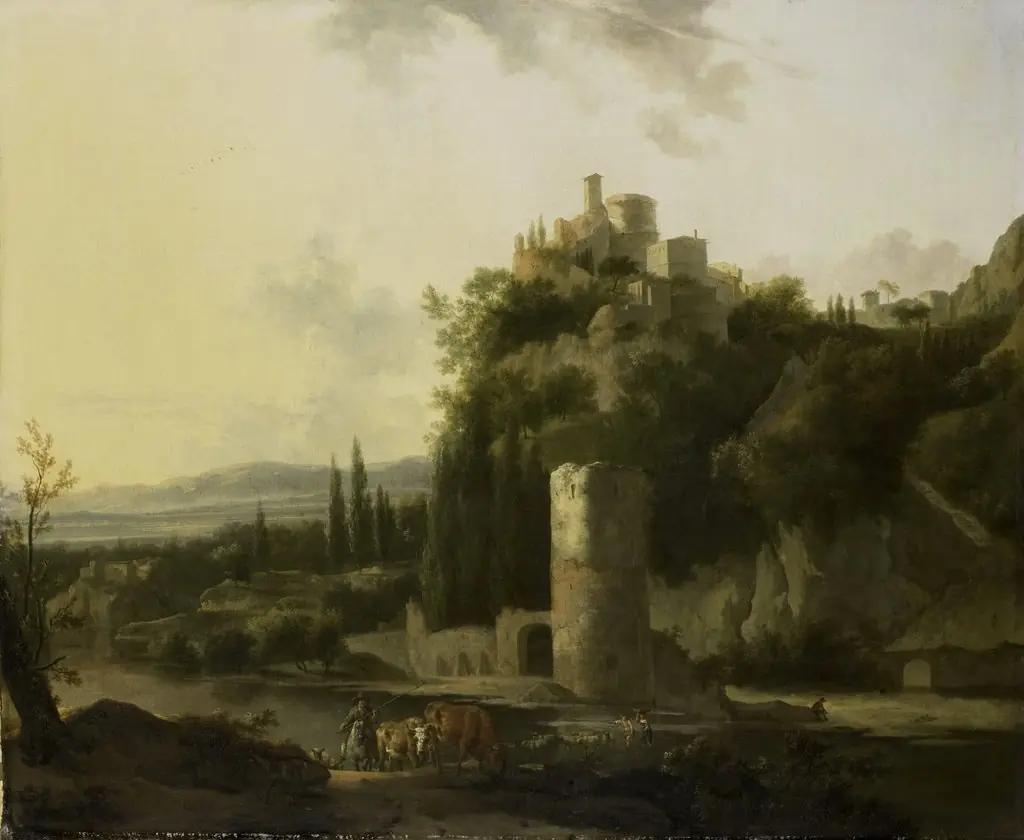 Italina landscape with round tower
 Kyiv (Imperial Garden)
- Tomb of Cecilia Metella