Artwork
Folio 2 from a Parshvanatha Charitra (Life and Stories of Lord Parshva) of Bhavadeva-suri: Monk preaching to a disciple with a lay audience (recto); Text (verso)
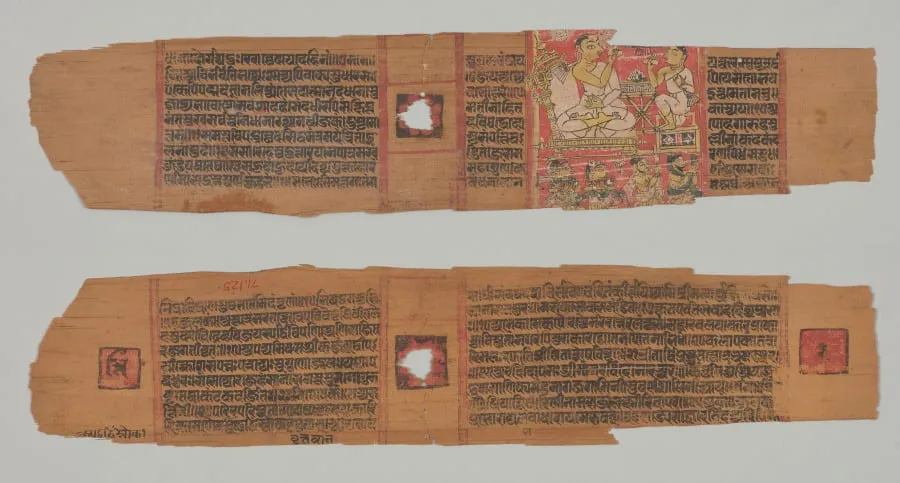
Folio 2 from a Parshvanatha Charitra (Life and Stories of Lord Parshva) of Bhavadeva-suri: Monk preaching to a disciple with a lay audience (recto); Text (verso) is an unspecified painting by the Indian Miniature artist Unknown. It dates from 1288 and is held in the collection of the Cleveland Museum of Art. Folio 2 belongs to a Jain manuscript recounting the life and nine previous incarnations of Parshva, the penultimate Jina.
- Accession no.
- 1971.125
- Credit line
- Purchase from the J. H. Wade Fund
About this work
You see a small, colorful painting on a manuscript page: a monk in white robes sits under a tree, preaching to a disciple while laypeople listen.
You see a small, colorful painting on a manuscript page: a monk in white robes sits under a tree, preaching to a disciple while laypeople listen.
This page comes from a Jain religious book made in Gujarat around 1275. The monk in the picture is telling stories about Parshva, a spiritual leader in Jainism. The bright colors and simple shapes are typical of art from this time and place.
To see more art like this, look up western india, gujarat.
Overview
Folio 2 belongs to a Jain manuscript recounting the life and nine previous incarnations of Parshva, the penultimate Jina. The leaf features a miniature painting on the recto showing a white‑robed monk delivering a sermon beneath a tree, attended by a disciple and lay listeners. The verso carries Sanskrit text enriched with regional linguistic elements.
Subject & Meaning
The scene illustrates a monk narrating episodes from Parshva’s life to a mixed audience, emphasizing the transmission of doctrinal teachings. By placing the teacher under a tree, the image evokes the traditional setting for spiritual instruction, while the attentive lay figures underscore the communal aspect of Jain religious education.
Technique & Style
Executed in the late thirteenth‑century Gujarat tradition, the miniature employs bright pigments and simplified forms characteristic of the period. The composition relies on flat color fields and stylized figures, with minimal perspective, reflecting the regional aesthetic that favored clear narrative over naturalistic detail.
History & Provenance
The text was composed by a Jain monk in 1255, shortly after the work gained popularity. The manuscript’s illumination dates to the third quarter of the 13th century, aligning with other Gujarat productions of that era. The leaf has remained within the manuscript collection, preserving its original context.
Context
During the 13th century, Jain communities in western India commissioned illustrated manuscripts to disseminate religious narratives. The integration of Sanskrit with local vernaculars in the text mirrors broader linguistic trends, while the visual program served both devotional and didactic functions for monastic and lay audiences alike.
Artist & collection









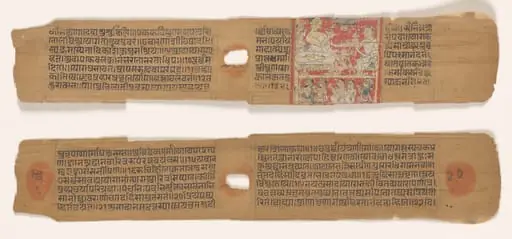 Folio 22 from a Yoga-shastra of Hemachandra: Jain Monk with disciple and two laymen, two Nuns, and a laywoman (recto); Text (verso)
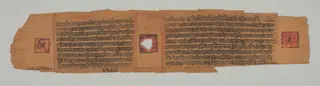 Text, folio 2 (verso) from a Parshvanatha Charitra (Life and Stories of Lord Parshva) of Bhavadeva-suri
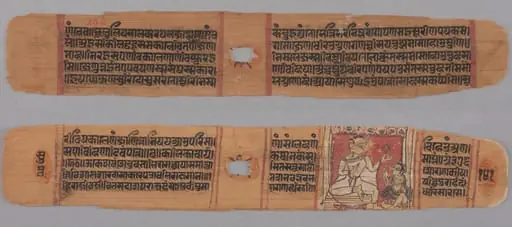 Folio 141, from a Kalpa-sutra and Story of Kalakacharya: Text (recto); Monk Holding a Flower Venerated by a Lay disciple (verso)
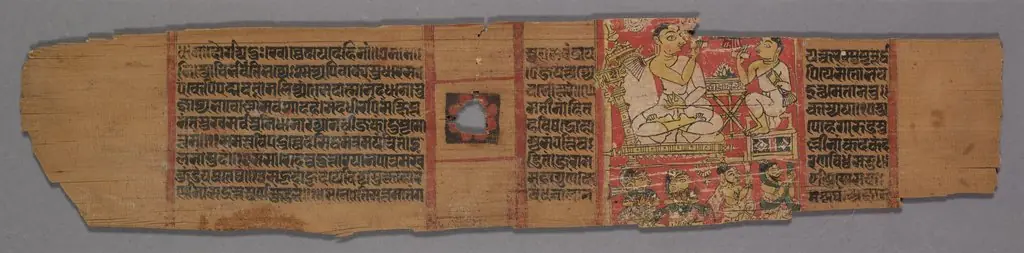 Text, folio 2 (verso) from a Parshvanatha Charitra (Life and Stories of Lord Parshva) of Bhavadeva-suri
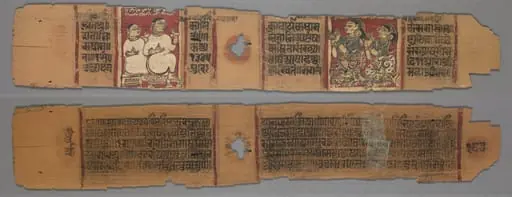 Folio 167, from a Kalpa-sutra and Story of Kalakacharya: two nuns teaching lay women (recto); genealogical text (verso)
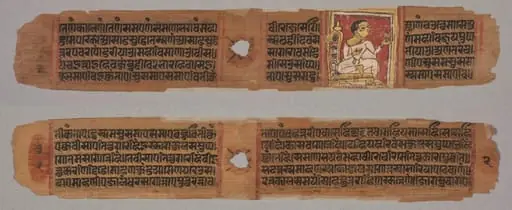 Folio 2, from a Kalpa-sutra and Story of Kalakacharya: Monk Holding a Flower (recto); text (verso)
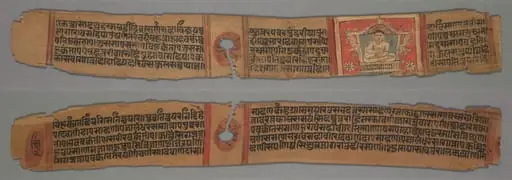 Folio 2, from a Kalpa-sutra and Story of Kalakacharya of Devachandra: Enthroned Monk Gautama (recto); Text (verso)
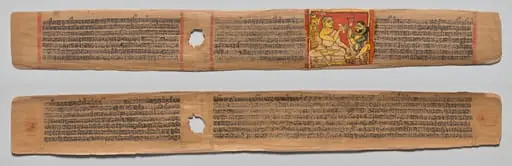 Folio 2, from a Great Poem about Twos (Dvyashraya Mahakavya) of Hemachandra with Commentary by Abhayatilaka
 Leaf from a Jain Manuscript: page from a Great Poem about Twos (Dvyashraya Mahakavya) of Hemachandra, with commentary by Abhayatilaka: Text (recto)
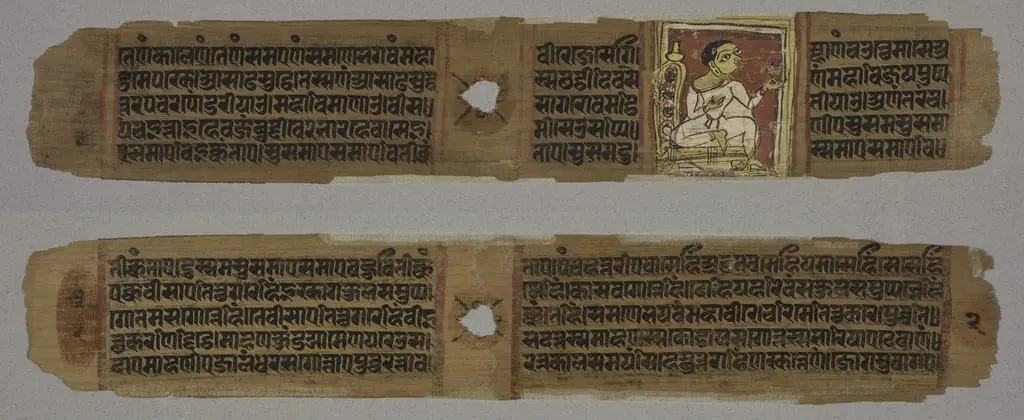 Folio 2, from a Kalpa-sutra and Story of Kalakacharya: Monk Holding a Flower (recto); text (verso)