Artwork
English Landscape Capriccio with a Palace
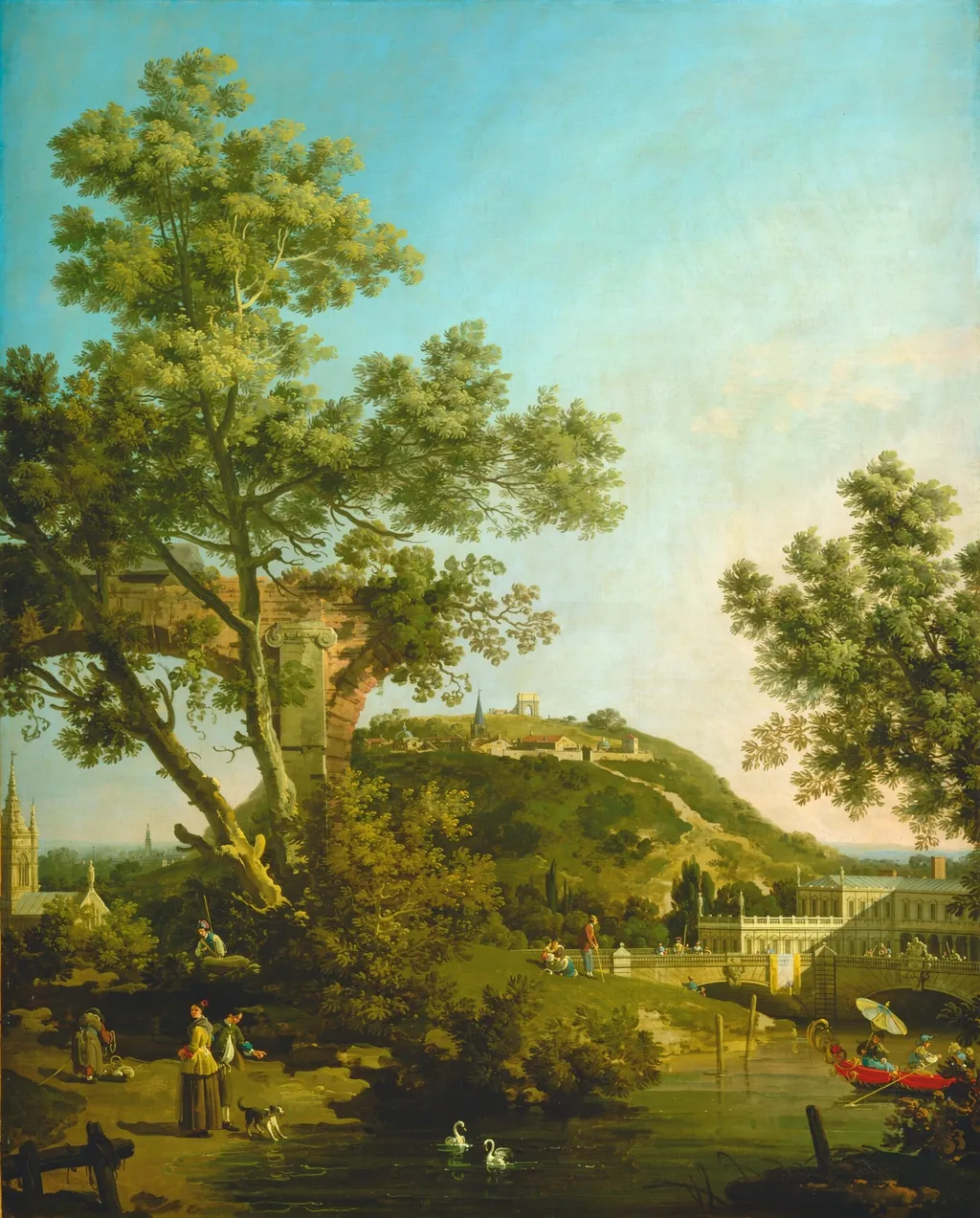
English Landscape Capriccio with a Palace is an oil painting by the Rococo painting artist Canaletto. It dates from 1754 and is held in the collection of the National Gallery of Art.
About this work
Subject & Meaning
English Landscape Capriccio with a Palace is a capriccio, a category of landscape painting that freely combines real and invented architecture within a single imaginary scene. The composition is dominated by a recollection of the chapel at Eton, a feature that points to the patron's personal associations rather than to a specific topographical view. By placing a recognizable English collegiate building at the center of an otherwise fabricated setting, Canaletto transformed a private reference into the focal point of the work, lending the imaginary landscape a distinctly English character.
The painting was made as part of a series of canvases intended for a London house, and the prominence of the Eton chapel motif suggests the patron had a direct connection to the school, likely through a son educated there. The capriccio thus functions both as an exercise in picturesque invention and as a commemorative image, embedding family biography into an idealized architectural fantasy.
Technique & Style
8 cm, the painting exemplifies the capriccio genre’s blend of real and invented architecture, balanced perspective, and atmospheric lighting.
English Landscape Capriccio with a Palace is an oil‑on‑canvas capriccio painted by Canaletto in 1754. The work employs the artist’s characteristic precise draftsmanship and luminous colour palette to render an imagined palace set within a pastoral landscape, combining accurate architectural detail with fantastical composition. Executed on a rectangular canvas measuring 134 cm × 108.8 cm, the painting exemplifies the capriccio genre’s blend of real and invented architecture, balanced perspective, and atmospheric lighting.
Its formal qualities include a harmonious arrangement of classical motifs, delicate tonal gradations, and a crisp linear clarity that reflects Canaletto’s Venetian training. The painting remains in the National Gallery of Art’s collection, where it is displayed as part of the institution’s European masterworks.
History & Provenance
The work was likely commissioned by Thomas King, who became the 5th Baron King in 1734, using funds from his marriage to Catherine Troye of Brabant. The painting is dated 1754 and was originally intended for a London setting rather than the family estate at Ockham Park, Surrey.
By descent, the painting remained at Ockham Park until it was sold at Sotheby’s, London, on 13 July 1937. It was purchased by M. Knoedler & Co., London, and then acquired by Philip Hill in 1938. After passing to his former wife, Mrs. Philip Hill (later Mrs. Warwick Bryant), it was sold to Rosenberg & Stiebel, New York, in 1959.
The following year, Paul Mellon purchased it and later donated it to the National Gallery of Art, Washington, D.C., in 1964.
The painting has been held by the National Gallery of Art in Washington, D.C., since 1964, when Paul Mellon of Upperville, Virginia, donated it to the institution following his purchase in December 1960 through Rosenberg & Stiebel of New York. Earlier, the canvas had passed through M. Knoedler & Co. in London after being sold at Sotheby's, London, on 13 July 1937 (lot 133) from the collection of Peter Malcolm, 4th Earl of Lovelace, at Ockham Park. It had descended at Ockham Park from its original commissioner, Thomas, 5th Baron King (1712–1779), and was acquired in 1938 by Philip Hill, remaining with Mrs. Philip Hill (later Mrs. Warwick Bryant) until 1959.
The corpus provenance entry does not record any exhibition history for the work.
Context
The 1754 capriccio by Canaletto, titled English Landscape Capriccio with a Palace, exemplifies the artist’s imaginative synthesis of real and invented architectural elements within the Venetian tradition of decorative landscape painting. Scholarship emphasizes its role within a series of capriccios likely commissioned by Thomas, 5th baron King, and later dispersed through the art market, a trajectory documented in provenance research and corrected by Russell. The work’s placement in the National Gallery of Art underscores its importance as a representative example of Canaletto’s later, more experimental phase, bridging his vedute and his decorative capriccios.
Its composition reflects the influence of earlier Venetian vedute while introducing fantastical ruins that highlight the artist’s engagement with antiquarian curiosity.
Legacy
The 1754 capriccio entered the collection of the National Gallery of Art after being acquired by Paul Mellon and gifted in 1964, a trajectory documented in the painting's provenance and later scholarly discussion. Research by Francis Russell clarified that the work was likely commissioned by Thomas, 5th Baron King, rather than earlier family members, refining the historical context of the piece and bolstering its standing in Canaletto studies. Its classification as a capriccio and presence in a major public collection have reinforced its reputation as an exemplar of the genre, influencing subsequent assessments of Canaletto's decorative projects.
Overview
This oil on canvas painting, created around 1754 by the Venetian artist Canaletto, exemplifies his capriccio style. Titled English Landscape Capriccio with a Palace, it combines a grand, imagined architectural structure with a serene English landscape. The work reflects the artist's period spent in England, where he produced numerous views that often merged actual locations with fanciful elements, characteristic of his Rococo approach.
Own this work as a print
Artist & collection
Artist
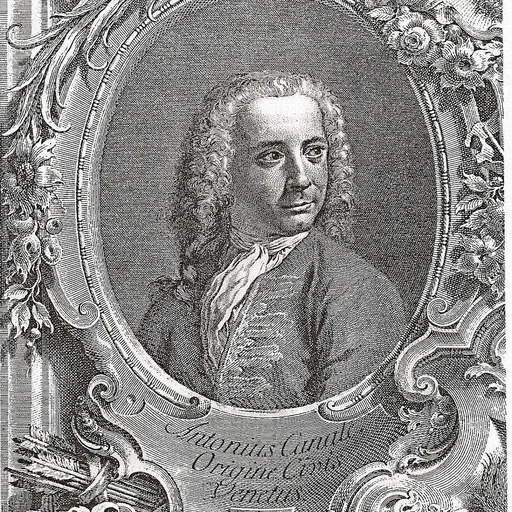
Giovanni Antonio Canal (18 October 1697 – 19 April 1768), commonly known as Canaletto (Italian: ), was an Italian painter from the Republic of Venice, considered an important member of the 18th-century Venetian school.

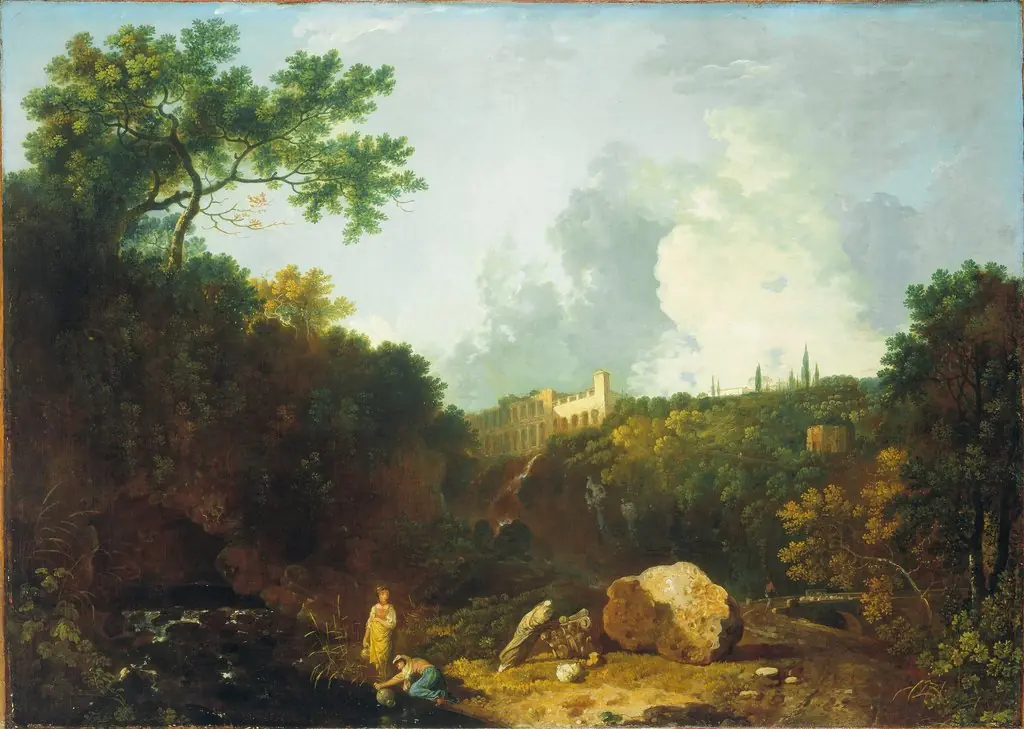 Distant View of Maecenas' Villa, Tivoli
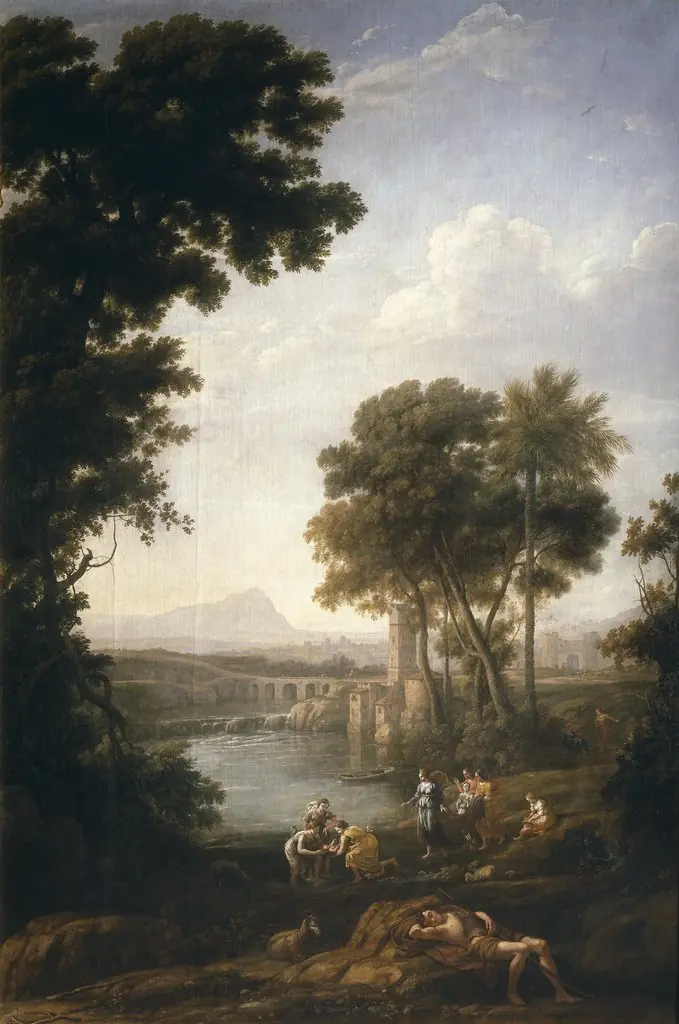 Landscape with the Finding of Moses
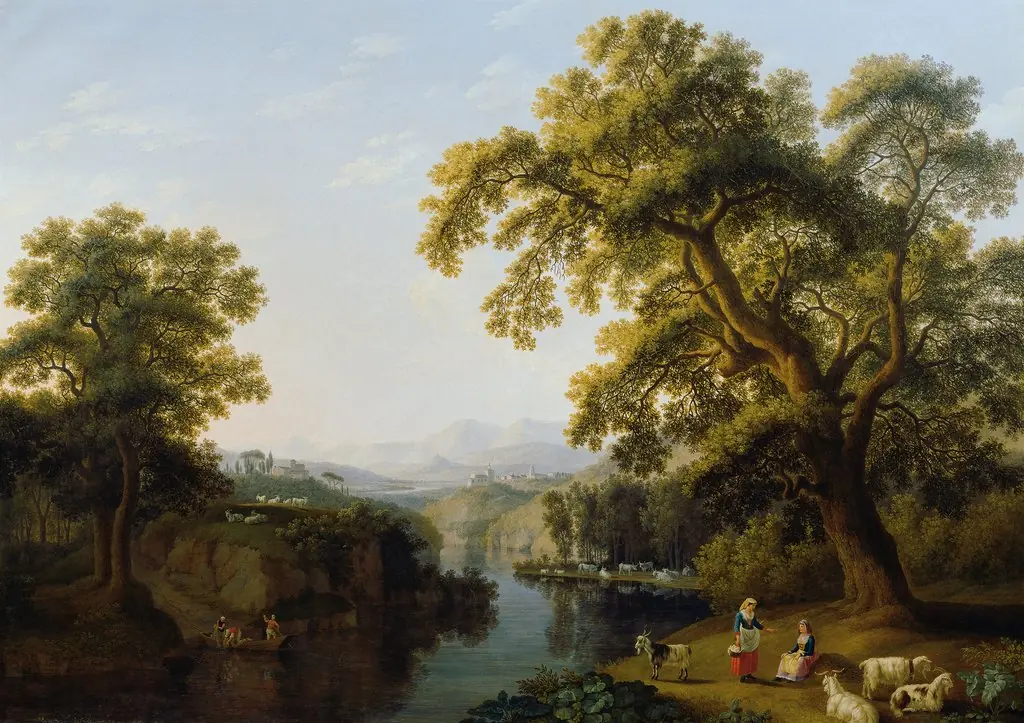 Flusstal von Isernia bei Neapel
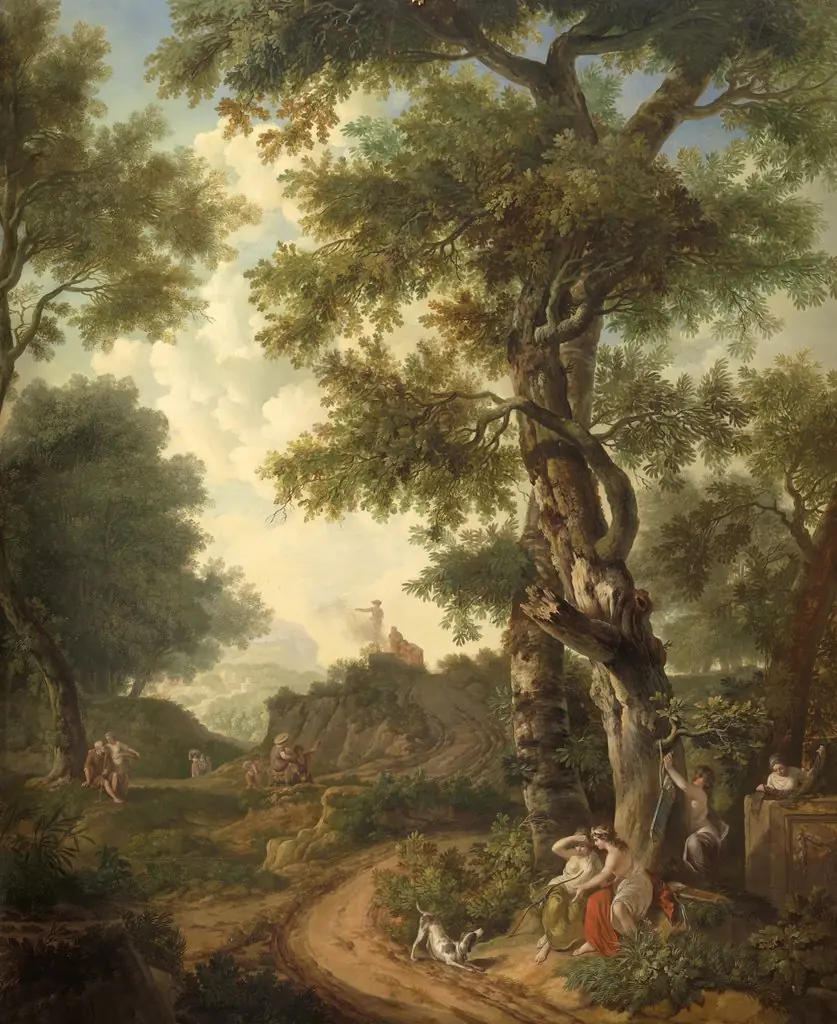 Arcadisch landschap met reizigers
 Landscape with Waterfall and Figures
 Italina landscape with round tower
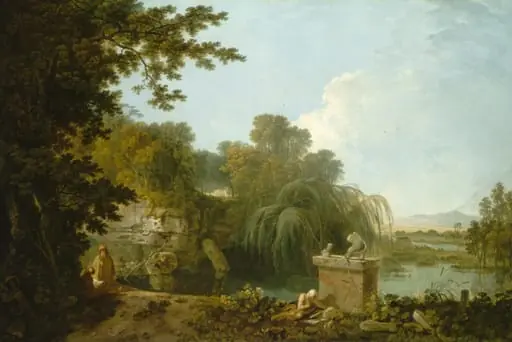 Solitude
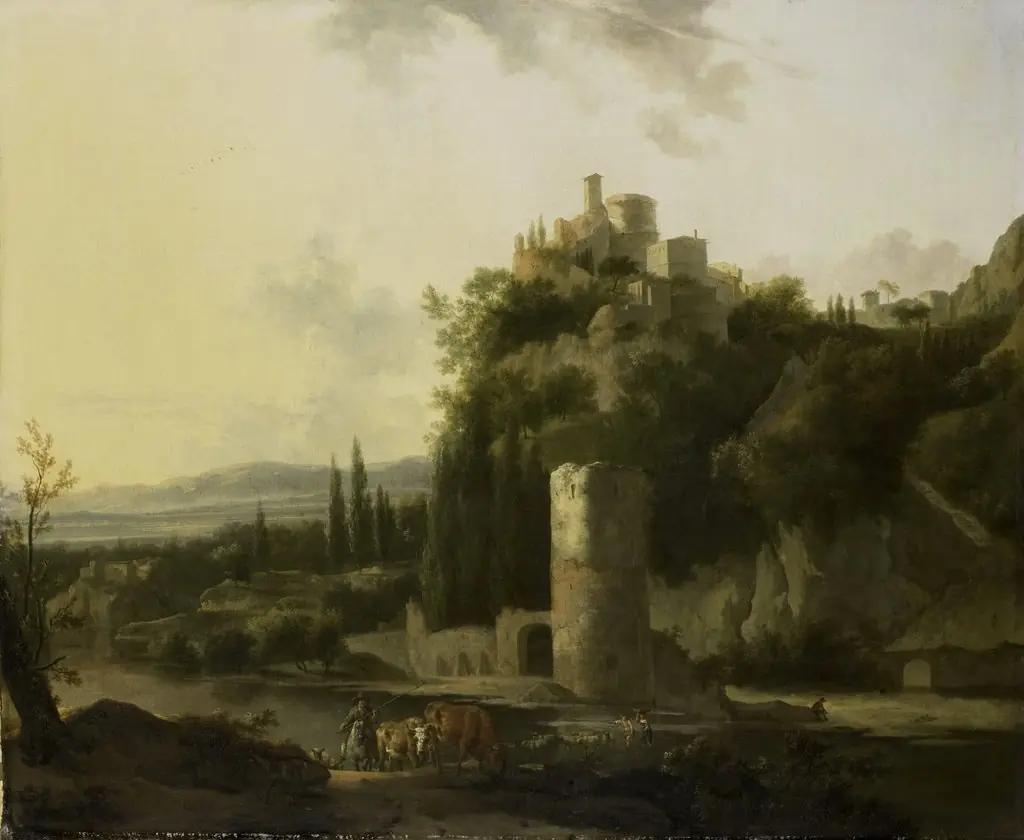 Italina landscape with round tower
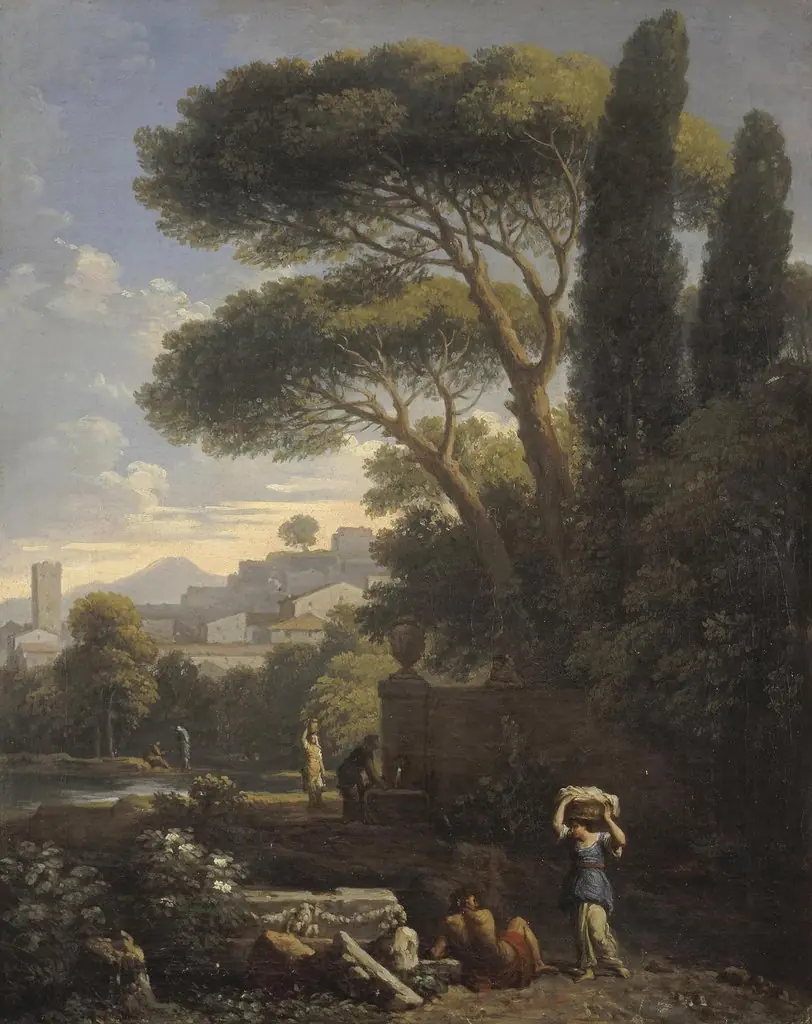 Landscape in Latium with Three Female Figures by a Fountain
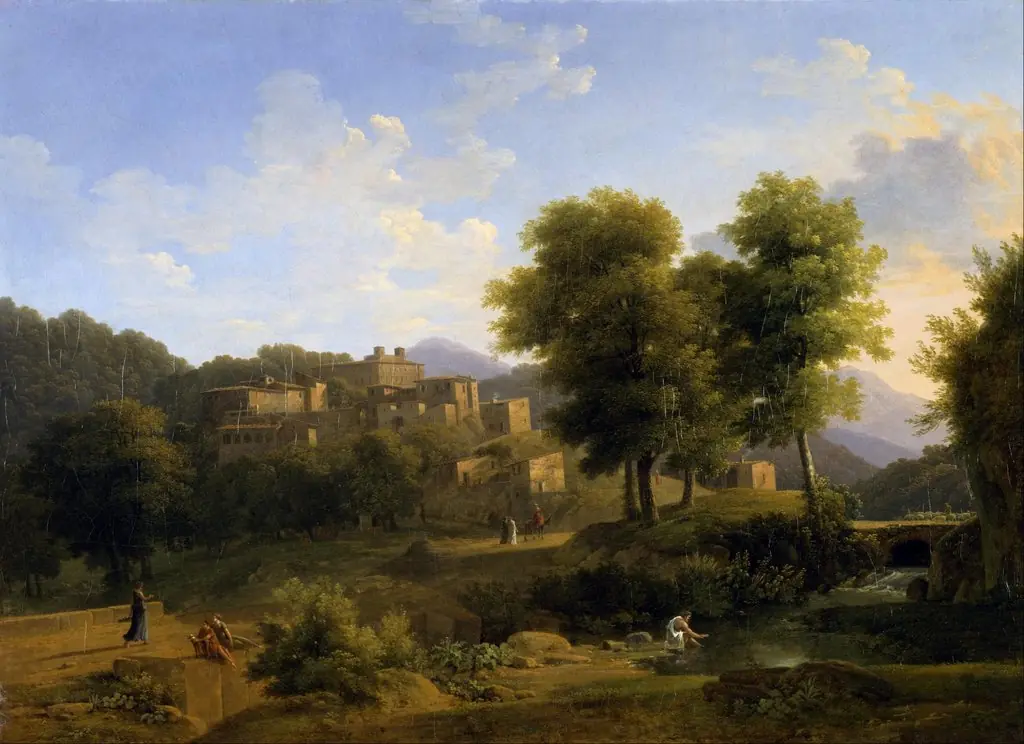 View of a Town in the Sabine Hills