Artwork
Angelica and Medoro
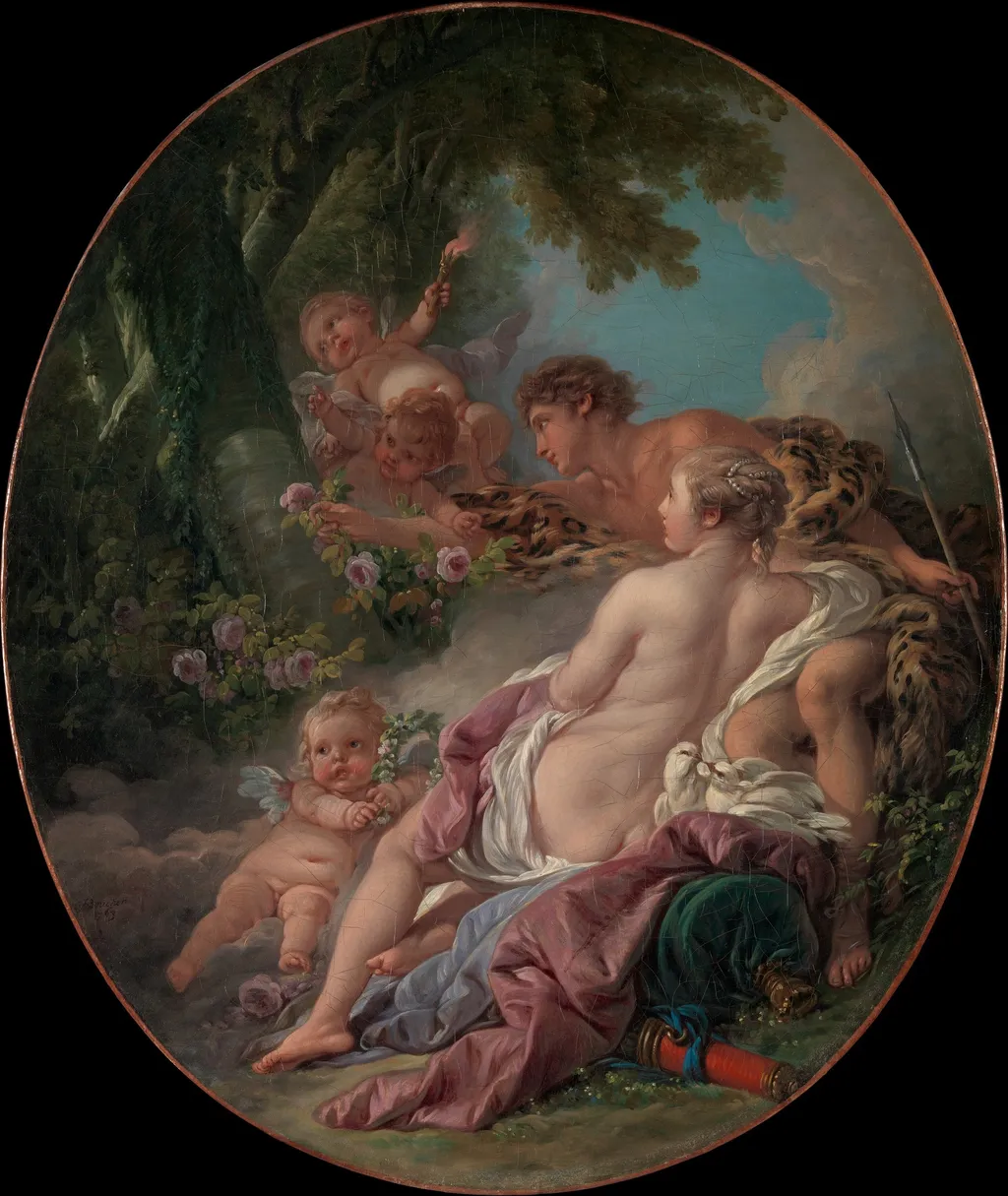
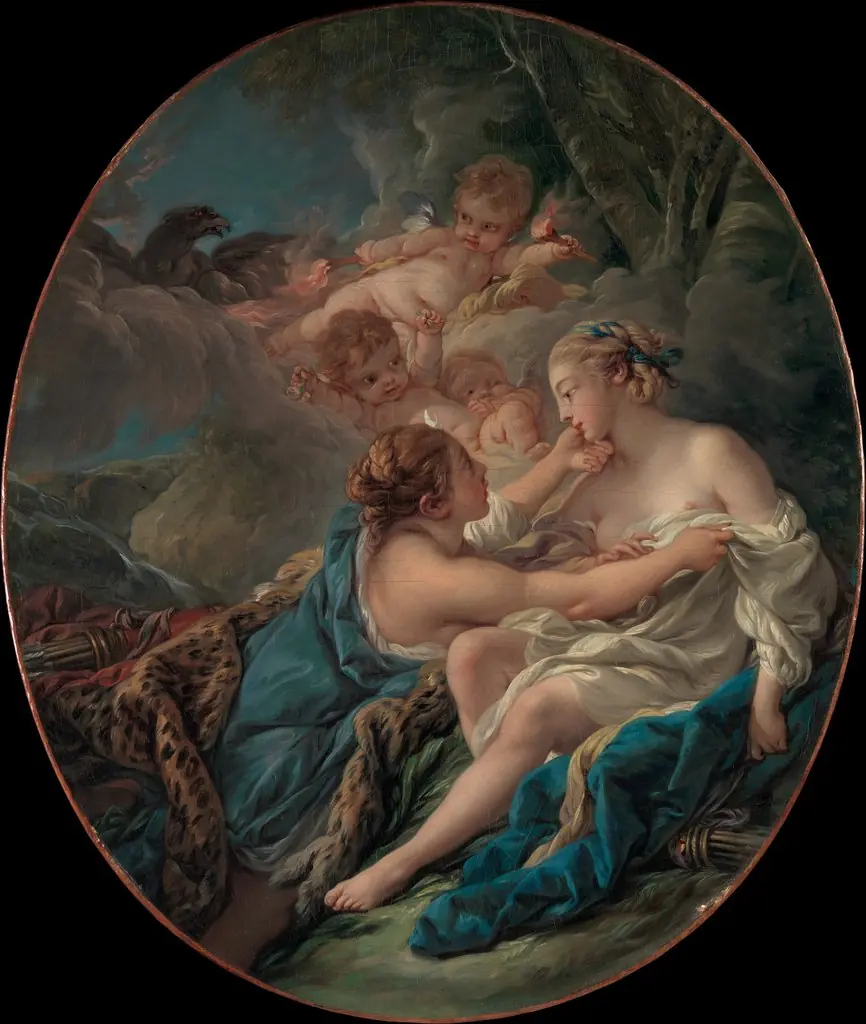
Angelica and Medoro is an oil painting by the Rococo painting artist François Boucher. It dates from 1763 and is held in the collection of the Metropolitan Museum of Art.
About this work
Subject & Meaning
Denis Diderot harshly criticized the painting, accusing Boucher of choosing the subject merely as a pretext for a female nude, shown from the back.
The painting illustrates an episode from Ludovico Ariosto's Orlando furioso, featuring Angelica, daughter of the ruler of Cathay (China), and Medoro, a Moorish soldier wounded while recovering the body of his king Dardinello. The princess, fleeing numerous suitors including the paladin Orlando, falls in love with the young soldier and is loved in return; before parting, the two carve their names on trees to seal their love. Boucher sets the lovers in a natural landscape surrounded by putti.
Rather than depicting Medoro carving names into bark, as in other treatments of the theme such as Toussaint Dubreuil's, Boucher shows him gathering a garland of roses, a gesture that in the period alluded to defloration, here Angelica's. The work was likely inspired by the opera Rolando, with a libretto by Philippe Quinault and music by Jean-Baptiste Lully. Denis Diderot harshly criticized the painting, accusing Boucher of choosing the subject merely as a pretext for a female nude, shown from the back.
Technique & Style
Created in 1763, Angelica and Medoro is an oil painting executed by François Boucher on a canvas support. The work measures 66.7 cm in height and 56.2 cm in width. Stylistically, the piece exemplifies Boucher's Rococo approach, depicting the lovers within a natural landscape populated by putti.
The composition features a nude female figure viewed from the back, a choice that contemporary critic Denis Diderot later condemned as a mere pretext for displaying nudity. In the scene, the figure of Medoro is shown gathering a garland of roses rather than carving names into tree bark, a specific iconographic variation that alludes to deflowering. The painting was exhibited at the Paris Salon in 1765 alongside its pendant, Jupiter and Callisto, and has remained in the collection of the Metropolitan Museum of Art since 1982.
History & Provenance
François Boucher painted Angelica and Medoro in 1763, with the work, together with its pendant Jupiter and Callisto, exhibited at the Salon de Paris in 1765. When the two paintings were sold in 1789, this canvas was cited under the title Bacchus and Ariadne, and when the oval painting was sold again in 1851 it was referred to as Venus and Adonis. The work subsequently passed through a succession of private owners before entering the Metropolitan Museum of Art in 1982 as part of the Jack and Belle Linsky Collection.
The documented ownership chain recorded for the painting includes Pierre Jacques Onésyme Bergeret de Grancourt, Pierre-Claude Prousteau de Montlouis, Richard Seymour-Conway (4th Marquess of Hertford), Sir Richard Wallace (1st Baronet), Julie Amelie Charlotte Castelnau, Sir John Edward Arthur Murray Scott (1st Baronet of Connaught Place), and Victoria Sackville-West.
Angelica and Medoro is held in the Metropolitan Museum of Art, New York, as part of the Jack and Belle Linsky Collection; the work entered the museum's holdings in 1982 through the Linsky bequest. The painting was first exhibited at the Salon in Paris in 1765 alongside Boucher's pendant Jupiter and Callisto. Early titles diverged from the modern one: in 1789 it was recorded as Bacchus and Ariadne, and in 1851 as Venus and Adonis during separate sales before reaching its current attribution.
Context
Exhibited at the Paris Salon of 1765 alongside its pendant, Jupiter and Callisto, François Boucher's Angelica and Medoro (1763) exemplifies the Rococo fascination with literary sources from Ariosto's Orlando Furioso. The work's art-historical significance is marked by Denis Diderot's severe contemporary criticism; the philosopher condemned Boucher for utilizing the narrative merely as a pretext to depict a female nude, specifically from the rear. Scholarly analysis notes that Boucher likely drew inspiration from Lully and Quinault's opera Rolando, adapting the traditional motif of lovers carving names into trees into a scene where Medoro gathers roses, a gesture symbolizing defloration.
The painting's provenance includes misidentifications as Bacchus and Ariadne and Venus and Adonis during 18th and 19th-century sales before entering the Metropolitan Museum of Art in 1982 via the Jack and Belle Linsky Collection.
Legacy
Angelica and Medoro's later reputation centered on Boucher's Rococo eroticism and its critical reception. At the Salon of 1765, where it was shown alongside its pendant Jupiter and Callisto, the painting drew censure for its eroticized treatment of mythological subject matter; Denis Diderot condemned the work as a pretext for depicting a female nude, albeit from behind, underscoring contemporary debates over propriety in history painting. Over subsequent decades, misattributions and renamings, first as Bacchus and Ariadne in 1789 and later as Venus and Adonis in 1851, reflect shifting interpretive frameworks and the painting's ambiguous status between narrative clarity and decorative appeal.
By the twentieth century, the work's inclusion in the Jack and Belle Linsky Collection and its eventual bequest to The Metropolitan Museum of Art in 1982 secured its place in major public holdings, anchoring its legacy within canonical French eighteenth-century painting and facilitating sustained scholarly engagement with Boucher's engagement of Ariosto's Orlando furioso.
Overview
Painted in 1763, François Boucher's Angelica and Medoro depicts a scene from Ludovico Ariosto's epic poem Orlando Furioso, illustrating the moment the pagan princess Angelica and the Moorish knight Medoro fall in love. The composition centers on the couple reclining in a lush, pastoral landscape, characterized by the artist's signature Rococo elegance. Angelica, dressed in flowing pink and blue drapery, leans affectionately toward Medoro, who is shown carving their names into a tree trunk, a pivotal act in the narrative that seals their union.
The setting is populated with soft greenery, blooming flowers, and playful putti that enhance the idyllic atmosphere. Executed in oil on canvas, the work demonstrates Boucher's mastery of light and color, utilizing a delicate palette to render smooth skin tones and textured fabrics. This painting reflects the artist's mature style during the mid-18th century, where mythological and literary subjects were treated with a focus on sensuality and decorative charm rather than dramatic intensity.
It stands as a representative example of the French Rococo tradition, prioritizing aesthetic pleasure and romantic narrative over moral instruction.
Own this work as a print
Artist & collection
Artist
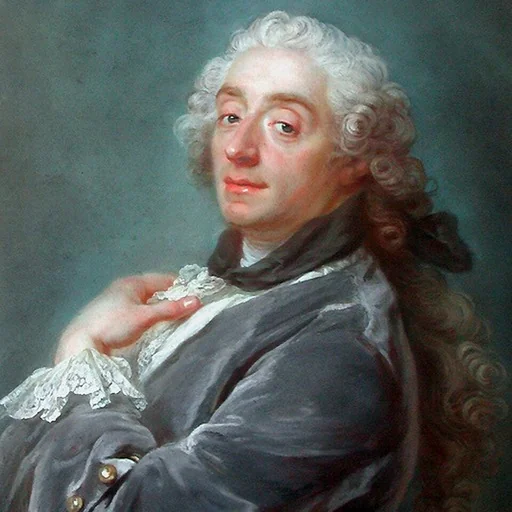
François Boucher was a French painter, draughtsman and etcher, who worked in the Rococo style.