Artwork
Corinne au Cap Misène
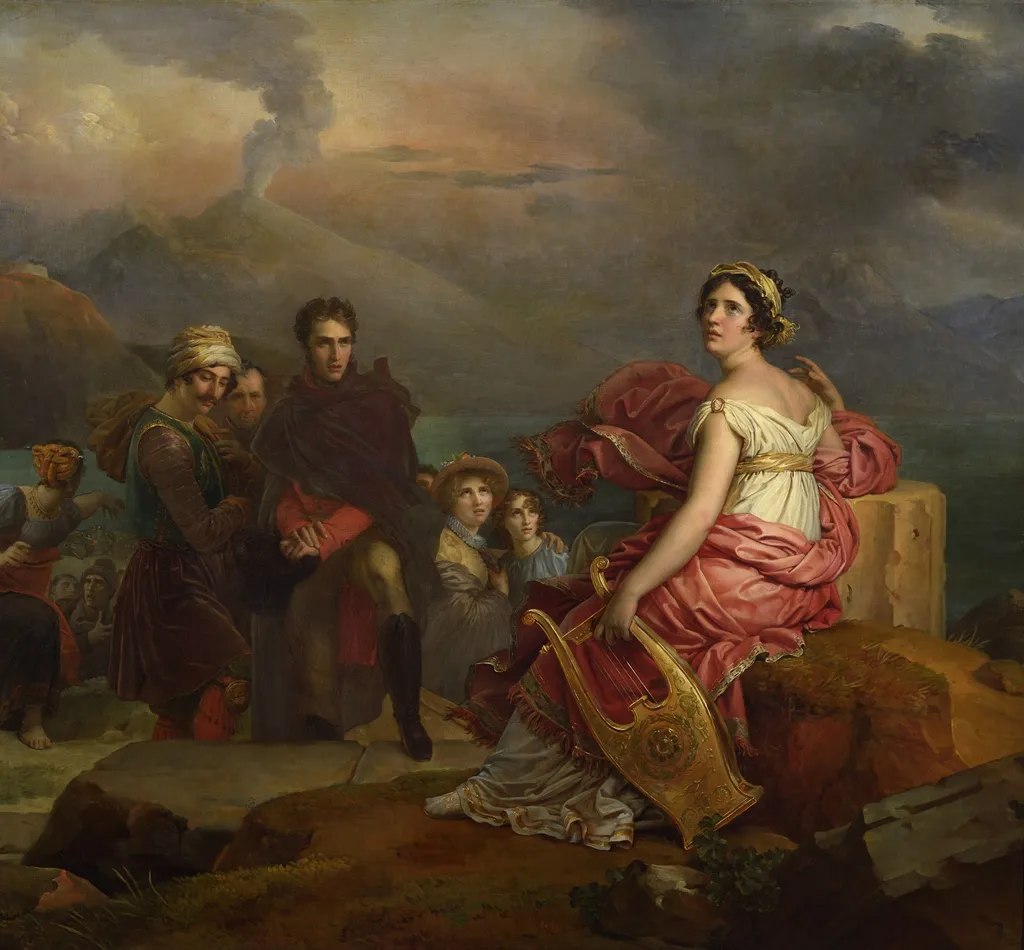
Corinne au Cap Misène is an oil painting by the Neoclassicist artist François Gérard. It dates from 1819 and is held in the collection of the Museum of Fine Arts of Lyon.
About this work
This painting shows a woman by the sea, set in a dramatic Italian landscape. François Gérard used oil paint to capture her in 1819. The scene comes from a famous novel about a poet and her love.
It’s based on Corinne, a novel by Madame de Staël. The title refers to a real place near Naples.
Look next at the artist, François Gérard.
Overview
The painting is held in the collection of the Musée des Beaux-Arts de Lyon, where it has been since the death of its original owner, Juliette Récamier.
Corinne au Cap Misène is an oil-on-canvas painting by the French Neoclassical artist François Gérard, created between 1819 and 1821. Measuring 266 by 277 centimetres, the work depicts the title character from Germaine de Staël's 1807 novel Corinne ou l'Italie, set at Cape Miseno on the Bay of Naples. The painting is held in the collection of the Musée des Beaux-Arts de Lyon, where it has been since the death of its original owner, Juliette Récamier. The work occupies a significant place in early nineteenth-century French art as a monument to literary celebrity, female genius, and the cross-pollination of salon culture and visual art. It was exhibited at the Salon of 1822, where it achieved considerable critical success.
Subject & Meaning
The painting illustrates a pivotal episode from Madame de Staël's novel, in which the protagonist Corinne, an improvisational poet of celebrated genius, stands at Cape Miseno with her lyre, having just recited a long poem for her beloved Oswald. Overcome with emotion, she turns her face toward a threatening sky, as if the intensity of her feeling had arrested time itself. Gérard depicts Corinne in a moment of suspended rapture, her gaze lifted to the clouds above Mount Vesuvius, whose volcanic presence looms in the background. The iconography weaves together multiple symbolic registers: the lyre signifies poetic inspiration and classical tradition; the cape location evokes the ancient world and the novel's Italian setting; the volcano suggests both creative passion and impending destruction. The prince who commissioned the work initially proposed that Corinne bear the embellished features of Madame de Staël herself, but Gérard resisted this direct identification, though a distant evocation of her features remains perceptible. The subject thus mediates between individual portraiture and idealised literary illustration, between personal tribute and universal allegory of the woman artist.
Technique & Style
Executed in oil on canvas, the large-format painting exemplifies Gérard's refined Neoclassical technique, learned during his training with Jacques-Louis David. The handling is characterised by clarity of composition, smooth finish, and controlled emotional expression rather than painterly bravura. Adolphe Thiers, in his contemporary review, praised the work's reason, truth, and perfect purity, noting the absence of disorder or mysticism. Stendhal similarly commended the picturesque effect and the lively, animated expression of Corinne. Gérard's approach to the figure achieves a balance between idealisation and psychological presence: Corinne appears noble, touching, passionate, yet tender despite her genius, suffused with the deep melancholy that pervades the novel. The sky and landscape are handled with atmospheric subtlety, the threatening clouds creating a dramatic foil to the figure's rapturous stillness. The frozen moment described by later critics, as if emotion itself had halted time, suggests Gérard's skill in narrative suspension, a quality that distinguishes his history painting from more didactic Neoclassical contemporaries.
History & Provenance
The painting emerged from a complex web of personal and literary relationships. In the summer of 1807, Prince Auguste of Prussia, then a prisoner of war in France, met Juliette Récamier at Madame de Staël's château at Coppet near Geneva; their passionate friendship would endure through correspondence and artistic exchange. Following Madame de Staël's death in 1817, the prince and Récamier sought to commemorate their mutual friend through a painting based on her most celebrated novel. The prince first approached Jacques-Louis David in Brussels exile, but his fee of 40,000 francs proved prohibitive. Gérard received the commission in April 1819, with the prince's letter explicitly proposing either Corinne's triumph at the Capitol or her scene at Cape Miseno, and suggesting, without pressing, the use of Madame de Staël's features. The original version was presented to Juliette Récamier by the prince in 1821 and installed in her apartments at the Abbaye-aux-Bois in Paris. A second version was exhibited at the Salon of 1822 to widespread acclaim. Upon Récamier's death, she bequeathed the original to the museum of Lyon, her native city, where it entered the collection of what is now the Musée des Beaux-Arts. The work was featured in the 2009 exhibition Juliette Récamier, muse et mécène.
Context
The painting sits at the intersection of multiple cultural currents in Restoration France. Gérard, a prominent portraitist and history painter who had survived the political shifts from Empire to Bourbon Restoration, was uniquely positioned to execute a work that honoured both a recently deceased literary lioness and the social network that sustained her memory. The commission reveals the continued vitality of salon culture, in which women like Récamier and de Staël exercised cultural authority through conversation, patronage, and the orchestration of artistic production. The choice of Corinne as subject reflected the novel's immense popularity and its role in shaping European perceptions of Italian culture, female genius, and the possibilities of passionate expression. Critical reception was notably warm: Thiers saw in the painting a national advance in art that honoured artist, country, and century alike, while Stendhal noted the unanimous praise for its composition and emotional effect. The work also participates in a broader visual culture of Corinne illustration, following earlier representations such as Élisabeth Vigée Le Brun's portrait of Madame de Staël in the character.
Legacy
The painting's afterlife is inseparable from its role as a physical witness to the celebrated receptions at Juliette Récamier's salon. François-René de Chateaubriand recorded its presence in his Mémoires d'outre-tombe, describing how sunlight through blue curtains would suddenly illuminate the canvas, making it seem that Corinne, or Madame de Staël herself, might open her eloquent lips and join the conversation. This testimony transforms the work from mere decoration to an active participant in the mythologised space of early nineteenth-century intellectual life. The painting's bequest to Lyon secured its preservation as public patrimony rather than private treasure, though it has not achieved the widespread reproduction and fame nineteenth-century fame might suggest. Its appearance in the 2009 exhibition Juliette Récamier, muse et mécène indicates continued scholarly interest in the networks of female patronage and literary celebrity that produced it. Several reduced replicas focusing on the principal figure were commissioned from Gérard, attesting to the composition's contemporary appeal and its function as a portable icon of feminine creative genius.

Own this work as a print
Artist & collection
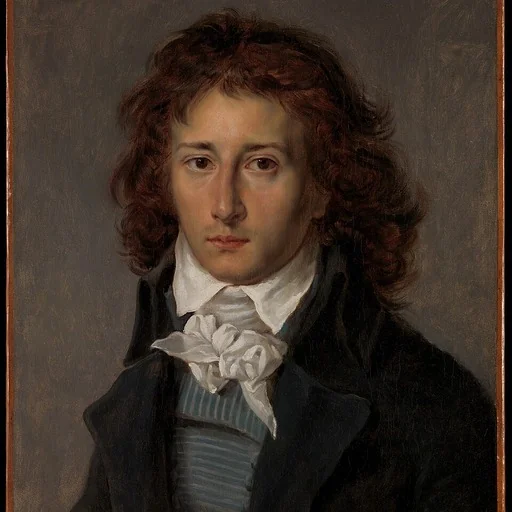
Artist
François Pascal Simon Gérard (French pronunciation: 4 May 1770 – 11 January 1837), titled as Baron Gérard in 1809, was a French painter.

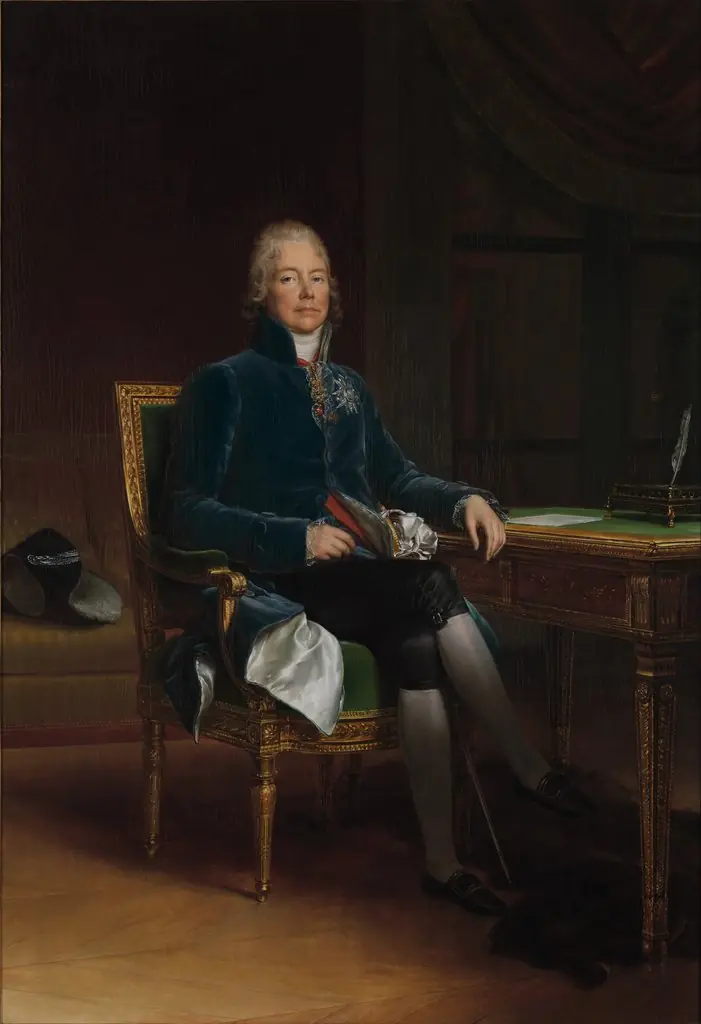 Charles Maurice de Talleyrand Périgord (1754–1838), Prince de Bénévent
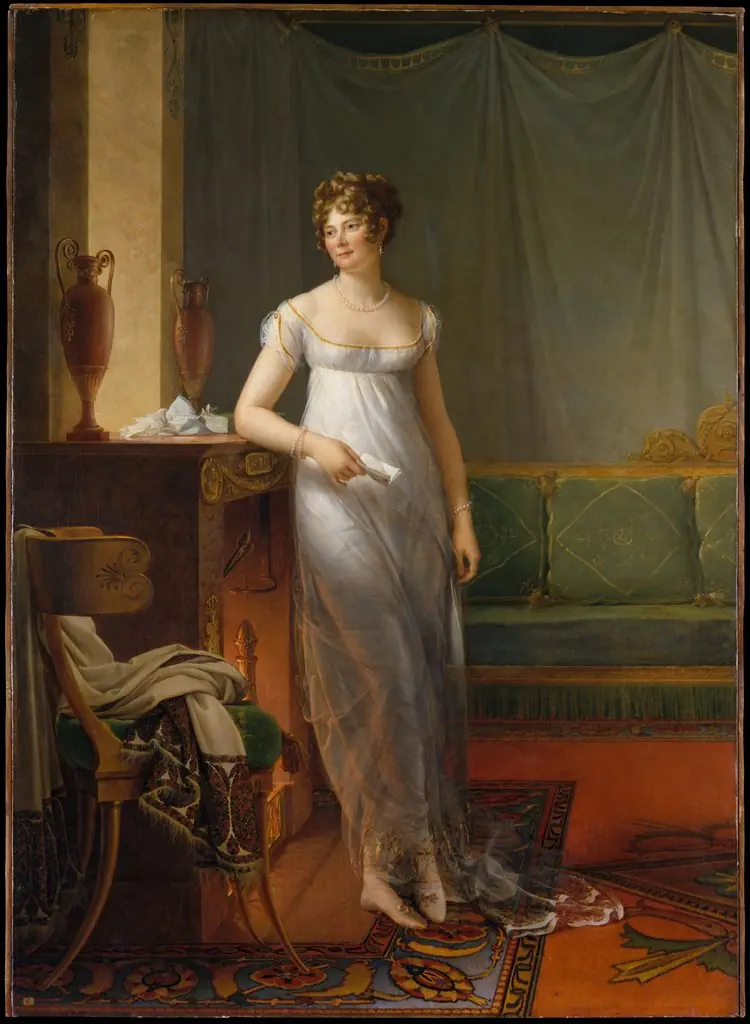 Madame Charles Maurice de Talleyrand Périgord (1761–1835)
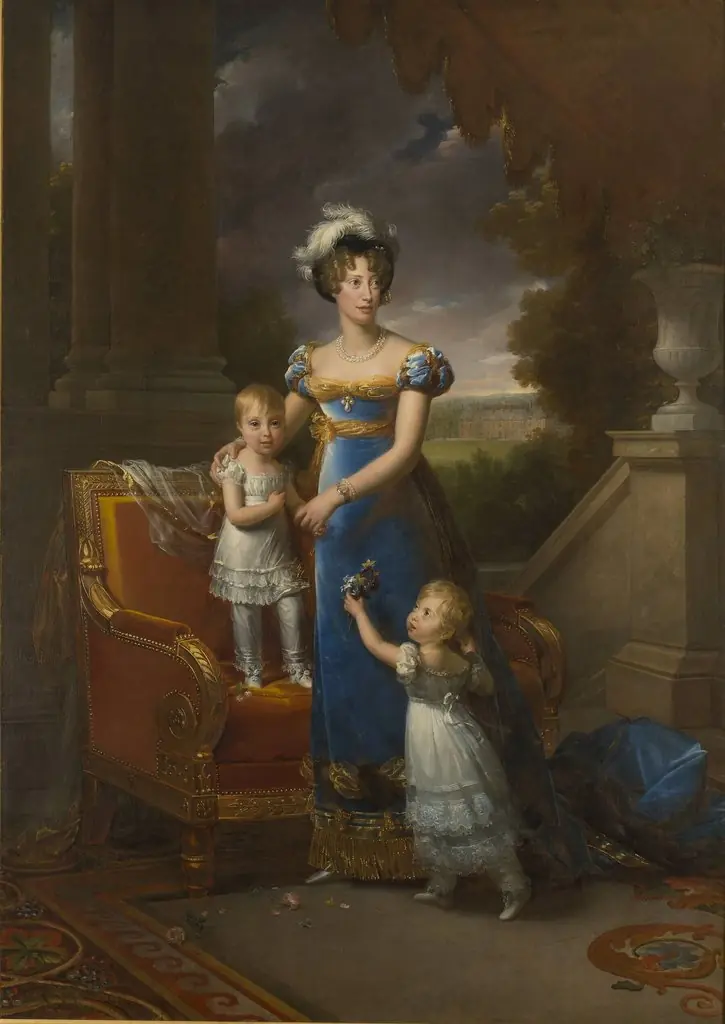 The Duchess of Berry and her Children
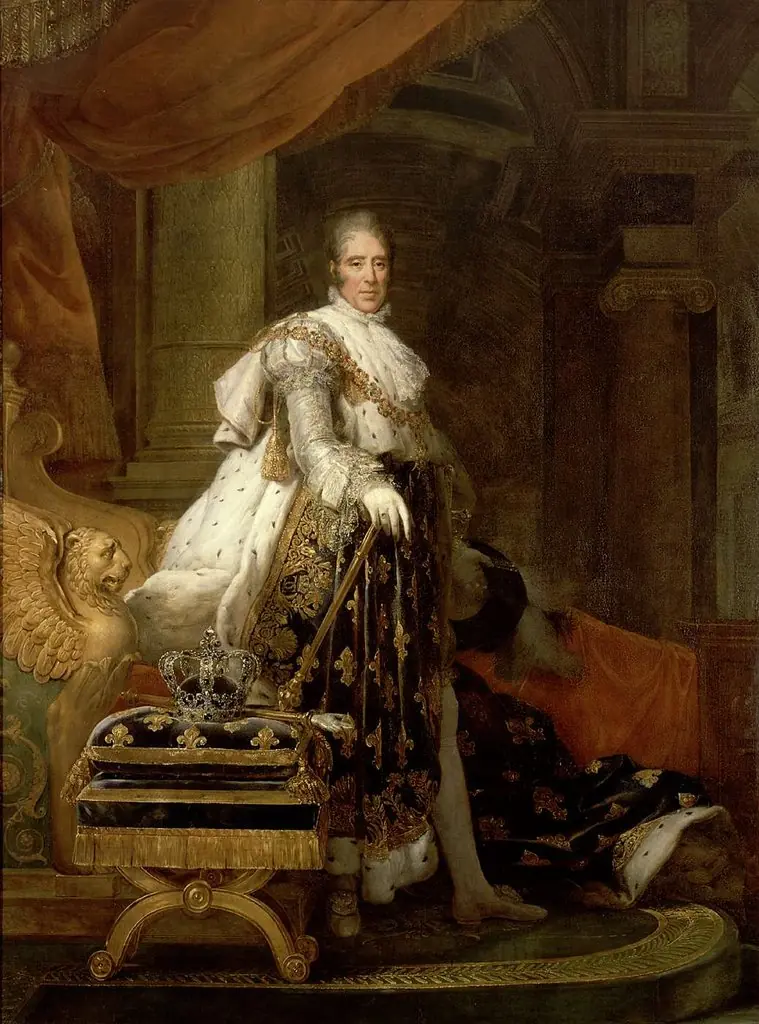 Charles X of France
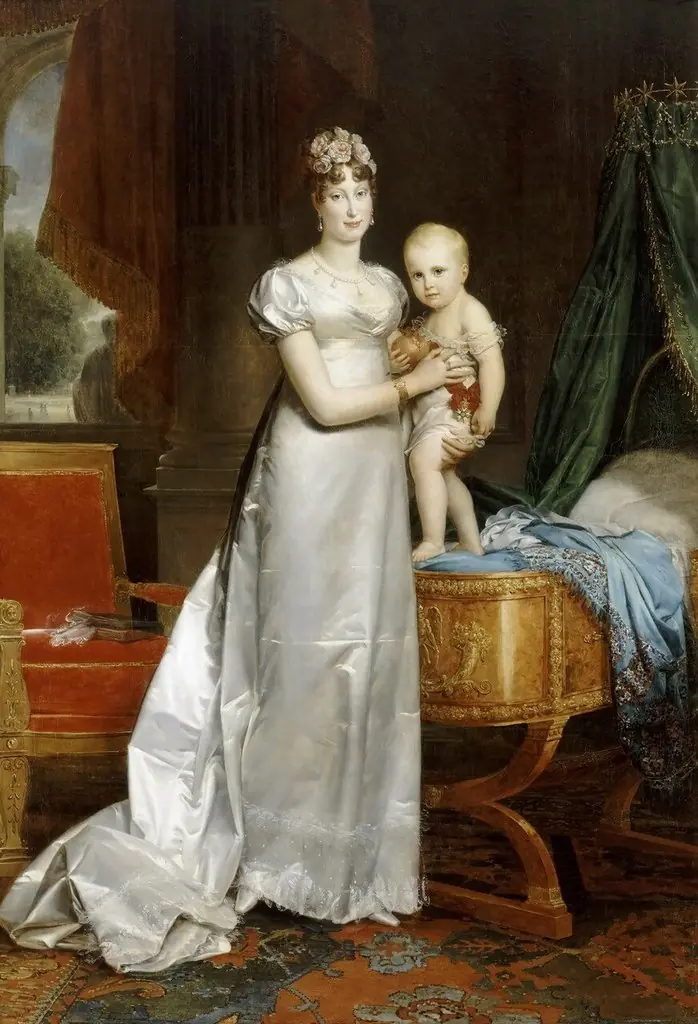 Marie-Louise, Empress of the French, and the Roi de Rome
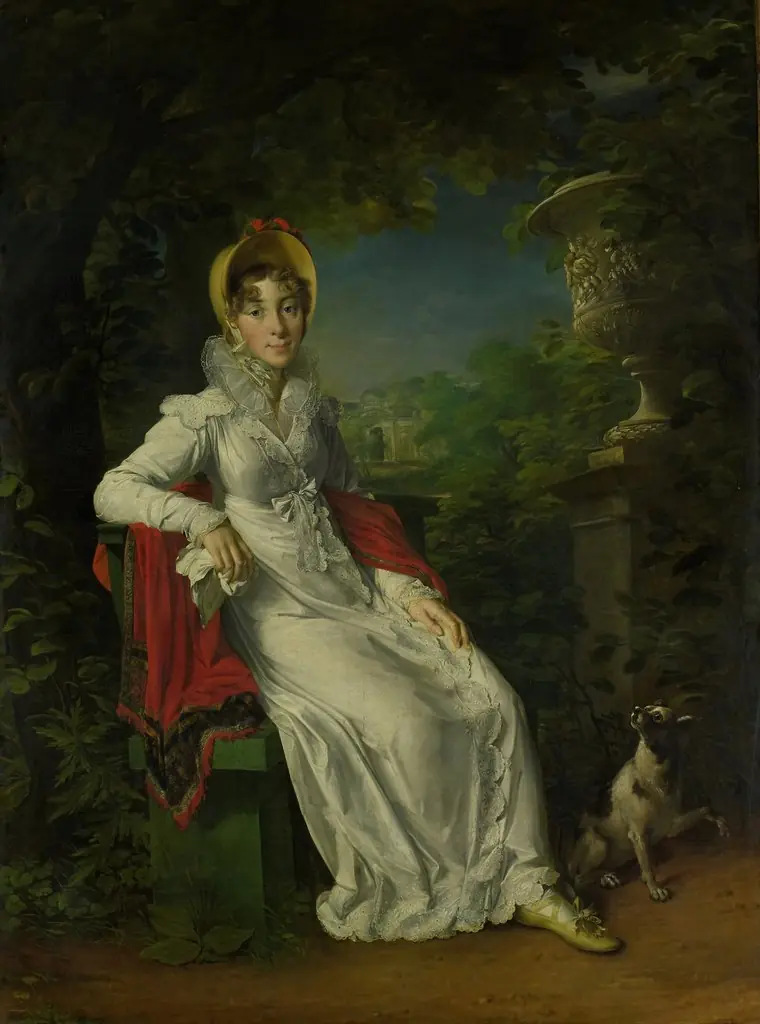 Portrait of Marie Caroline Ferdinande Louise de Naples, Wife of Charles Ferdinand, Duke de Berry, in the Park de Bagatelle in the Bois de Boulogne, Paris
 Marie-Annunciade-Caroline Bonaparte, Queen of Naples and her children
 Julie Bonaparte as Queen of Spain with her Daughters, Zénaïde and Charlotte
- Queen Zenobia Addressing Her Soldiers
 Die Schlacht bei Lipan 1434
 Boccaccio reading from the Decameron to Queen Johanna of Naples
 Prins Buris, Liden Kirsten, Skøn Hulfrid og Stolt Ingefrid fanget af Ulf Svartskæg
 Bravo torero!
 The Sorrow of Telemachus
 Queen Philippa Interceding for the Lives of the Burghers of Calais
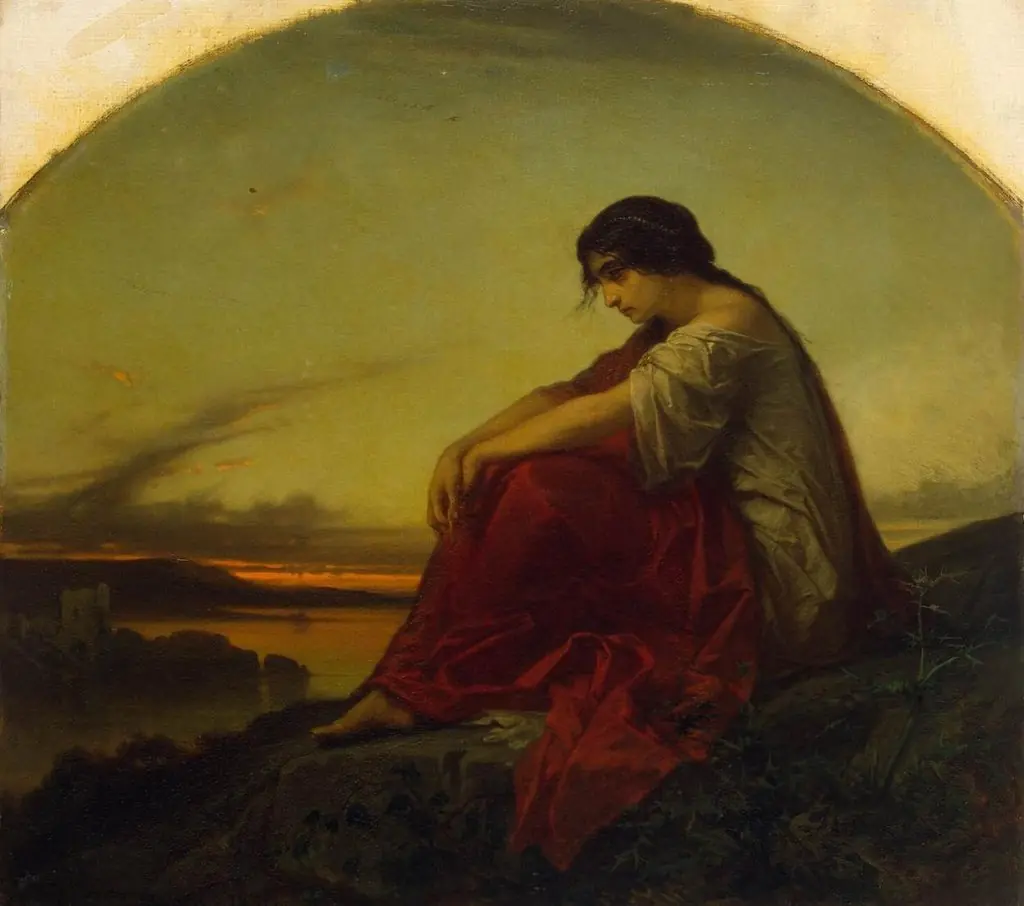 Disillusion
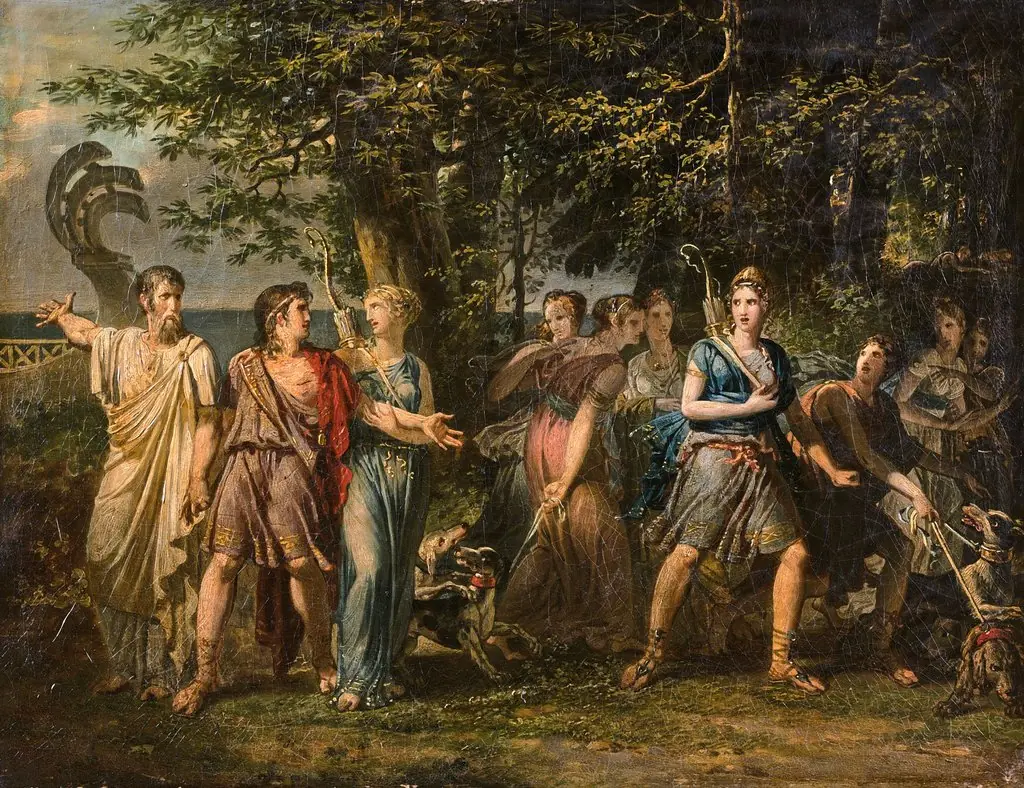 Telemachus, Urged by Mentor, Leaving the Island of Calypso
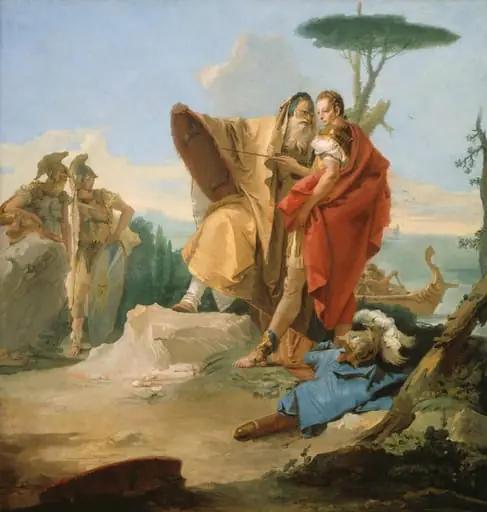 Rinaldo and the Magus of Ascalon
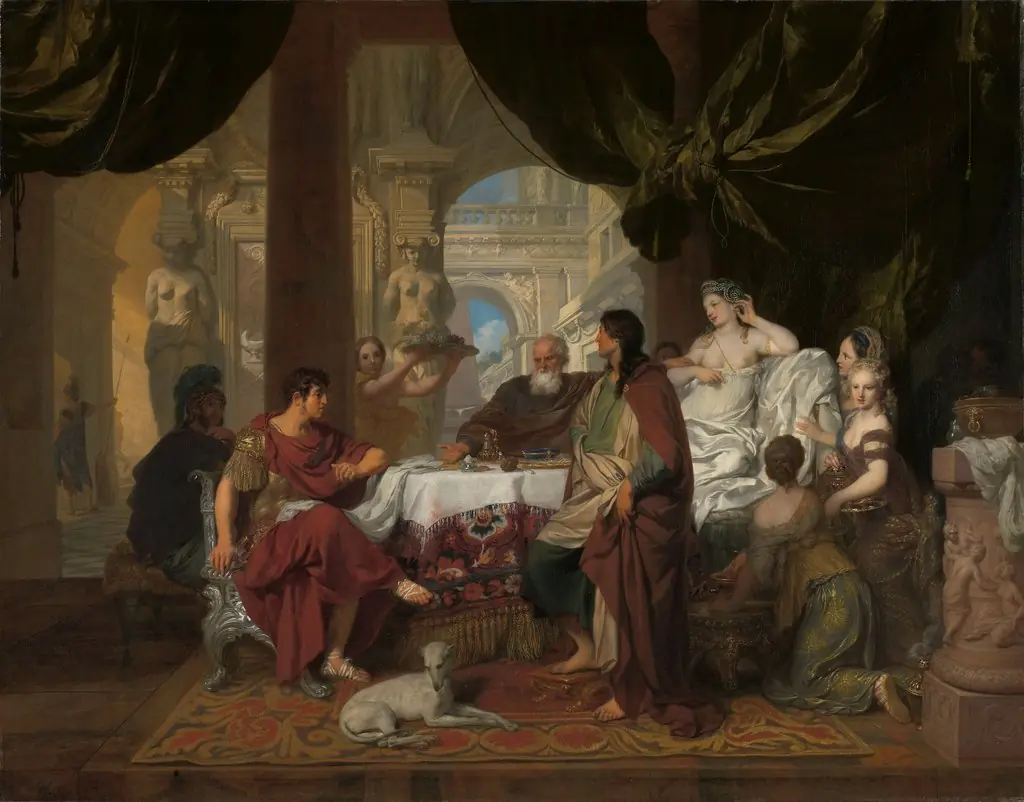 The Banquet of Cleopatra
 Berenice Reproaching Ptolemy