Artwork
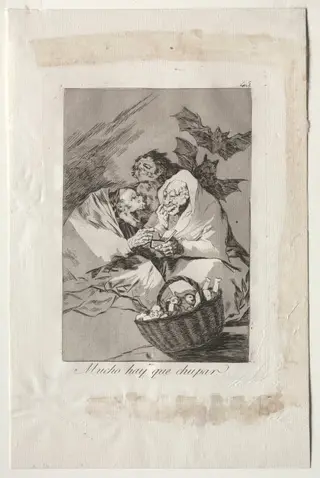
What a Golden Beak!, Plate 53
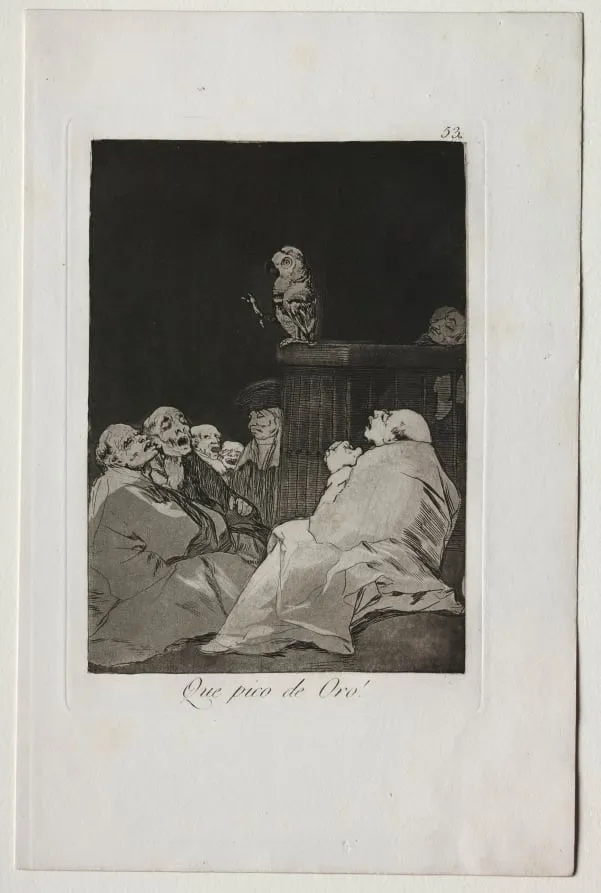
What a Golden Beak!, Plate 53 is a print by the Romanticist artist Francisco de Goya. It dates from 1799 and is held in the collection of the Cleveland Museum of Art. What a Golden Beak!
- Accession no.
- 1922.648
- Credit line
- Dudley P. Allen Fund
About this work
Overview
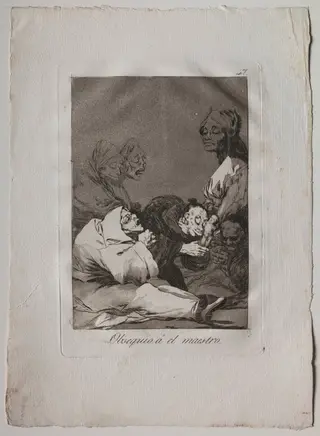
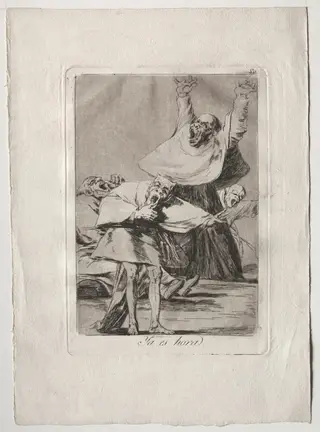
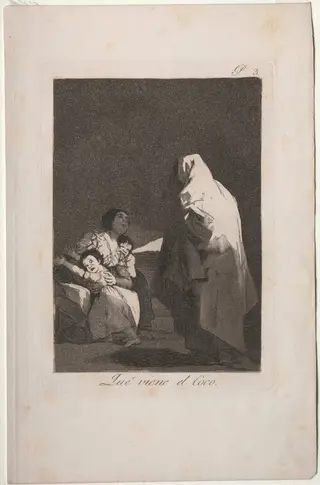
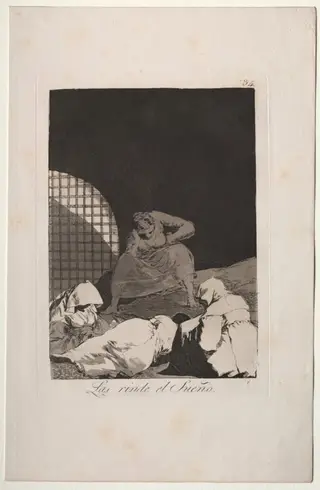
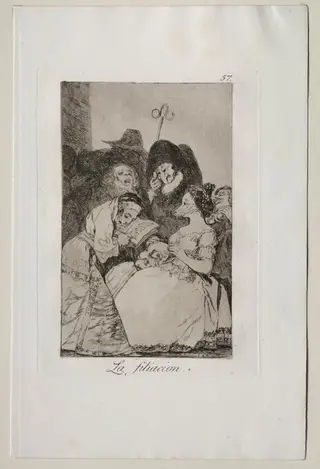
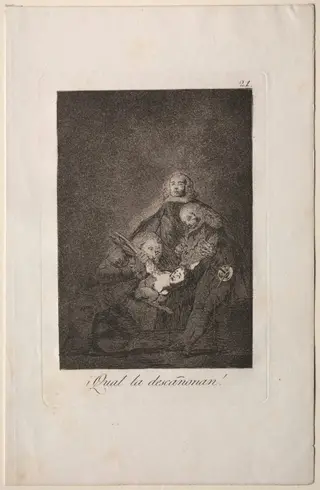
What a Golden Beak!, Plate 53 is one of eighty prints from Francisco de Goya’s series Los Caprichos, produced around 1799. Executed in etching and aquatint, it presents a somber interior scene marked by stark contrasts of light and shadow. The work is part of the collection at The Cleveland Museum of Art, where it is studied for its psychological depth and social commentary.
Subject & Meaning
The creature’s presence introduces an eerie, almost satirical layer, questioning the efficacy of those who claim to cure.
The scene depicts a dimly lit room where figures gather around a sick individual, their expressions tense and silent. An owl perches on the bedpost, its gaze fixed downward. The title, a Spanish idiom, may mock the pretensions of healers or suggest the owl as a symbol of false wisdom.
The creature’s presence introduces an eerie, almost satirical layer, questioning the efficacy of those who claim to cure.
Technique & Style
Goya employed etching and aquatint to achieve rich tonal gradations and deep blacks, enhancing the atmosphere of unease. Dramatic chiaroscuro isolates faces and gestures, drawing attention to the emotional weight of the moment. The texture of the walls and fabrics is rendered with subtle ink washes, while the owl’s form is sharply defined against the gloom, reinforcing its symbolic role.
History & Provenance
Created during Goya’s period of introspection following illness and political disillusionment, the print was published in 1799 as part of Los Caprichos. The series was initially met with controversy for its critique of superstition and institutional failure. The Cleveland Museum of Art acquired the print in the 20th century, preserving it as a key example of Goya’s graphic work.
Context
Los Caprichos emerged amid Enlightenment-era skepticism and the decline of Spanish absolutism. Goya targeted ignorance, hypocrisy, and the clergy’s influence over daily life. This plate reflects broader anxieties about medicine, faith, and authority, where the owl, traditionally linked to wisdom, becomes an ironic witness to human folly.
Legacy
What a Golden Beak! exemplifies Goya’s shift from decorative art to incisive social critique. Its influence extends to later generations of printmakers and expressionist artists drawn to its psychological intensity. The print remains a touchstone for discussions on the intersection of art, medicine, and symbolism in late 18th-century Europe.
Artist & collection
Artist
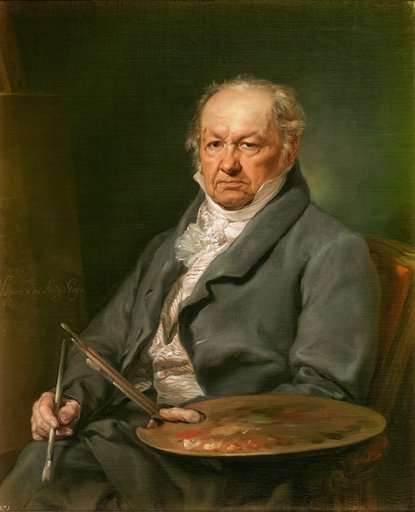
Francisco José de Goya y Lucientes was a Spanish romantic painter and printmaker.