Artwork
Asmodea
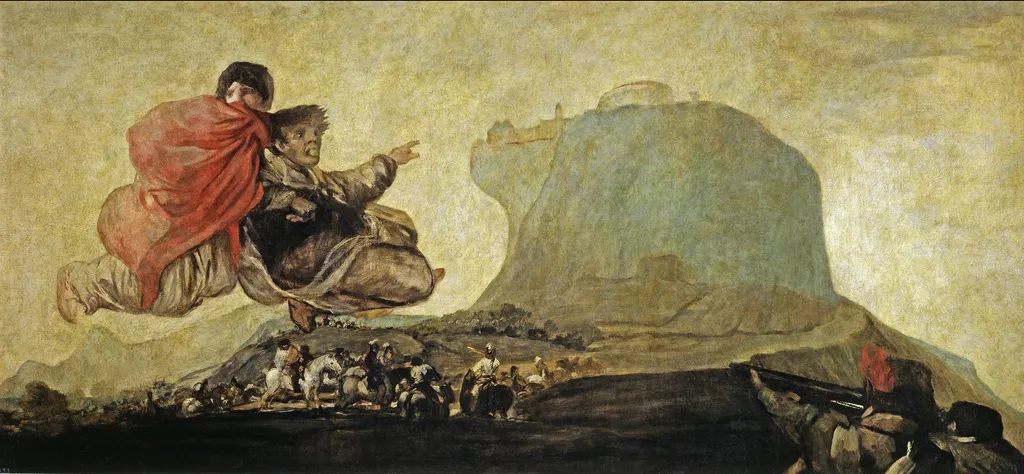
Asmodea is an oil painting by the Romanticist artist Francisco de Goya. It dates from 1819 and is held in the collection of the Museo del Prado.
About this work
Subject & Meaning
The juxtaposition of realistic warfare with fantastical aerial figures creates an enigmatic narrative reflecting political turmoil and human vice.
The work depicts two flying figures, one male and one female, hovering over a landscape dominated by a large mountain topped with buildings resembling a temple or bullring. Below, French soldiers aim at a group of travelers, possibly refugees fleeing the Peninsular War. The title Asmodea, assigned by Antonio Brugada, likely references the demon king Asmodeus from the Book of Tobit, symbolizing destruction caused by lust or anger. However, alternative interpretations suggest the scene illustrates the Greek myth of Prometheus being carried by Athena to the Caucasus Mountains, or simply shows witches in flight akin to Goya's earlier Caprichos. Some scholars argue the dark-clad figure pointing at the mountain represents Asmodeus, while the red-robed companion may be a victim like Sara. The juxtaposition of realistic warfare with fantastical aerial figures creates an enigmatic narrative reflecting political turmoil and human vice.
Technique & Style
Originally executed as a fresco directly onto the plaster walls of the Quinta del Sordo's upper floor, the work was created using oil paint applied over an earlier version of the scene. The upper register features a very light application of pigment, contrasting with the lower section where the paint is applied more thickly with distinct touches of light. Goya employed a restricted chromatic palette typical of the Black Paintings, utilizing blacks, earth tones, ochres, and reds, accented by blue-grey hues to create atmospheric perspective in the distant landscape.
In 1874, the mural was transferred from the wall to canvas by restorer Salvador Martínez Cubells under the commission of Émile d'Erlanger. This process involved photographing the original in situ before the physical removal and mounting onto a new support. The composition utilizes an elliptical visual device to distort perspective, bringing the male figure's robe forward to appear closer to the viewer than his female companion.
History & Provenance
Francisco Goya painted Asmodea (also called Vision Fantastique) directly onto the walls of his Quinta del Sordo house between 1819 and 1823 as part of his Black Paintings series. The work was created on cloth hung on the upper floor wall to the right of the doorway, facing the wall where Las Parcas was painted. In 1873 the house was purchased by French banker Émile Baron d'Erlanger, who commissioned restorer Salvador Martínez Cubells to transfer the painting onto canvas in 1874; he intended to sell it at the 1878 Paris Universal Exposition but later donated it to the Museo del Prado in 1881. The painting depicts two airborne figures, one male in dark clothing pointing toward a mountain with a circular building, and one female in a white dress covered by a red-rose robe, above a landscape that includes a war scene with French soldiers aiming at refugees, possibly reflecting events from the Peninsular War. The title Asmodea was assigned later by Goya's friend Antonio Brugada and likely references the demon Asmodeus from the Book of Tobit, though some scholars link it to Prometheus or Greek myth. The work remains on permanent display at the Museo del Prado. Originally painted directly onto the walls of the Quinta del Sordo in Madrid between 1819 and 1823, the work was transferred from plaster to canvas in 1874 by Salvador Martínez Cubells. This restoration was commissioned by Émile Baron d'Erlanger, who had acquired the house in 1873 with the intention of selling the series at the 1878 Exposition Universelle in Paris. When the paintings failed to attract buyers, d'Erlanger donated them to the Museo del Prado in 1881, where the work remains on permanent display today. The painting is currently cataloged within the Prado's collection of Black Paintings, though no specific inventory number is provided in the available sources.
Context
Francisco Goya created Asmodea (also called Visión fantástica) as one of the 14 Black Paintings, a series of works executed directly onto the walls of his house, the Quinta del Sordo, between 1819 and 1823. The fresco shows two airborne figures above a landscape dominated by a large tabled mountain; the woman covers part of her face with a red‑rose robe while the man points toward a town on the mountain and gestures toward French soldiers in the foreground, a scene reminiscent of Goya’s earlier war imagery. The work was later transferred to canvas by Salvador Martínez Cubells in the 1870s and entered the Museo del Prado, where it remains on permanent display. Critics have linked the figures to the demon Asmodeus of the Book of Tobit, to Prometheus, or to the myth of the Cojuelo, while also noting the painting’s blend of fantastical flight, war‑scene realism, and elliptical composition that distorts perspective.
Legacy
Asmodea, also known as Fantastic Vision, is regarded as one of the most enigmatic works in Goya's Black Paintings series and within his broader oeuvre. The painting's title originated with Antonio Brugada's posthumous inventory of Goya's belongings, after which successive critics have linked its airborne figures to the demon Asmodeus from the Book of Tobit, the myth of Prometheus carried by Minerva, the Icarus legend, or simply to witches reminiscent of Goya's earlier Caprichos and Disparates. Valeriano Bozal has compared its iconography unfavorably to Rembrandt's treatment of the Tobias theme, questioning the traditional reading. The work was transferred from wall to canvas in 1874 by Salvador Martínez Cubells on commission from Baron Émile d'Erlanger, who donated it to the Museo del Prado in 1881, where it remains on permanent display alongside the rest of the Black Paintings.
Artist & collection
Artist
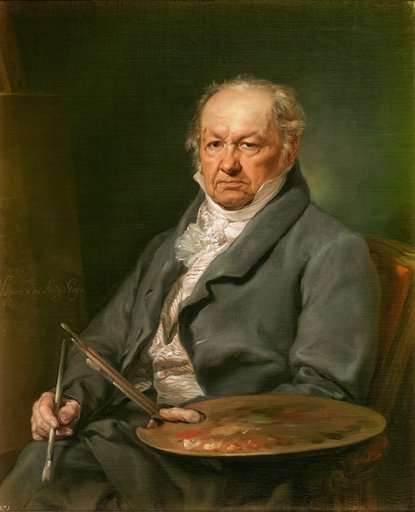
Francisco José de Goya y Lucientes was a Spanish romantic painter and printmaker.

- Pilgrimage to the Fountain of San Isidro
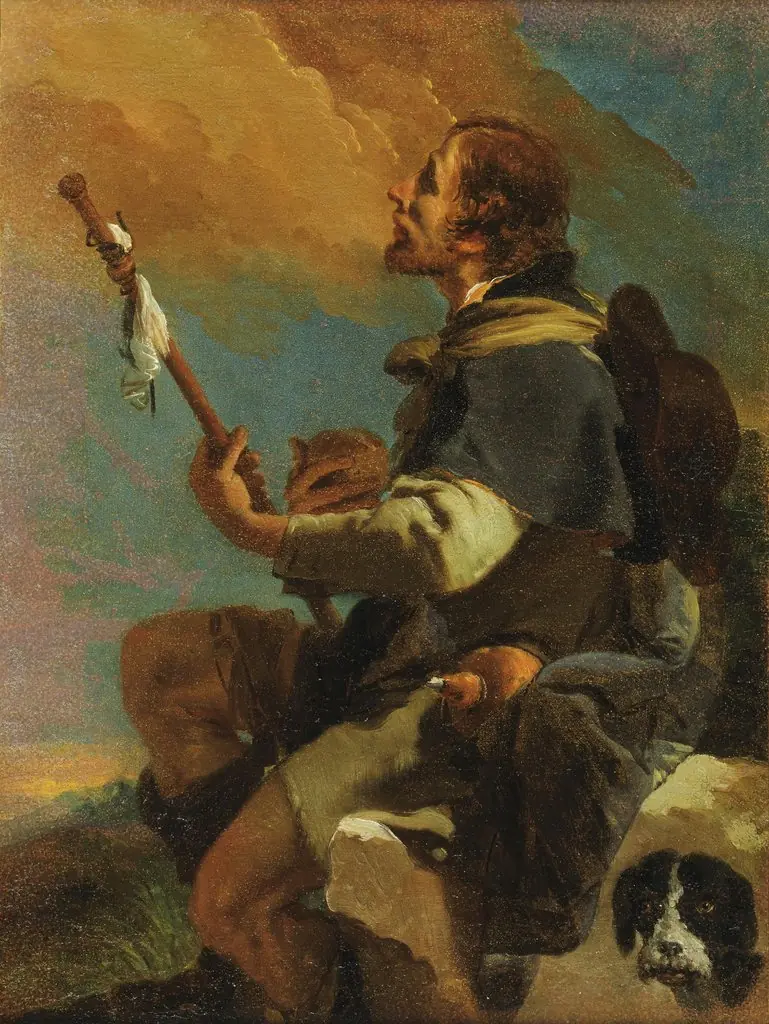 Saint Roch
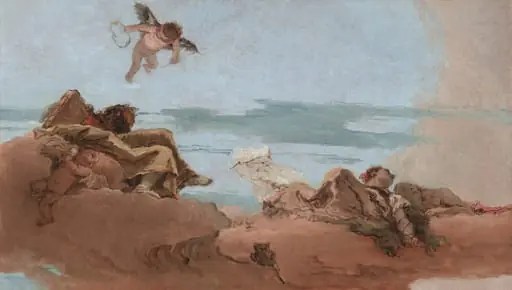 Study for a Ceiling with the Personification of Counsel
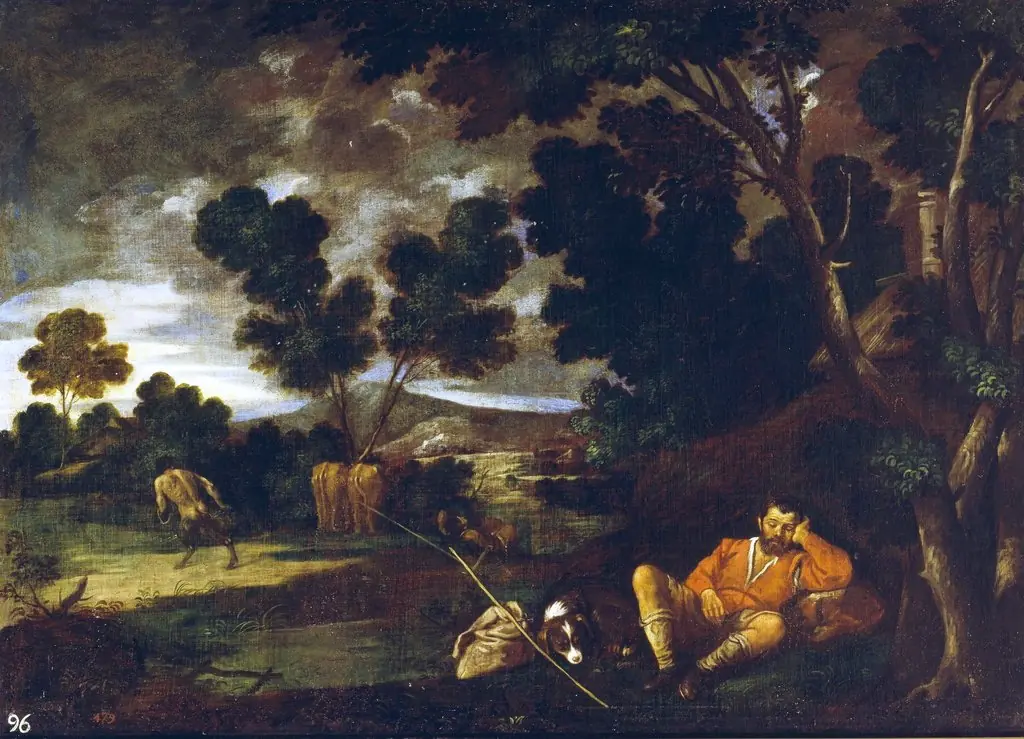 Parábola de la cizaña
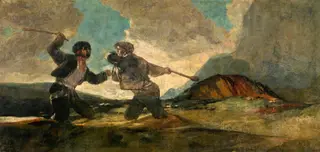 Fight with Cudgels
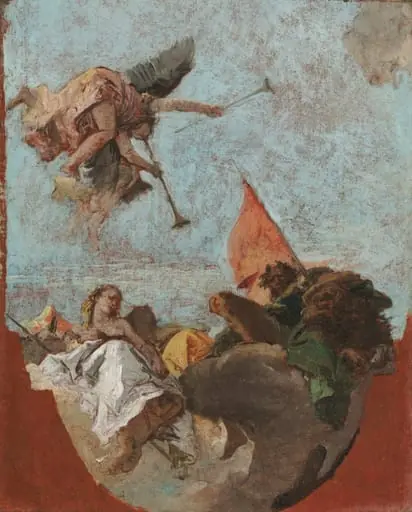 Sketch for a Ceiling
 The Pretty Woman and the Masked Men (The Road of Andalusia)
 Scene from Ancient History
 Scene from Ancient History
 Landscape with bathing nymph
 Assumption of Mary
 The Holy Family Descending a Path near Shepherds