Artwork
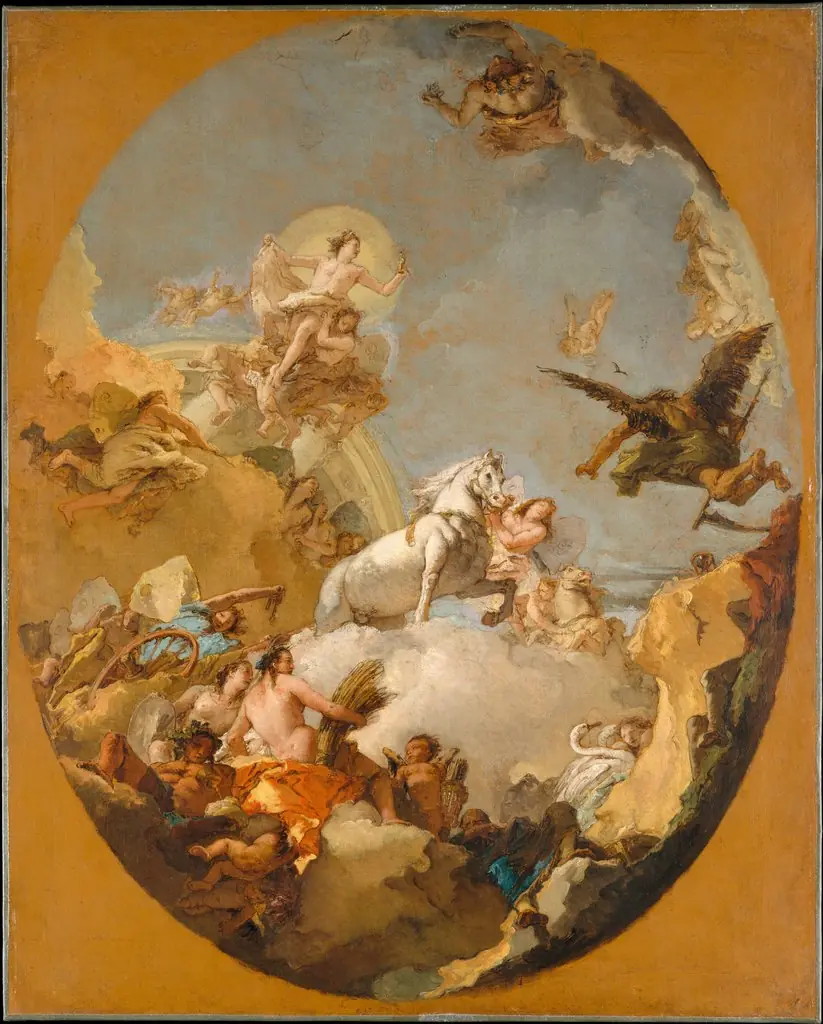
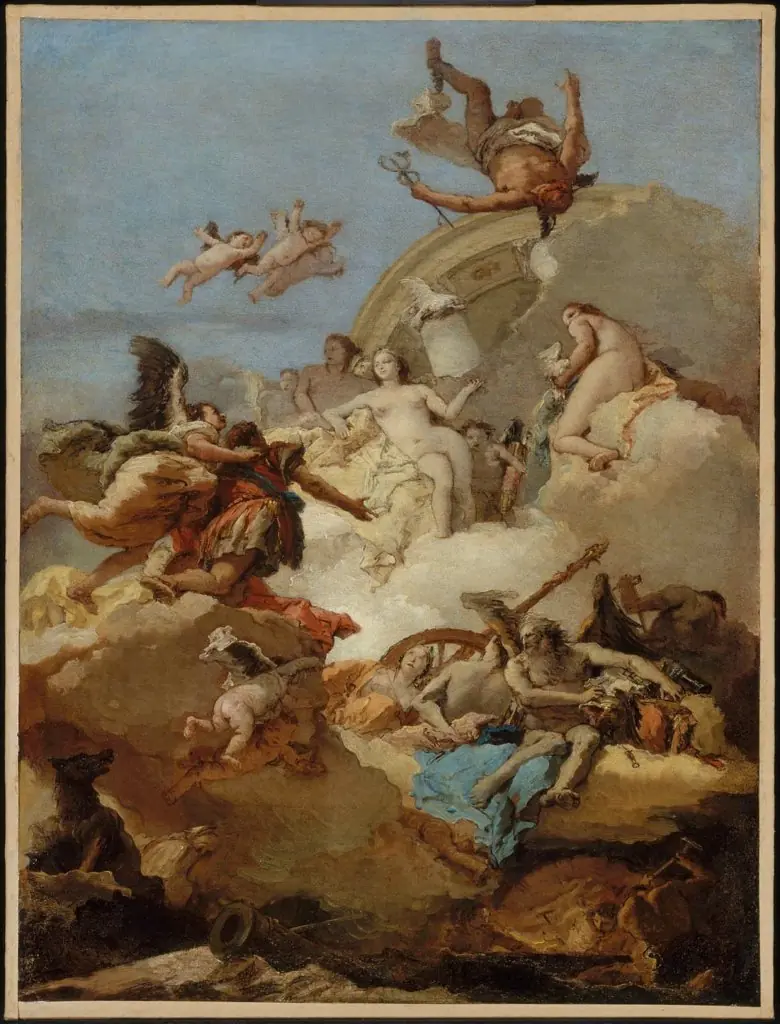
Study for a Ceiling with the Personification of Counsel
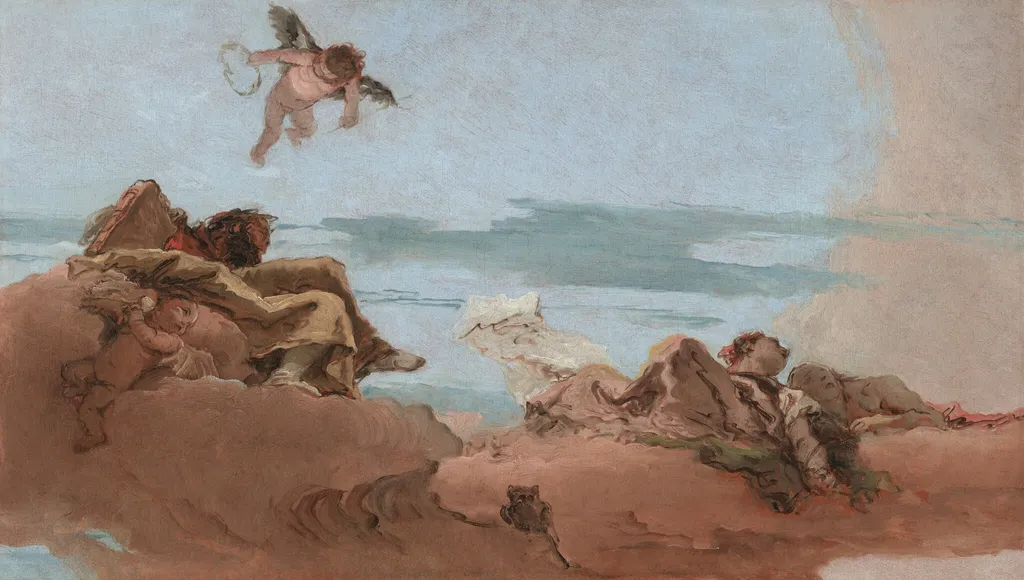
Study for a Ceiling with the Personification of Counsel is an oil painting by the Rococo painting artist Giovanni Battista Tiepolo. It dates from 1762 and is held in the collection of the National Gallery of Art.
About this work
Technique & Style
The support is canvas, and handling appears typical of oil paintings from this period, showing no signs of significant deterioration.
Oil on canvas creates a preparatory study for a ceiling composition. The work depicts an allegorical figure representing Counsel, rendered in the Rococo style with delicate brushwork and soft modeling. The support is canvas, and handling appears typical of oil paintings from this period, showing no signs of significant deterioration. Formal qualities include a balanced composition, restrained color palette, and characteristic Rococo ornamental elements.
History & Provenance
The oil sketch is dated before circa 1762. Its earliest documented ownership is uncertain: it may have been held by the British collector Edward Cheney in London after 1860 and subsequently at Badger Hall, Shropshire, possibly passing by inheritance to his brother-in-law Colonel Alfred Capel-Cure and then to his nephew Francis Capel-Cure. The painting later entered the collection of Count Alessandro Contini Bonacossi in Florence.
In 1932 the Samuel H. Kress Foundation purchased the work in New York, and in 1939 it was given to the National Gallery of Art in Washington, D.C., where it remains as part of the Samuel H. Kress Collection.
The painting is held by the National Gallery of Art, Washington, D.C., as part of the Samuel H. Kress Collection, accessioned as 1939.1.146.
It entered the Gallery in 1939 as a gift from the Samuel H. Kress Foundation, which had purchased it in 1932 from Count Alessandro Contini Bonacossi, Florence. Earlier, the work was in the United Kingdom, possibly forming part of the collection of Edward Cheney at Badger Hall, Shropshire, and later passing by descent through the Capel-Cure family.
Overview
Created around 1762, Giovanni Battista Tiepolo’s oil on canvas study was intended as a preparatory design for a ceiling composition featuring the personification of Counsel. The work reflects the lightness and ornamental flair typical of the Rococo period, and it offers a glimpse into the artist’s process for large‑scale decorative schemes.
Subject & Meaning
The central figure is a winged allegory, most likely representing Counsel, who hovers above a rugged seaside cliff while holding a scroll. Below, a group of figures lies scattered on the rocks, some reclined, others partially concealed, suggesting a narrative of guidance or protection amid a turbulent setting.
Context
Within the 18th‑century Venetian school, Tiepolo was a leading exponent of Rococo aesthetics, merging decorative elegance with narrative vigor. This study exemplifies his approach to integrating allegorical figures into architectural schemes, a practice that influenced contemporaneous ceiling decorations throughout Europe.
Artist & collection

Artist
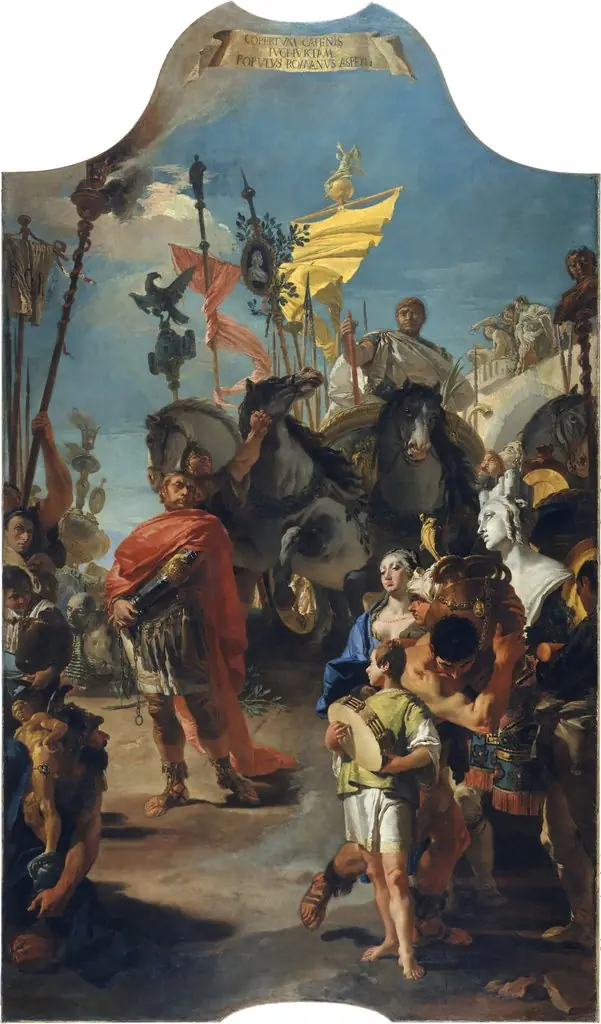
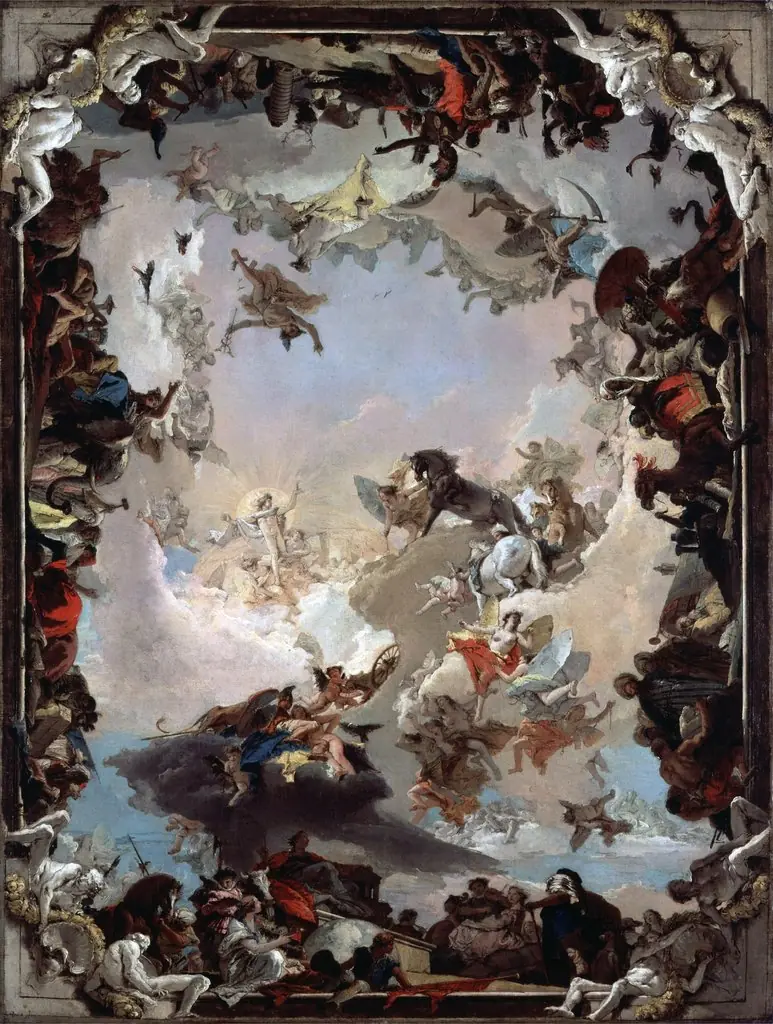
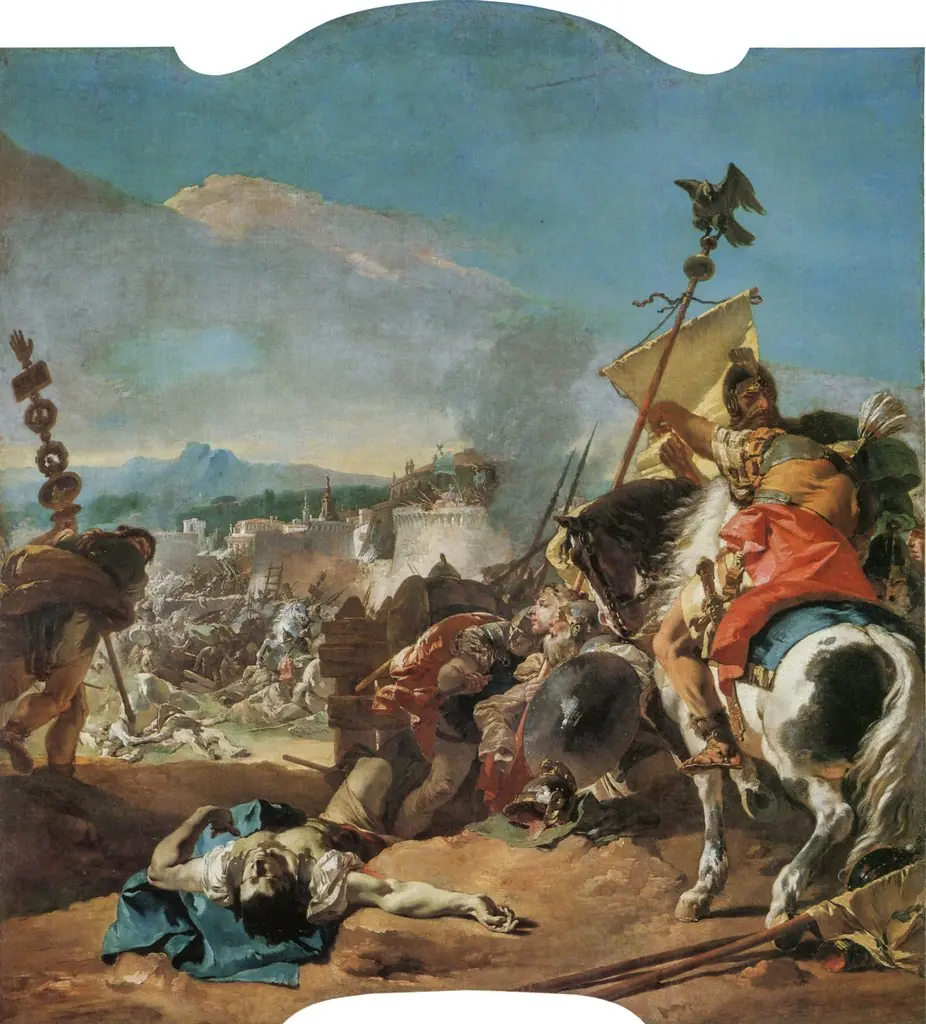
Giovanni Battista Tiepolo, also known as Giambattista Tiepolo, was an Italian painter and printmaker from the Republic of Venice who painted in the Rococo style, considered an important member of the 18th-century Venetian school.



- The Crowning of Merit
 Sketch for a Ceiling
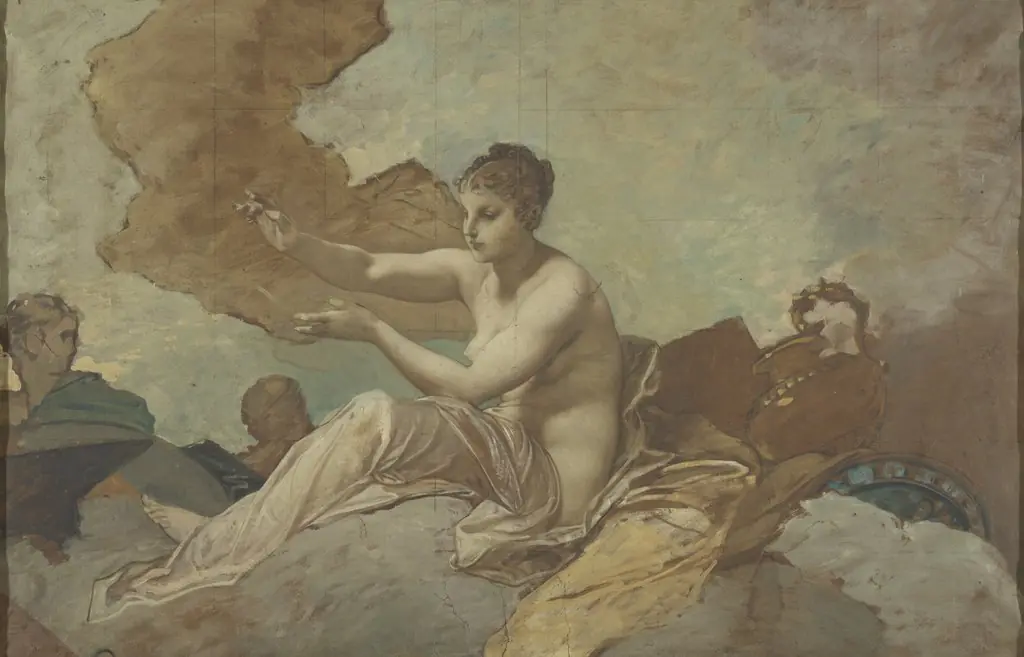 Industry
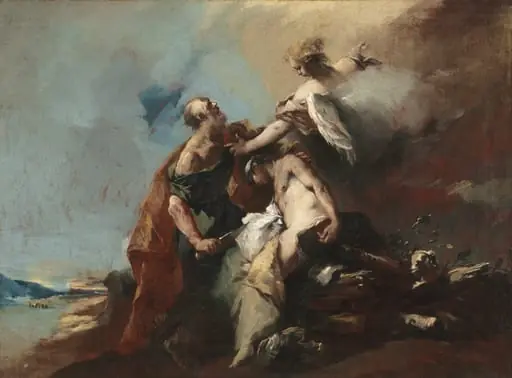 The Sacrifice of Isaac
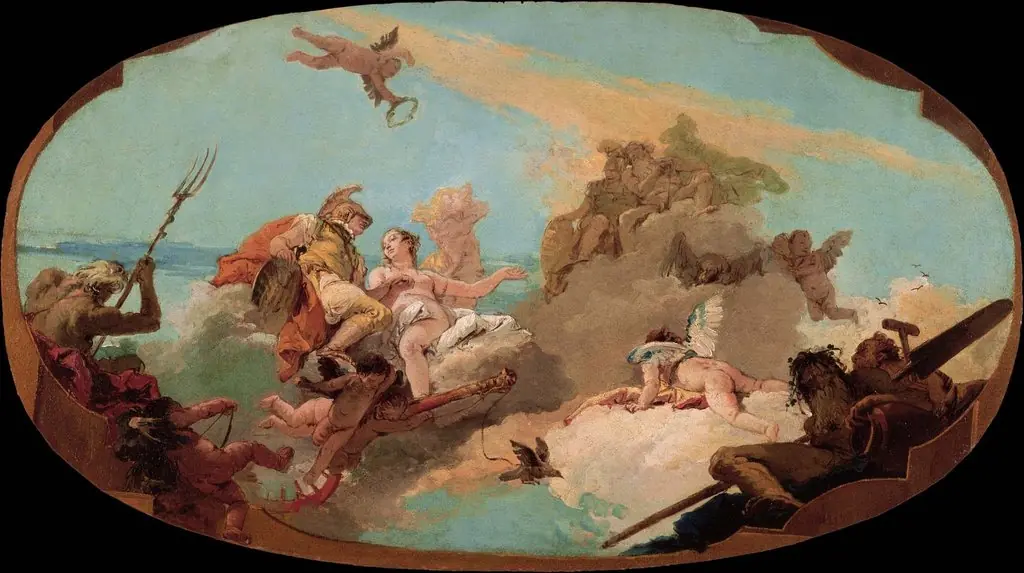 The Apotheosis of Admiral Vettor Pisani
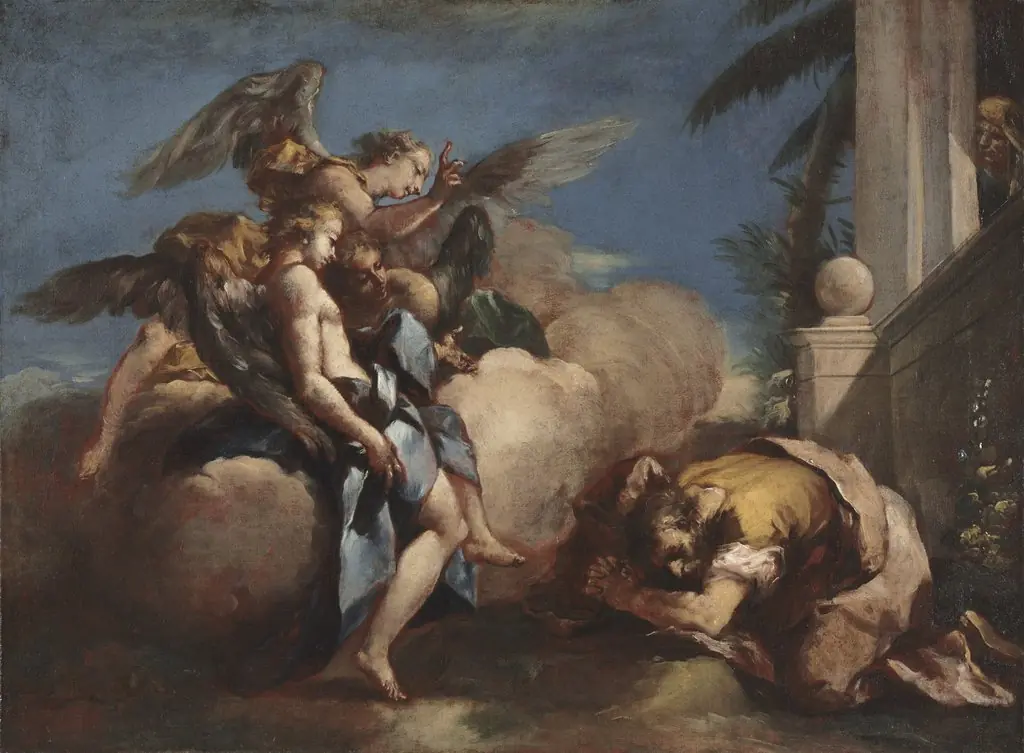 The Angels Appearing to Abraham
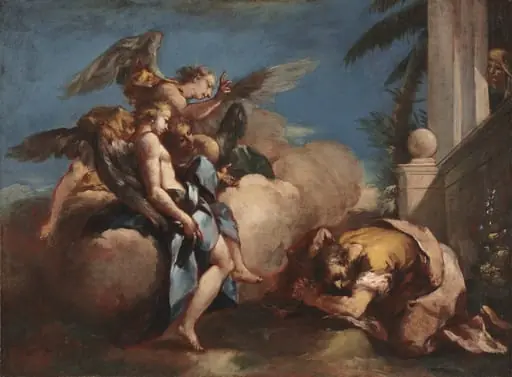 The Angels Appearing to Abraham
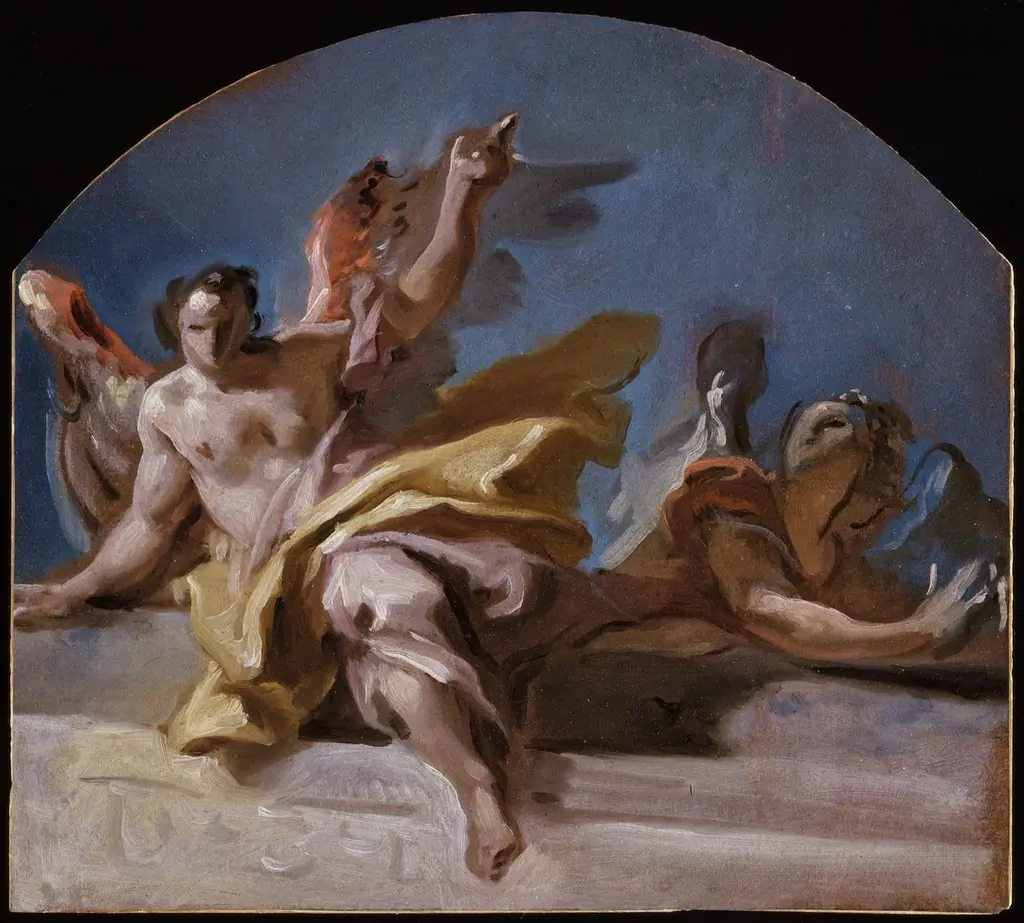 A Study for Two Angels on a Balustrade
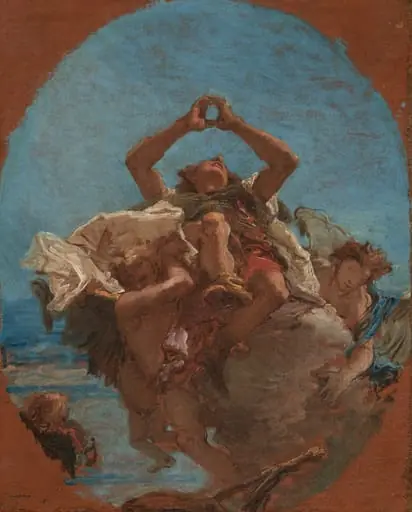 Saint Roch Carried to Heaven by Angels
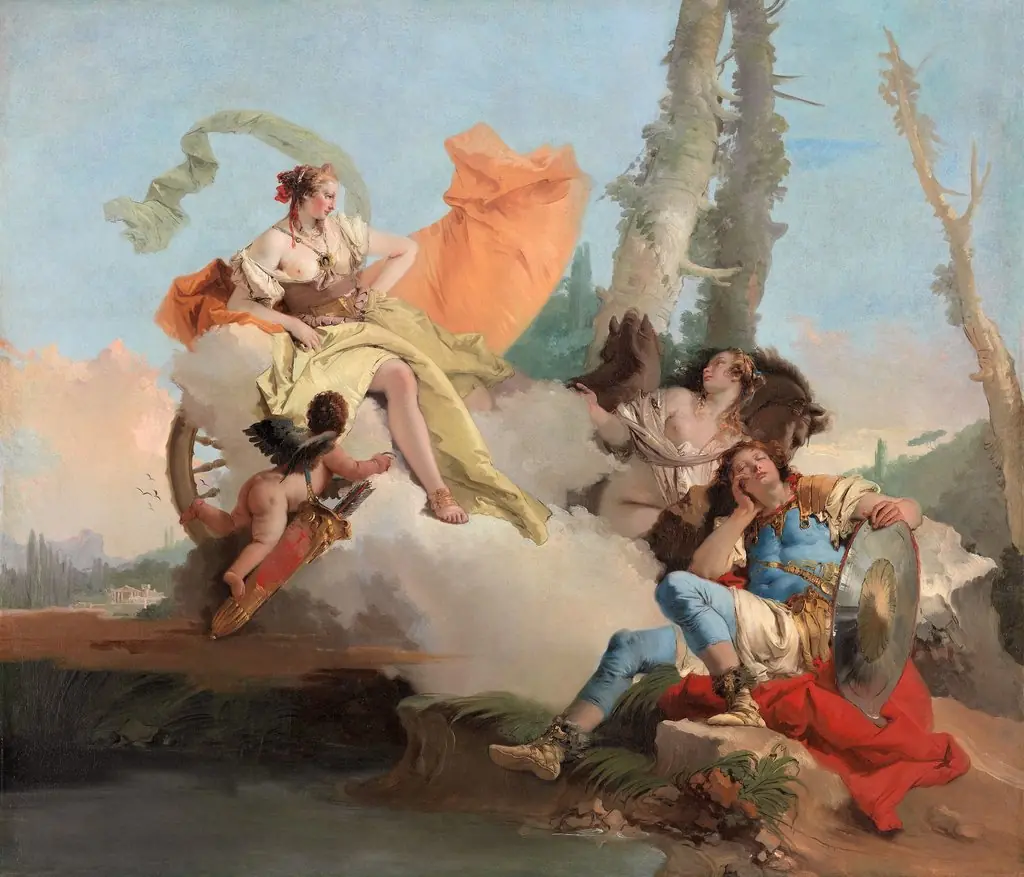 Armida Encounters the Sleeping Rinaldo
 Apotheosis of Aeneas
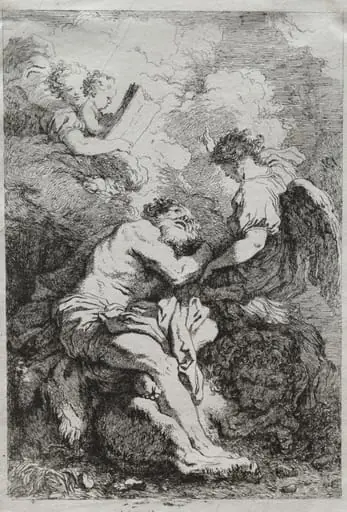 Saint Jerome