Artwork
Picnic on the banks of the Manzanares
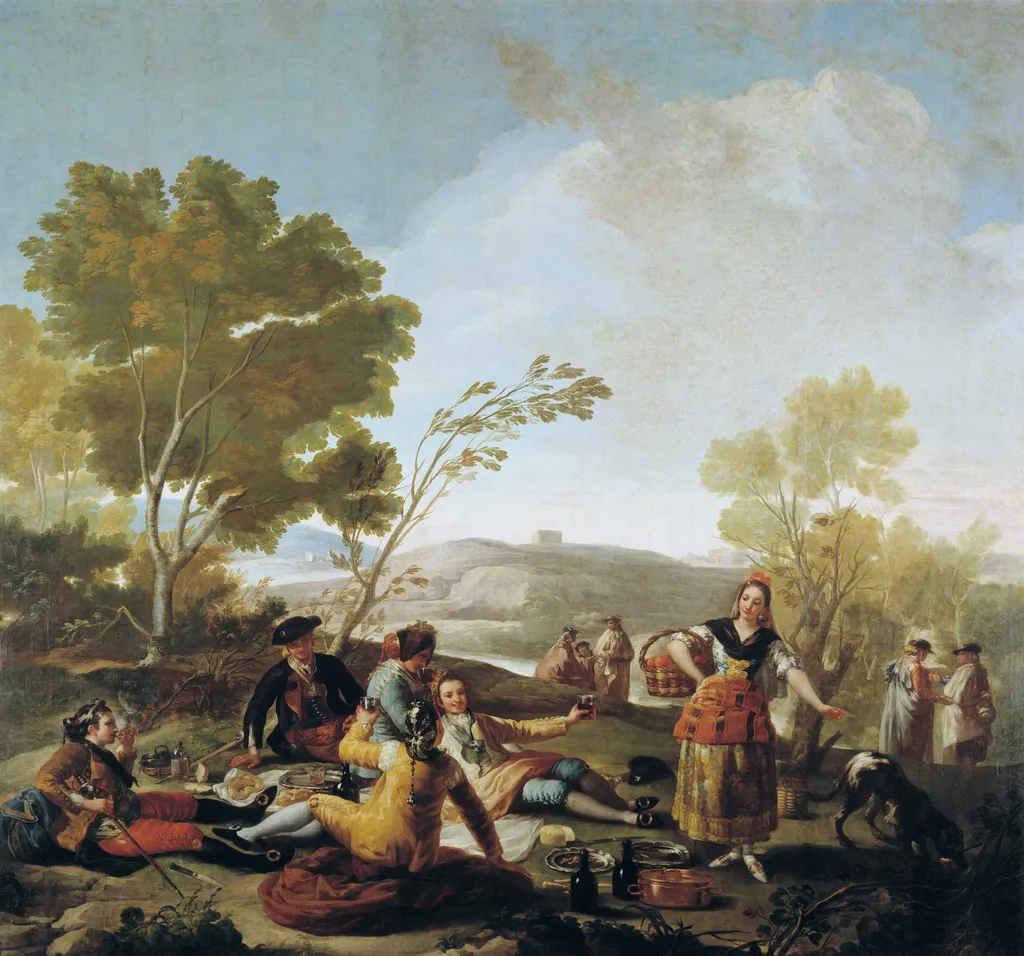
Picnic on the banks of the Manzanares is an oil painting by the Rococo painting artist Francisco de Goya. It dates from 1788 and is held in the collection of the Museo del Prado.
About this work
Subject & Meaning
A central element of the composition is the flirtation between an orange seller and these carefree men.
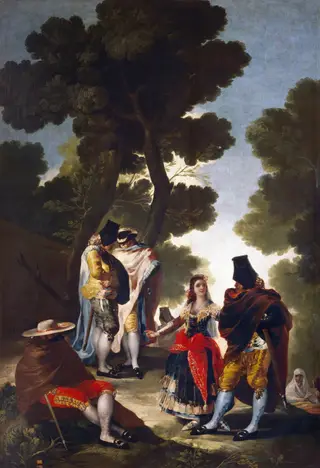
The painting depicts a popular genre scene of a picnic on the banks of the Manzanares River in Madrid. In the background, partially obscured by shrubbery, stands the Hermitage of the Virgin of the Port. The foreground features a still life arrangement of leftover food, baskets, and bottles, alongside figures known as majos who are drinking and smoking around a light-colored tablecloth. A central element of the composition is the flirtation between an orange seller and these carefree men.
Inspired by a homonymous short play by Ramón de la Cruz, the work reflects a royal desire, particularly from Princess Marie Louise of Parma, for art that mirrored the lives of common people. The imagery emphasizes realism and the joyous, uninhibited expressions of the lower classes, utilizing vivid colors to convey a sense of merriment and freedom characteristic of Madrid's popular culture.
Technique & Style
The work is executed in oil on canvas, measuring 271 cm × 295 cm, and belongs to the second series of cartoons Goya designed for tapestry decoration in the Prince of Asturias’ dining room. It was painted in 1776 using oil paint and later transferred to the Museo del Prado after its discovery in the palace’s basement in 1869 and formal accession in 1870. Stylistically, the piece belongs to the genre‑scene tradition, depicting a lively riverside picnic with vivid colors, animated figures, and a softly blurred background that emphasizes the foreground activity. The handling reflects its function as a preparatory cartoon, intended for later weaving.
History & Provenance
The work was commissioned by the future king Charles IV and his wife Maria Luisa of Parma for the royal dining room at the Palace of the Pardo, forming part of the second series of tapestry cartoons intended for that space. Goya completed it in 1776 after receiving just over 7,000 reales, a payment recorded on 30 October of that year, and the canvas was subsequently sent to the Royal Tapestry Workshop.
After being regarded as lost, it was rediscovered in 1869 in the basement of the Royal Palace of Madrid by Gregorio Cruzada Villaamil; the following year the painting entered the Prado Museum, was assigned catalogue number 785, and has been exhibited in room 85 since its acquisition in 1870.
The painting is held by the Museo del Prado, Madrid, where it carries accession number P785 and is exhibited in gallery 85.
It entered the Prado’s collection in 1870 following its recovery in the basement of the Royal Palace of Madrid by Gregorio Cruzada Villaamil. The work was first listed in the museum’s catalogue in 1876.
Context
Created in 1776 as the inaugural work of Goya's second series of tapestry cartoons, Picnic on the banks of the Manzanares was designed for the dining room of the Prince of Asturias at the Palace of El Pardo. Inspired by a contemporary sainete by Ramón de la Cruz, the painting reflects the aristocratic desire to emulate popular Madrid life, a theme championed by Princess Marie Louise of Parma. Goya's style during this period shows the influence of his brother-in-law Francisco Bayeu and Agustín Esteve, characterized by realistic figures and vibrant depictions of majos.
The work remained lost until its rediscovery in 1869 by Gregorio Cruzada Villaamil in the basement of the Royal Palace of Madrid. Following its transfer to the Museo del Prado in 1870, scholar Aureliano de Beruete y Moret later highlighted the artist's attention to realistic details in clothing and objects, as well as the joyful expressions of the figures.
Overview
Francisco Goya's 1788 oil painting, "Picnic on the banks of the Manzanares," captures a lively genre scene. Executed on canvas, this work exemplifies the Rococo movement's interest in leisurely outdoor gatherings. It portrays a group enjoying a simple meal by the Manzanares River, showcasing the artist's early engagement with everyday life and social customs of the period.
Legacy
As a leading Spanish artist bridging the late 18th and early 19th centuries, Goya's diverse output significantly influenced subsequent generations of painters. Although "Picnic on the banks of the Manzanares" represents an earlier, more conventional aspect of his oeuvre, his broader body of work, often marked by its commentary on contemporary society, established a lasting impact on European art.
Own this work as a print
Artist & collection
Artist
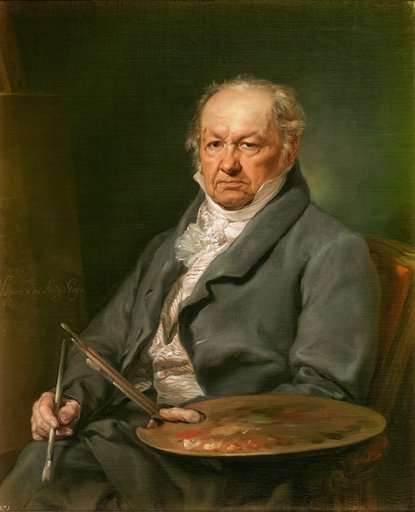
Francisco José de Goya y Lucientes was a Spanish romantic painter and printmaker.