Artwork
The Marchioness of Villafranca Painting her Husband
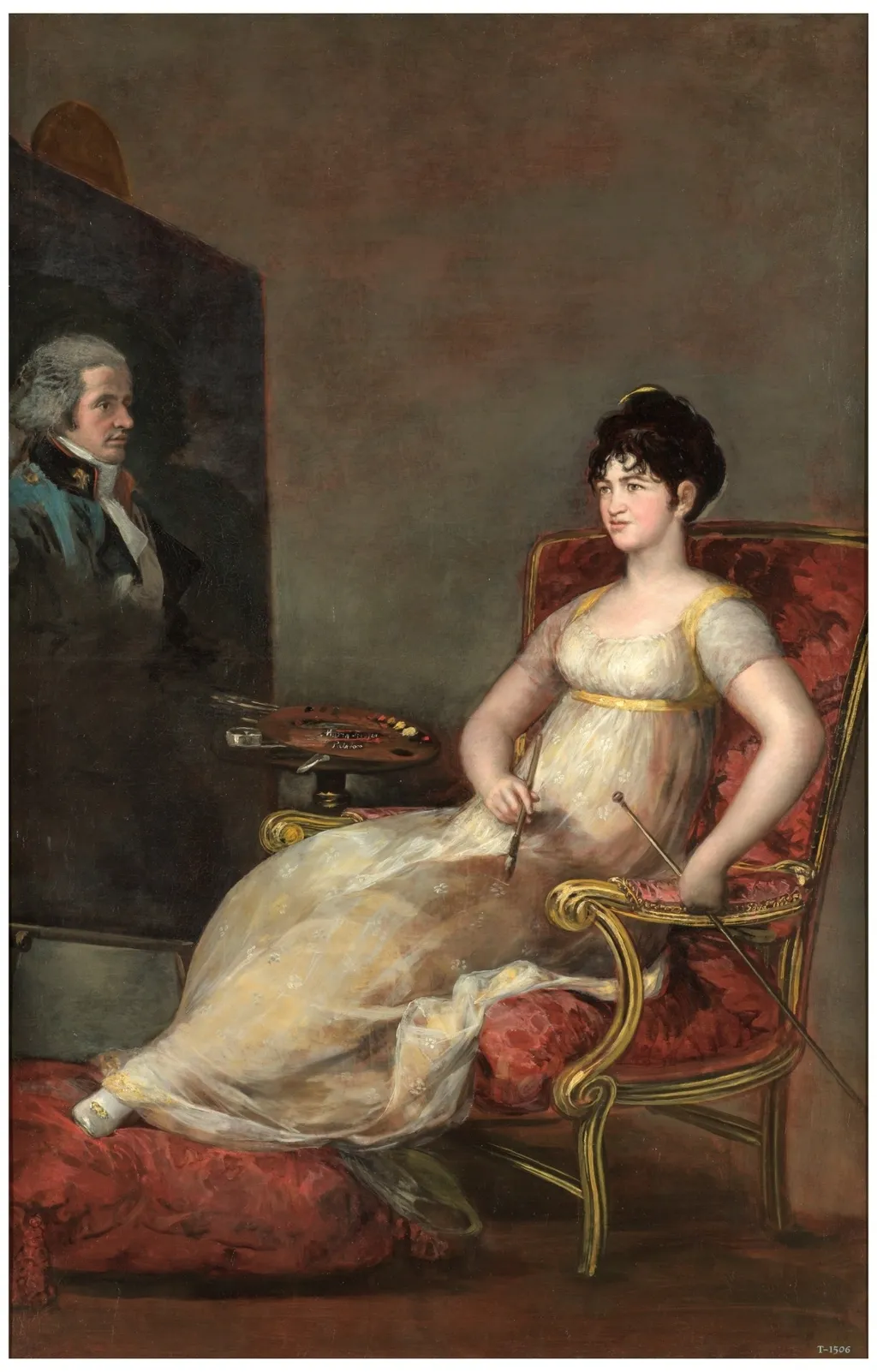
The Marchioness of Villafranca Painting her Husband is an oil painting by Francisco de Goya. It dates from 1804 and is held in the collection of the Museo del Prado.
About this work
Subject & Meaning
The contrast of colors and the detailed accessories serve as symbolic emphasis on both her refined taste and the intimate bond shared with her spouse.
The work shows María Tomasa Palafox y Portocarrero, Marchioness of Villafranca, seated in a fauteuil while painting a portrait of her husband, Francisco de Borja y Álvarez de Tolède, who is rendered in a military uniform. She is dressed in a bright white empire‑style gown that stands out against the dark ochre and red tones surrounding her, and a palette with brushes rests on a nearby table. Goya’s composition highlights her intellectual and creative agency, presenting the act of painting as a marker of her cultivated status, while the mutual gaze between the couple suggests a deep marital affection.
The contrast of colors and the detailed accessories serve as symbolic emphasis on both her refined taste and the intimate bond shared with her spouse.
Technique & Style
Francisco Goya executed this 1804 portrait in oil paint on canvas, which measures 195 by 126 centimeters. Stylistically, the work demonstrates Goya's mastery of dramatic chiaroscuro through bold color contrasts. He surrounds the central figure with dominant dark ochres and deep reds, which sharply offset the sitter's brilliant white empire-style dress at the center of the composition, immediately drawing the viewer's eye.
The formal arrangement captures the marchioness comfortably seated in an armchair with her feet on a large cushion, pausing at her easel. Beside her, a side table holds her palette, paintbrushes, and a small metal bowl. Her focused gaze meets that of her husband's military portrait on the easel, establishing a dynamic visual interplay that anchors the composition's spatial and narrative structure.
History & Provenance
The work was commissioned circa 1804 by María Tomasa Palafox, Marchioness of Villafranca, and painted by Francisco Goya as a double portrait in which she depicts herself painting her husband, Francisco de Borja y Álvarez de Toledo, seated beside her in military attire. Goya’s execution dates the canvas to 1804, aligning with his mature portrait practice in Madrid. After remaining in the family’s possession, the painting was later donated to the Museo del Prado by the Count of Niebla, entering the museum’s collection where it has been exhibited since.
The painting is currently held by the Museo del Prado in Madrid. It was donated to the museum by the Count of Niebla. While the provided sources confirm the work's presence in the Prado and its origin as a 1804 oil on canvas, they do not specify a unique inventory or accession number for the piece.
Regarding exhibition history, the sources state the work is displayed at the Museo del Prado but do not list specific past exhibitions, temporary showings, or loan records outside of its permanent residence. The work remains a key portrait in the museum's collection, depicting the Marchioness painting her husband.
Context
Painted in 1804, this double portrait belongs to a phase in Francisco Goya's career when, from the 1790s onward, he had become a fashionable portraitist whose works were in high demand among the Spanish aristocracy and the affluent Madrid bourgeoisie. The painting reflects Goya's engagement with intellectual and creative sitters, depicting María Tomasa Palafox y Portocarrero, Marchioness of Villafranca, as a painter at work on a portrait of her husband, Francisco de Borja Álvarez de Toledo. The Marchioness, identified as an academician of the Order of Merit of San Fernando, an erudite figure, and an amateur painter and art lover, is shown in a manner that acknowledges women's intellectual and creative capacities.
The composition documents an exchange of gazes between the two figures that contemporary sources linked to the affection uniting the couple. The work entered the Museo del Prado through donation by the Conde de Niebla and remains part of the institution's holdings.
Overview
Francisco Goya completed The Marchioness of Villafranca Painting her Husband in 1804, an oil painting that captures a notable moment. This work portrays the Marchioness herself, actively engaged in the creation of art, specifically painting her spouse. It offers a glimpse into the domestic and artistic life of an aristocratic woman during the early 19th century, and is now housed in the Museo del Prado in Madrid.
Own this work as a print
Artist & collection
Artist
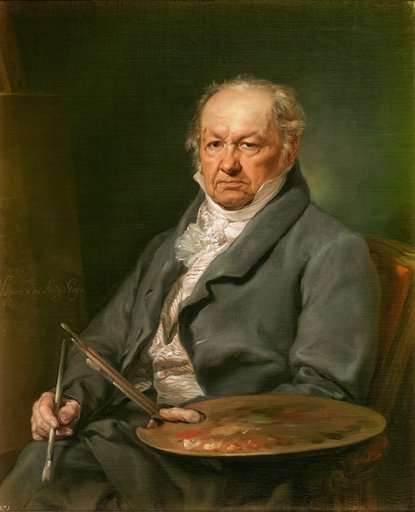
Francisco José de Goya y Lucientes was a Spanish romantic painter and printmaker.

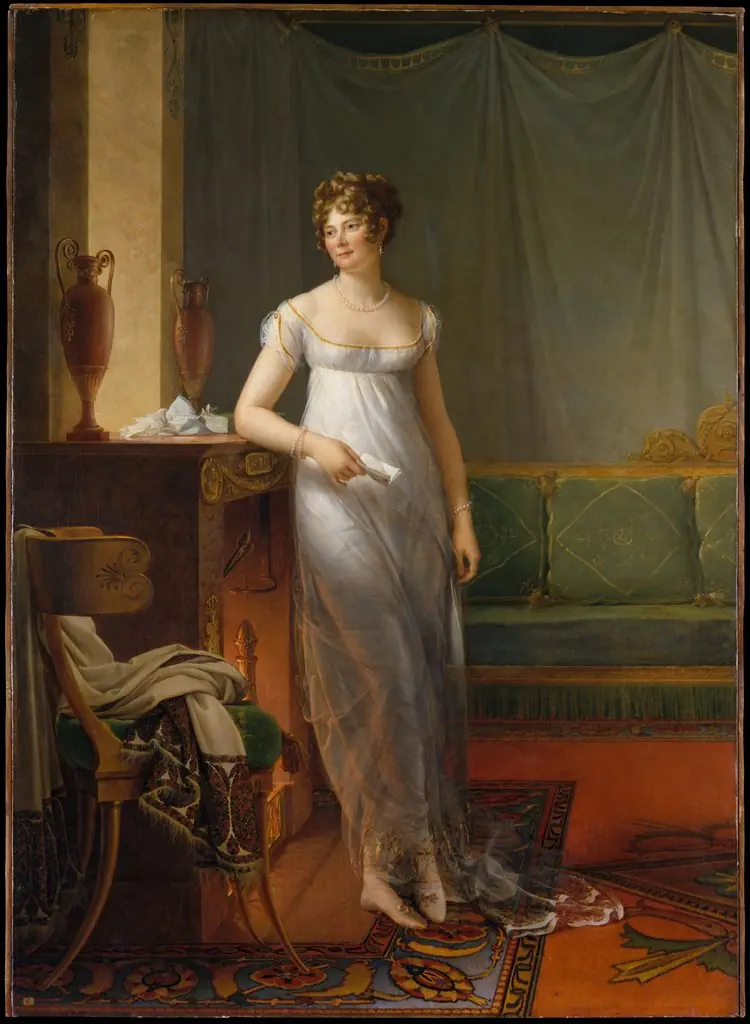 Madame Charles Maurice de Talleyrand Périgord (1761–1835)
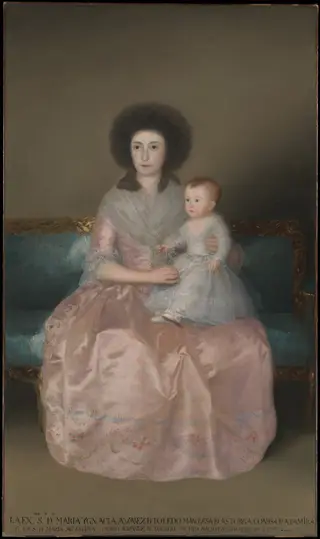
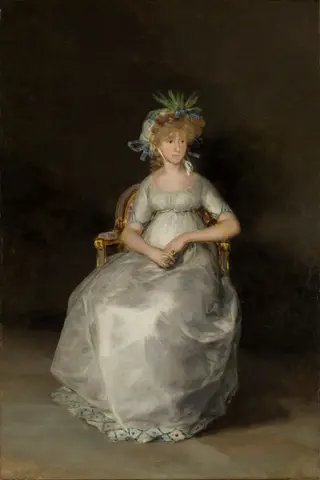 Countess of Chinchon
 A Young Woman Leaning on the Edge of a Window
 Portrait of a Woman Holding a Pencil and a Drawing Book
 Paulina, First Wife of Sir Codrington Edmund Carrington
 Mme. Dufresne
 Portrait of Catherine Grey, Lady Manners
 Auguste Amalia von Bayern, Vizekönigin von Italien
 Portrait of Gertrud Hage, née Heitmann
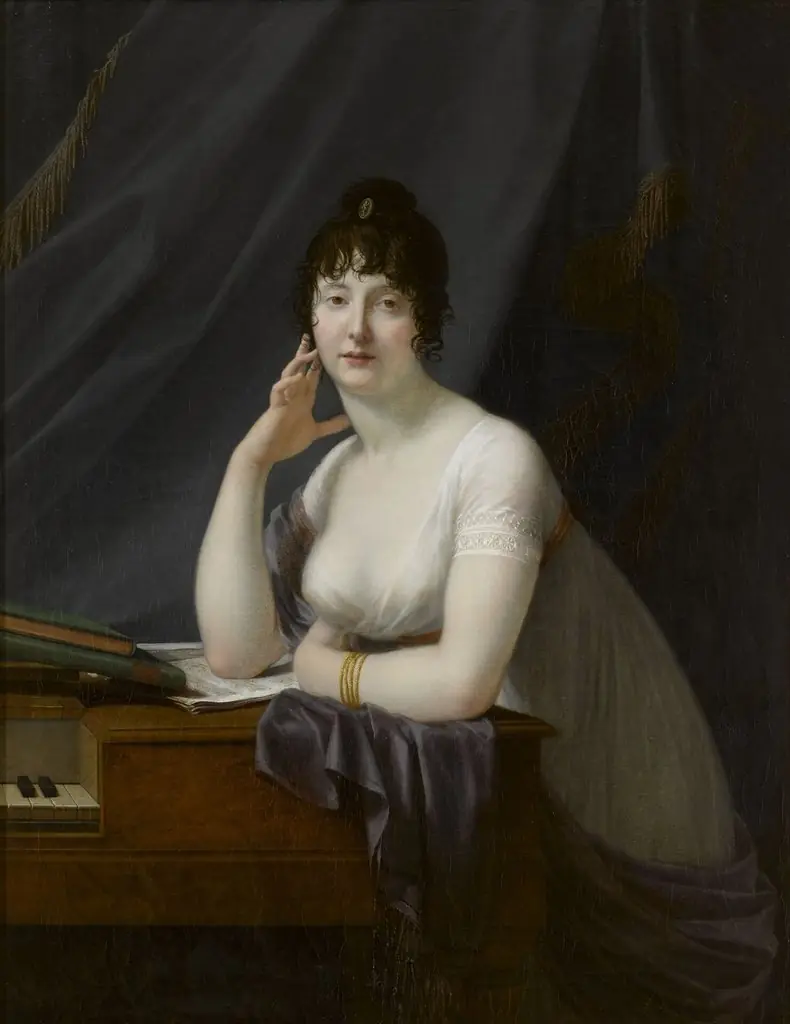 Madame Antoine Arnault
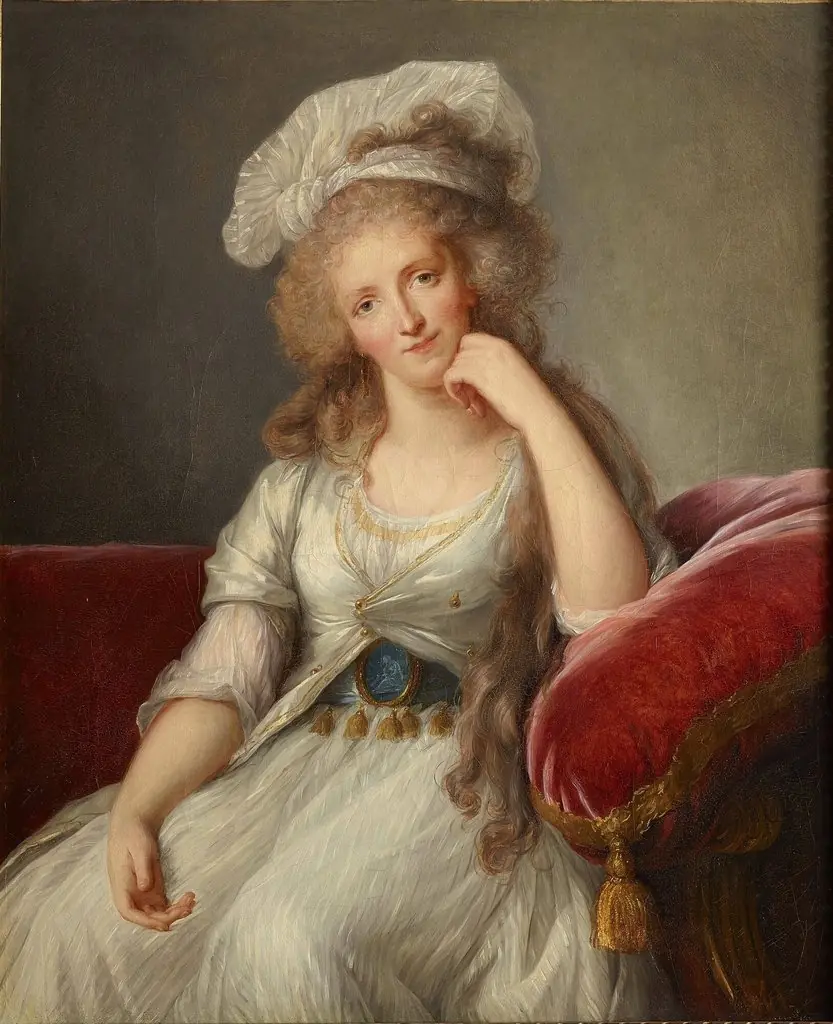 Louise-Marie-Adélaïde de Bourbon-Penthièvre, Duchess of Orléans
- The Artist's Wife in His Studio