Artwork
The descent from the cross
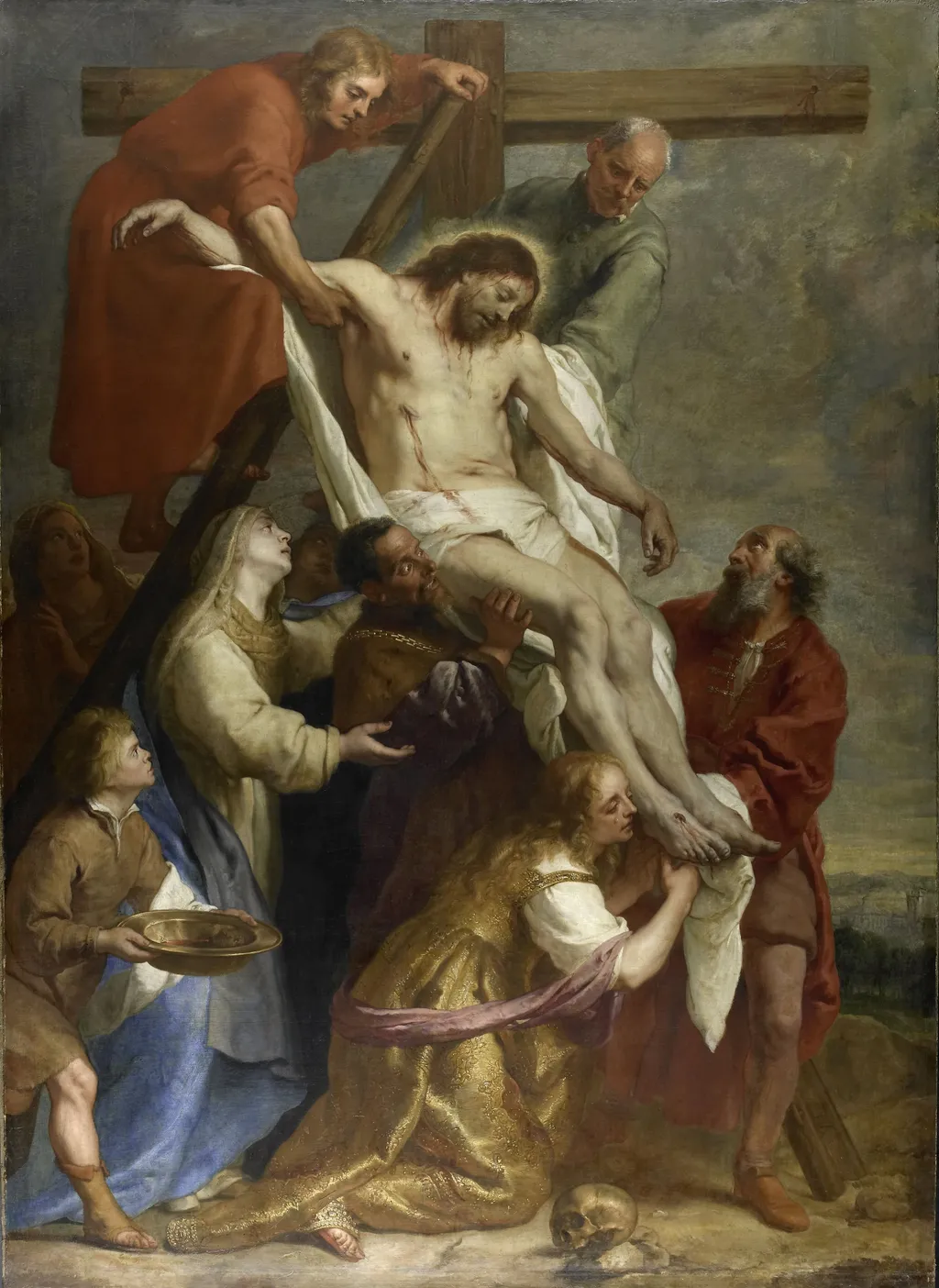
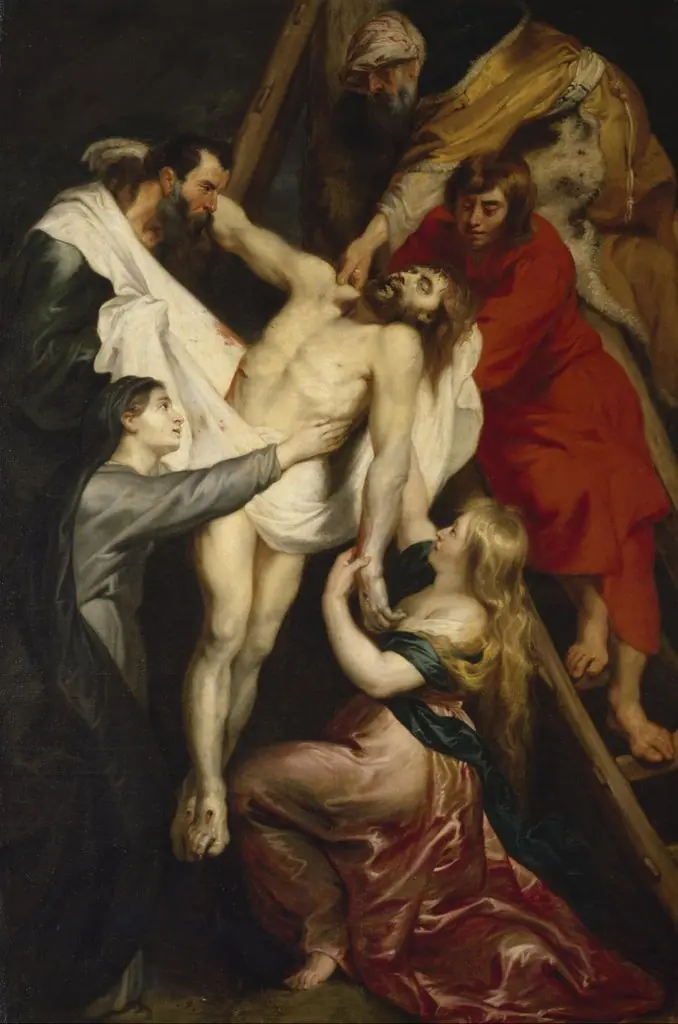
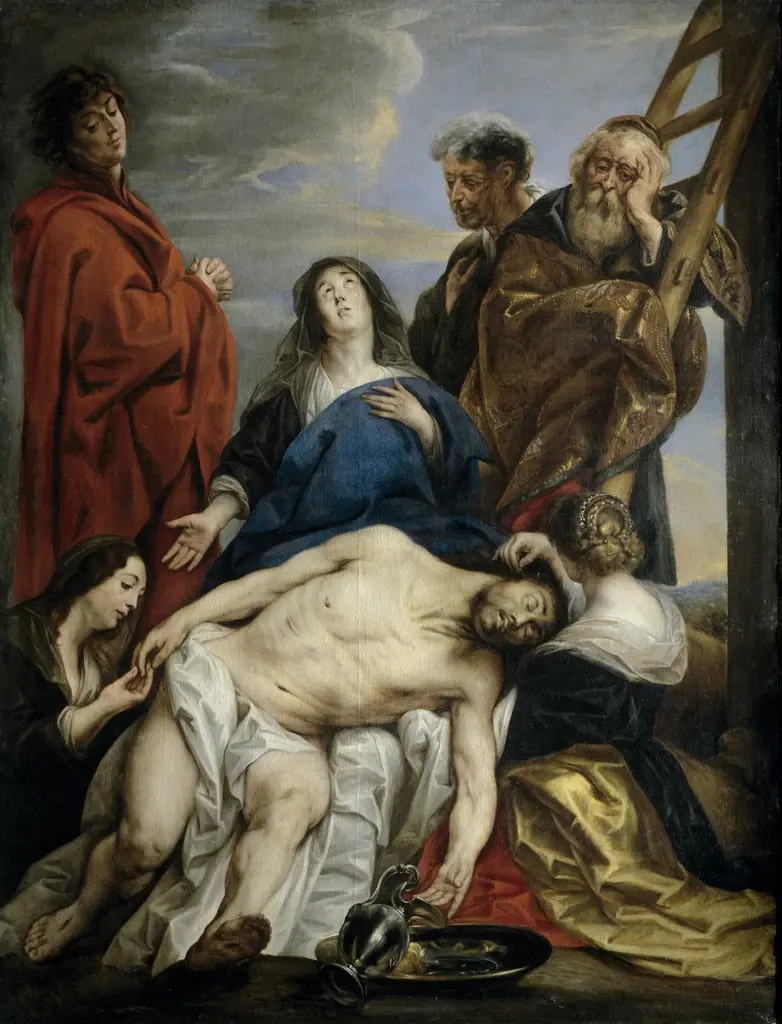
The descent from the cross is an oil painting by the Flemish Baroque painting artist Gaspar de Crayer. It dates from 1650 and is held in the collection of the Rijksmuseum.
About this work
Subject & Meaning
The work functions as a devotional image within the religious genre, illustrating the sorrowful transition from the crucifixion to the entombment of the savior.
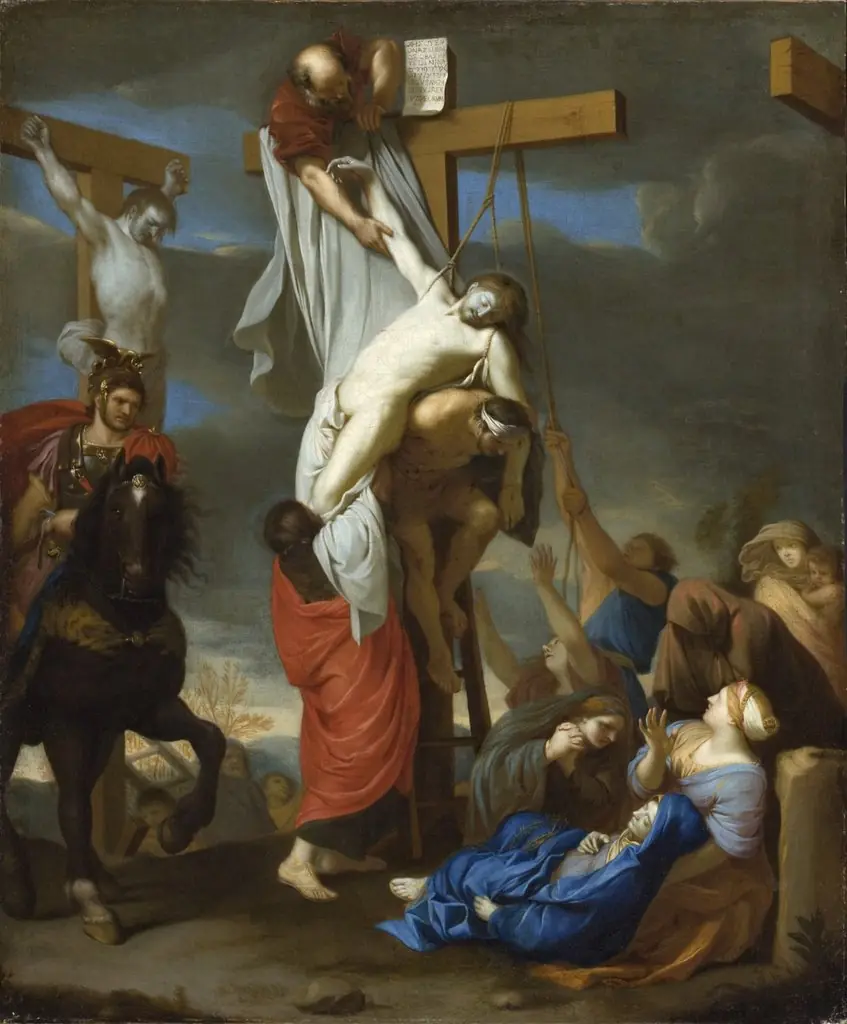
The painting depicts the Descent from the Cross, a specific episode from the Passion of Christ where the body of Jesus is removed from the cross after the Crucifixion. As a work of religious art created in 1650 by Gaspar de Crayer, the composition centers on the figure of Jesus Christ, marking the main subject of the piece. The scene represents the moment of mourning and reverence following the death of Jesus, adhering to traditional Christian iconography associated with this biblical event.
The work functions as a devotional image within the religious genre, illustrating the sorrowful transition from the crucifixion to the entombment of the savior.
Technique & Style
The painting is executed in oil on canvas, a common support for 17th-century religious works. Its dimensions measure 309 cm in height by 224.5 cm in width, confirming a large-scale devotional piece. The composition centers on the lowering of Christ’s body from the cross, rendered with naturalistic modeling and restrained chiaroscuro typical of Flemish Baroque painting.
The handling of pigment suggests careful layering to achieve depth in drapery and flesh tones, while the stylistic choice of a pyramidal arrangement emphasizes solemnity and sacred gravity.
The work belongs to the religious art genre and reflects Counter-Reformation ideals of emotional piety through its intimate narrative focus.
History & Provenance
The painting was created in Brussels in 1650 by the Flemish artist Gaspar de Crayer, who worked within the religious art genre. It was executed in oil paint on canvas, measuring 309 cm in height by 224.5 cm in width. The work depicts the Descent from the Cross and is part of the Rijksmuseum's collection, reflecting its significance within Dutch and Flemish religious painting traditions.
Context
Gaspar de Crayer's 1650 oil painting The descent from the cross, housed at the Rijksmuseum in Brussels, exemplifies Counter-Reformation religious art through its dramatic composition and emotional intensity. Scholarship highlights its significance within the artist's oeuvre as a mature expression of Flemish Baroque tendencies, particularly in its handling of light and figure arrangement. The work's provenance at the Rijksmuseum since its acquisition contributes to ongoing scholarly discussions about 17th-century devotional practices in the Southern Netherlands, situating it within broader debates on Counter-Reformation aesthetics and the evolution of religious narrative painting.
Overview
Created around 1650, this oil painting by the Flemish artist Gaspar de Crayer portrays the biblical episode of Christ being taken down from the cross. Executed in the Baroque period, the work is part of the Rijksmuseum’s collection and exemplifies the devotional imagery typical of Counter‑Reformation art.
Own this work as a print
Artist & collection
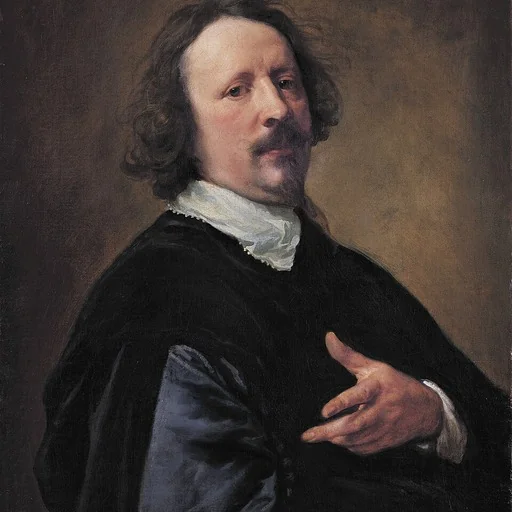
Artist
Gaspar de Crayer or Jasper de Crayer (18 November 1584 – 27 January 1669) was a Flemish painter known for his many Counter-Reformation altarpieces and portraits.

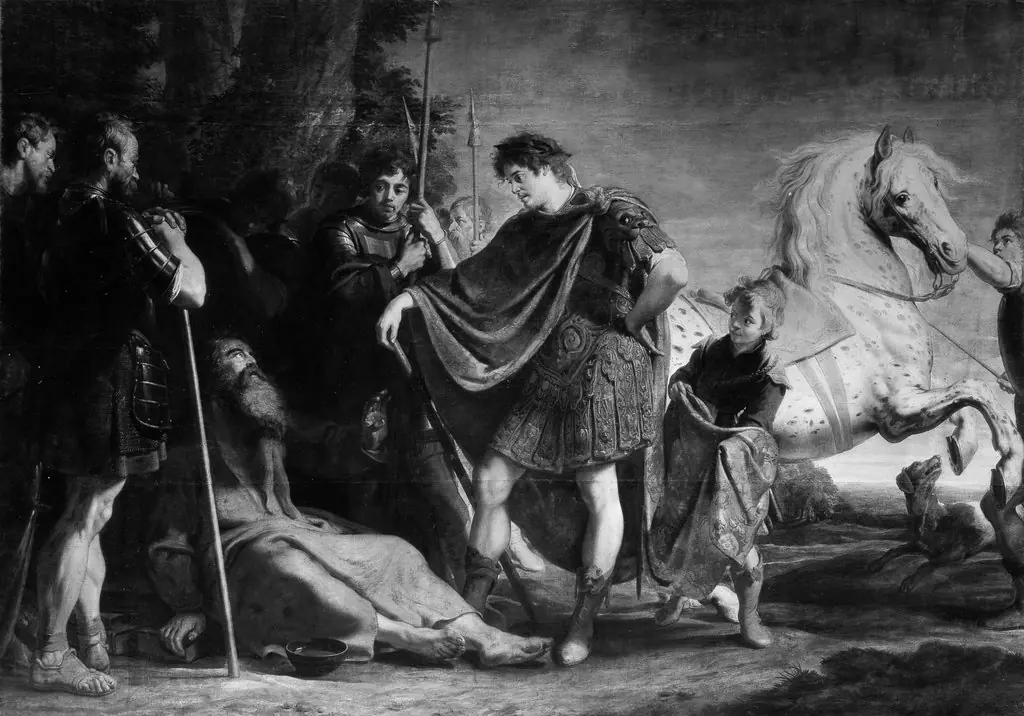 The Meeting of Alexander the Great and Diogenes
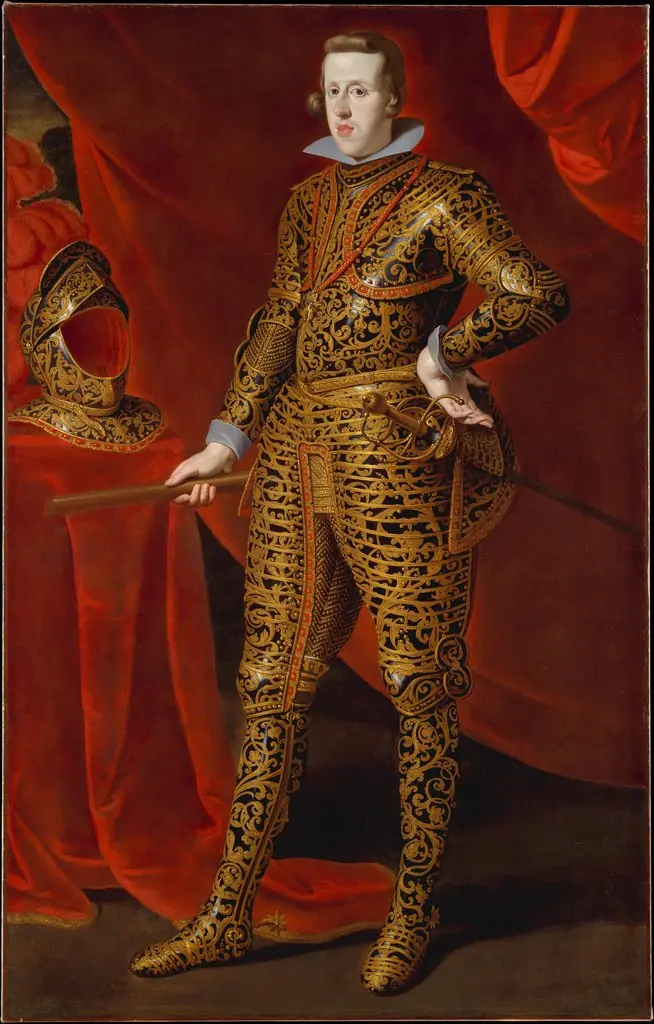 Philip IV (1605–1665) in Parade Armor
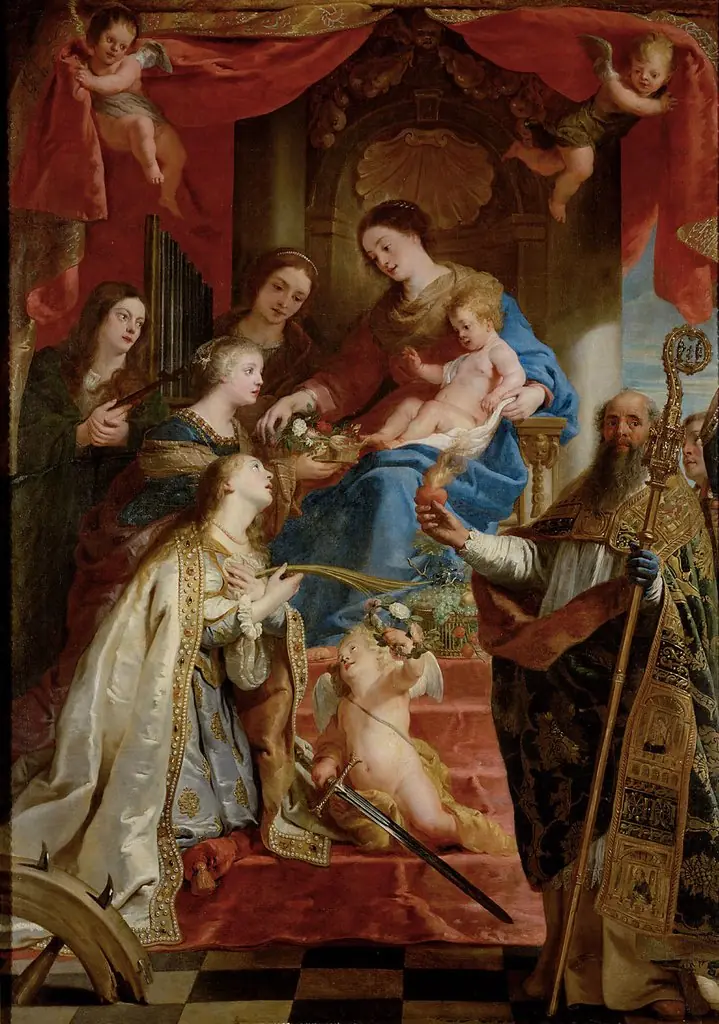 Virgin with child and saints Maria Magdalen, Cecilia, Dorothea, Catharina and Augustine
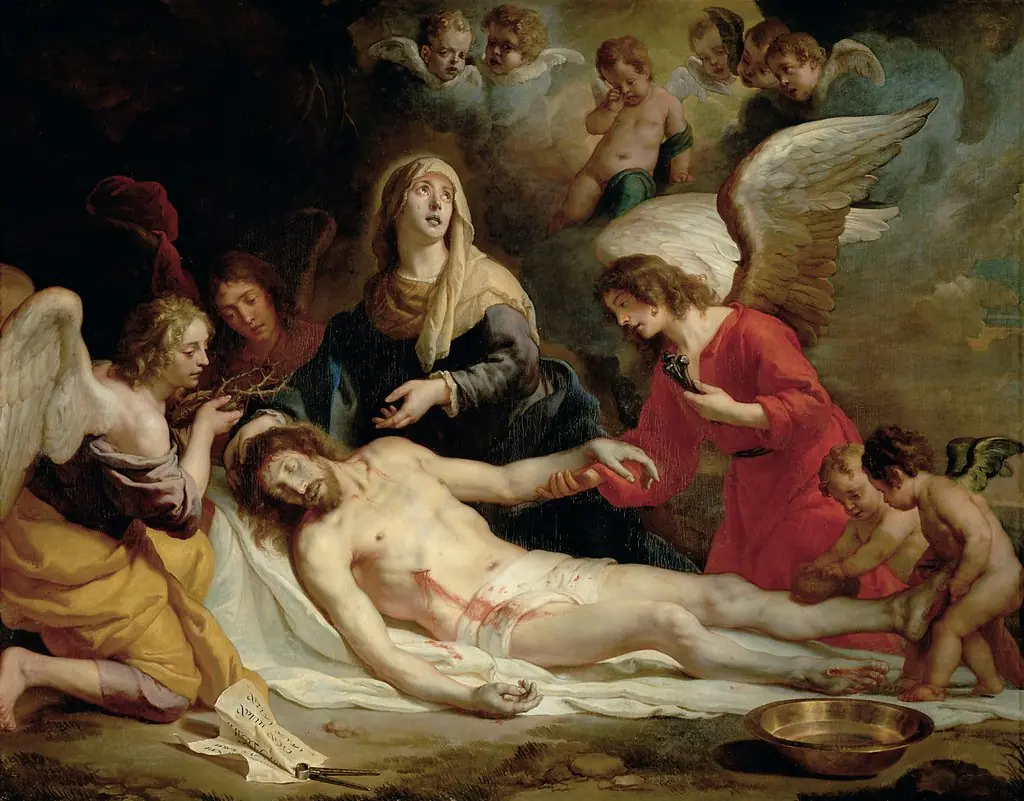 Lamentation
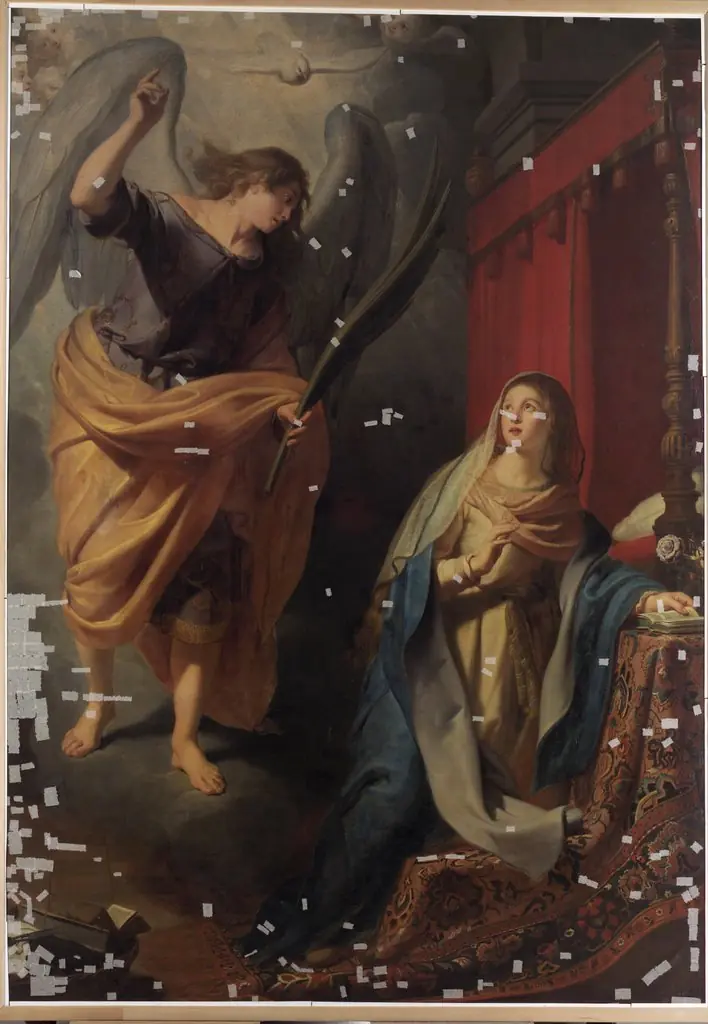 The Annunciation
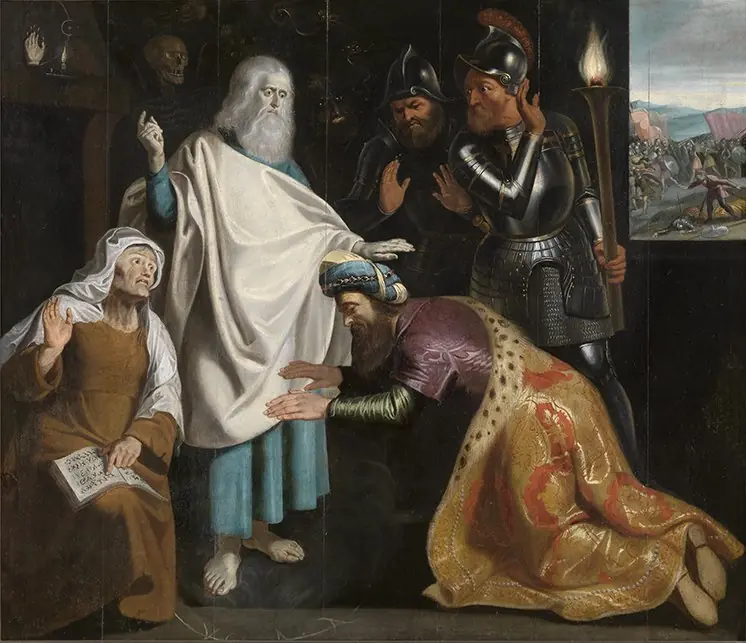 The ghost of Samuel appears to the witch of Endor; Saul falls prostrate to the ground (1 Samuel 28:3-20)
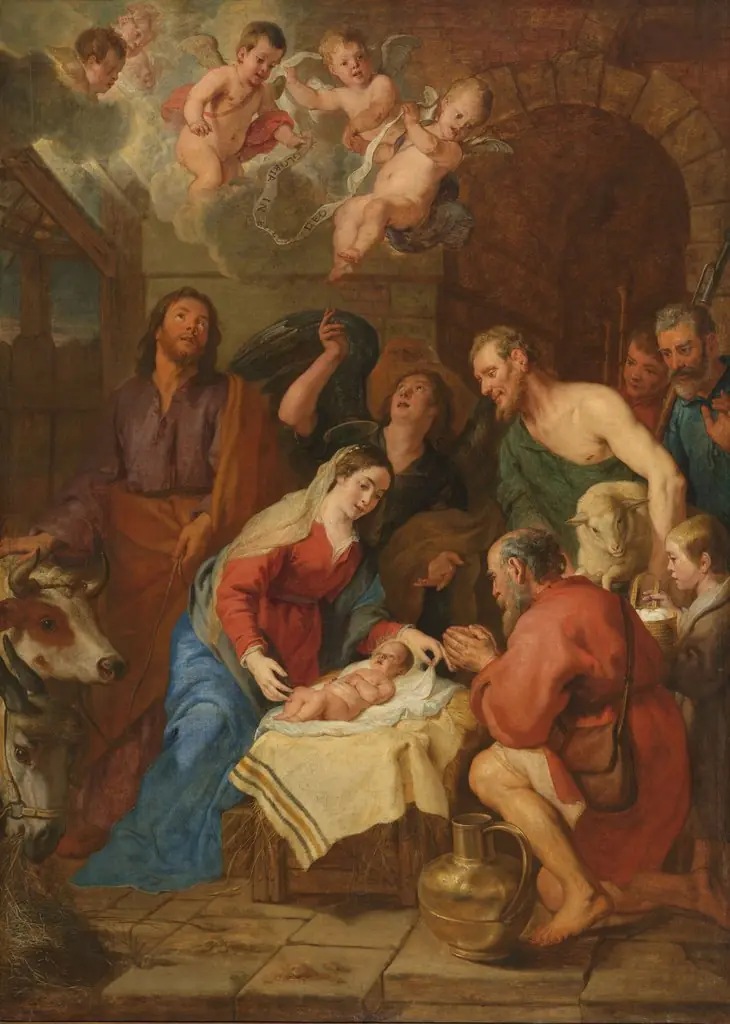 The adoration of the shepherds