Artwork
Adoration of the Magi
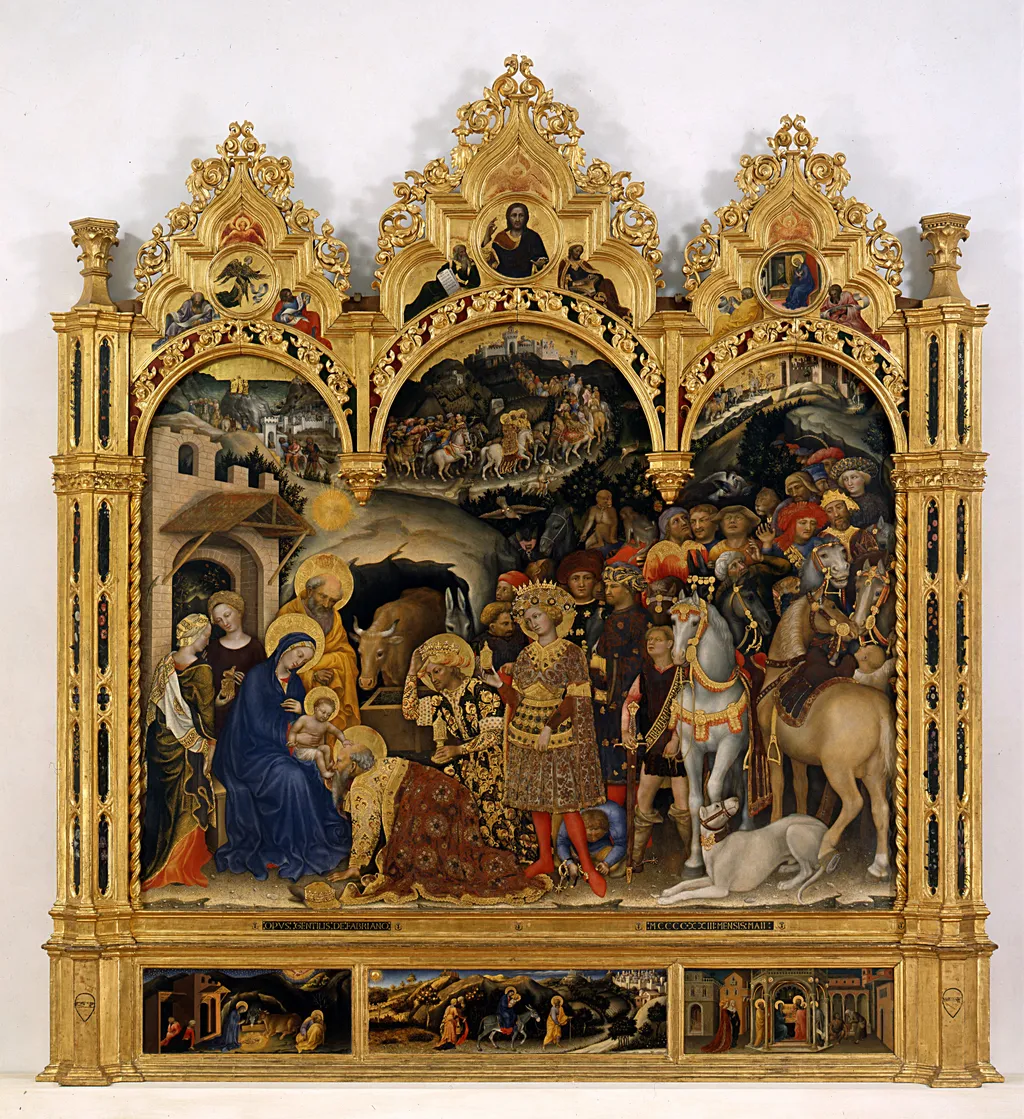
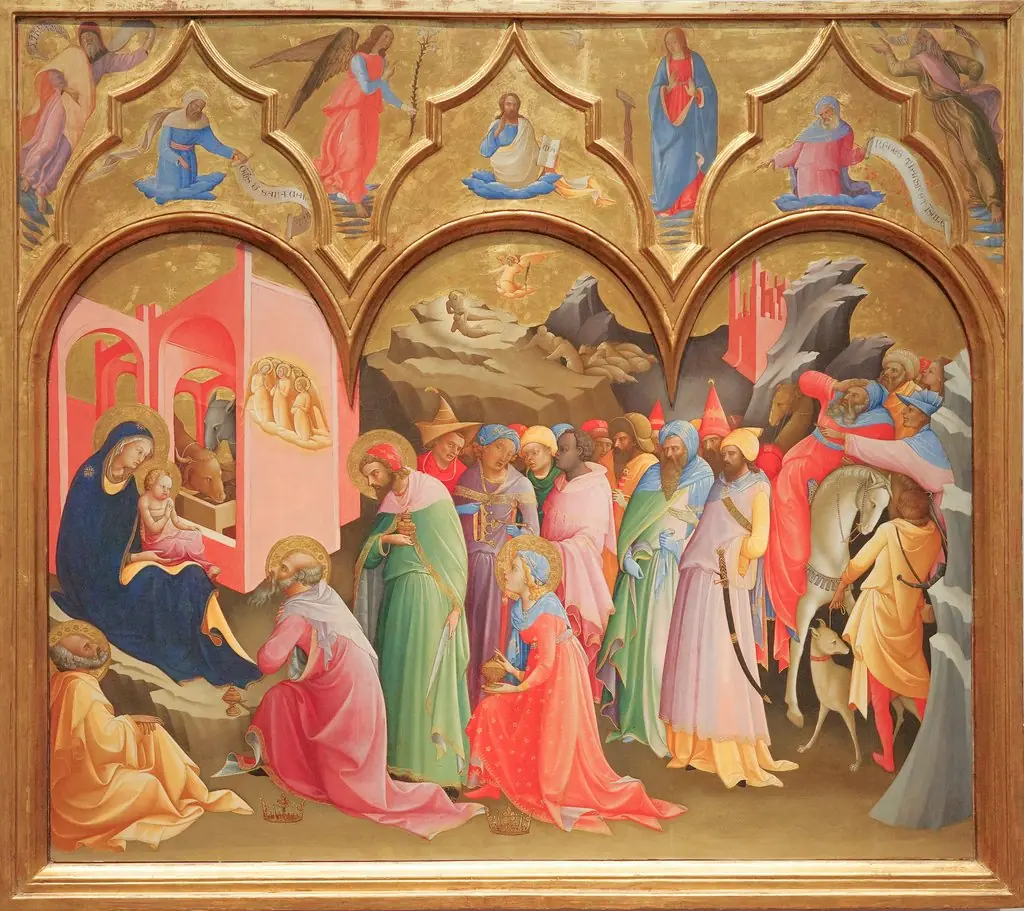
Adoration of the Magi is a tempera painting by the Early Renaissance artist Gentile da Fabriano. It dates from 1423 and is held in the collection of the Uffizi Gallery.
About this work
Subject & Meaning
The white alaunt dog, a hunting breed, may symbolize fidelity or evoke classical antiquity.
Gentile da Fabriano’s Adoration of the Magi (1423) depicts the biblical episode of the three Magi visiting the newborn Christ, a central theme in Christian iconography. The painting portrays the Magi, representing the three ages of man: youth, maturity, and old age, presenting gifts of gold, frankincense, and myrrh to the infant Jesus, signifying his royal, divine, and mortal nature, respectively. The Virgin Mary and Joseph are positioned beside the Christ Child, while a procession of courtiers, exotic animals (including leopards, a dromedary, and monkeys), and falconers accompanies the Magi, emphasizing their long journey from distant lands.
Symbolism permeates the work. The Magi’s removal of their crowns underscores humility before the divine, while the inclusion of a page fastening spurs to a Magi references Palla Strozzi’s membership in the Order of the Golden Spur, linking earthly prestige to spiritual devotion. The white alaunt dog, a hunting breed, may symbolize fidelity or evoke classical antiquity.
The painting’s opulent details, gold leaf, ultramarine, and jewels, reflect the patron’s wealth and piety, framing the adoration as both a sacred event and a display of secular power. The narrative unfolds across three lunettes, depicting the Magi’s journey from the appearance of the star to their arrival in Bethlehem, reinforcing the theme of pilgrimage and revelation.
Technique & Style
Executed in 1423, this altarpiece is a tempera painting on wood panel, distinguished by its extensive use of gold and silver leaf. Gentile da Fabriano employed the pastiglia technique, applying raised gesso and glue to create three-dimensional textures on crowns, textiles, and spurs before covering them with gold. The artist further enriched the surface through incising, punching, and freehand tooling of the metal leaf to simulate varied light effects.
Mary's robe features ultramarine, a costly pigment, while the original carved wooden frame retains intricate Gothic architectural details and floral motifs. Stylistically, the work exemplifies the International Gothic through its vibrant colors, detailed naturalism, and lack of linear perspective, relying instead on figure stacking and foreshortening to suggest depth. The composition integrates narrative continuity across the main panel and predella, utilizing luxurious materials to reflect the patron's status.
History & Provenance
Commissioned in 1420 by the wealthy banker Palla Strozzi for his family chapel in the Basilica of Santa Trinita, Florence, this altarpiece was completed in May 1423. Gentile da Fabriano executed the work with assistance from painters including Arcangelo di Cola da Camerino, Giovanni da Imola, and Michele d'Ungheria. The patron paid a total of 300 florins, with a final settlement document recording 150 florins. The painting is signed and dated on the frame between the main panel and the predella.
During the Napoleonic suppressions in 1806, the work was removed from the church and transferred to the Galleria dell'Accademia in 1810 for educational purposes. In 1812, the predella panel depicting the Presentation at the Temple was seized and sent to the Louvre; a copy replaced it when the altarpiece moved to the Uffizi Gallery in 1919, where it remains.
The Gentile da Fabriano Adoration of the Magi is housed in the Uffizi Gallery (Galleria degli Uffizi) in Florence. After its creation for the Strozzi chapel in Santa Trinita, the panel was seized during the Napoleonic occupation; in 1806 it was placed in a deposit, then moved in 1810 to the Galleria dell'Accademia for the instruction of painters. The predella panel showing the Presentation at the Temple was detached in 1812 and entered the Louvre, while the main altarpiece remained in Florence.
In 1919 the work was returned to the Uffizi, where it remains on display, accompanied by a copy of the missing predella.
Context
Gentile da Fabriano’s Adoration of the Magi (1423) is widely regarded as the culminating masterpiece of the International Gothic style, synthesizing opulent detail with narrative innovation. Scholars highlight its role in bridging late medieval courtly aesthetics and emerging Florentine Renaissance techniques, particularly through its layered spatial composition and naturalistic rendering of textures, fabrics, and expressions, elements that influenced contemporaries like Masaccio. The work’s luxurious materials, including gold leaf, ultramarine, and pastiglia reliefs, were not merely decorative but strategically employed to reflect the patron Palla Strozzi’s wealth and piety, reinforcing the mercantile elite’s cultural legitimacy.
Critically, the altarpiece’s self-supporting frame and predella marked a shift in altarpiece construction, separating structural and decorative functions. Its integration of exotic motifs, leopards, dromedaries, and Pseudo-Kufic script, also exemplifies the era’s fascination with the Orient, blending devotional imagery with secular display. While the painting retains Gothic conventions, such as hierarchical scaling and narrative juxtaposition, its technical sophistication and visual richness positioned it as a pivotal work in the transition toward Renaissance naturalism.
Legacy
The Adoration of the Magi is widely regarded as Gentile da Fabriano's finest work and the culminating achievement of the International Gothic style. Its detailed naturalism and complex compositions profoundly influenced Florentine Renaissance painting, introducing novel techniques of lighting, depth, and three-dimensionality.
The painting's innovative self-supporting frame, designed to protect rather than remain inseparable from the panel, proved influential in the evolution of framing conventions. The work has maintained exceptional prominence in art-historical discourse, earning a place in historian Paul Veyne's "musée imaginaire."
Removed from Santa Trinita during the Napoleonic suppressions of 1806, the altarpiece was transferred to the Accademia Gallery for artistic instruction before arriving at the Uffizi Gallery in 1919, where it remains displayed with its original gilded frame and a replica predella, the Presentation at the Temple having been ceded to the Louvre in 1812.
Overview
Gentile da Fabriano’s tempera panel, titled Adoration of the Magi, occupies a prominent place in the Uffizi’s collection. The composition depicts a bustling gathering around the infant Christ, surrounded by richly dressed figures, exotic animals and an elaborate architectural frame. The work exemplifies the ornate visual language of the International Gothic, combining vivid coloration with intricate gold detailing.
Own this work as a print
Artist & collection

Artist
Gentile da Fabriano was a traveler who followed the money. Around 1420 he landed in Florence chasing richer patrons than his Umbrian hometown could offer. He liked gold leaf more than gold coins, his paintings shimmer…

- Adoration of the Magi
 Adoration of the Magi
 Madonna and Child with Two Saints (Bicci)
 Tobias and Three Archangels
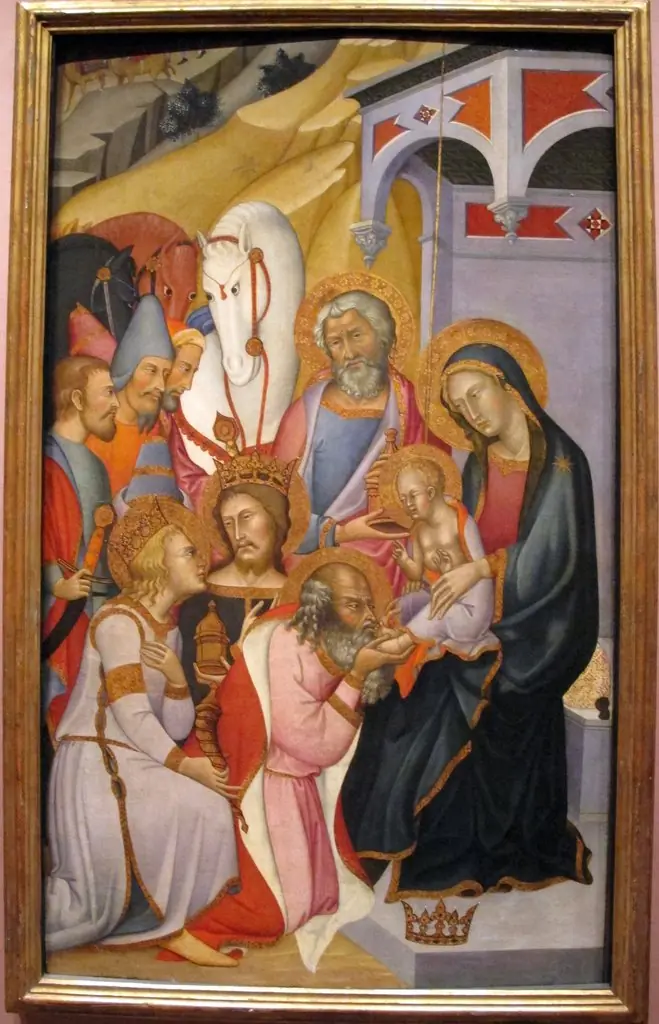
 The Adoration of the Magi
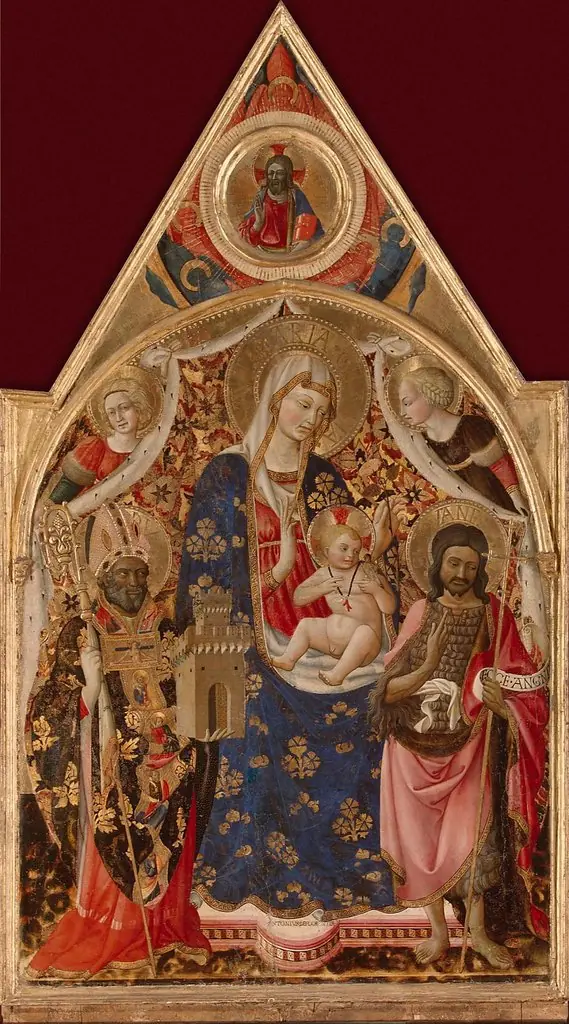 Madonna and Child, with a Bishop, St John The Baptist and Angels
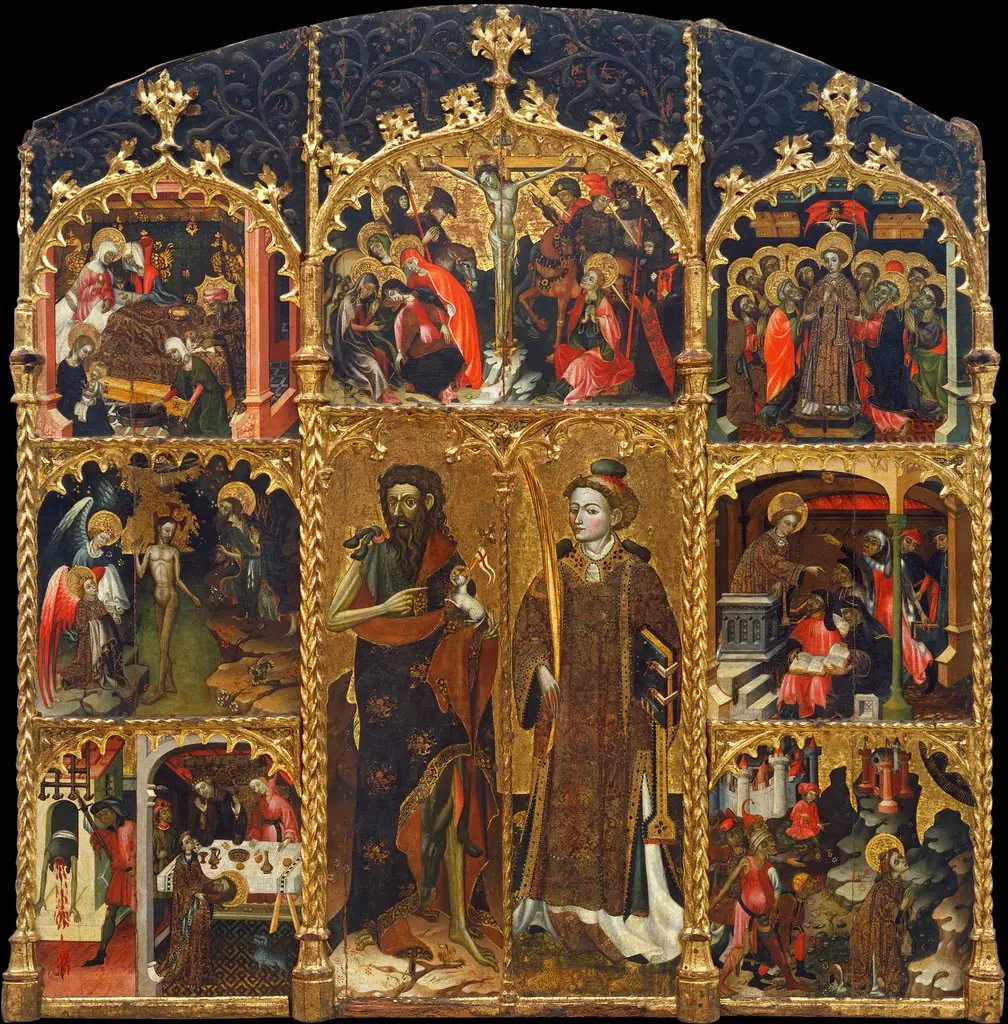 Altarpiece of Saint John the Baptist and Saint Stephen
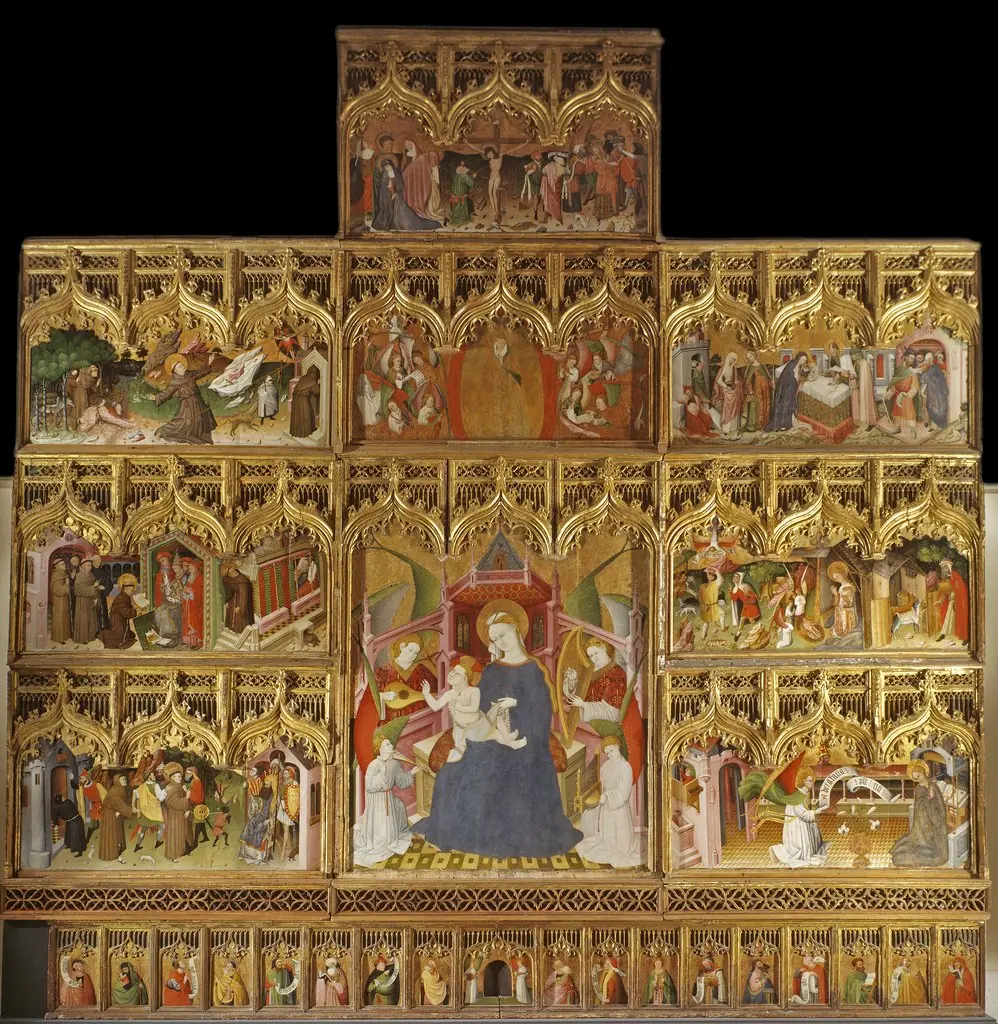 Altar Piece of the Lives of the Virgin and Saint Francis
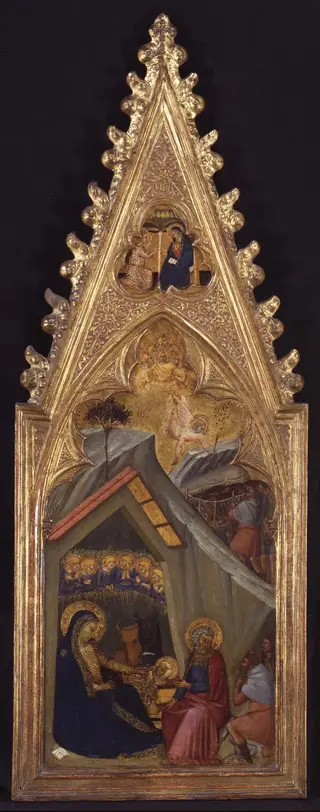 Nativity of Christ
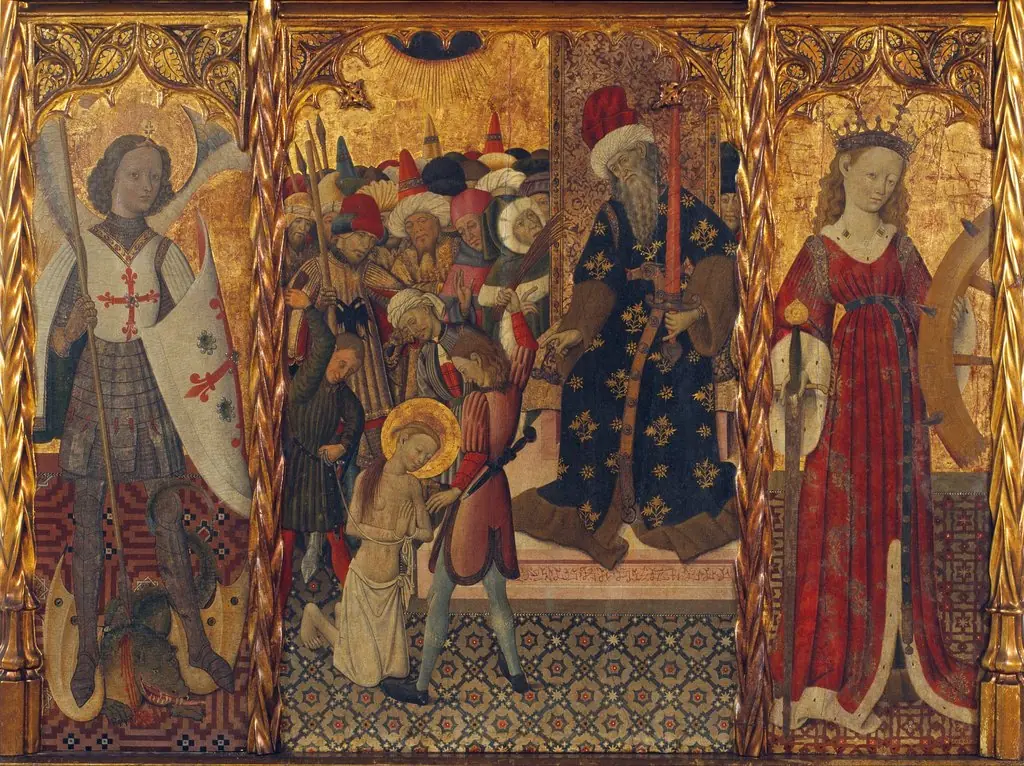 Saint Michael, Martyrdom of Saint Eulalia and Saint Catherine
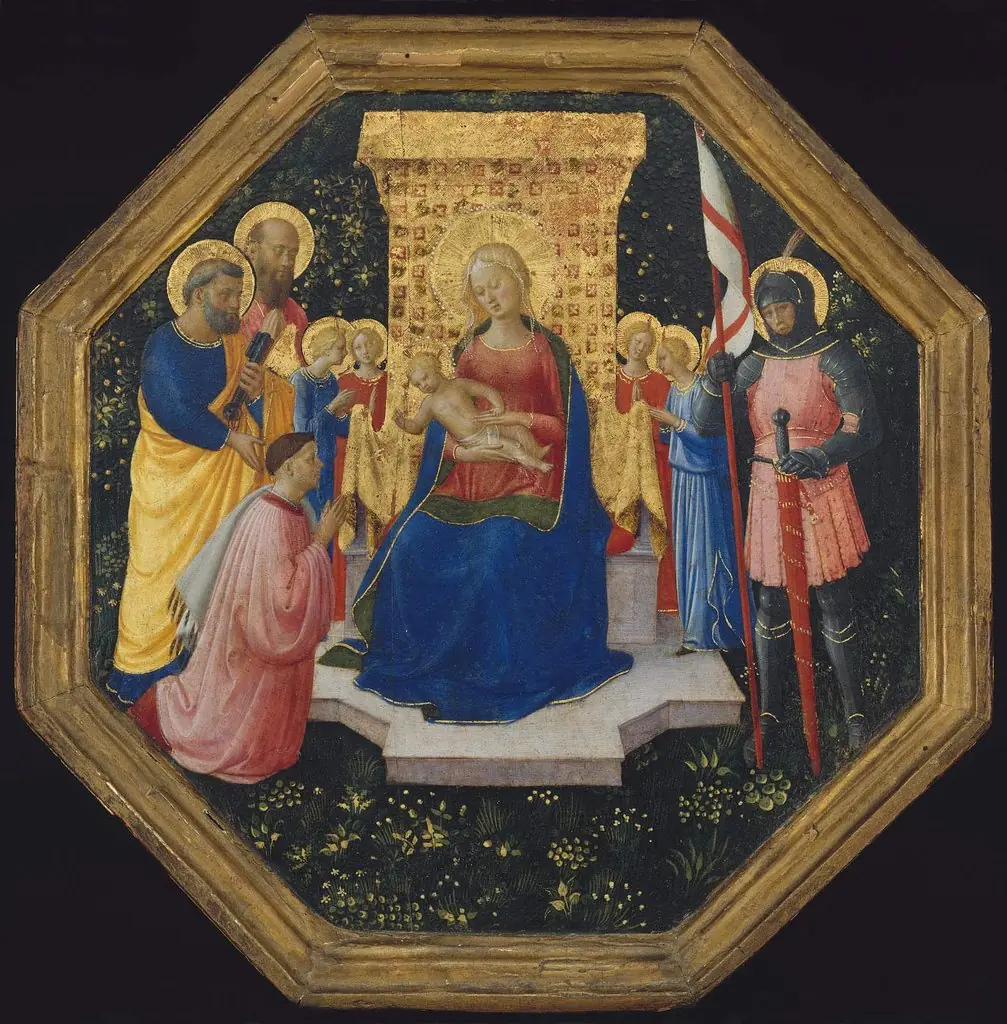 Virgin and Child Enthroned with Saints Peter, Paul and George (?), Four Angels, and a Donor
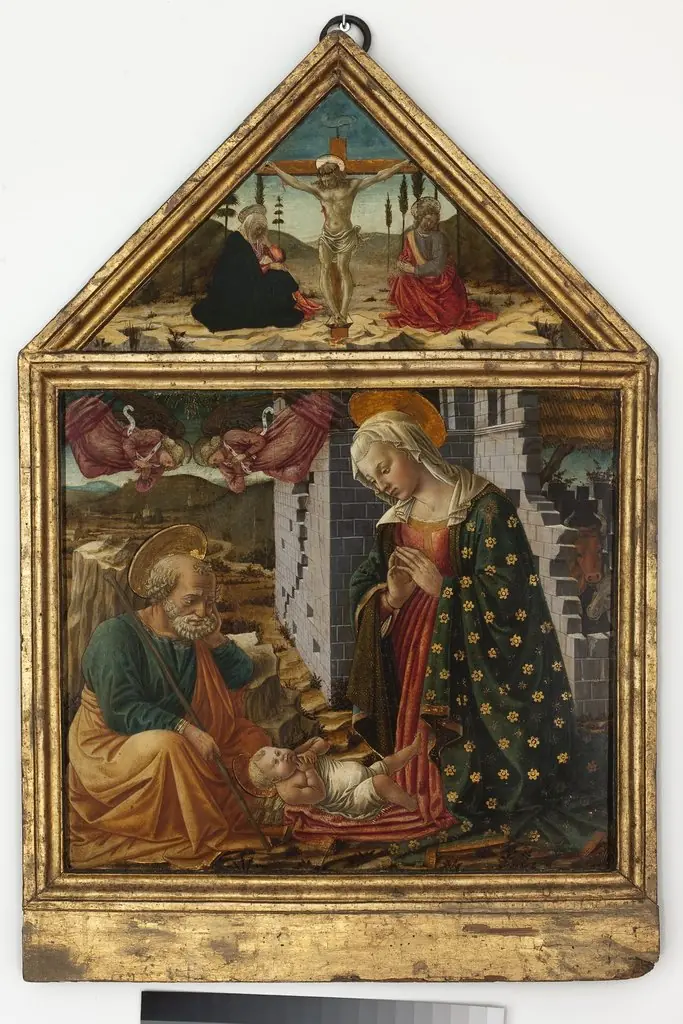 Adoration of Child Jesus and Crucifixion