Artwork
Agathonike Helen Ionides (1887–1976)
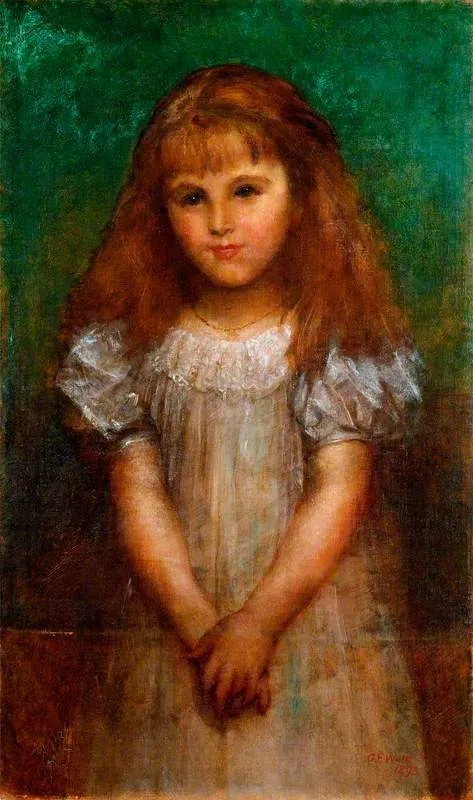
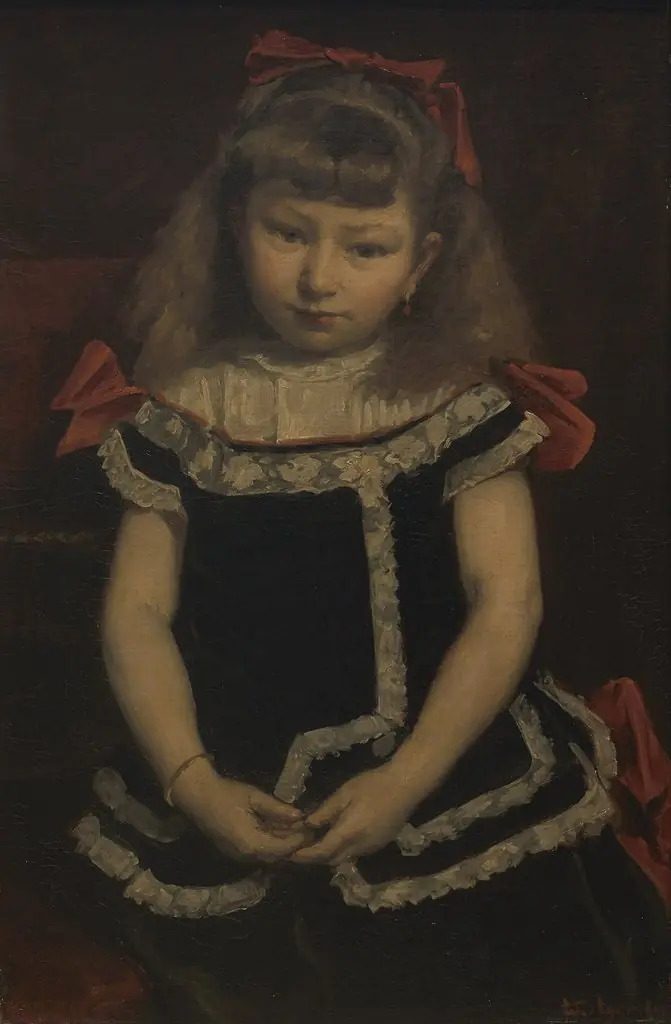
Agathonike Helen Ionides (1887–1976) is an oil painting by the Aestheticist artist George Frederic Watts. It dates from 1897 and is held in the collection of the Victoria and Albert Museum.
About this work
Overview
The work is part of the Victoria and Albert Museum’s collection and reflects Watts’s interest in quiet, introspective subjects.
Painted in 1897 by George Frederic Watts, this oil portrait captures Agathonike Helen Ionides, a child born in 1887. The work is part of the Victoria and Albert Museum’s collection and reflects Watts’s interest in quiet, introspective subjects. Though associated with Symbolism and Aestheticism, the painting avoids narrative or allegory, focusing instead on the stillness and presence of its young subject.
Subject & Meaning
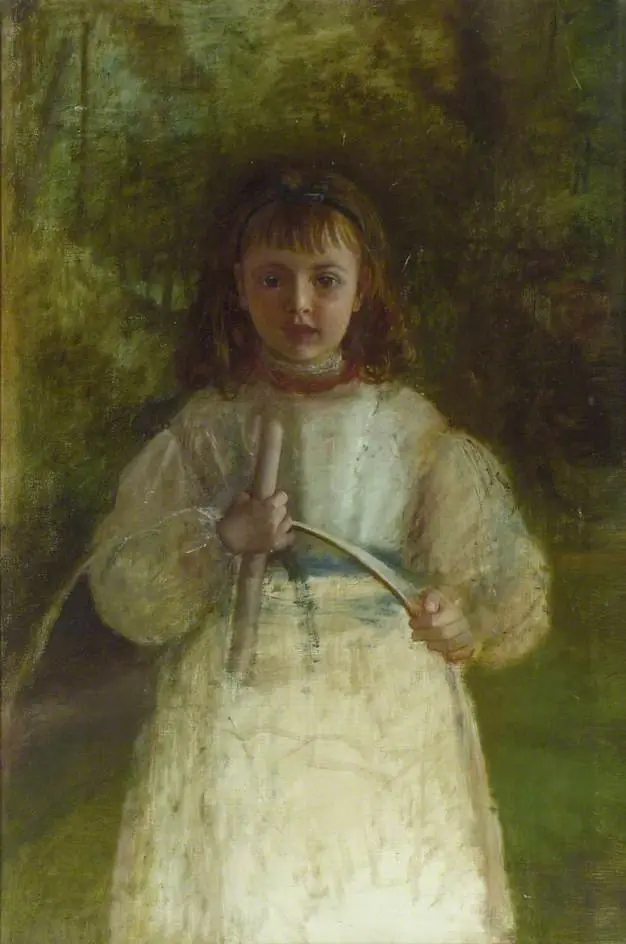
The sitter, Agathonike Helen Ionides, was a child at the time of the portrait, her youth emphasized by her delicate features and simple attire. Her calm expression and gently clasped hands suggest a composed, inward demeanor. Watts avoids idealization or sentimentality; instead, the portrait conveys a sense of quiet dignity, inviting contemplation rather than storytelling.
Technique & Style
Watts employed subtle chiaroscuro to model the girl’s face and hands, drawing attention to their soft illumination against the muted green background. The white dress, with its ruffled collar and puffed sleeves, is rendered with restrained detail, allowing texture to emerge through layered brushwork. The gold necklace and loose curls of red hair add quiet accents, enhancing the composition’s serenity without distraction.
History & Provenance
The painting entered the Victoria and Albert Museum’s collection in the early 20th century, likely through the artist’s estate or a donor connected to Watts’s circle. Its preservation reflects the museum’s interest in British portraiture and Aesthetic Movement works. No significant alterations or reattributions are recorded, and it has remained in public ownership since acquisition.
Context
Watts painted this portrait during a period when he increasingly favored intimate, non-narrative studies over grand historical or mythological themes. The Aesthetic Movement’s emphasis on beauty and mood influenced his approach, aligning this work with contemporaries who valued sensory harmony over moral or literary content. The portrait reflects a broader shift toward personal, contemplative imagery in late Victorian art.
Legacy
Though not among Watts’s most widely known works, this portrait exemplifies his later style, quiet, restrained, and emotionally nuanced. It contributes to the understanding of how British artists of the time reimagined portraiture through atmosphere and presence rather than narrative. The painting remains a quiet testament to his ability to convey stillness with depth.
Artist & collection
Artist
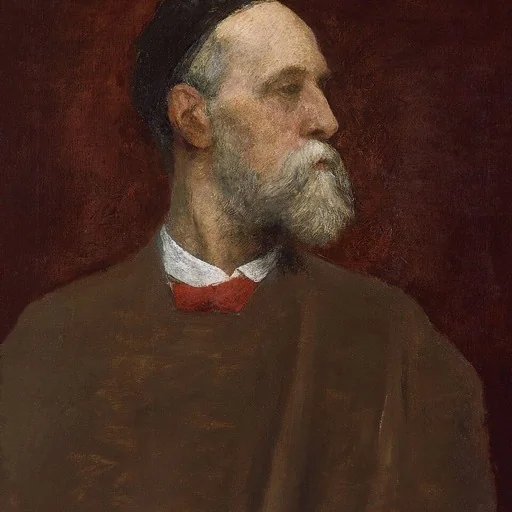
George Frederic Watts (23 February 1817 – 1 July 1904) was a British painter and sculptor associated with the Symbolist movement.

- Ducklings
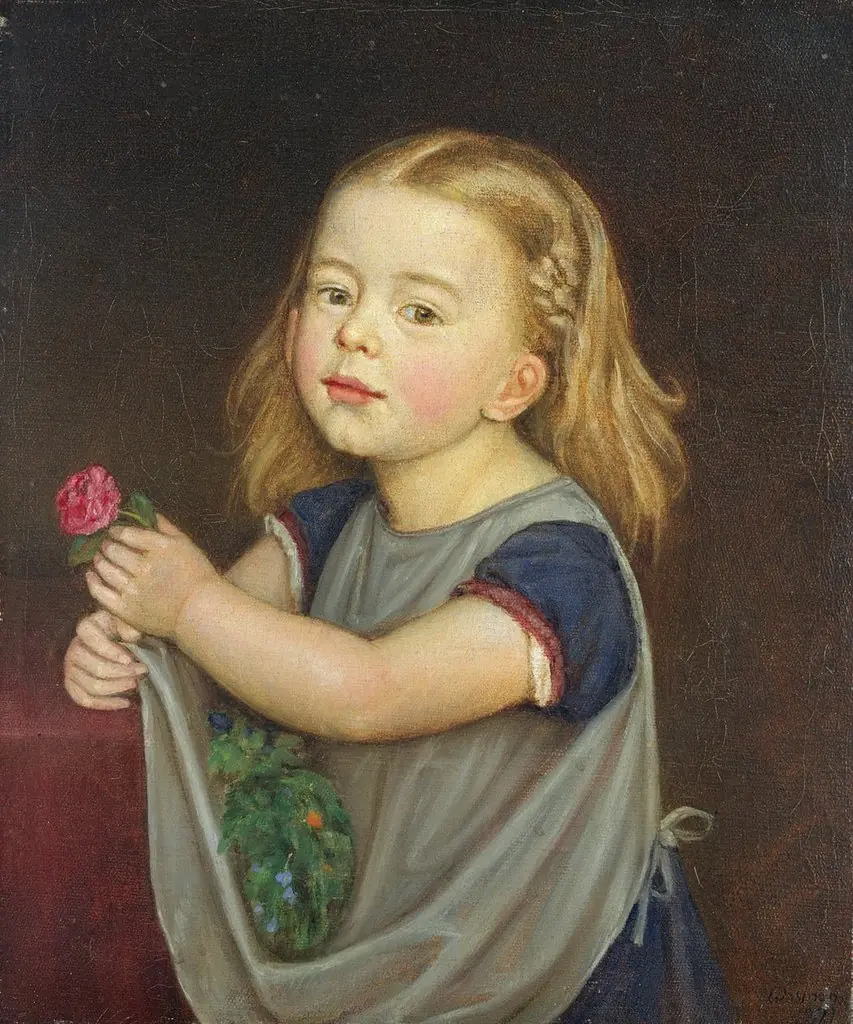 Antonia Franziska Romana Wasmann, die jüngste Tochter des Künstlers
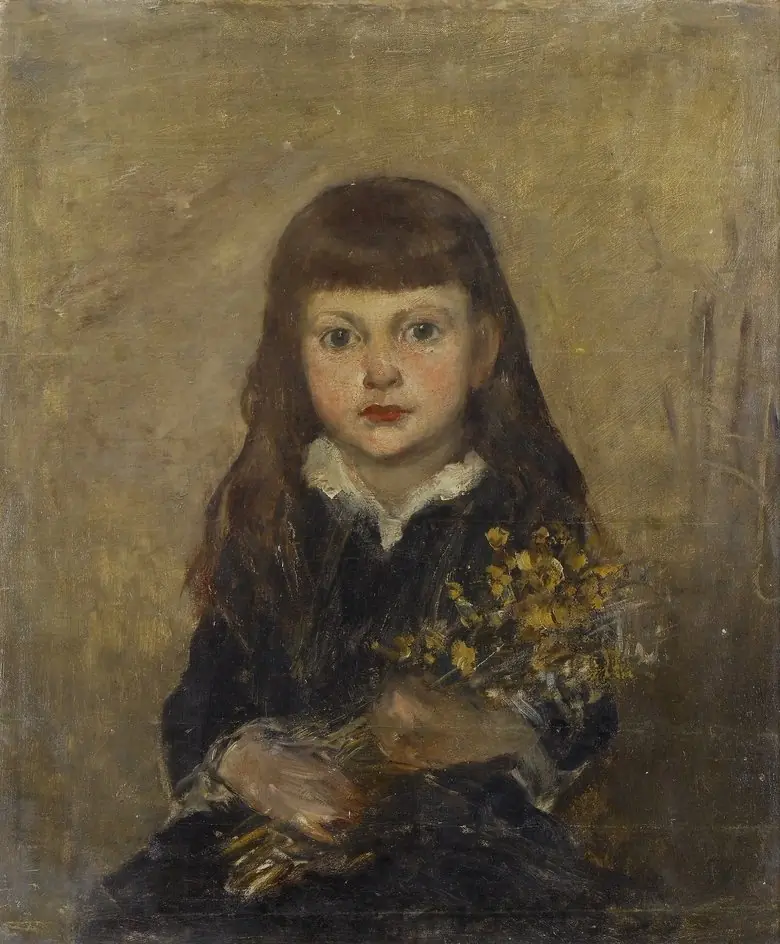 Portrait of Margaret Millicent Fisher Prout, the Artist's Daughter
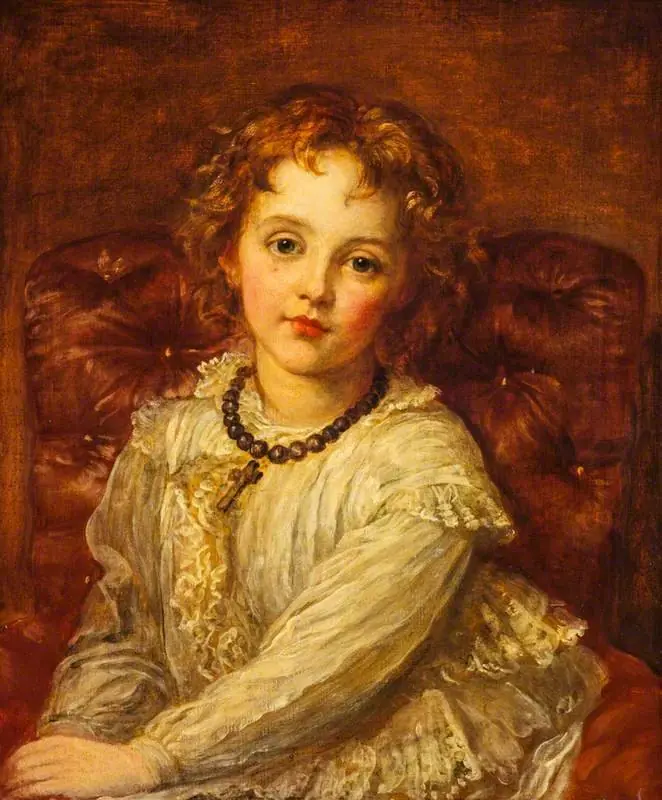 Caroline Muriel Callander, later Mrs Baird (c 1861 - 1932)
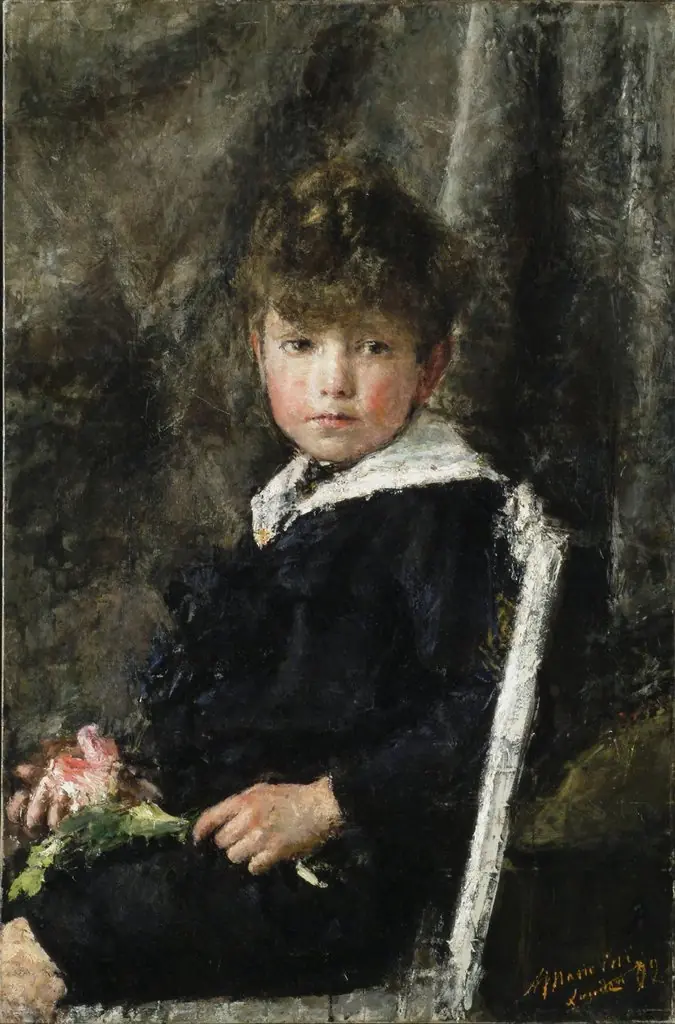 Seated Boy
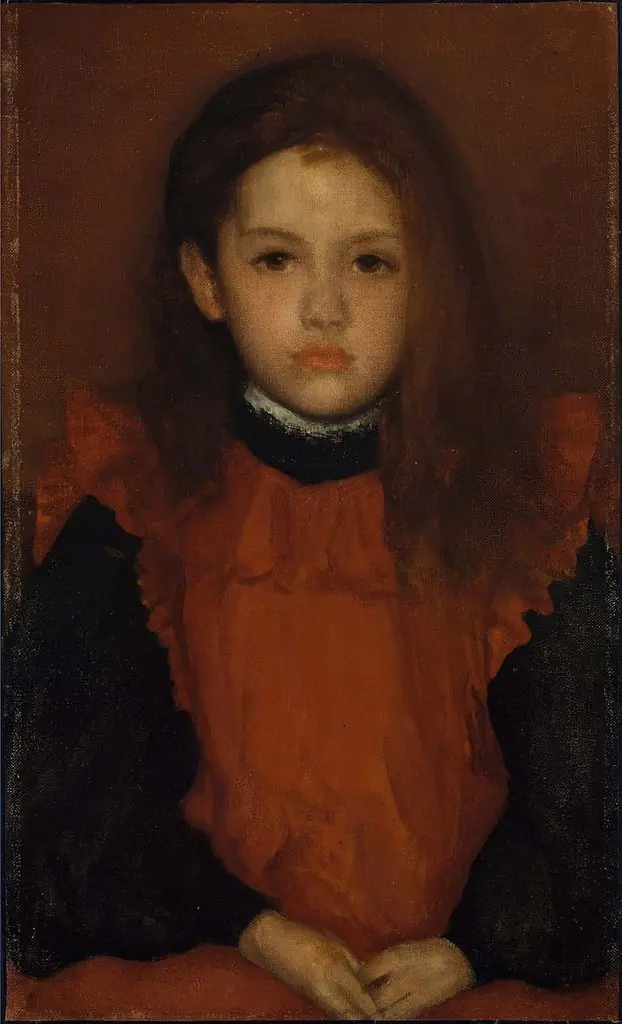 Little Rose of Lyme Regis
 Portret van een meisje
 Girl with a Hoop
 Portrait of Jean
 Edward Robert Hughes as a child
 Juliette Quénel