Artwork
Noontime, St. Botolph Street, Boston
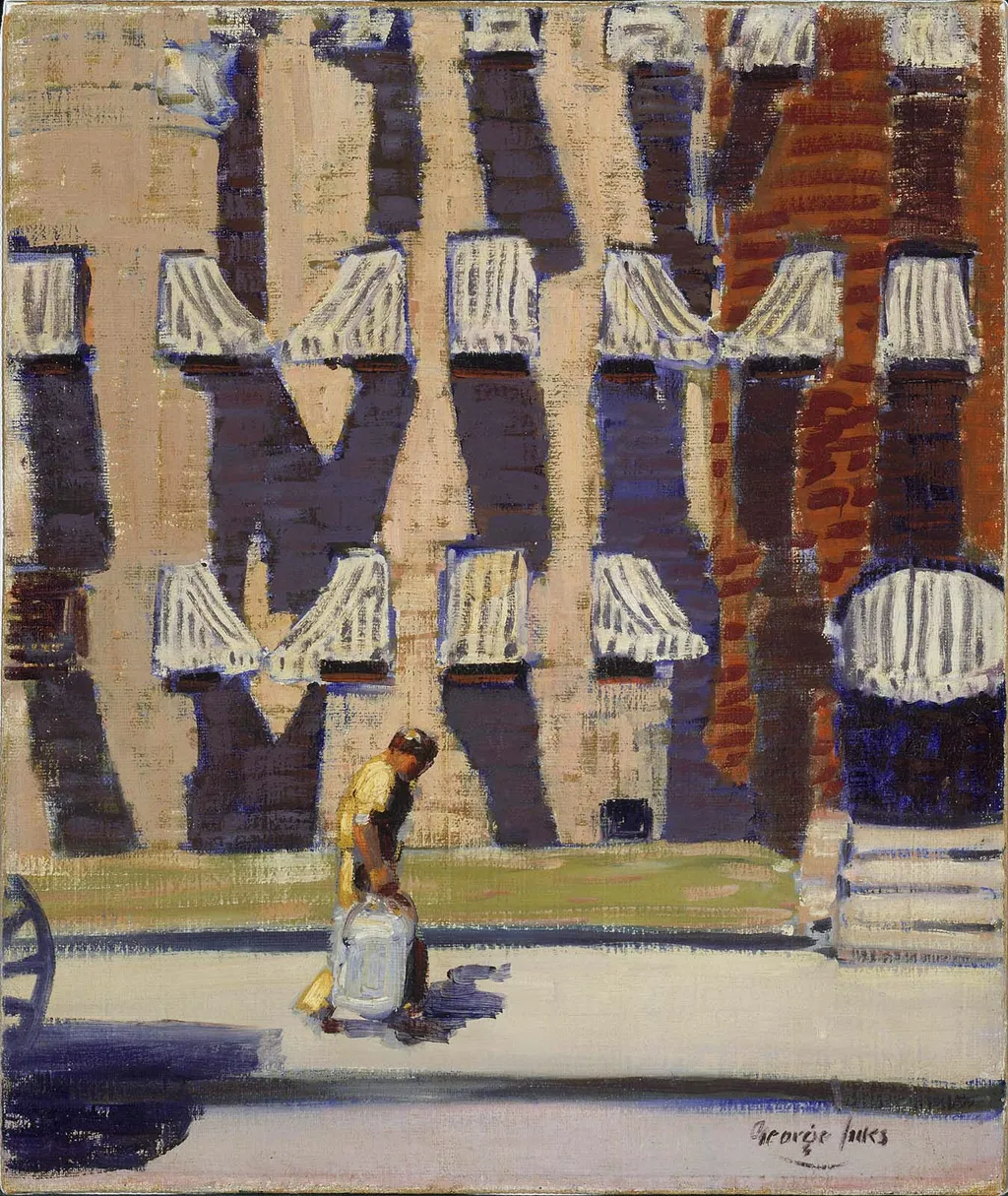
Noontime, St. Botolph Street, Boston is an oil painting by the Impressionist artist George Luks. It dates from 1923 and is held in the collection of the Museum of Fine Arts Boston. Painted in 1923, Noontime, St.
About this work
Overview
Its composition and lighting reflect Luks’s background in illustration, blending observational detail with a restrained, atmospheric approach to the cityscape.
Painted in 1923, Noontime, St. Botolph Street, Boston is an oil-on-canvas work by George Luks, an artist linked to the Ashcan School. The painting captures a quiet urban moment in Boston, emphasizing ordinary life rather than grand spectacle. Its composition and lighting reflect Luks’s background in illustration, blending observational detail with a restrained, atmospheric approach to the cityscape.
Subject & Meaning
The central figure is a woman walking alone along a sidewalk, her posture bent under the weight of a bundled package. Dressed in dark clothing and facing away, she embodies quiet solitude amid the urban environment. The scene avoids drama, instead conveying the rhythm of daily labor and the anonymity of city life. The stillness of the moment suggests contemplation, not action, grounding the work in the dignity of routine.
Technique & Style
Luks employed loose, expressive brushwork to render light and shadow across the street and buildings, creating depth without sharp definition. The palette is muted, dominated by grays and browns, with the white bundle offering a subtle contrast. His handling of light, long, diagonal shadows under midday sun, echoes impressionist concerns with atmosphere, yet remains grounded in the tangible textures of urban surfaces.
History & Provenance
Created late in Luks’s career, the painting reflects his enduring interest in street life, a theme he pursued since his years as a newspaper illustrator. Unlike his earlier New York scenes, this work shifts focus to Boston, suggesting a personal or regional engagement. Its provenance traces to private collections after its completion, with no major public exhibition history noted during Luks’s lifetime.
Context
In the early 1920s, American art was moving toward modernism, yet Luks remained committed to depicting everyday reality. Noontime stands apart from the era’s growing abstraction, aligning instead with a tradition of social observation rooted in realism. The painting quietly resists idealization, presenting the city not as a stage for spectacle but as a space of quiet, unremarkable passage.
Legacy
Though less widely known than Luks’s New York street scenes, this work exemplifies his consistent focus on the unnoticed rhythms of urban existence. It contributes to a broader understanding of Ashcan School artists who extended their vision beyond major metropolises. The painting remains a quiet testament to the dignity of solitary labor in the American city.
Own this work as a print
Artist & collection

Artist
George Benjamin Luks (August 13, 1867 – October 29, 1933) was an American artist, identified with the aggressively realistic Ashcan School of American painting.

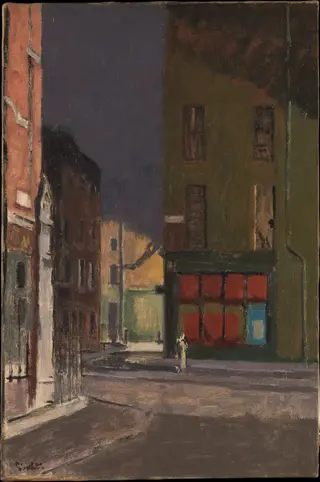 Maple Street, London
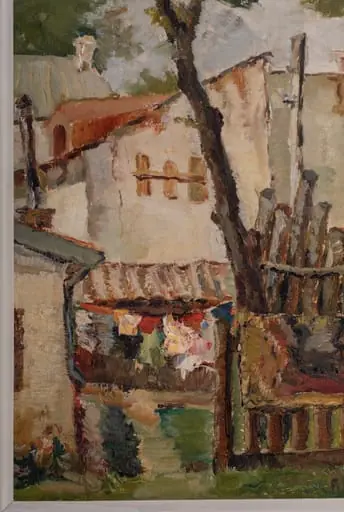 Curte în provincie, 1940
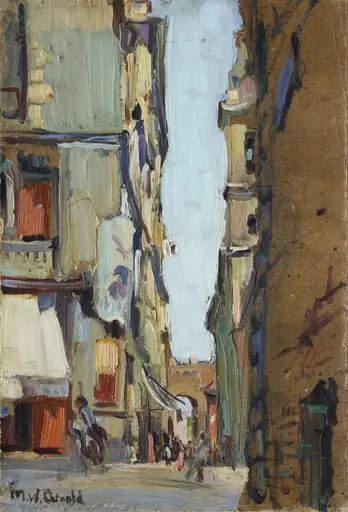 Stradă
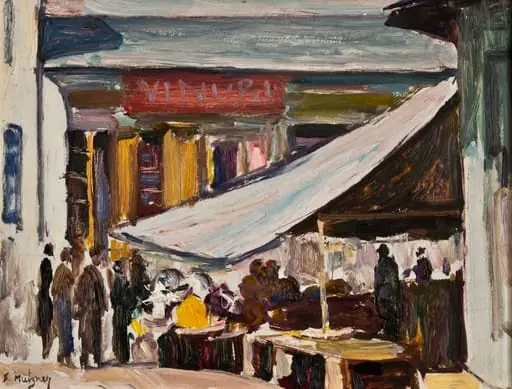 Bazar
Bazar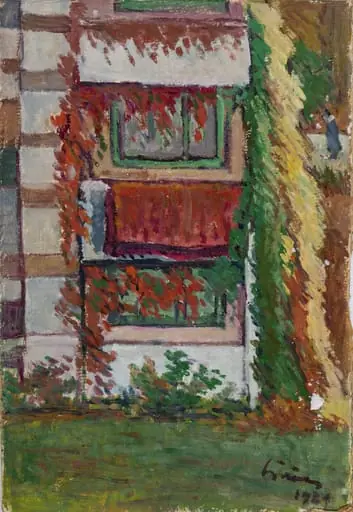 Un petic de iarbă în prim-plan, urmat de un detaliu dintr-un bloc de locuințe, un colț al acestuia cu geamuri și balcoane tăiate brusc în zona etajului al doilea, amplasat spre jumătatea din stânga a lucrării. În jumătatea din dreapta, pe lângă peretele blocului, este redată o vegetație abundentă care se „cațără”, colorată în verde, roșu, brun și ocru. Pe lângă balcoanele blocului alb-gri cu dungi brune se cațără o iederă roșie-ruginie; pe balconul etajului unu, un covor roșu-violet este atârnat afară. Hașurări și suprapuneri de culoare în redarea vegetației. Semnat și datat cu brun, dreapta jos: Craiu 1981.
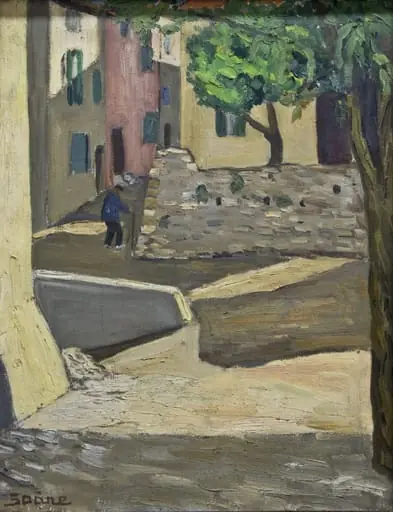 Peisaj din Baleare
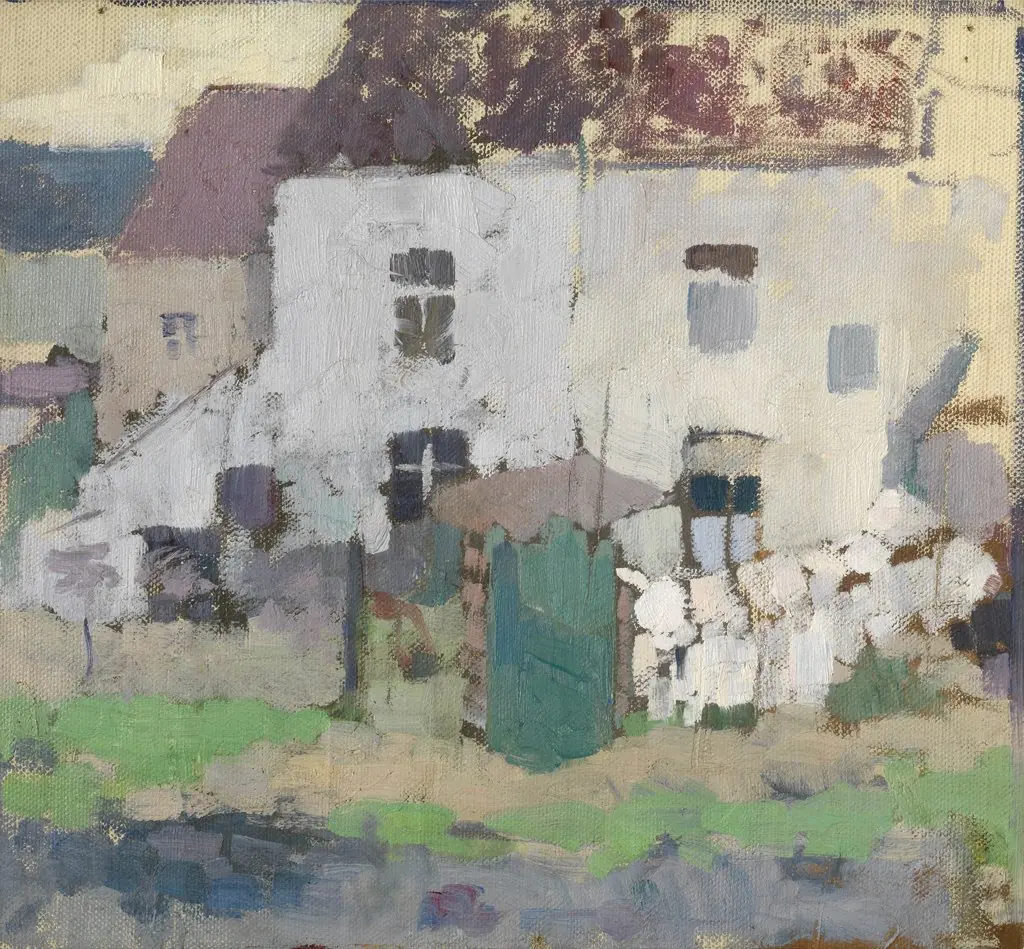 White Façades and Garden at Bosvoorde
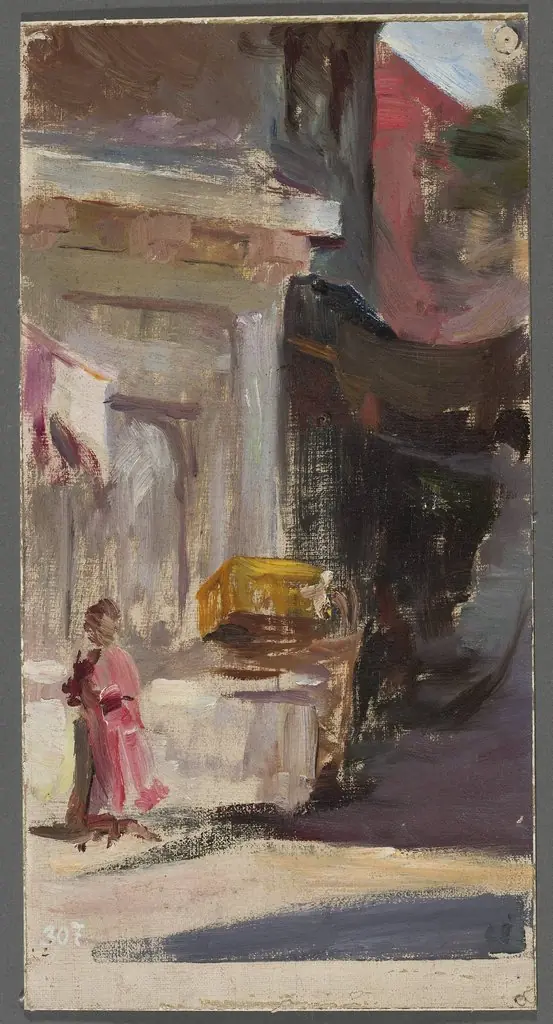 Street fragment. From the journey to Constantinople
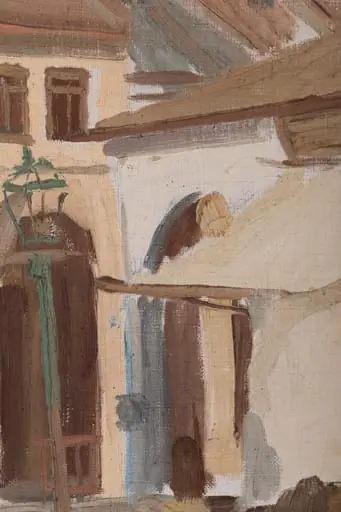 Colț de stradă - Tulcea
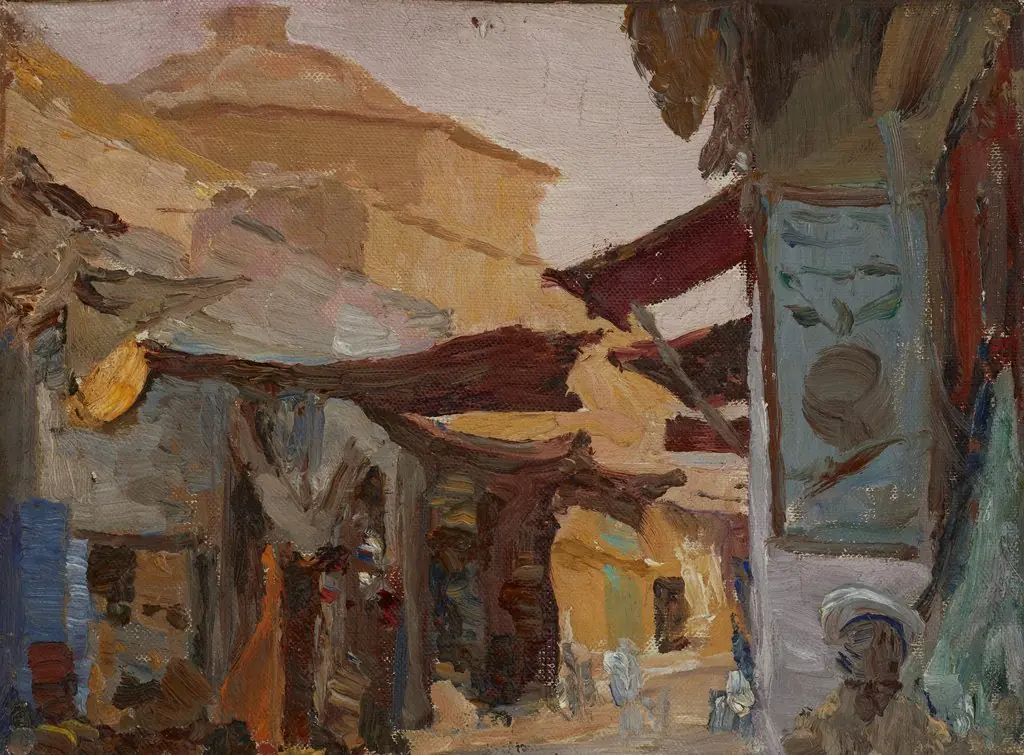 Smyrna (Bazaar)
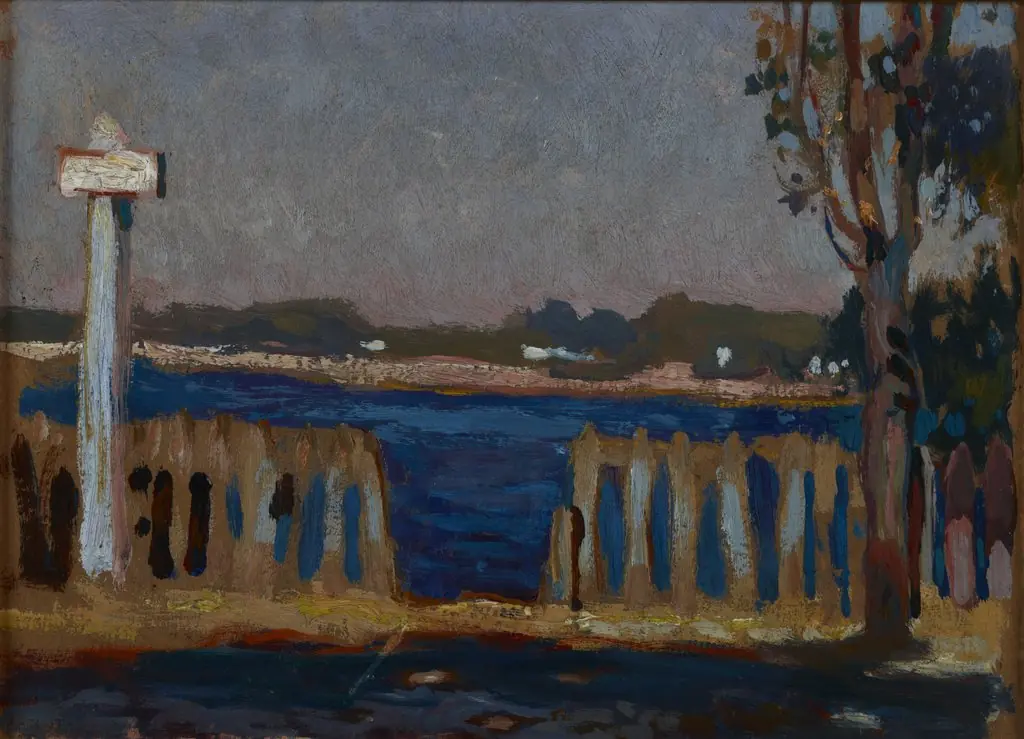 Fence on the River
- High Noon