Artwork
Fan
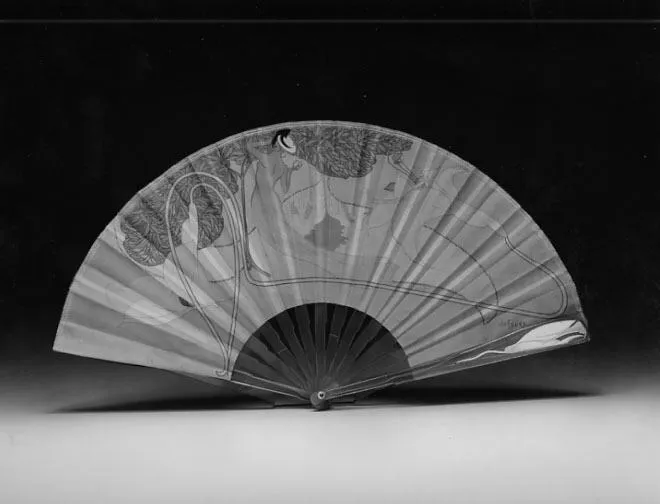
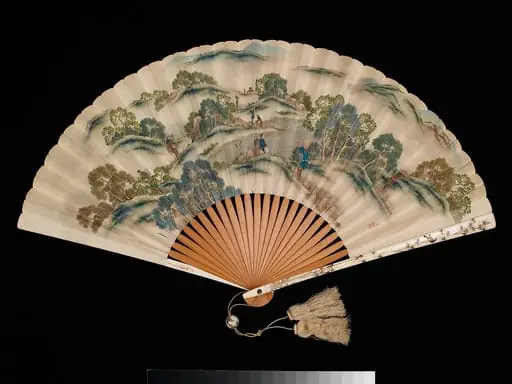
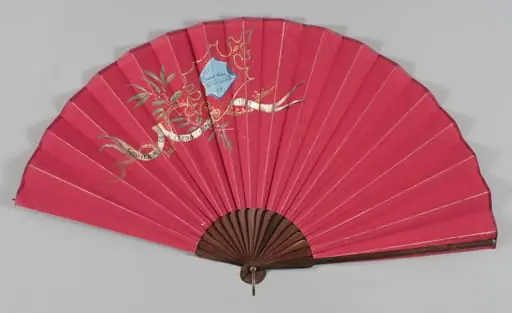
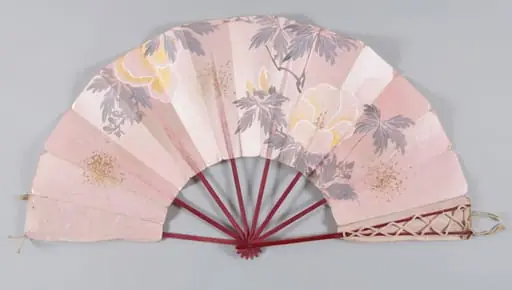
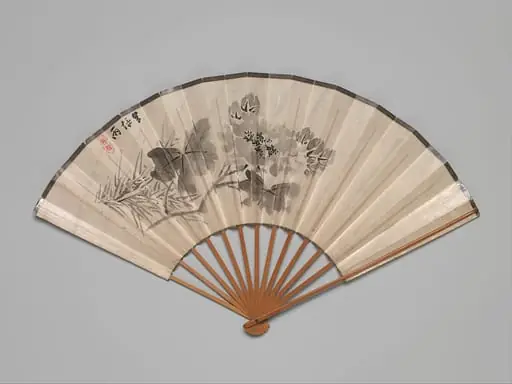
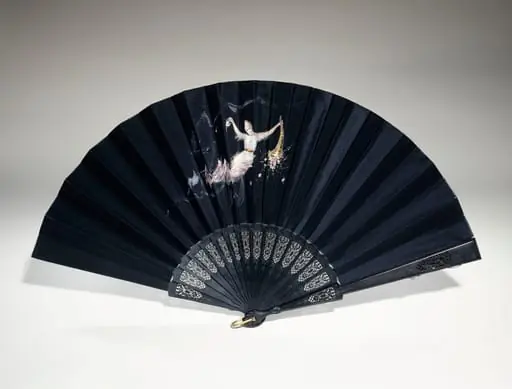
Fan is an unspecified painting by the Art Nouveau artist Georges de Feure. It dates from 1900 and is held in the collection of the Metropolitan Museum of Art.
About this work
Subject & Meaning
The work integrates these elements as its primary subject matter, utilizing the floral motif alongside the female form to establish its visual narrative.
Georges de Feure's 1900 painting, titled Fan, presents a composition centered on the figures of a woman and a flower. The work integrates these elements as its primary subject matter, utilizing the floral motif alongside the female form to establish its visual narrative. As an Art Nouveau creation, the piece relies on the interplay between the human subject and the natural element to convey its thematic content.
Technique & Style
Georges de Feure's Fan, created in 1900, is classified as a painting. The work depicts a woman accompanied by floral elements, reflecting the artist's engagement with decorative and figurative subjects typical of the period. While the specific medium, support, and brushwork techniques are not detailed in the available records, the piece is recognized as a painted composition held within the collection of the Metropolitan Museum of Art. The formal qualities center on the representation of the female figure and botanical motifs.
History & Provenance
The painting Fan was created by Georges de Feure in 1900, according to the work's cataloguing. It is held in the collection of the Metropolitan Museum of Art, where it is currently located.
The available sources do not document the circumstances of the work's commission, the chain of prior ownership, or any intermediate owners between its creation and its acquisition by the Metropolitan Museum of Art. No information on dating refinements, alterations, or acquisition history is provided.
Context
The painting titled Fan, executed in 1900 by French artist Georges de Feure, is recorded as a work of the painting genre. Its subject matter includes a flower and a woman, a motif noted in the Metropolitan Museum of Art's cataloging. The Metropolitan Museum of Art holds the piece in its collection, documenting its status as a 1900 painting by de Feure.
The work's inception date is documented as 1900, situating it within the early modernist period of French art. Scholarship on de Feure frequently cites this painting as an example of his synthesis of Symbolist themes and Art Nouveau decorative sensibilities.
Legacy
The 1900 painting Fan by French artist Georges de Feure entered the collection of the Metropolitan Museum of Art, a status that underscores its enduring scholarly and curatorial attention. As a notable example of Art Nouveau painting, the work is frequently referenced in studies of turn‑of‑the‑century French decorative art and is cited in museum catalogues that document de Feure’s contribution to the movement. Its inclusion in a premier public institution highlights a sustained reputation that extends beyond the artist’s lifetime, influencing how later generations perceive his role in blending fine art with decorative motifs.
Overview
Georges de Feure, a French artist recognized for his contributions to Symbolism and Art Nouveau, created this painted fan in 1900. The work features a solitary female figure amidst natural elements, rendered with the characteristic elegance of the period. It is presently part of the collection at The Metropolitan Museum of Art, showcasing de Feure's diverse artistic practice.
Artist & collection

Artist
Georges de Feure (real name Georges Joseph van Sluijters; 6 September 1868 – 26 November 1943) was a French painter, theatrical designer, and industrial art designer in the symbolism and Art Nouveau styles.