Artwork
Young Man with Arrow
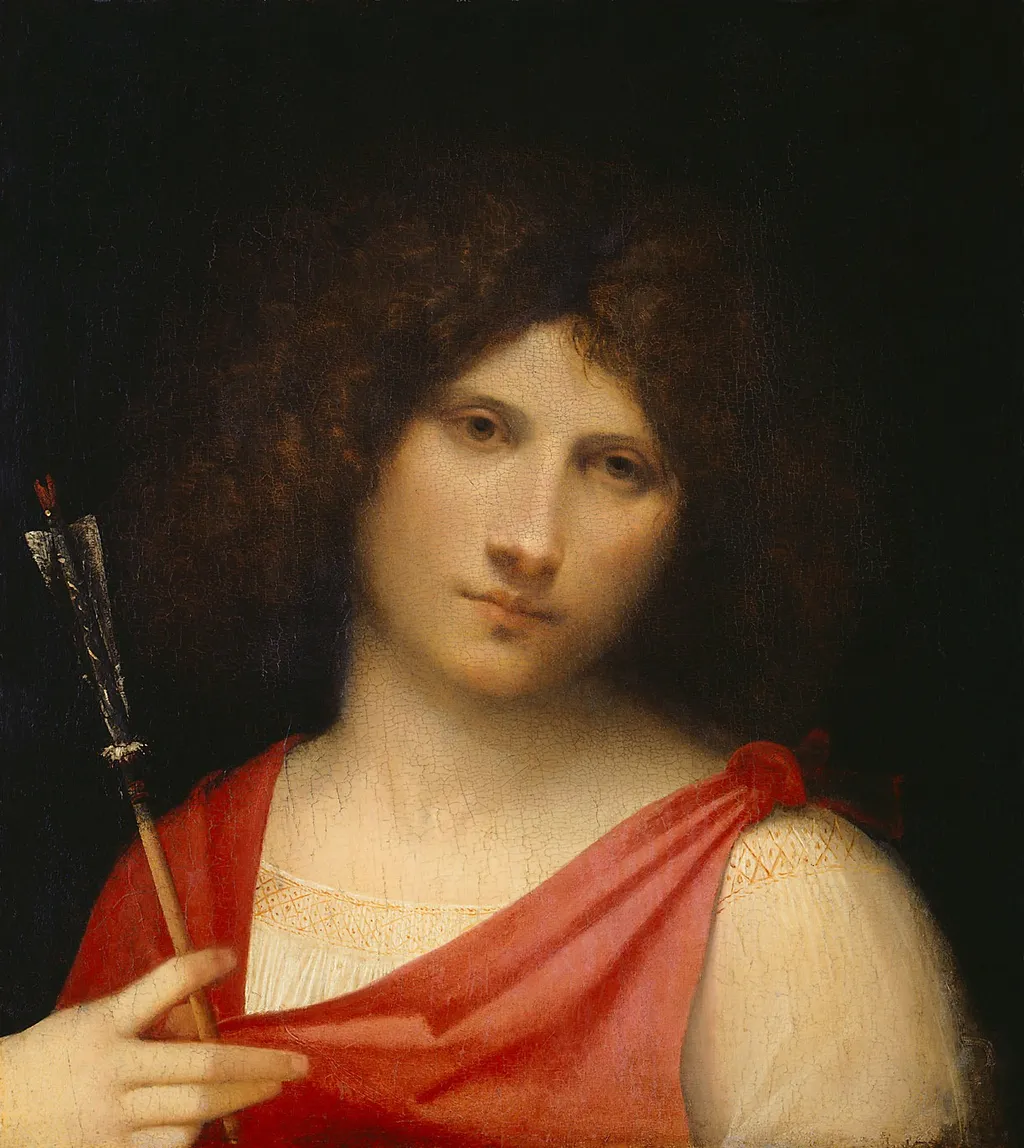
Young Man with Arrow is an oil painting by the High Renaissance artist Giorgione. It dates from 1505 and is held in the collection of the Kunsthistorisches Museum.
About this work
Subject & Meaning
A thesis first advanced in 1937 by Richter, and subsequently endorsed almost unanimously, reads the youth as Eros holding the arrow of love.
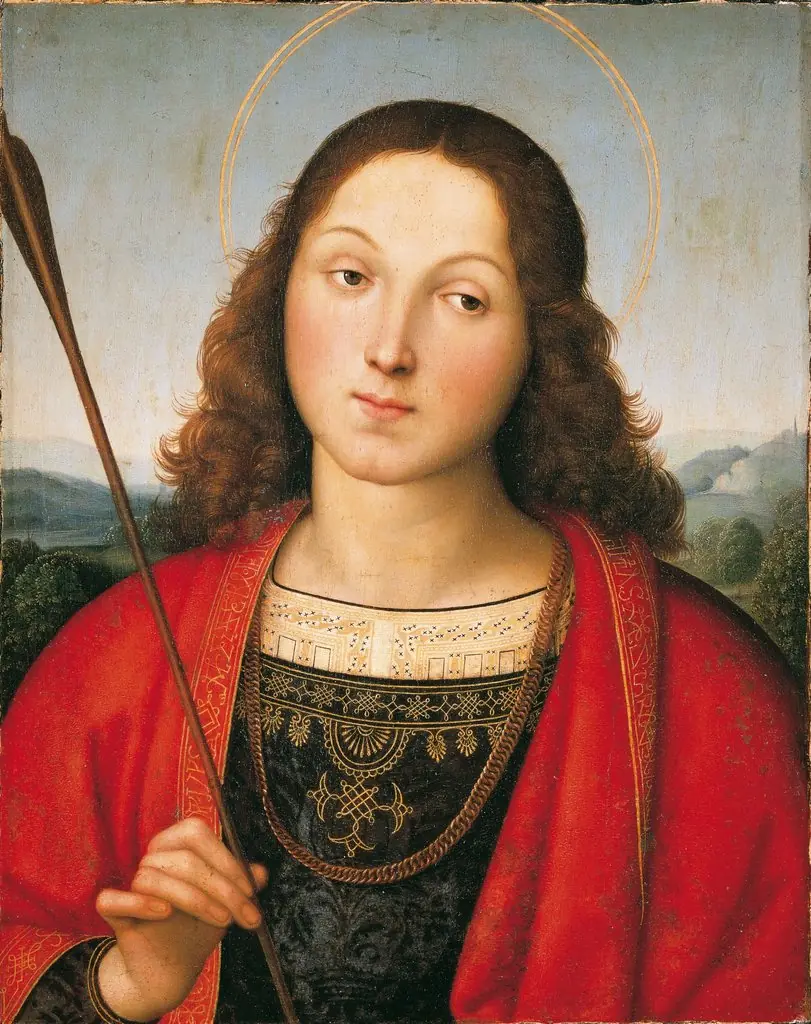
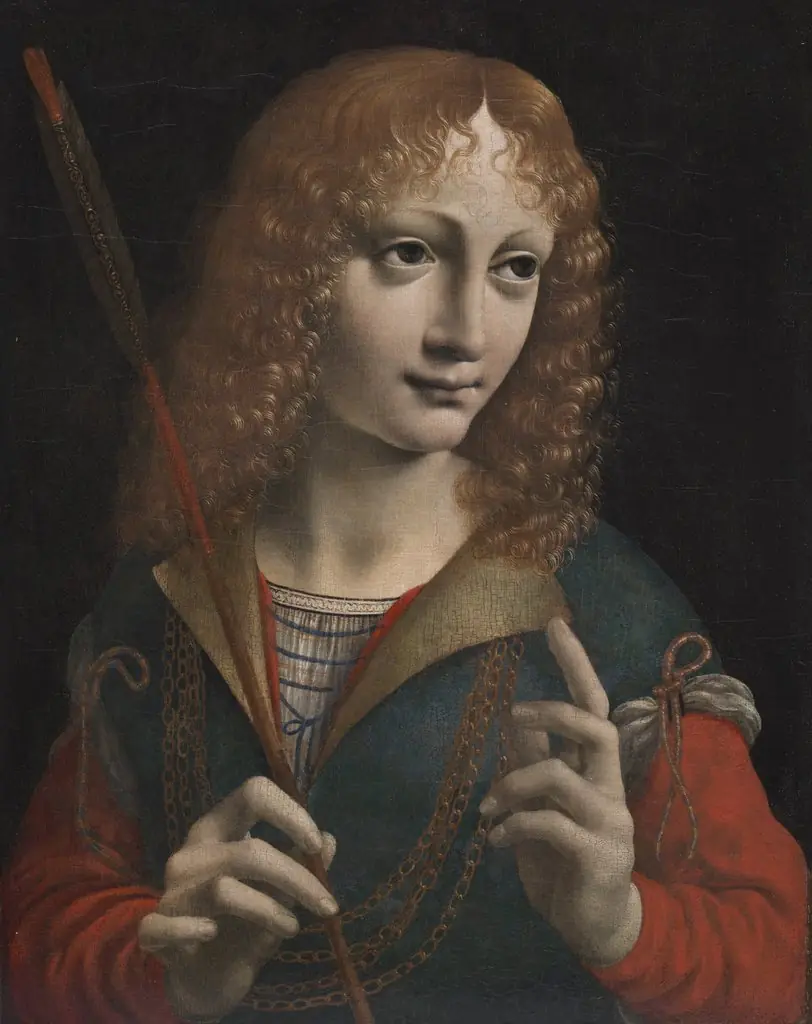
The painting depicts a young adult man shown bust-length and frontally, emerging from a dark background. He wears a red drape knotted at the left shoulder over a white tunic trimmed with golden lozenges, and his long, thick chestnut curls frame an oval face whose gaze meets the viewer. In his right hand, held in the lower left corner with index and middle fingers spread, he grasps an arrow whose point is directed downward.
The iconographic identification of the figure has long divided critics. A thesis first advanced in 1937 by Richter, and subsequently endorsed almost unanimously, reads the youth as Eros holding the arrow of love. Johannes Wilde contested this in 1974, proposing instead an Apollo.
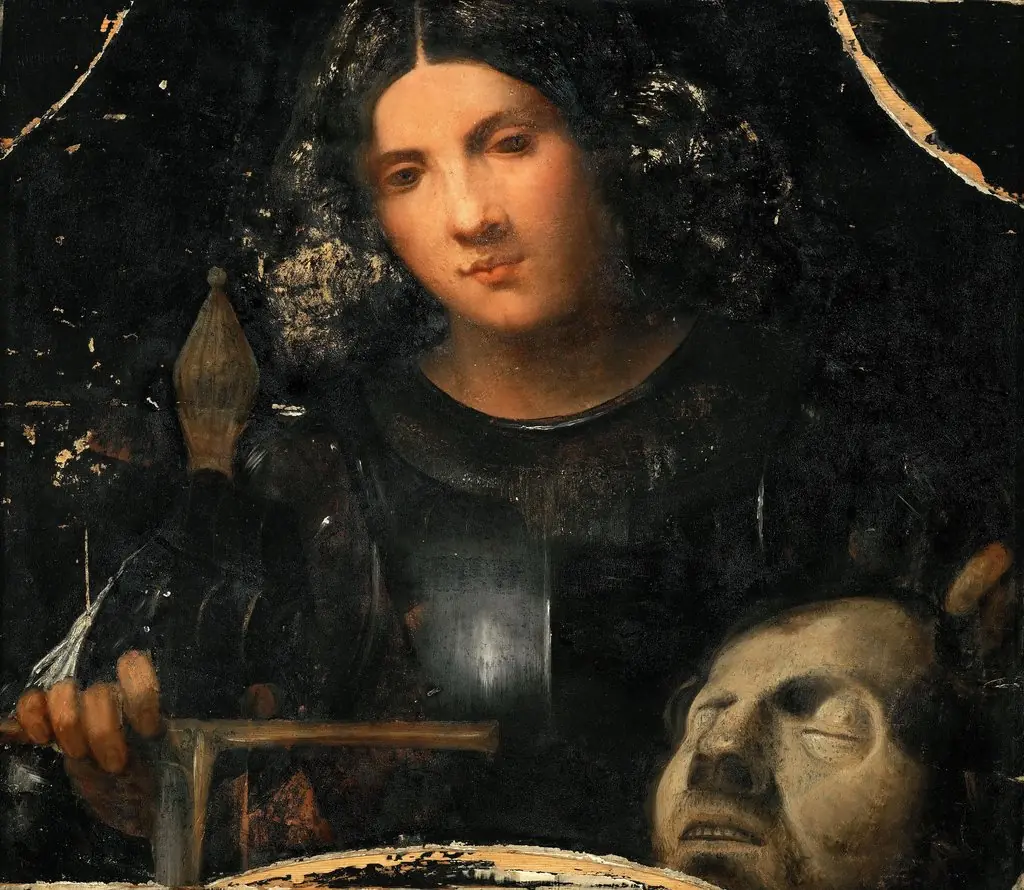
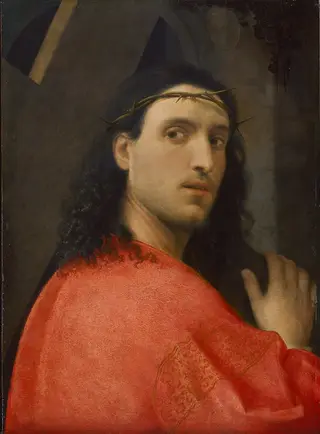
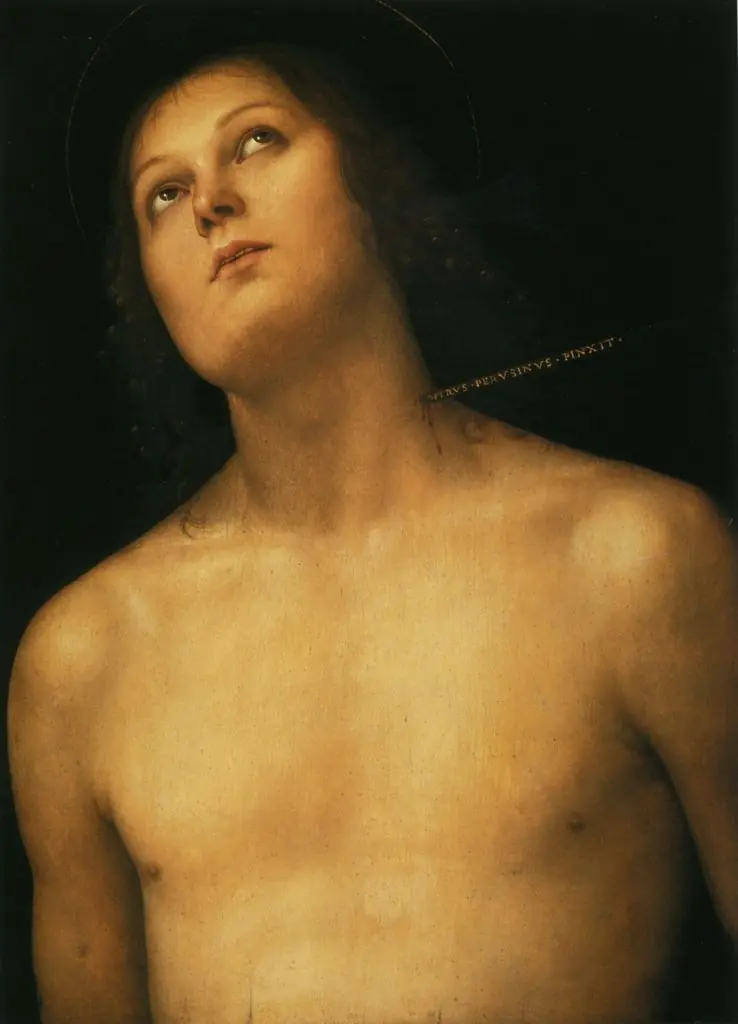
An alternative reading sees the youth in the guise of Saint Sebastian, and notes that the same model appears in other works by the master, such as the Boy with a Flute and the David with the Head of Goliath.
The red drape evokes an antique mode of dress, while the soft modeling of the face emerging from shadow reflects a Leonardesque inspiration, with critics comparing the treatment of the lips to that of the Mona Lisa.
Technique & Style
The painting is executed in oil on poplar panel, measuring 48 × 42 cm, and is characterized by a nearly square format typical of Venetian practice of the period.
Stylistically, the figure emerges from a dark ground with a softly modeled, three-quarter view that emphasizes delicate tonal transitions and a gentle chiaroscuro. The handling aligns with Leonardo’s sfumato, particularly in the treatment of the face, where subtle gradations articulate form and mood. The sitter’s features, rosy, compressed lips, a faint smile casting a shadow, and a shallow chin dimple, echo comparisons drawn to the Mona Lisa.
The drapery, knotted over the left shoulder in a manner redolent of antique costume, is rendered with quiet plasticity, while the curling chestnut hair and direct gaze contribute to an introspective presence.
History & Provenance
The painting was recorded in 1530 in Venice as the "head of the boy holding the arrow" by Giorgione (Zorzo da Castelfranco) in the home of Giovanni Ram, a Spanish physician, and again in 1533 in the collection of Antonio Pasqualino with the same attribution.
It entered the imperial collections at Innsbruck under Archduke Sigismund and was transferred to Ambras Castle by 1663, where it was later catalogued under Andrea del Sarto. In 1773 the work moved to the imperial collections in Vienna, where it remains at the Kunsthistorisches Museum.
Scholarly dating spans the artist’s career, with proposals ranging from before 1500 to 1508–1510; recent cleaning in 1955 for the Venice Giorgione exhibition consolidated the attribution to Giorgione.
Young Man with Arrow is held in the Kunsthistorisches Museum in Vienna, where it entered the imperial collections in 1773. Prior to this transfer, the work was kept at Ambras Castle near Innsbruck, having been part of Archduke Sigismund's collection since at least 1663. The painting was displayed at the 1955 Giorgione exhibition in Venice, which followed a cleaning that revealed the work's quality and helped solidify its attribution to the master.
While the museum currently houses the piece, historical records indicate it was once misattributed to artists such as Andrea del Sarto and Correggio in various imperial catalogues from 1783 and 1873 respectively.
Context
Scholarly debate regarding Young Man with Arrow has long centered on its attribution and iconography. While early inventories misidentified the work as by Andrea Schiavone or Correggio, Gustav Ludwig's 1903 identification of the painting in Marcantonio Michiel's 1530 notes secured its status as a Giorgione. Although Bernard Berenson initially wavered between Giovanni Cariani and Lorenzo Lotto, he accepted the attribution following a 1955 cleaning that revealed the work's quality.
Interpretations of the subject vary; George Martin Richter proposed in 1937 that the figure represents Eros, a view widely adopted, whereas Johannes Wilde argued in 1974 for an depiction of Apollo. Some scholars also suggest a portrayal of Saint Sebastian.
Art historically, the painting is frequently cited as a primary example of Leonardo da Vinci's influence on the Venetian school. Terisio Pignatti and Enrico Maria Dal Pozzolo highlight the Leonardesque sfumato and the specific modeling of the lips, comparing them to the Mona Lisa. Pignatti posits that this work and The Three Ages of Man illustrate the peak convergence of Giorgione's style with Leonardo's.
Dating remains contested, with proposals ranging from a youthful effort circa 1500 to a late production between 1508 and 1510.
Overview
Created around 1505, this oil painting by the Venetian artist Giorgione presents a solitary figure rendered in the High Renaissance idiom. The work is part of the collection of the Kunsthistorisches Museum in Vienna and exemplifies the period’s interest in balanced composition and restrained emotional expression.
Artist & collection