Artwork
Virgin and Child in a Landscape
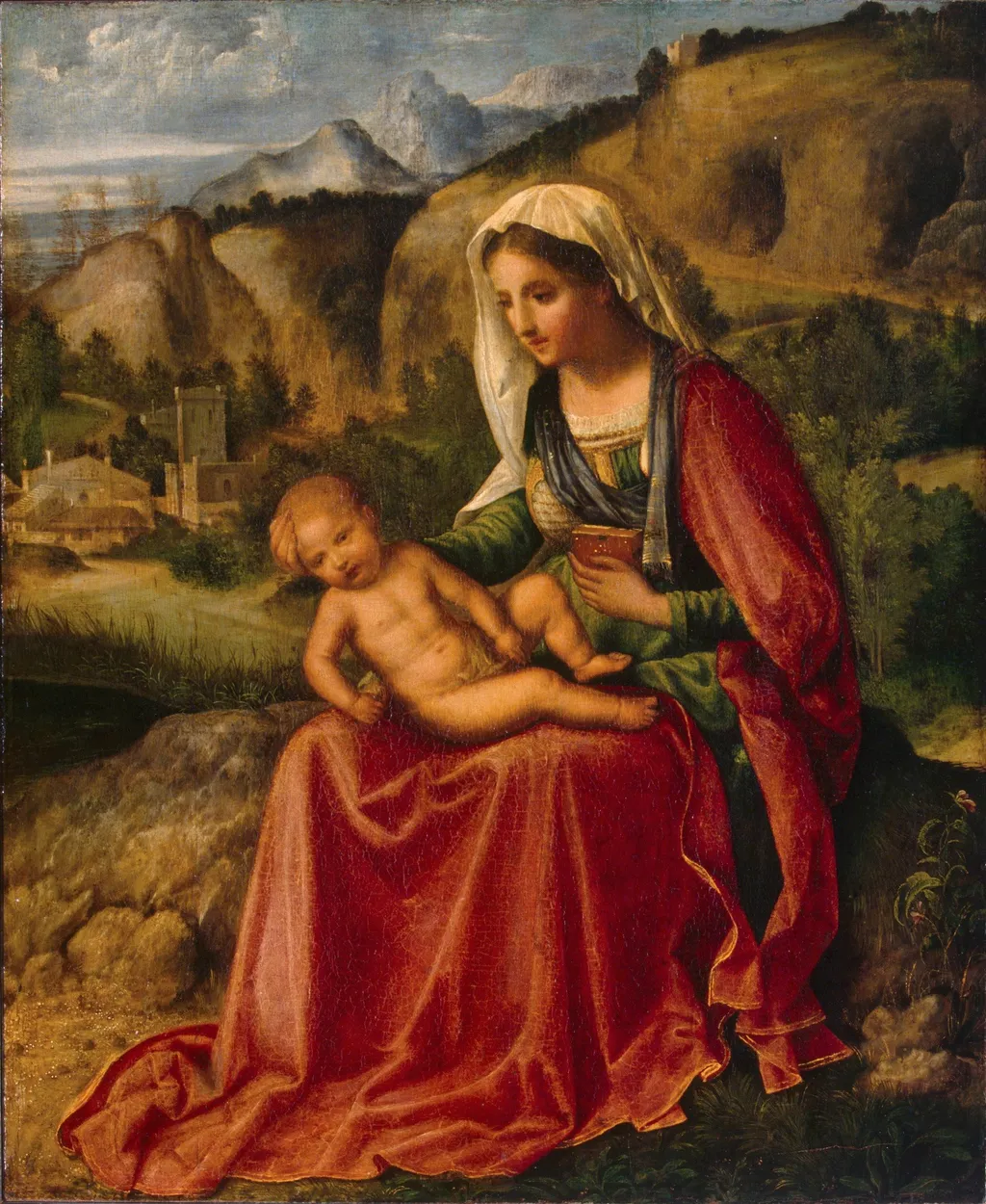
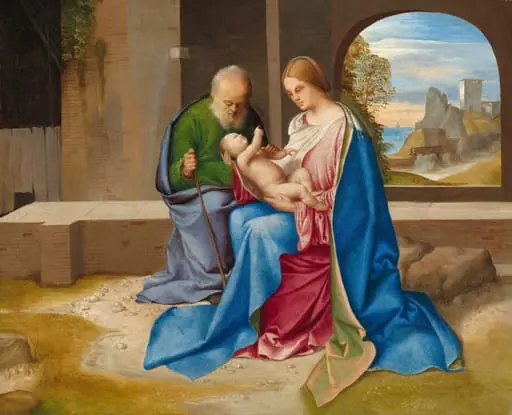
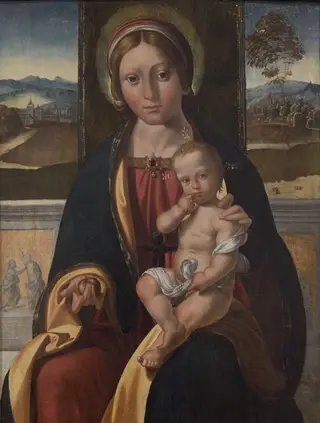
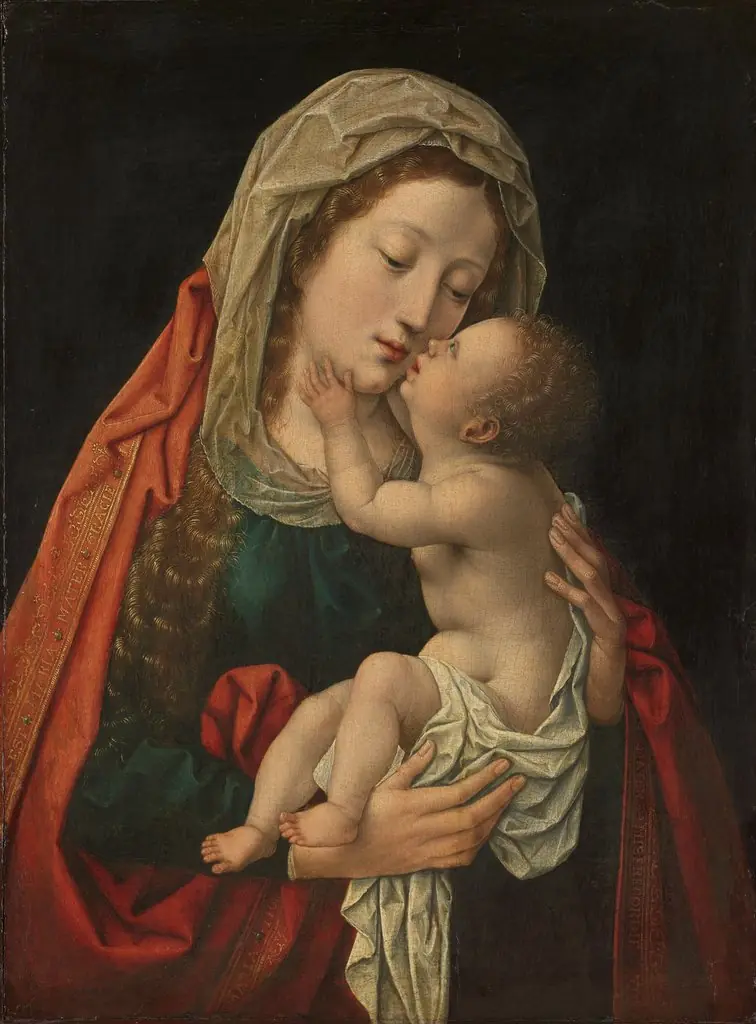
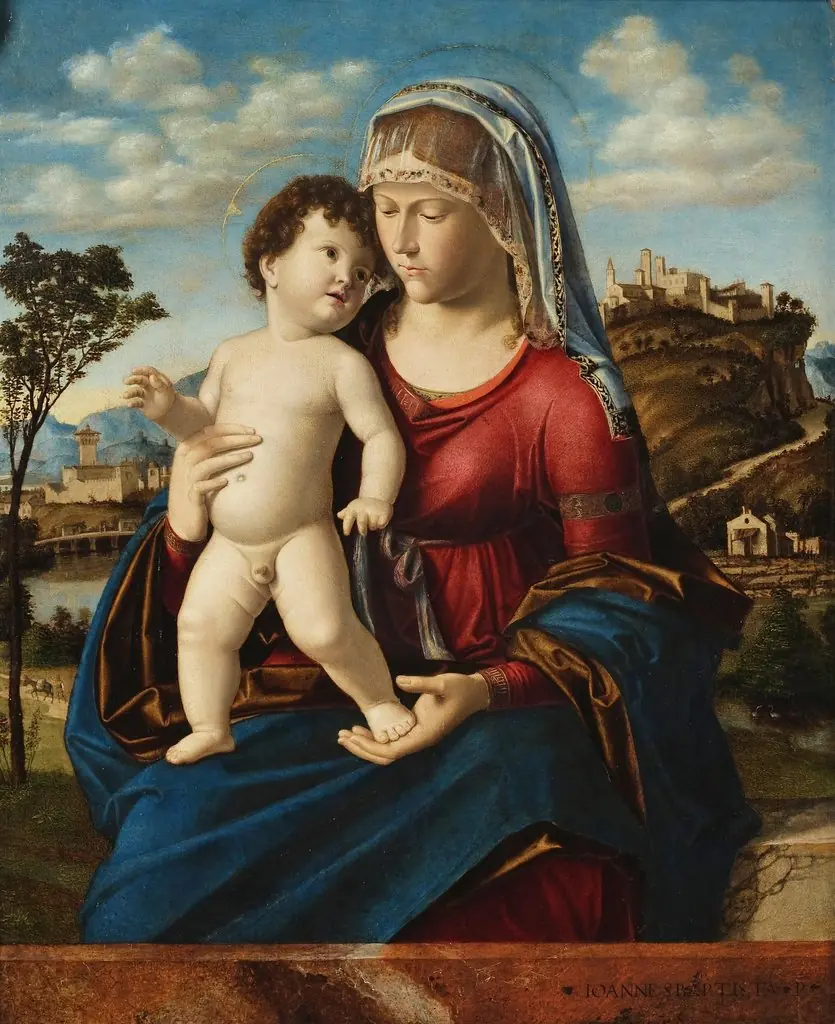
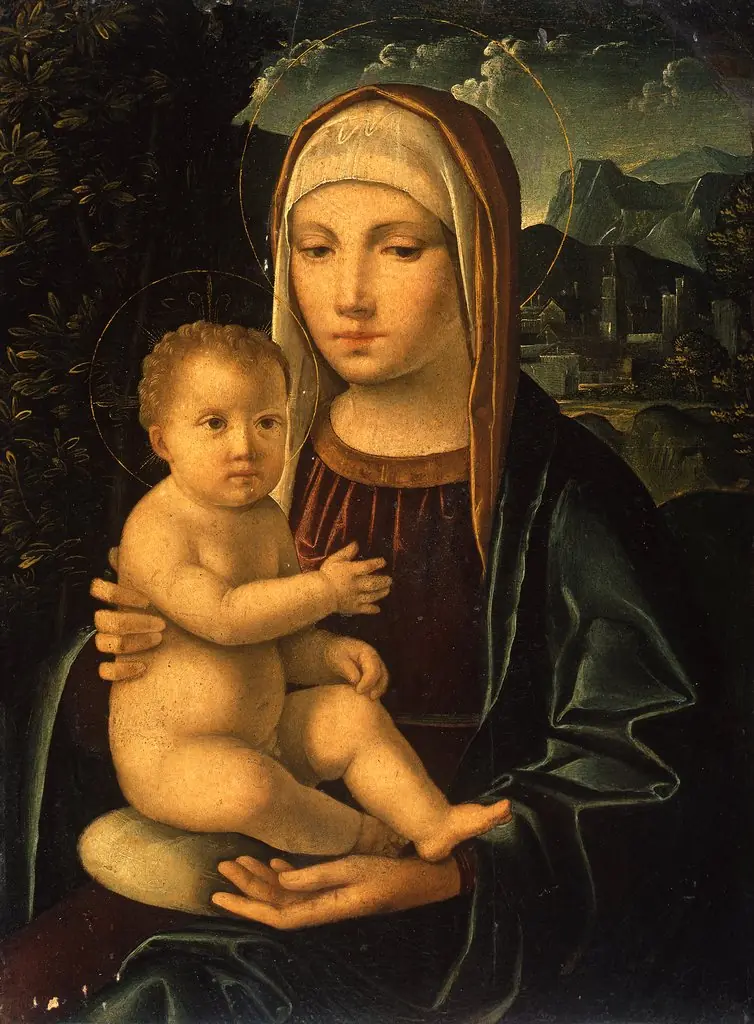
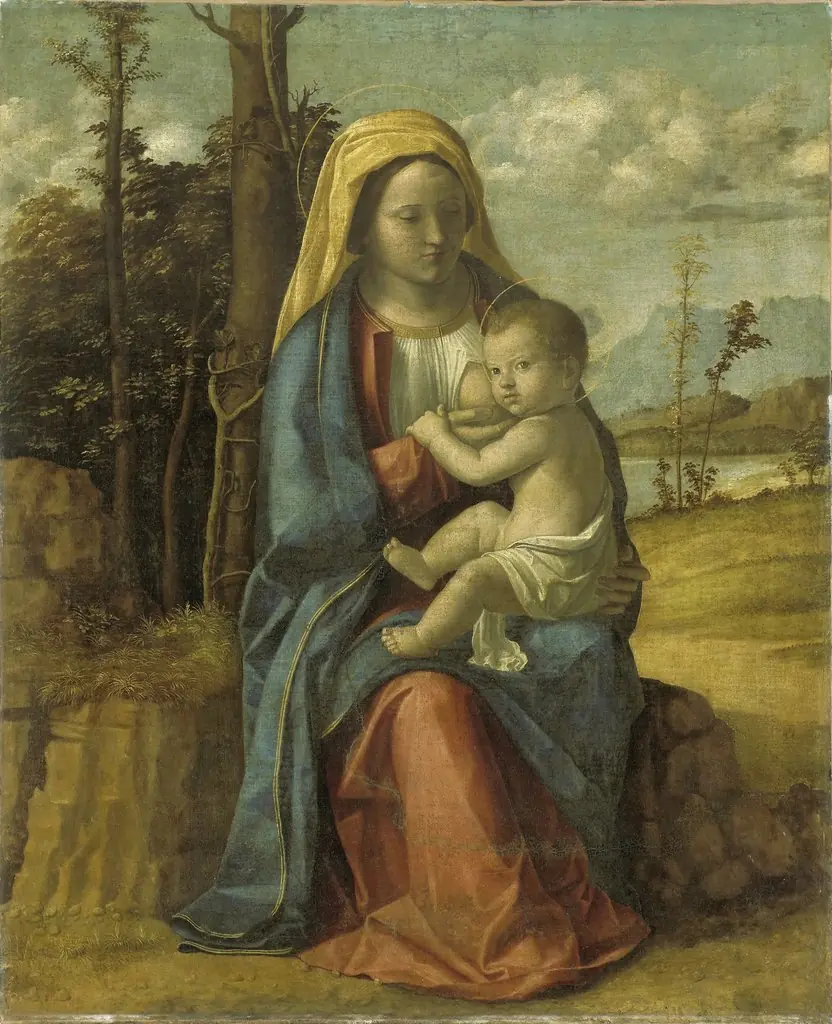
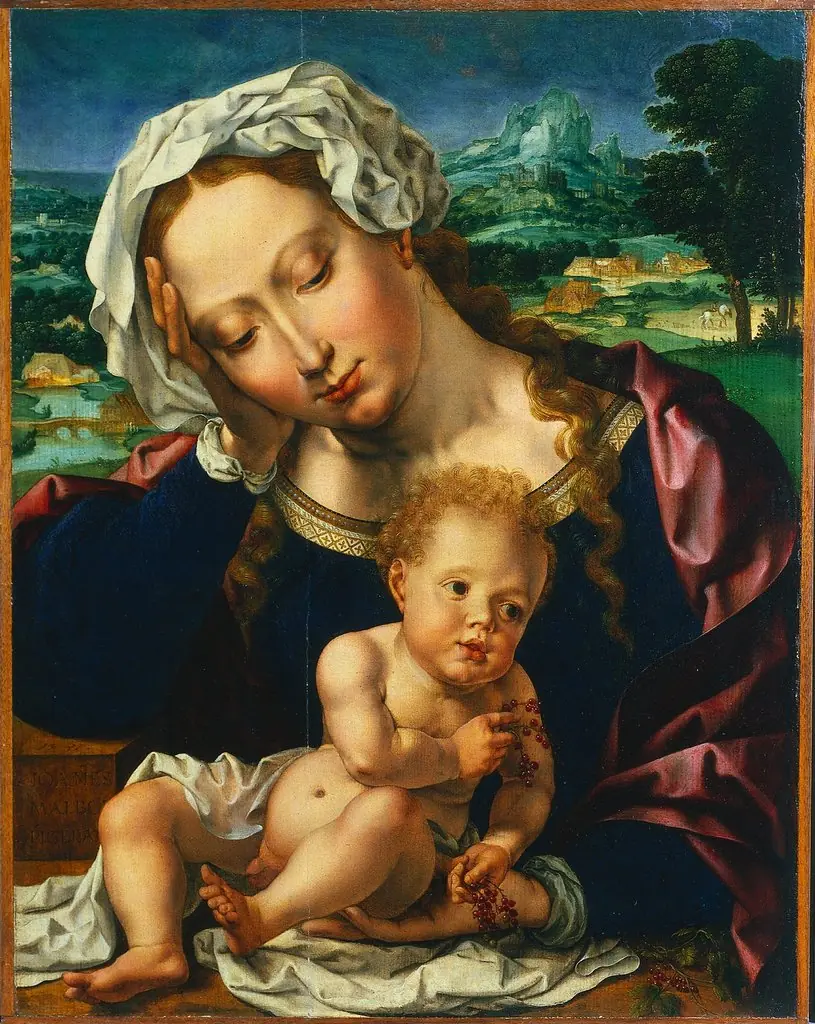
Virgin and Child in a Landscape is an oil painting by the High Renaissance artist Giorgione. It dates from 1500 and is held in the collection of the Hermitage Museum. Created around 1500, this oil painting by Giorgiano portrays a mother and child set within an open landscape.
About this work
Subject & Meaning
The painting depicts the Virgin Mary and the Christ Child, a traditional Madonna and Child subject rendered with innovative Venetian iconography of the period.
The painting depicts the Virgin Mary and the Christ Child, a traditional Madonna and Child subject rendered with innovative Venetian iconography of the period. Rather than enthroned among saints, Mary is seated in a landscape setting, turning three-quarters to the left as she leans toward the sleeping infant Jesus resting on her knees. She supports his shoulders with her right forearm and cradles his head in her right hand.
Mary wears an unusual green dress and ample red mantle with heavy, abundant drapery, topped with a light white veil. The Christ Child appears nude. These figural elements stand out against a background of distant hills rendered in pale greens, browns, and grays, dissolving into a light sky through atmospheric haze.
The work's small dimensions suggest it was intended for private devotion. The representation achieves a highly lyrical quality through a warm, golden luminous bond that creates an intimate effect, fusing the figures with their landscape surroundings.
Technique & Style
Virgin and Child in a Landscape is an oil painting executed on a wooden panel, measuring 44 by 36.5 cm. The Virgin is depicted seated in a three-quarter view facing left, leaning toward the Christ Child, whom she holds on her lap while supporting his sleeping head with her right hand. She wears an unusual green robe and a heavy, ample red mantle with a light white veil, contrasting with the surrounding landscape. The background features distant hills and mountains rendered in muted greens, yellows, browns, and grays under a pale blue sky, where hazy effects cause the farthest peaks to blend into the atmosphere.
The work is characterized by a highly lyrical quality, employing a golden, luminous binder that produces a warm, quietly intimate effect. This warm light visually fuses the figures with their landscape setting, reflecting the Venetian shift away from traditional enthroned Madonnas toward sacred figures integrated into natural surroundings. The small scale of the panel suggests it was intended for private devotion.
History & Provenance
Attributed to Giorgione, the painting's creation is generally dated around 1498 to 1500, though scholarly estimates range broadly from 1495 to 1505, with a preference for the late 15th century. The work's small scale suggests it was likely a private commission intended for personal devotion. Created in Italy as an oil on panel, it reflects the contemporary Venetian shift from traditional throne-bound Madonna iconography to placing the Virgin within a landscape.
The panel entered the Hermitage Museum in Saint Petersburg in 1817 from the Crichton collection.
The Virgin and Child in a Landscape is held by the Hermitage Museum in Saint Petersburg, with the inventory number listed as part of the Crichton collection acquired in 1817. The work is catalogued under its standard title and attributed to Giorgione, created circa 1498–1500. It has been exhibited in museum displays focusing on Venetian Renaissance painting and has a documented presence in Hermitage exhibition records related to early Italian works.
The painting entered the Hermitage in 1817 from the Crichton collection and remains part of the museum's permanent holdings, though it is not frequently highlighted in major special exhibitions. Its provenance is noted in both French and Italian Wikipedia entries and referenced in scholarly publications on Giorgione's oeuvre.
Context
Attribution and dating of this panel remain challenging due to the scarcity of documentation and the difficulty in isolating Giorgione's specific stylistic traits from those of his pupils and followers during his brief career. While some sources cite 1498, scholarship generally places the work between 1495 and 1505, with a preference for the final years of the fifteenth century.
The painting exemplifies a pivotal shift in Venetian art, where artists began moving away from traditional enthroned Madonnas surrounded by saints to situate sacred figures within natural landscapes. Its small dimensions suggest it was commissioned for private devotion rather than public display. Critics describe the composition as highly lyrical, noting a golden, luminous binder that creates a warm, intimate atmosphere, effectively merging the figures with the hazy, distant hills.
Legacy
The Virgin and Child in a Landscape influenced later depictions of the Madonna and Child within naturalistic settings, shaping the development of sacra conversazione compositions and inspiring artists to integrate sacred figures into landscape contexts. Its innovative placement of the Virgin and Child in an outdoor environment, rather than within architectural or throne settings, became a recognized precedent in Venetian painting during the early 16th century. This approach contributed to evolving devotional practices and visual storytelling in religious art, particularly influencing interpretations of sacred narratives within landscape frameworks.
The work's legacy is documented in art historical literature, including analyses by Alessandra Fregolent, and is cited in scholarly resources such as the Foundation Federico Zeri database. It remains part of the Hermitage Museum's collection, reflecting its enduring significance in the study of Renaissance painting and iconographic evolution.
Overview
Created around 1500, this oil painting by Giorgiano portrays a mother and child set within an open landscape. The work is part of the collection at the State Hermitage Museum, where it is displayed among other Renaissance pieces.
Own this work as a print
Artist & collection