Artwork
The Virgin and Child with Saint Andrew and Saint Peter
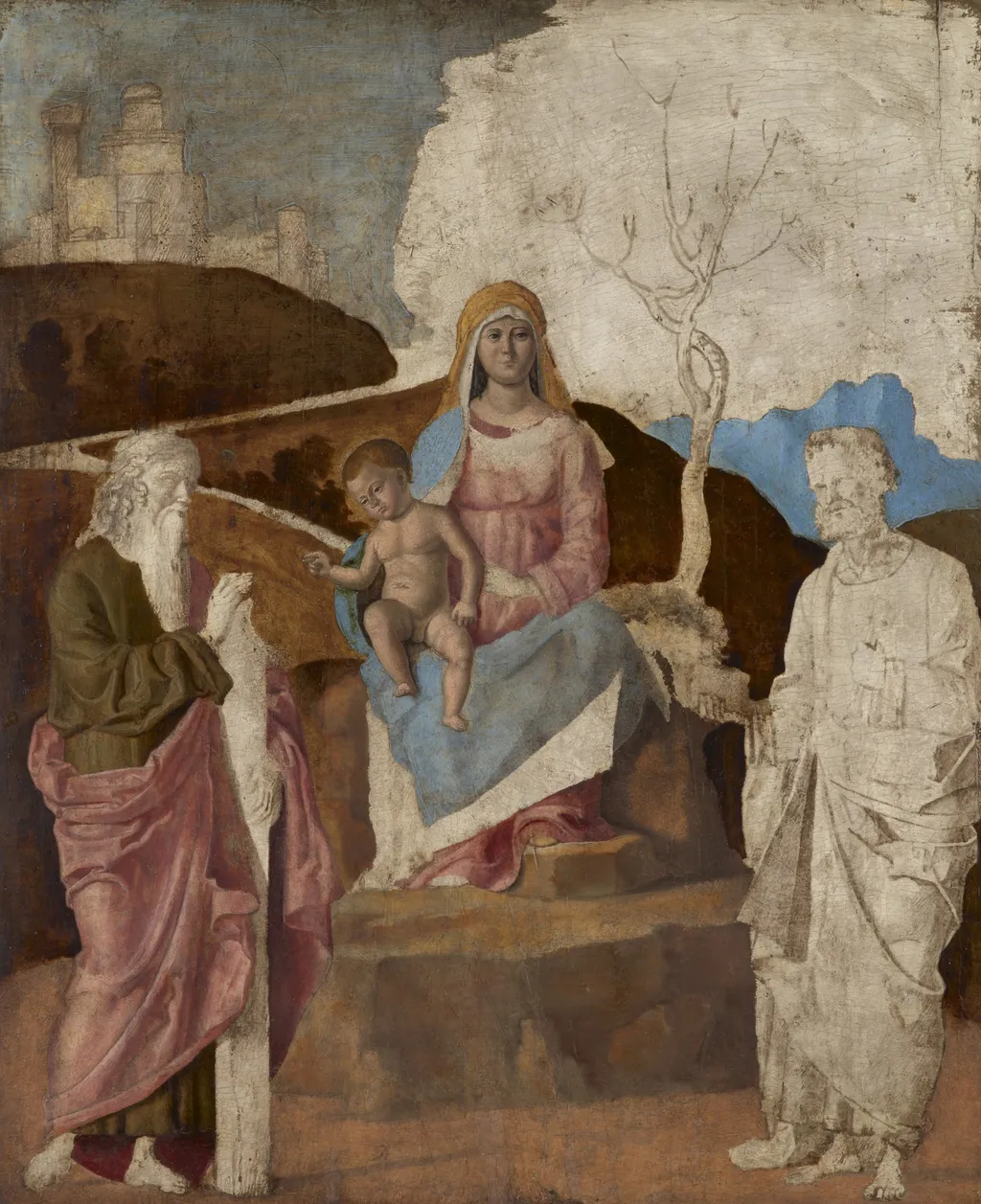
The Virgin and Child with Saint Andrew and Saint Peter is an oil painting by the High Renaissance artist Giovanni Battista Cima da Conegliano. It dates from 1510 and is held in the collection of the National Galleries Scotland. The work depicts the Virgin and Child accompanied by Saint Andrew and Saint Peter.
About this work
It is believed to have been created in the late 15th or early 16th century, specifically around 1510.
The Virgin and Child with Saint Andrew and Saint Peter is a painting. It was created in the studio of Giovanni Battista Cima da Conegliano.
The painting is unfinished and made with oil paint. It is believed to have been created in the late 15th or early 16th century, specifically around 1510.
The painting is now held at the Scottish National Gallery. Check out the museum: Scottish National Gallery.
Subject & Meaning
The painting is a devotional panel depicting the Virgin Mary seated with the Christ Child on rocky ground within a landscape, flanked by Saint Andrew to the left and Saint Peter to the right. Its main subject is identified as a sacra conversazione, a compositional type in which the Madonna and Child are accompanied by saints gathered in a unified space rather than separated into discrete panels. The pairing of Andrew and Peter, the two earliest-called apostles and brothers in tradition, alongside the Virgin and Child gives the work a specifically apostolic emphasis, presenting the foundational witnesses of Christ alongside his mother.
Because the panel was left unfinished, it offers insight into Cima da Conegliano's working method, with the sacred figures and their devotional meaning only partially resolved on the canvas.
Technique & Style
The work is executed in oil on canvas and measures 47.7 cm in height by 39.7 cm in width. Stylistically, it presents a sacra conversazione composition with the Virgin seated on rocky terrain holding the Christ Child, flanked by Saints Andrew and Peter in a balanced arrangement. Handling shows delicate modeling of faces and drapery, with softly blended transitions in the flesh tones and a restrained palette of muted greens, ochres, and umbers.
The landscape background recedes through atmospheric haze, while the figures are rendered with volumetric clarity, reflecting Cima’s mature Venetian approach.
The painting is recorded as unfinished, with pentimenti visible in the underdrawing beneath the Virgin’s drapery and in the positioning of the Christ Child’s head.
History & Provenance
The Virgin and Child with Saint Andrew and Saint Peter is dated to 1510 and is considered an unfinished work by Giovanni Battista Cima da Conegliano.
The painting entered the collection of the National Galleries of Scotland (then the National Gallery of Scotland) in Edinburgh through a presentation by Miss Margaret Peter Dove in 1915, where it was assigned accession number NG 1190.
The Virgin and Child with Saint Andrew and Saint Peter is held by the National Galleries Scotland, where it is inventoried as NG 1190. The painting entered the collection in 1915 through a presentation by Miss Margaret Peter Dove.
Exhibition history is not documented in the provided sources beyond its current holding institution.
Context
The Virgin and Child with Saint Andrew and Saint Peter is widely recognized as an unfinished work that offers significant insight into the studio practices of Giovanni Battista Cima da Conegliano. Dating to approximately 1510, the panel is attributed either directly to the master or to an artist within his workshop, reflecting the collaborative nature of production in early 16th-century Venice. Scholars value the piece for its devotional composition, which arranges the Madonna and Child alongside Saints Andrew and Peter in a landscape setting characteristic of the sacra conversazione genre.
Its incomplete state allows art historians to observe the artist's working methods and underpainting techniques. Currently held by the National Galleries of Scotland, the painting serves as a key example of Cima's later religious output and the transition of his style during this period.
Overview
The work depicts the Virgin and Child accompanied by Saint Andrew and Saint Peter. Executed in oil on panel, the composition remains incomplete, revealing the hand of an artist working within the workshop of Giovanni Battista Cima da Conegliano. Scholars date the piece to the turn of the 16th century, around 1510, and it now belongs to the National Galleries of Scotland in Edinburgh.
Own this work as a print
Artist & collection
Artist
Giovanni Battista Cima da Conegliano
Giovanni Battista Cima, also called Cima da Conegliano (c. 1459 – c. 1517), was an Italian Renaissance painter, who mostly worked in Venice. He can be considered part of the Venetian school, though he was also…

 Madonna and Child with Saint Jerome and Saint John the Baptist
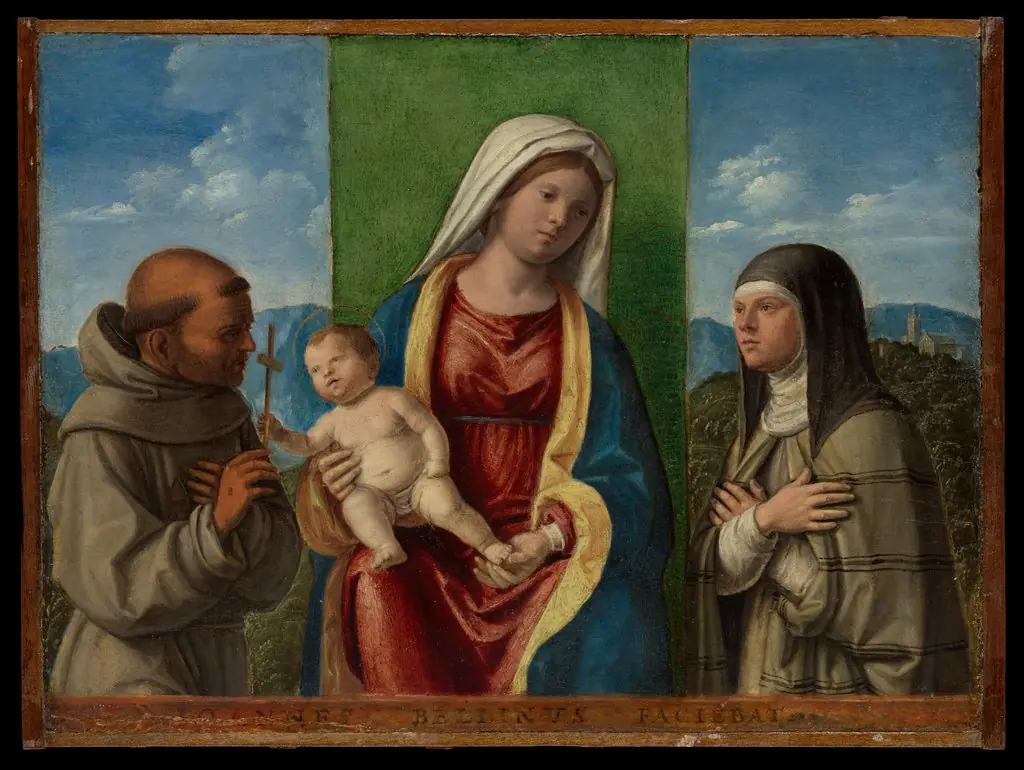 Madonna and Child with Saints Francis and Clare
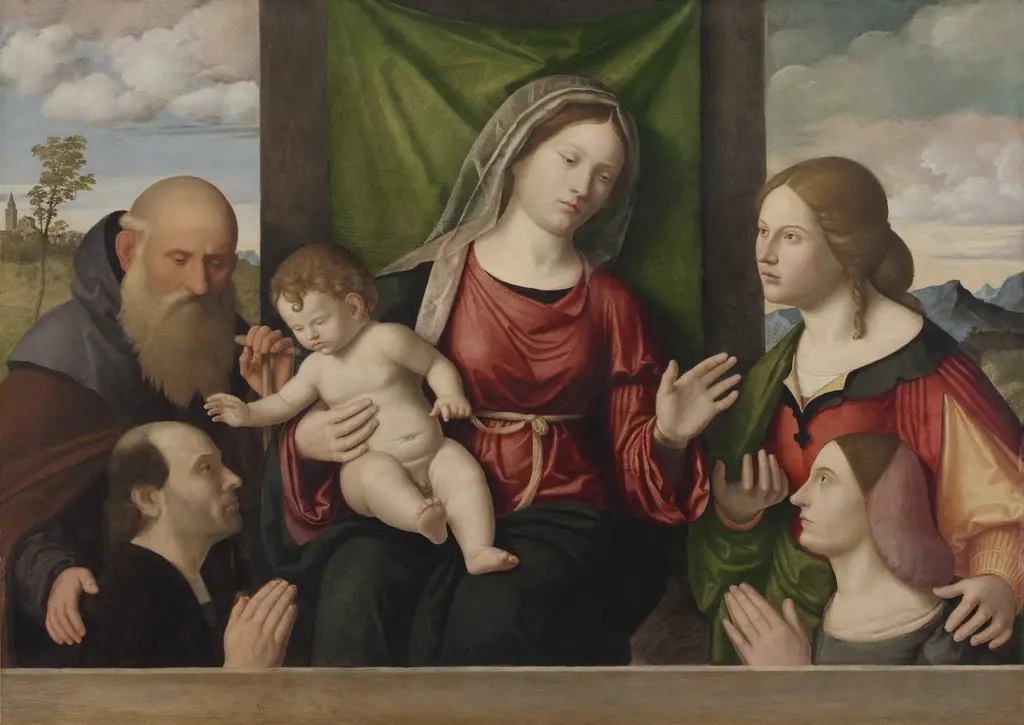 Virgin and Child with Saints and Donors
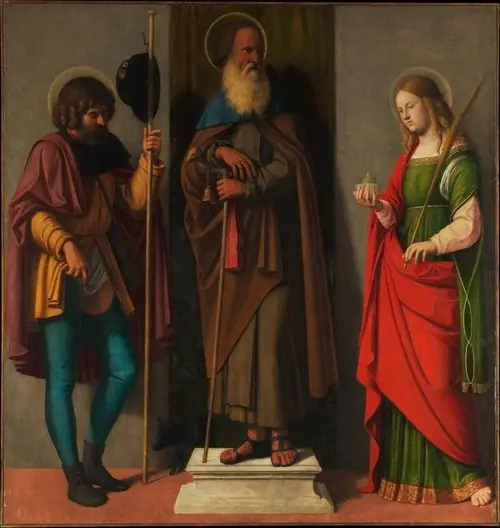 Saints Roch, Anthony Abbot and Lucy
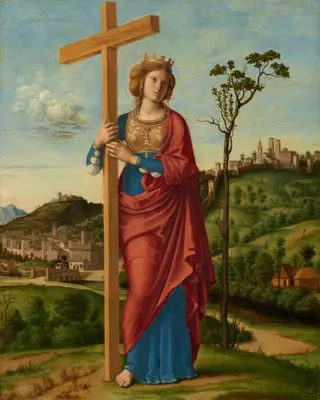 Saint Helena
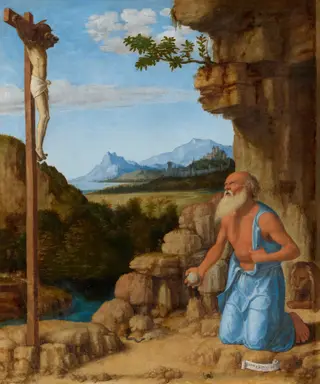 Saint Jerome in the Wilderness
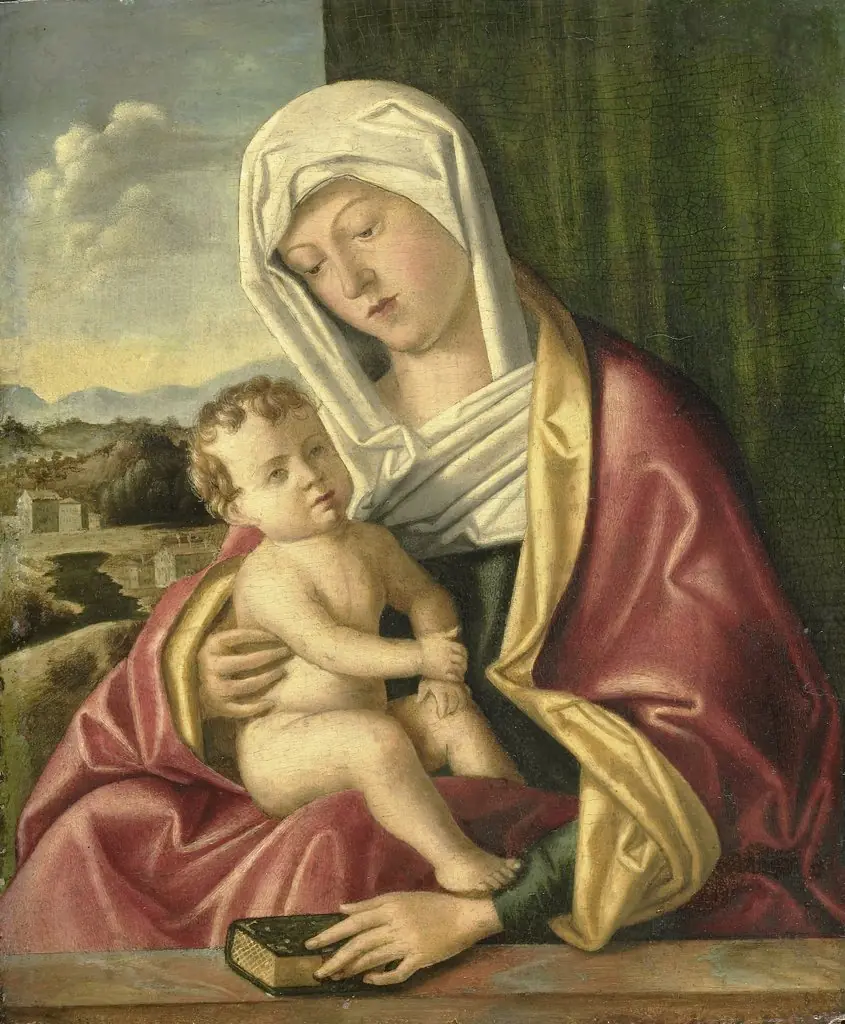 Virgin and Child
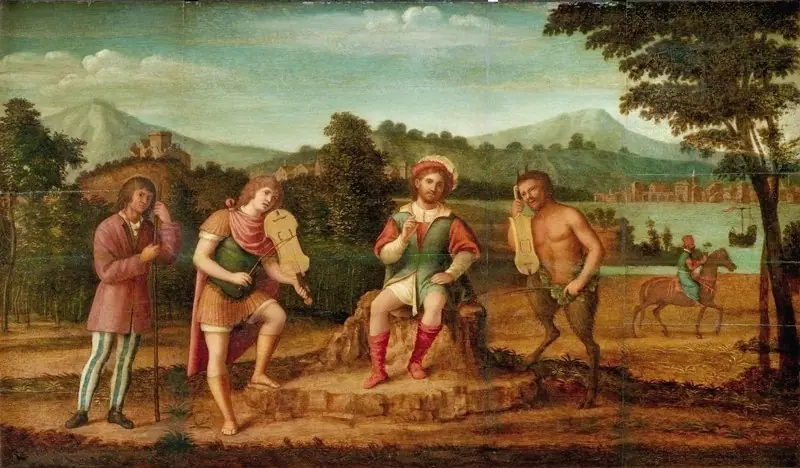 The Judgement of Midas. The Musical Contest between Apollo and Marsyas
- Virgin and Child between Saint Peter and Saint Paul
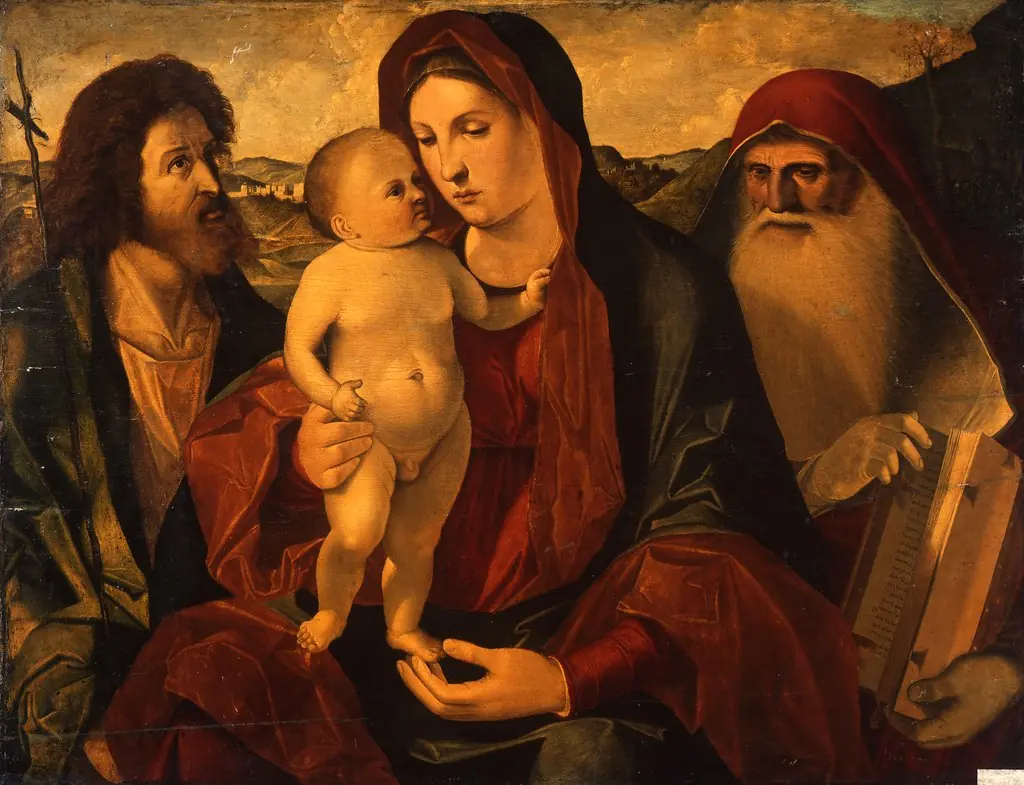 The Virgin and the Child with St. John the Baptist and St. Jerome
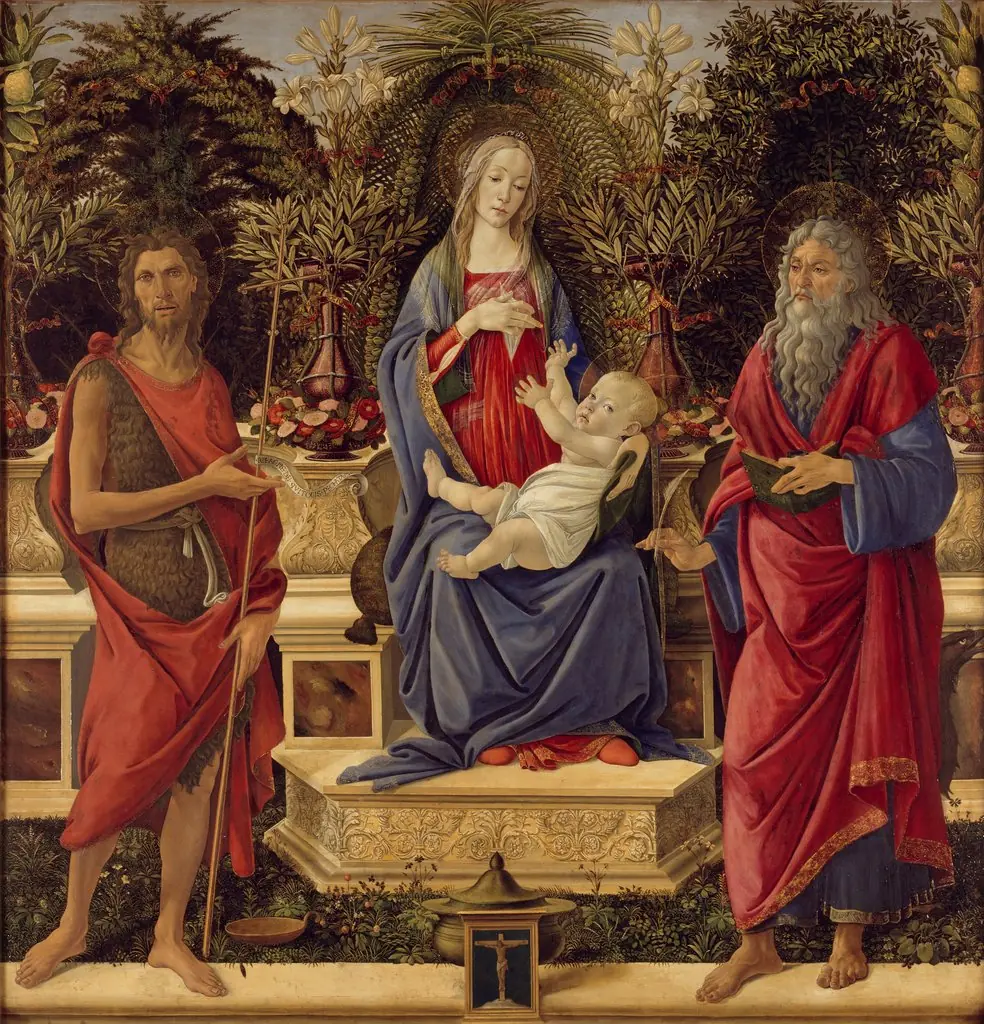 Madonna Bardi
 Madonna and Child Enthroned with Saint Peter and Saint Paul
 The Holy Family
 Adoration of the Magi
 The Holy Family
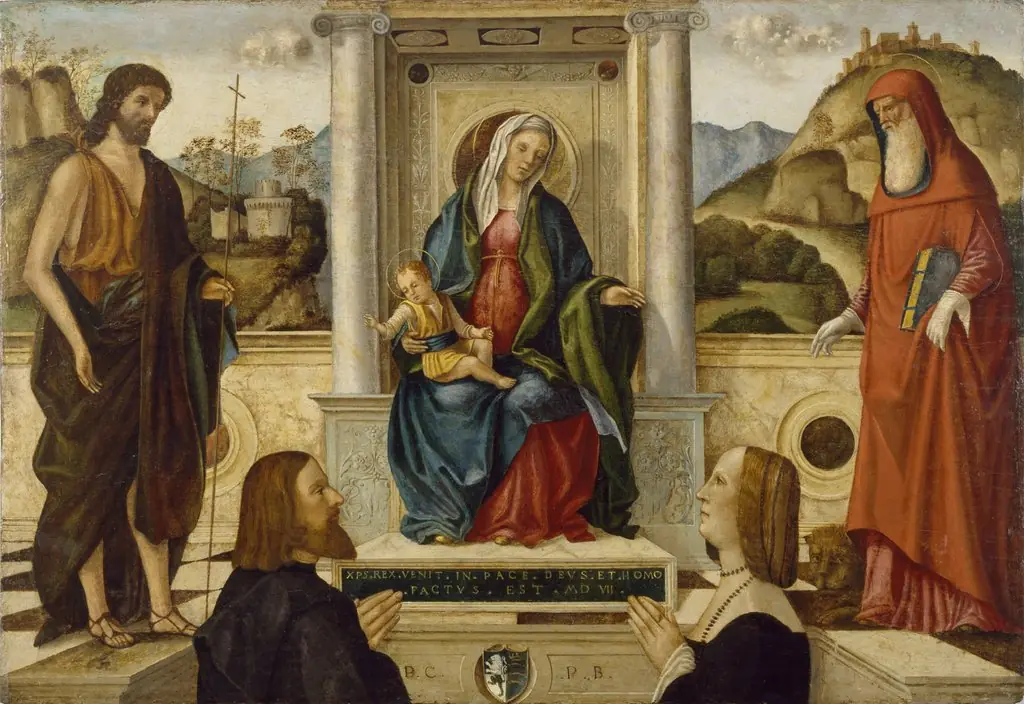 Madonna and Child Enthroned with Saints and Donor
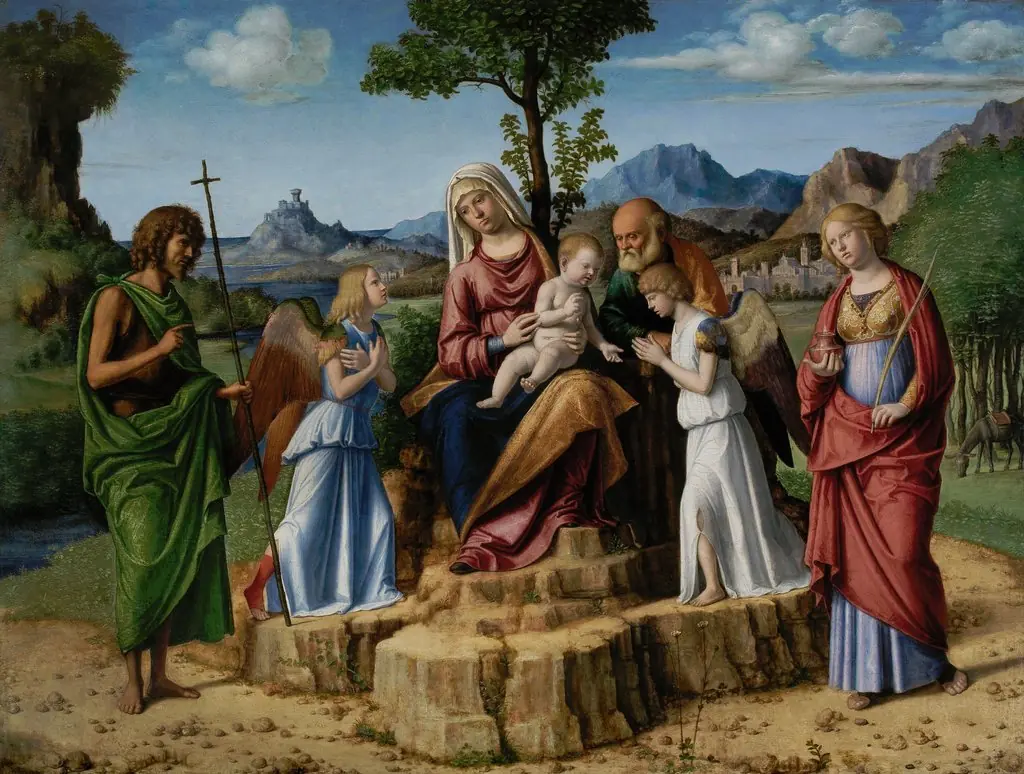 Rest on the Flight into Egypt
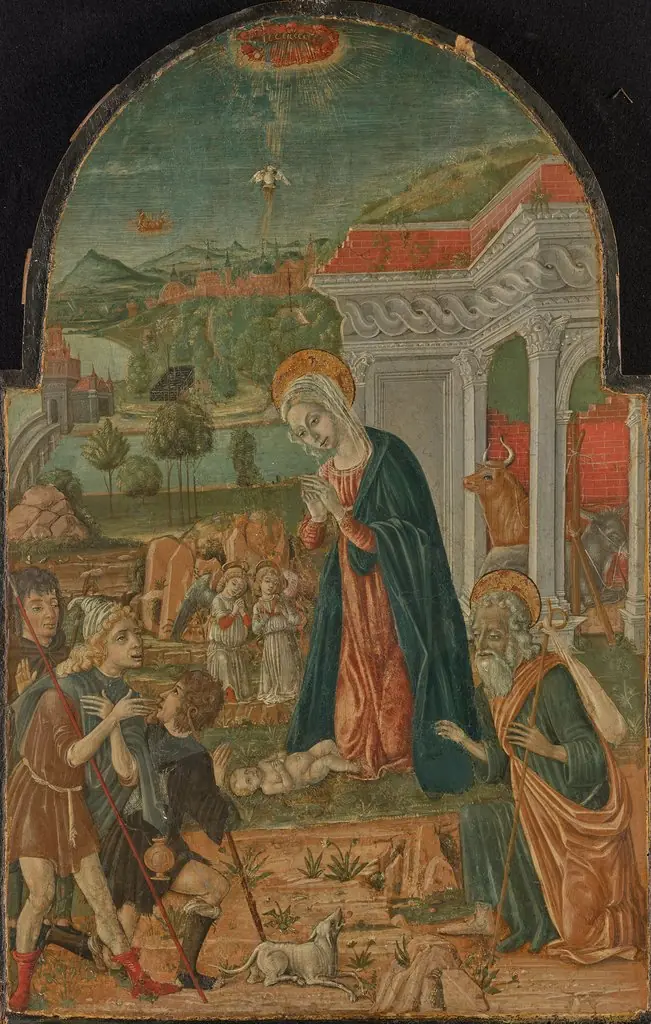 The adoration of the Shepherds
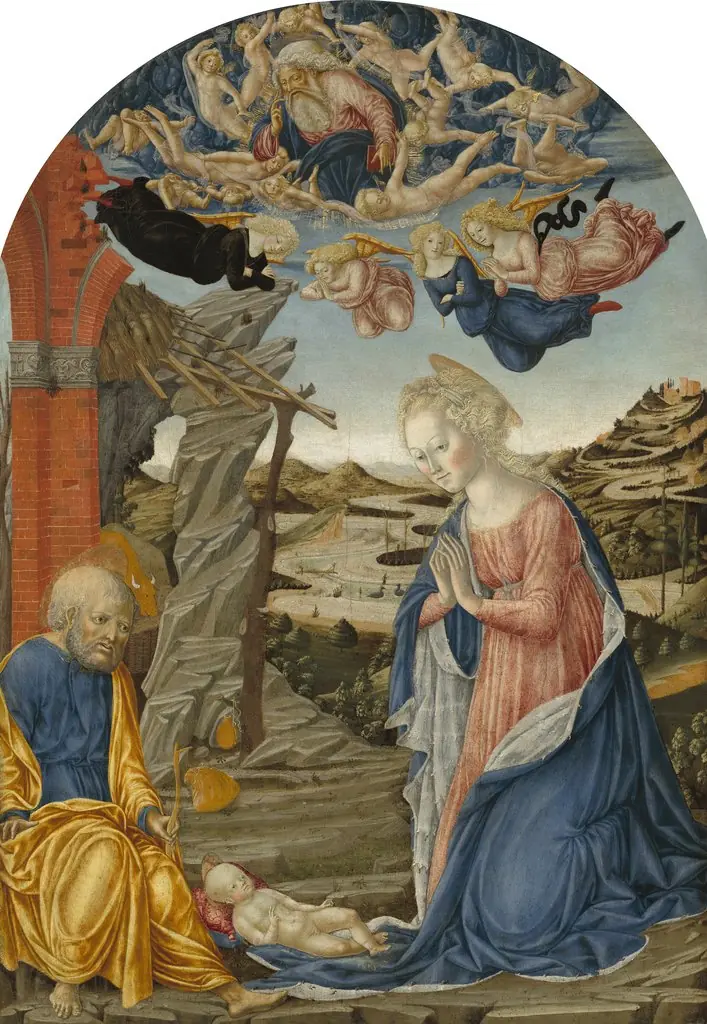 The Nativity
 Adoration of the Christ Child