Artwork
The Investiture of Bishop Harold as Duke of Franconia
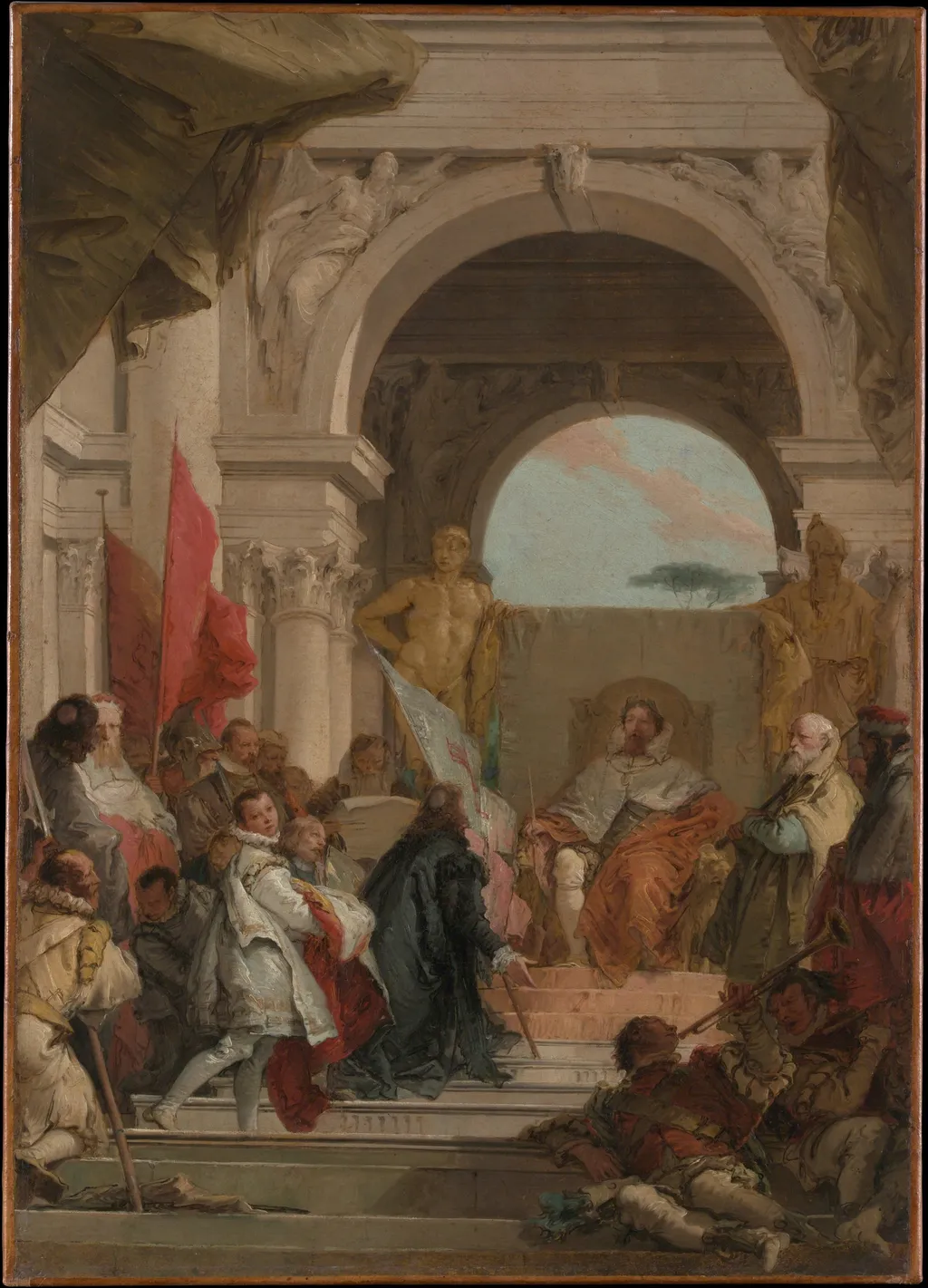
The Investiture of Bishop Harold as Duke of Franconia is an oil painting by the Rococo painting artist Giovanni Battista Tiepolo. It dates from 1751 and is held in the collection of the Metropolitan Museum of Art.
About this work
Subject & Meaning
While the title specifies this political and ecclesiastical ceremony, the visual composition includes a musical instrument alongside the central male figure.
The painting depicts the historical event of the investiture of Bishop Harold as Duke of Franconia, a scene centered on a man receiving authority. While the title specifies this political and ecclesiastical ceremony, the visual composition includes a musical instrument alongside the central male figure. Created in 1751 within the Rococo style, the work illustrates a moment of bestowal, though the specific symbolic details of the investiture ritual or the deeper theological meaning of Harold's dual role are not elaborated in the available records. The presence of the instrument suggests a celebratory or courtly atmosphere accompanying the transfer of power.
Technique & Style
The Investiture of Bishop Harold as Duke of Franconia is executed in oil paint on canvas, a medium characteristic of Giovanni Battista Tiepolo's mature practice. The work is classified as a painting and is associated with the Rococo movement, the stylistic current in which Tiepolo was a leading figure. Its modest scale, 71.8 cm in height by 51.4 cm in width, is consistent with an easel painting rather than a large decorative commission.
History & Provenance
The Investiture of Bishop Harold as Duke of Franconia is an oil painting on canvas completed in 1751 by Giovanni Battista Tiepolo. The work measures 71.8 cm in height and 51.4 cm in width. It was first recorded in the collection of William T. Blodgett, who owned the piece before it entered the Metropolitan Museum of Art, where it is presently displayed.
The painting is classified as a Rococo work and depicts a man with a musical instrument. Its creation history is documented solely by the 1751 date and the medium of oil on canvas.
Overview
Giovanni Battista Tiepolo's oil painting, The Investiture of Bishop Harold as Duke of Franconia, was completed in 1751. This work is characteristic of the Rococo movement and is housed in the collection of The Metropolitan Museum of Art. It portrays a formal ceremony, capturing a moment of significant historical or allegorical importance through its detailed depiction of figures and setting.
Context
Created in the mid-18th century, The Investiture of Bishop Harold as Duke of Franconia aligns with the Rococo movement's broader interest in elaborate narratives and decorative artistry. While Rococo is often recognized for its lighter themes, Tiepolo's painting demonstrates the style's capacity for grand historical or allegorical subjects, reflecting the era's appreciation for ceremonial pomp and the visual representation of significant events within a refined aesthetic.
Own this work as a print
Artist & collection

Artist
Giovanni Battista Tiepolo, also known as Giambattista Tiepolo, was an Italian painter and printmaker from the Republic of Venice who painted in the Rococo style, considered an important member of the 18th-century Venetian school.





- Pilate Washing His Hands
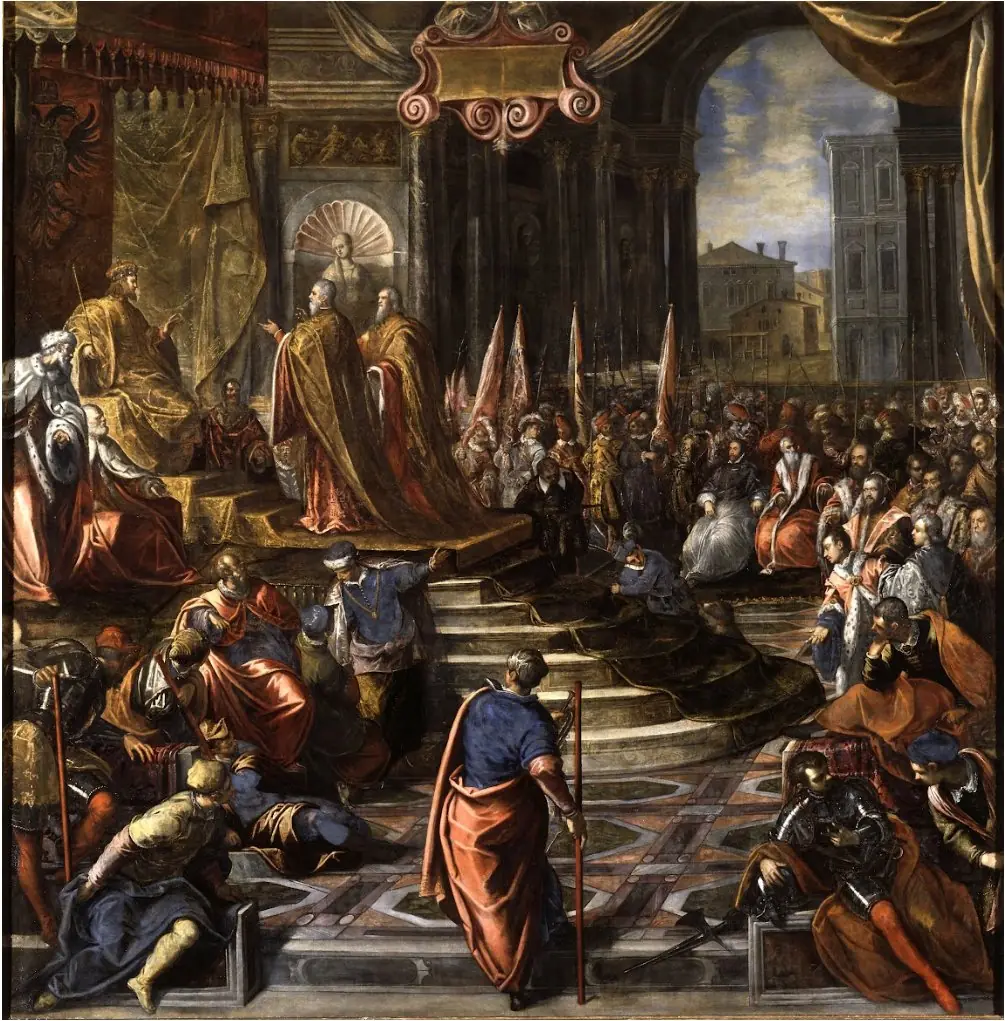 Ambassadors of Doge Ziani
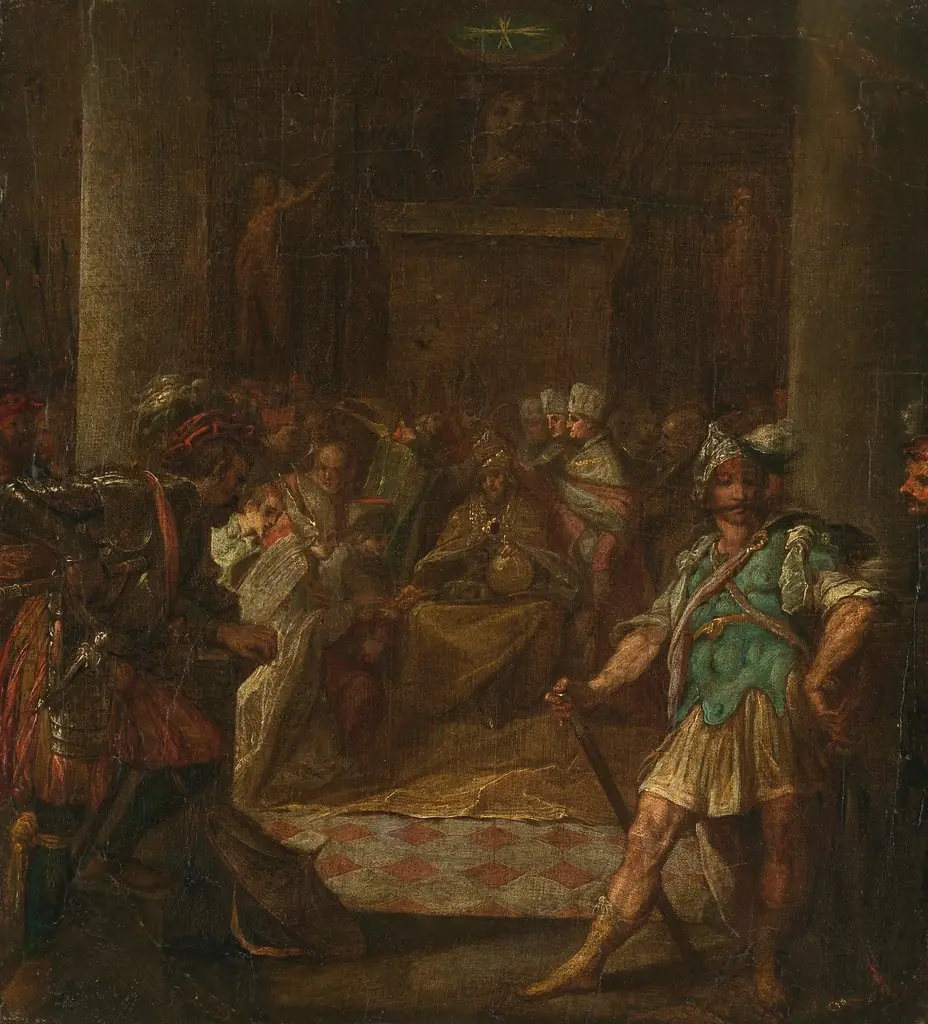 Imperial Coronation
 Painters and Sculptors
 Count Wilczek beseeching king John Sobieski to help Vienna against the Turks, sketch
 Imaginary church interior with a procession
 Kurfürst Johann Wilhelm übergibt den Kommandostab
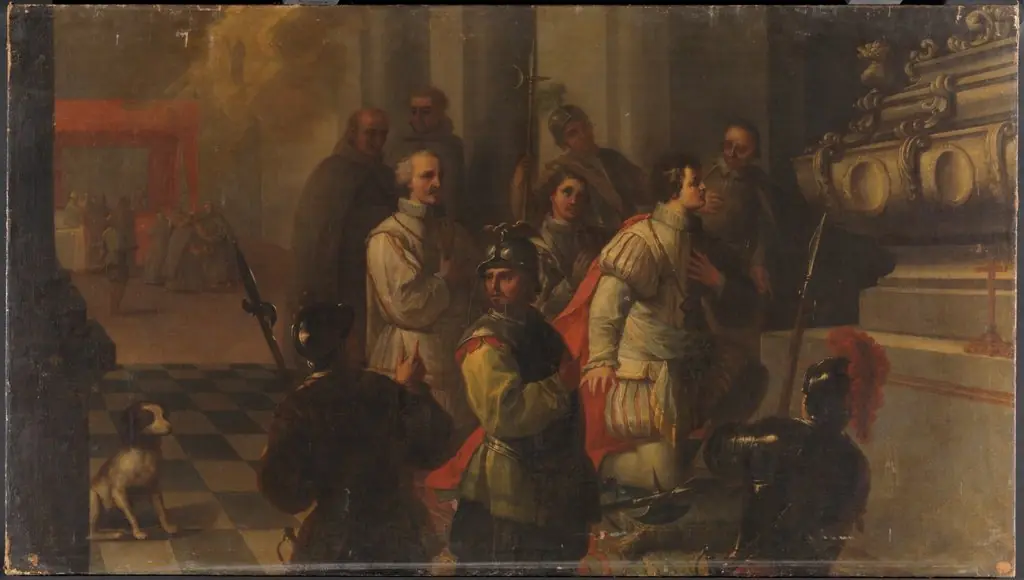 Curación y acción de gracias del príncipe don Carlos. Serie de la Vida de San Diego de Alcalá
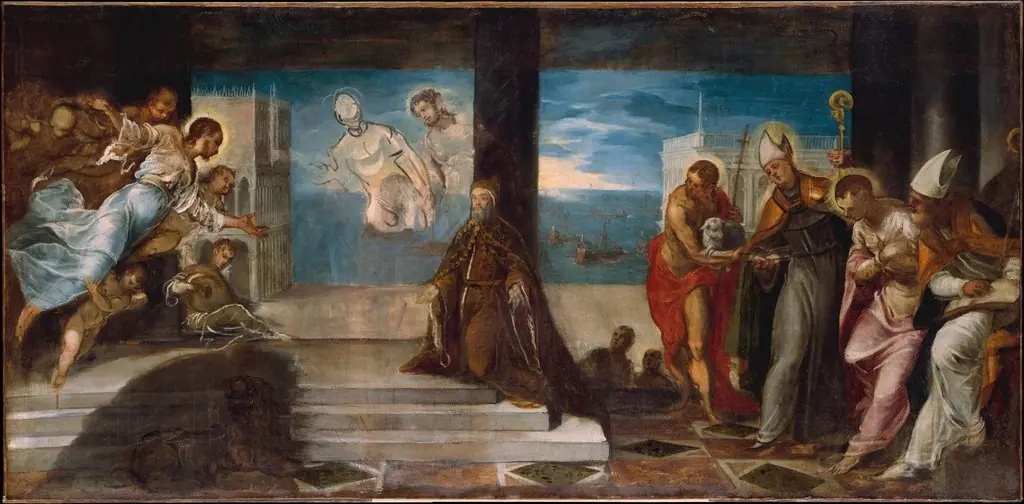 Doge Alvise Mocenigo (1507–1577) Presented to the Redeemer
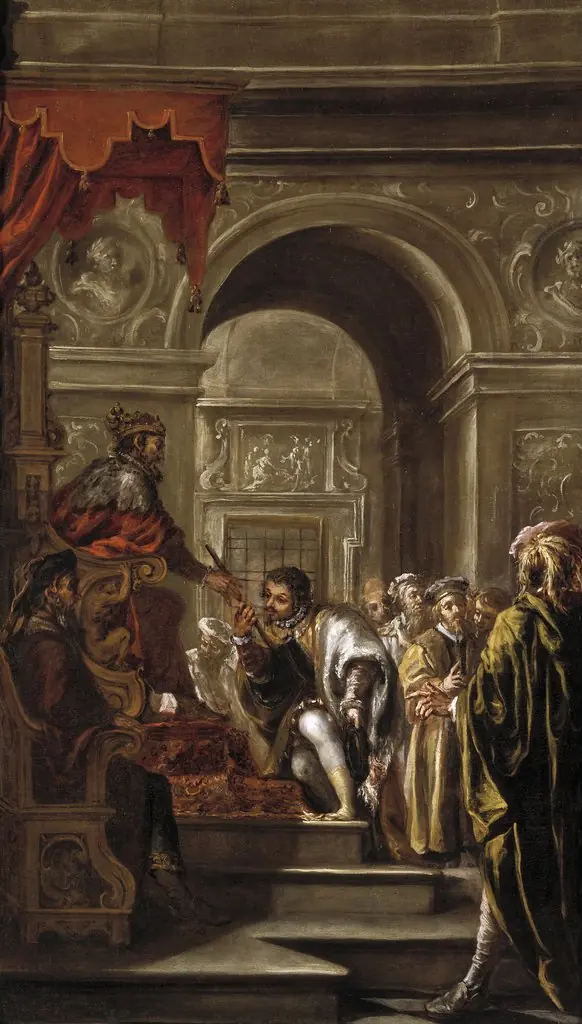 Saint Ambrose appointed Governor of Liguria and Emilia
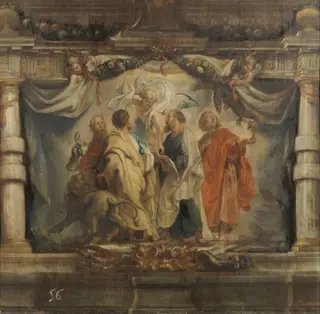 Los cuatro evangelistas
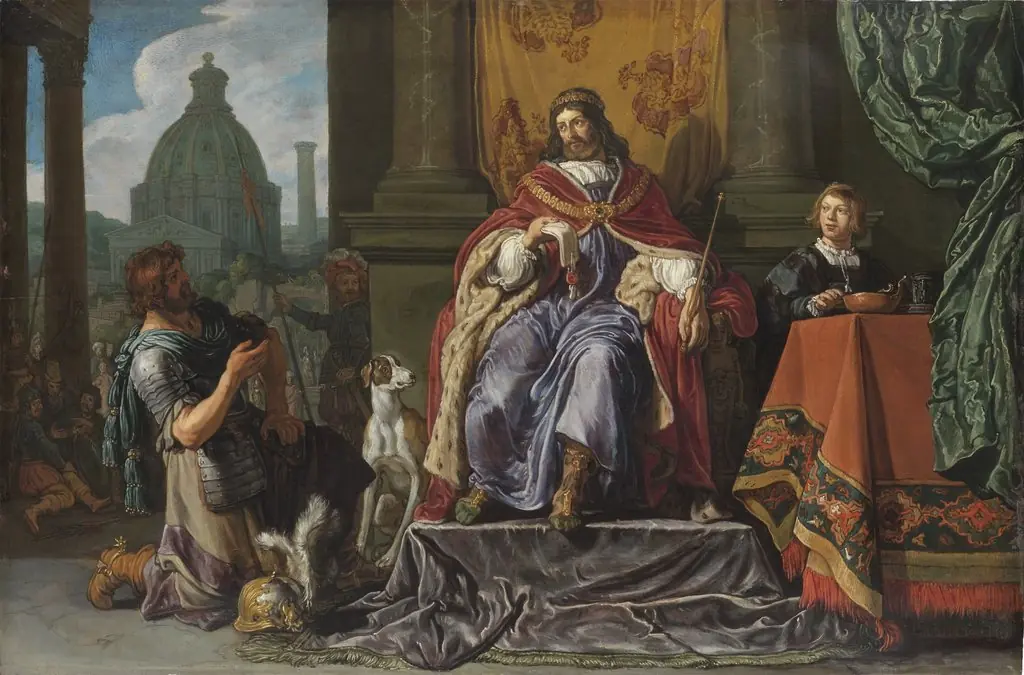 David Gives Uriah a Letter for Joab