Artwork
Christ in the tomb
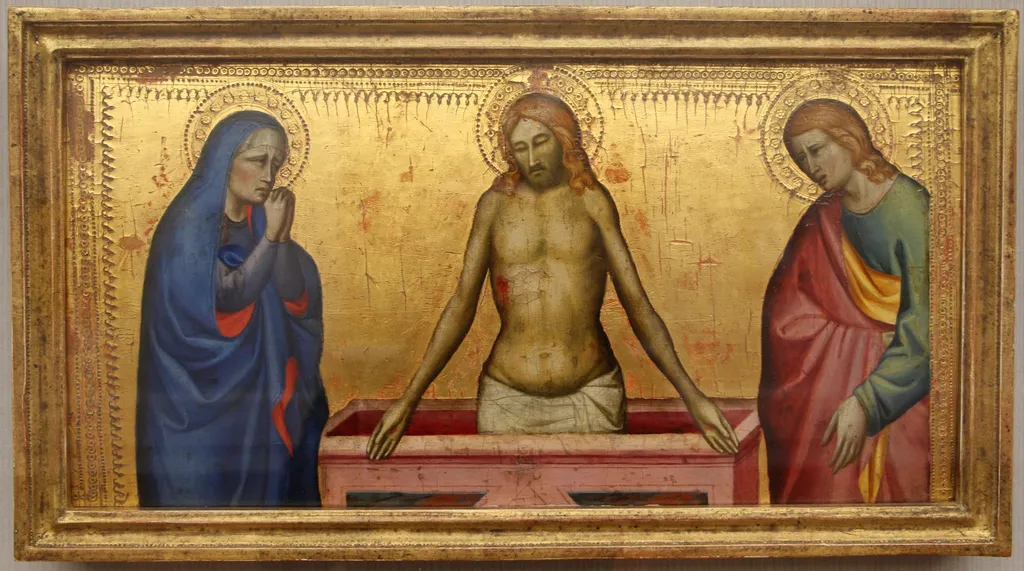
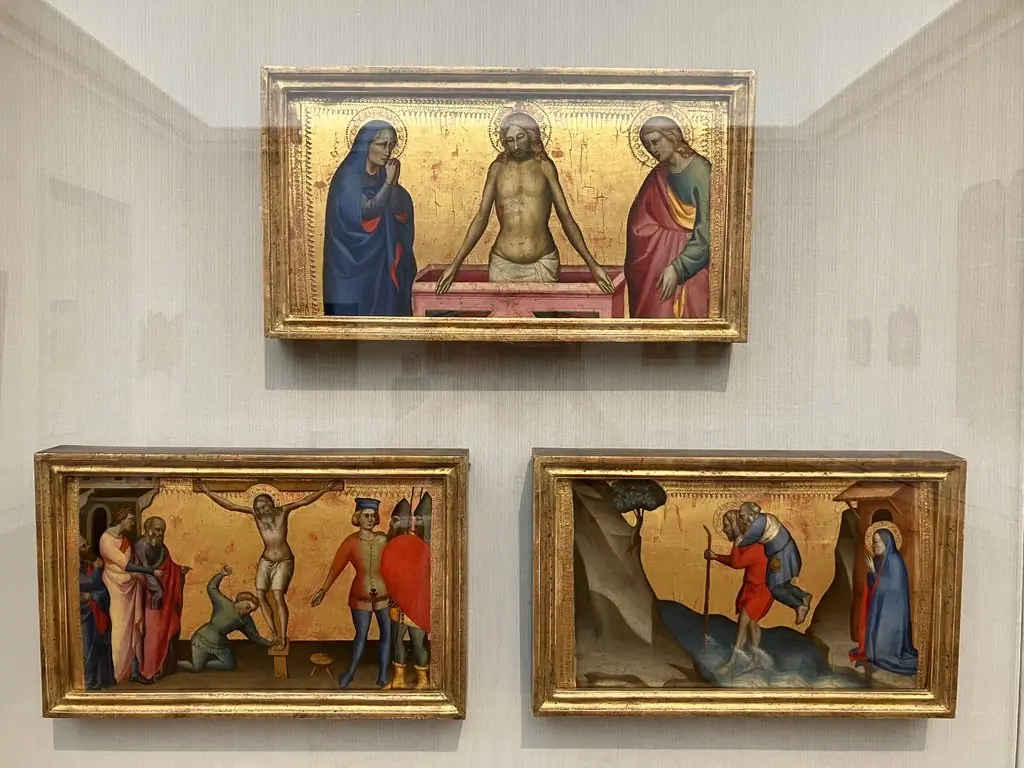
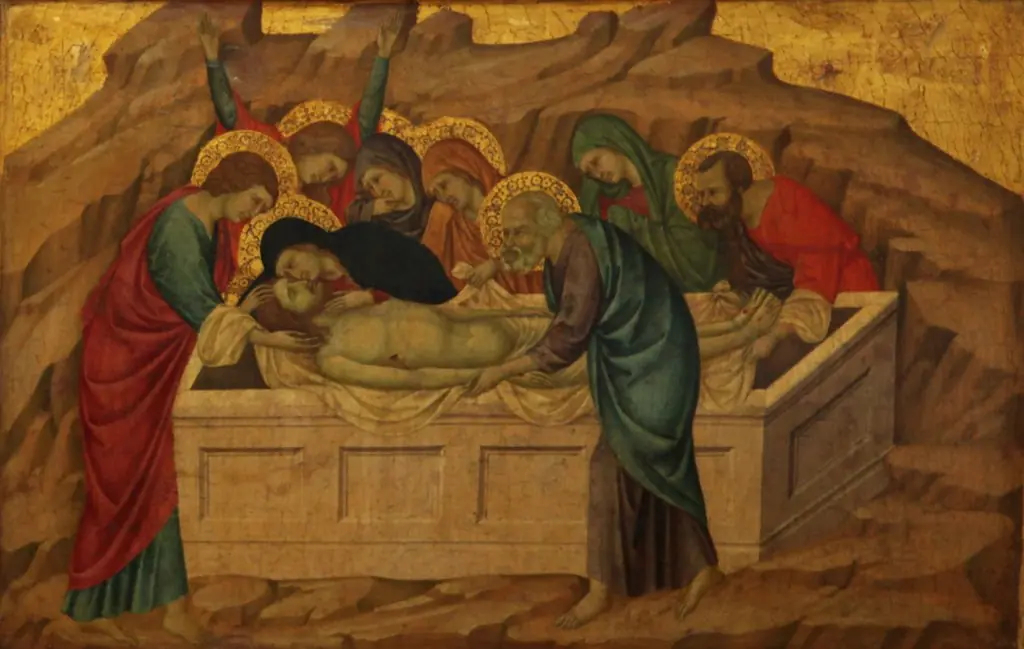
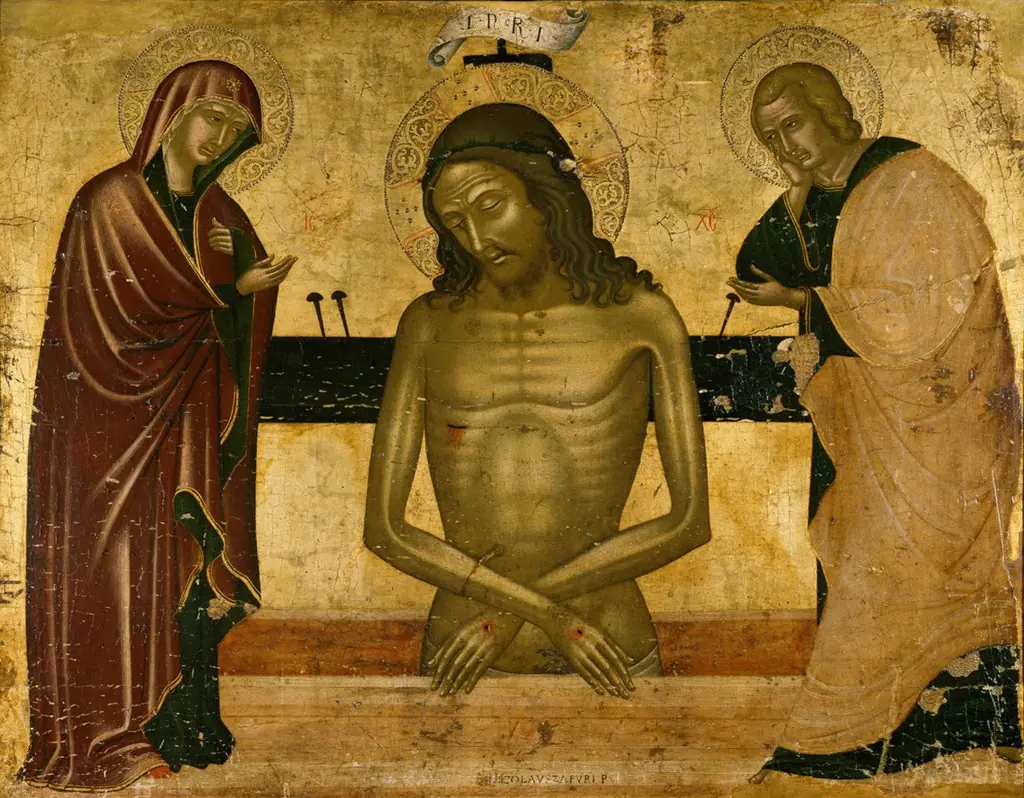
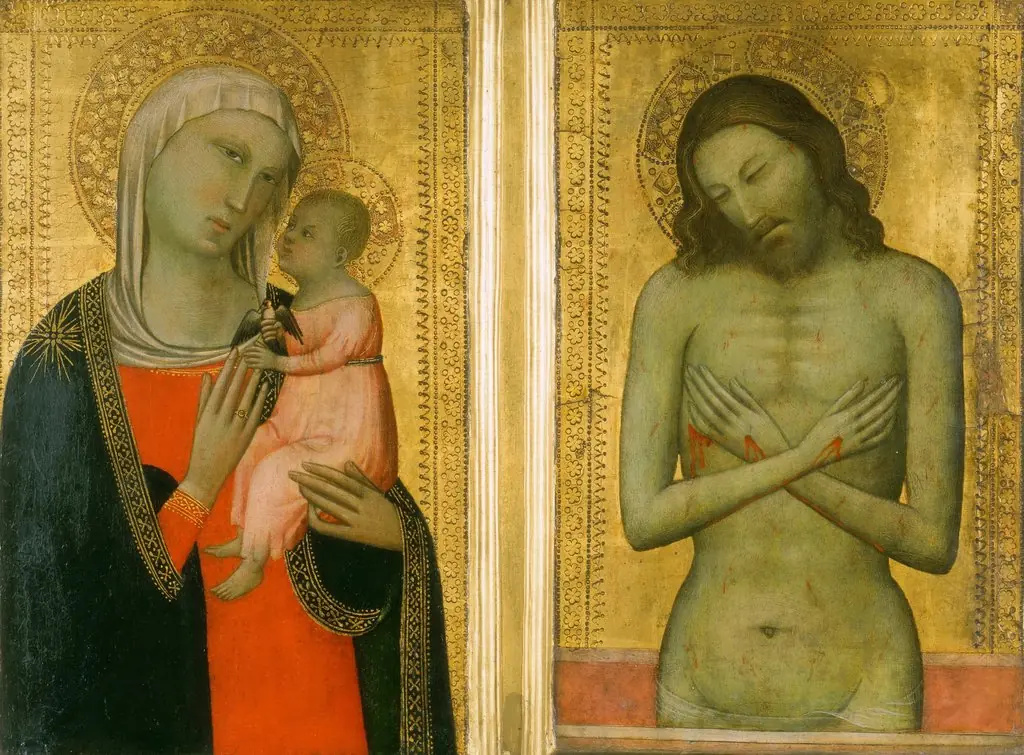
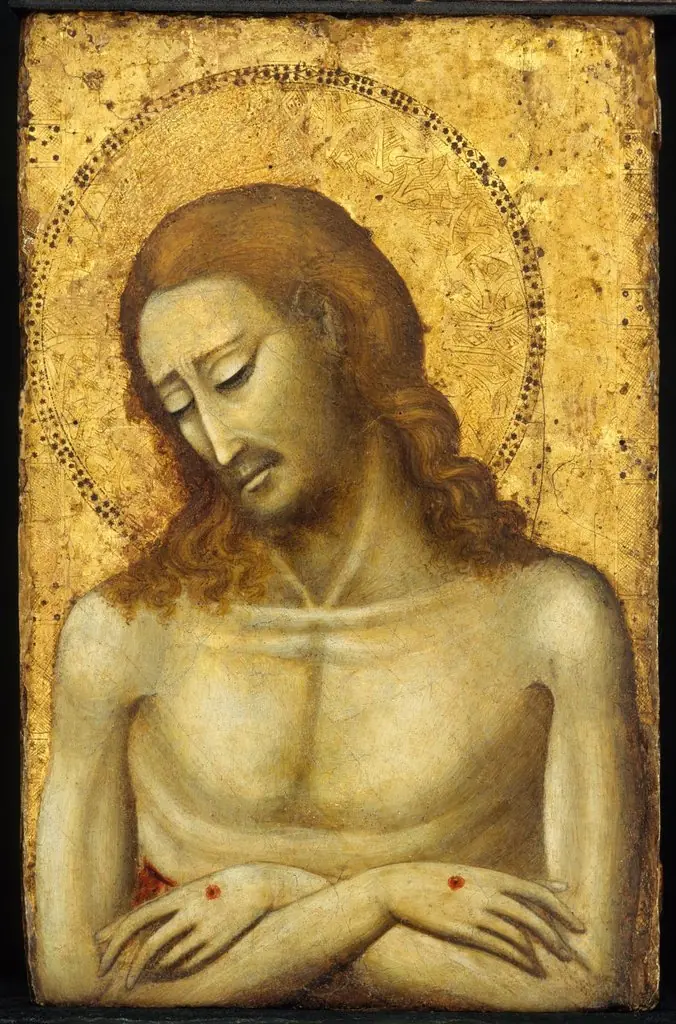
Christ in the tomb is a wood painting by the Italo Byzantine artist Giovanni del Biondo. It dates from 1365 and is held in the collection of the Gemäldegalerie Berlin.
About this work
Overview
The composition follows established iconographic conventions of the period, emphasizing solemnity and spiritual presence over naturalistic space.
Painted in 1365 on a poplar wood panel, Christ in the Tomb is a devotional work by the Sienese artist Giovanni del Biondo. It belongs to a tradition of Italian religious panel painting that flourished in the mid-14th century. The composition follows established iconographic conventions of the period, emphasizing solemnity and spiritual presence over naturalistic space. Its gold background and formal arrangement reflect lingering Byzantine influences adapted to contemporary Italian tastes.
Subject & Meaning
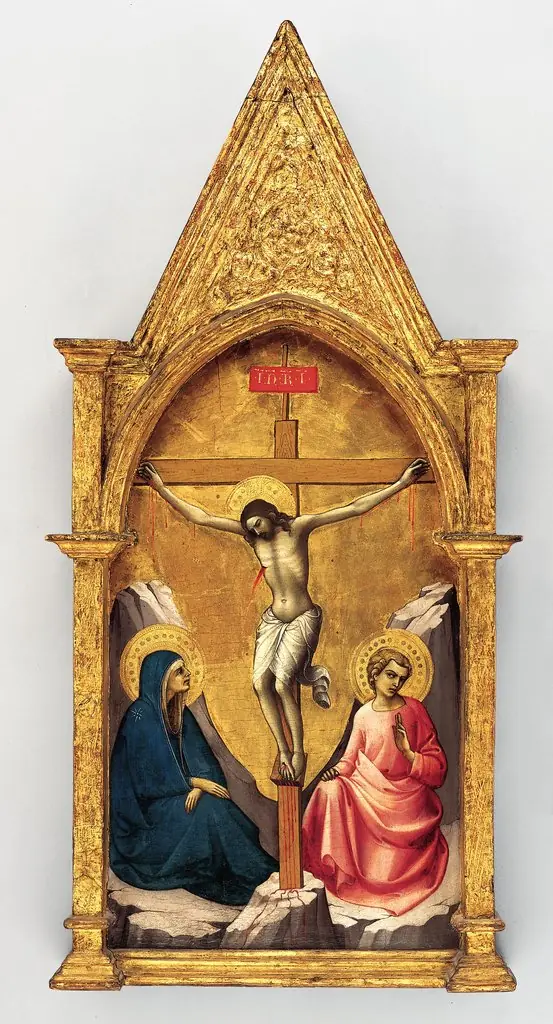
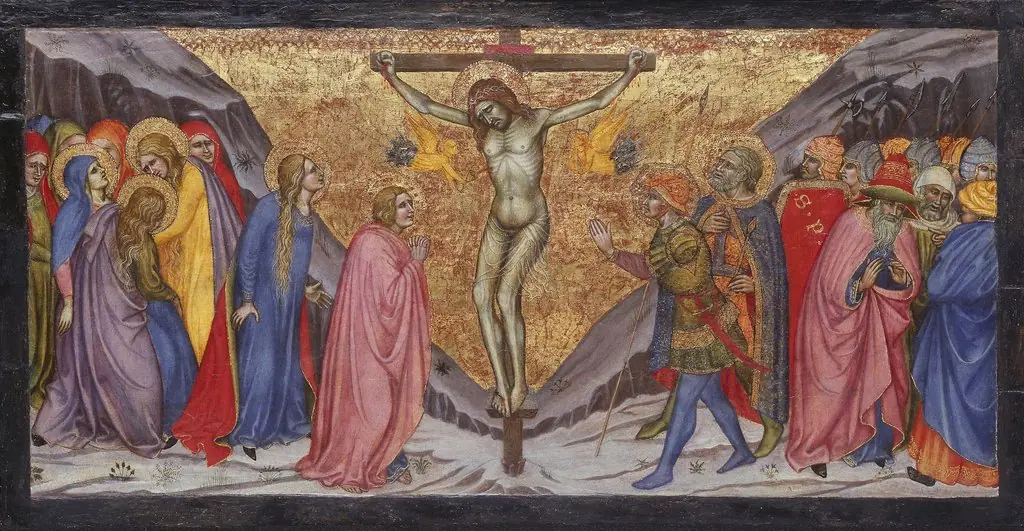
The painting portrays Christ seated within a stone tomb, clad in a white shroud, his hands resting on the edges of the sarcophagus. Flanking him are two mourners, identified as the Virgin Mary and John the Evangelist, their downward gazes conveying grief and reverence. The scene captures the moment after the Deposition and before the Resurrection, a quiet interval of sacred stillness. The halos and gold ground affirm the divine nature of the event, reinforcing its liturgical significance.
Technique & Style
Del Biondo employed tempera on wood, using fine brushwork to render the intricate folds of the figures' garments and the subtle modeling of their faces. The gold background, applied in raised gilding, enhances the luminous quality of the scene without suggesting spatial depth. Figures are arranged frontally, with elongated proportions and stylized drapery, characteristic of the Italo-Byzantine tradition. Color remains symbolic, blue for divinity, red for humanity, rather than naturalistic.
History & Provenance
The panel entered the collection of the Gemäldegalerie in Berlin in the 19th century, likely acquired from a private or ecclesiastical source in Italy. Its attribution to Giovanni del Biondo is based on stylistic comparison with his signed works and documented commissions from the 1360s–1380s. No early documentation of its original location survives, but its size and quality suggest it was intended for private devotion or a small chapel.
Context
In mid-14th-century Tuscany, devotional images of the entombed Christ were common in both public altarpieces and private settings, serving as aids for meditation on Christ’s suffering. Del Biondo worked within a network of artists responding to both Sienese elegance and Florentine innovations. While his style retained Byzantine rigidity, the increasing attention to textile detail hints at emerging trends toward greater naturalism in the decades before the Renaissance.
Legacy
Christ in the Tomb stands as a representative example of late Gothic religious painting in central Italy, bridging medieval iconography and early Renaissance sensibilities. Though not widely known outside specialist circles, it contributes to understanding how devotional imagery evolved before the full emergence of linear perspective and anatomical realism. Its preservation in Berlin allows continued study of regional workshop practices in 14th-century Italy.
Artist & collection
Artist
Giovanni del Biondo was a 14th-century Italian painter of the Gothic and early-Renaissance period.