Artwork
The Crucifixion
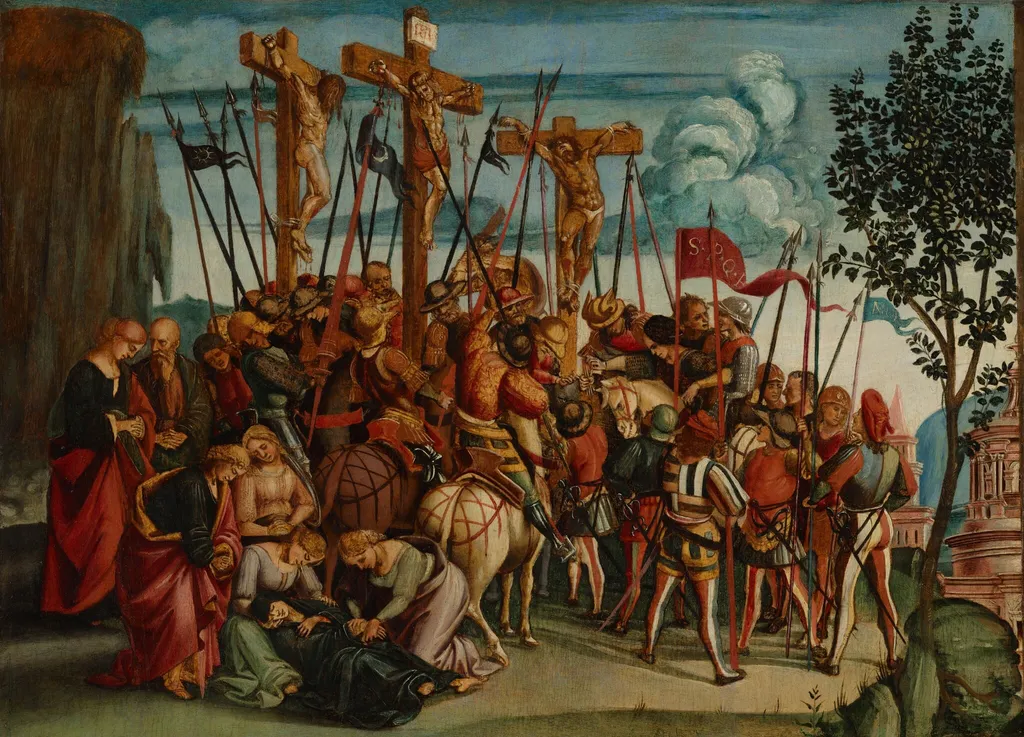
The Crucifixion is an oil painting by the Early Baroque Italian artist Luca Signorelli. It dates from 1504 and is held in the collection of the National Gallery of Art.
About this work
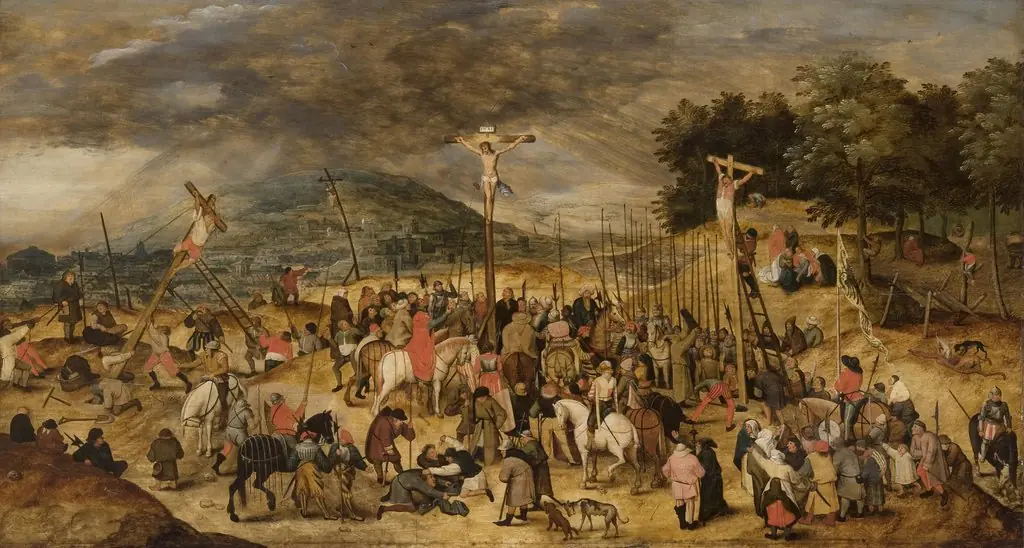
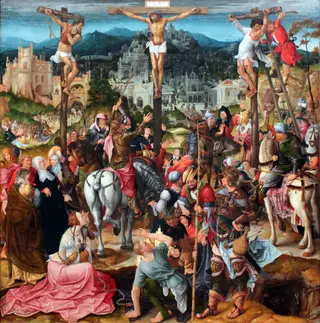
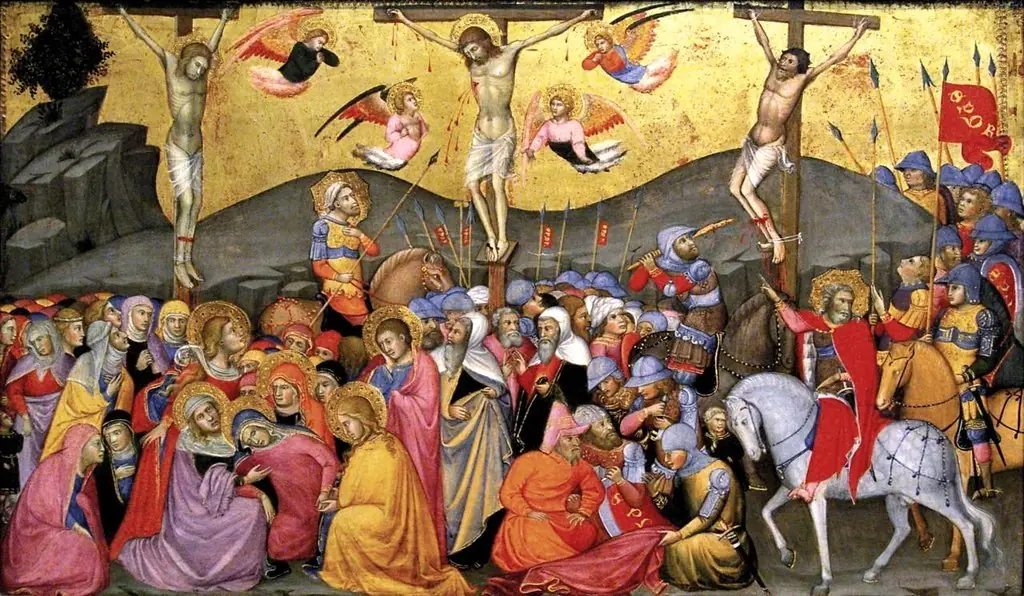
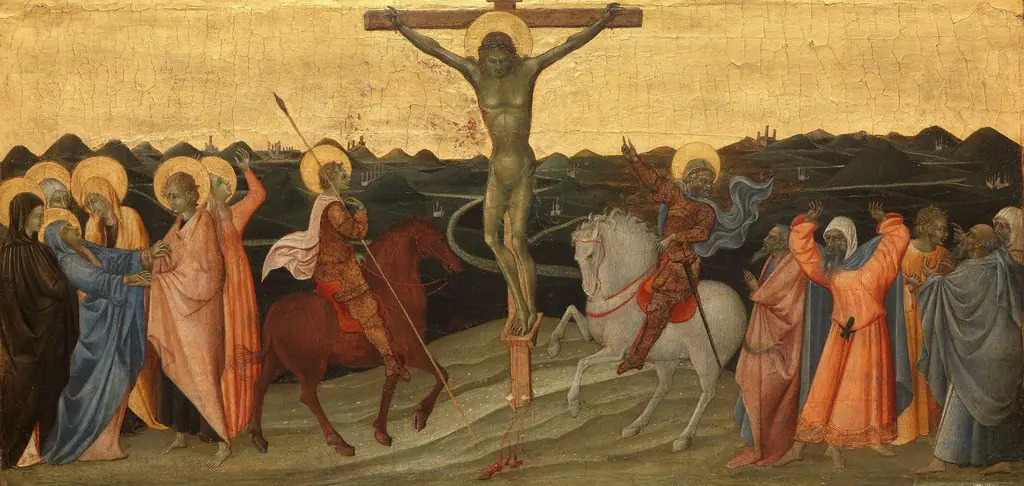
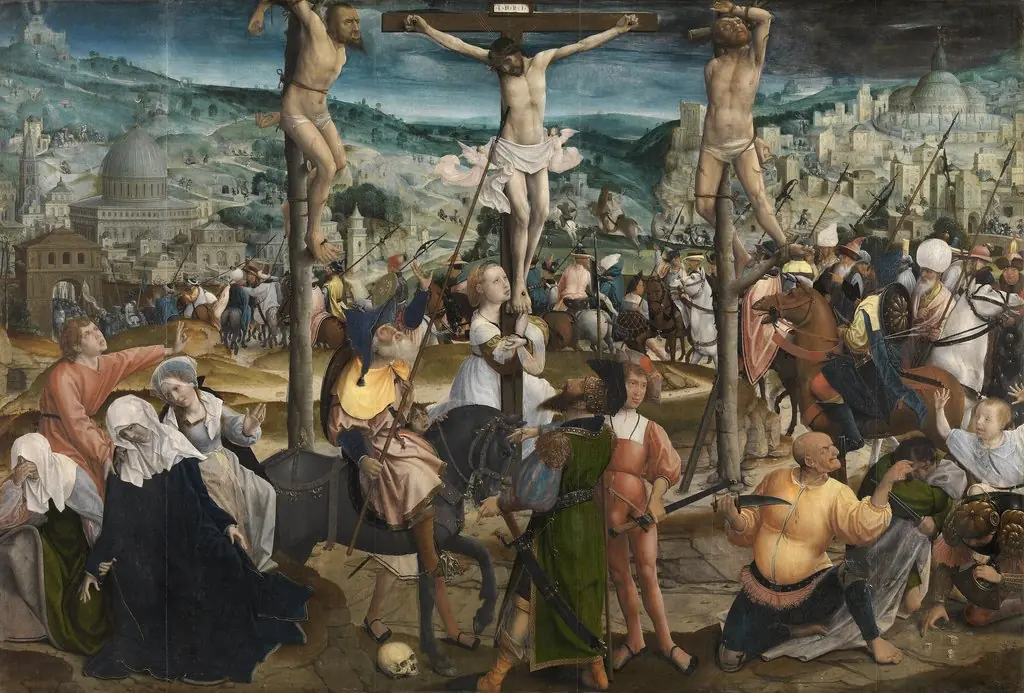
Luca Signorelli shows Jesus nailed to a wooden cross, blood dripping from his hands and feet. Dark clouds gather overhead, one thief beside him and the other below. Painted around 1504 in tempera and oil with gold leaf, the bodies look heavy and sculptural, and the gold glows against the stormy sky.
Subject & Meaning
Created in 1504 by Luca Signorelli, this religious panel painting explicitly depicts the crucifixion of Jesus Christ as its central subject.
Created in 1504 by Luca Signorelli, this religious panel painting explicitly depicts the crucifixion of Jesus Christ as its central subject. The work functions as a devotional image within the Christian tradition, focusing entirely on the figure of Jesus during his execution. While the specific iconographic details of surrounding figures or background elements are not enumerated in the available records, the piece is classified broadly as religious art intended to represent this pivotal biblical event.
The painting's original context likely involved a church setting, possibly the main altar of Sant'Agostino in Matelica, suggesting it served a liturgical or communal worship purpose. Its enduring classification and preservation within major collections underscore its role as a significant representation of the Passion narrative in early sixteenth-century Italian art.
Technique & Style
Executed in 1504, this panel painting employs a mixed technique combining tempera and oil paints, enhanced with gilding. The work measures 72.5 by 101.3 centimeters. As a religious composition depicting the Crucifixion of Jesus Christ, the piece demonstrates the artist's application of precious materials and specific binding media characteristic of the period.
The support consists of a wooden panel, which served as the foundation for the layered application of pigments and gold leaf. The integration of oil and tempera suggests a transitional approach to medium handling, allowing for both the luminosity associated with gilding and the textural qualities achievable through oil glazes.
History & Provenance
The Crucifixion, a tempera, oil and gilded panel painted in 1504 by Luca Signorelli, was likely commissioned for the main altar of the church of Sant'Agostino in Matelica, as suggested by scholarly hypotheses [1]. After its creation the work entered the collection of Sir John Charles Robinson, was sold in 1894 to Sir Francis Cook and remained in the Cook family for three generations before being sold in 1947 to Gualtiero Volterra on behalf of Count Alessandro Contini Bonacossi [1]. The painting was acquired later that year by the Samuel H. Kress Collection and, following a gift in 1952, entered the National Gallery of Art, where it remains [2].
The Crucifixion by Luca Signorelli entered the National Gallery of Art in Washington, D.C., in 1952 as a gift from the Samuel H. Kress Collection. Its documented provenance begins with a possible commission for the church of Sant'Agostino in Matelica (Macerata). The panel passed through Citernesi in Florence before being purchased in May 1883 by Sir John Charles Robinson in London.
In February 1894 it was sold to Sir Francis Cook, 1st bt., at Doughty House, Richmond, Surrey, descending through three successive Cook baronets at the same residence. In mid-1947 it was sold to Gualtiero Volterra on behalf of Count Alessandro Contini Bonacossi of Florence, then acquired in July 1948 by the Samuel H. Kress Collection in New York, before its 1952 donation to the NGA.
Context
Painted in 1504, Luca Signorelli's Crucifixion is a late work by an artist then approaching seventy and working in the Umbrian tradition he had long helped define. Its likely original placement on the high altar of Sant'Agostino at Matelica, in the Marche, situates the panel within Signorelli's continuing commissions for religious institutions outside his principal Tuscan orbit during the opening years of the Cinquecento. The attribution to this commission rests on a hypothesis first advanced by Mario Salmi in 1953 and subsequently confirmed by Laurence B. Kanter, whose dissertation of 1989 and joint article with David Franklin of 1991 established the Matelica provenance on the basis of Vasari's reference to a related Passion subject painted for Monte Santa Maria.
The painting's passage through the Cook collection at Doughty House and its 1948 acquisition by the Samuel H. Kress Collection, followed by its 1952 gift to the National Gallery of Art, have secured its place in the Anglo-American canon of Italian Renaissance panel painting.
Legacy
The Crucifixion (1504) by Luca Signorelli helped shape the visual language of Passion imagery in Renaissance Italy; scholars such as Salmi, Kanter, and Franklin have highlighted its innovative composition and emotional intensity as a model for later depictions of Christ’s suffering [1]. The painting’s distinguished provenance, from its possible original church commission to ownership by the Cook family and eventual acquisition by the Samuel H. Kress Foundation, reflects its enduring prestige among collectors [1]. Its inclusion in the National Gallery of Art’s collection cemented its reputation in the United States and ensured continued scholarly attention to Signorelli’s legacy in religious art [2]
Overview
Luca Signorelli's The Crucifixion, created around 1504-1505, is a panel painting employing tempera, oil, and gilding. This work depicts Jesus Christ on the cross, a central theme in Christian art. It represents a mature phase in the Tuscan Renaissance painter's career, showcasing his developed approach to composition and figure representation after extensive fresco projects.
Own this work as a print
Artist & collection
Artist
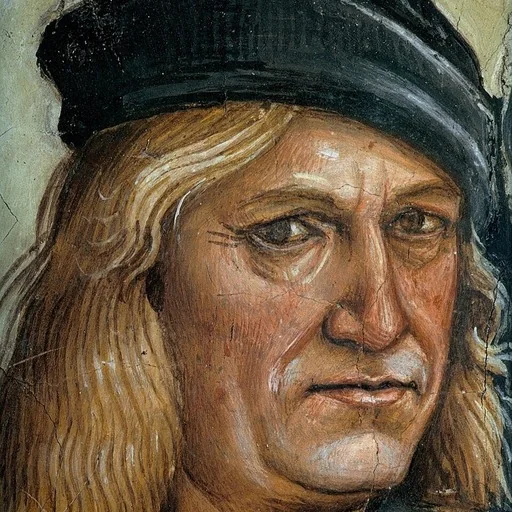
Luca Signorelli (c. 1441/1445 – 16 October 1523) was an Italian Renaissance painter from Cortona, in Tuscany, who was noted in particular for his ability as a draftsman and his use of foreshortening. His massive frescos…