Artwork
The Game of Bowls
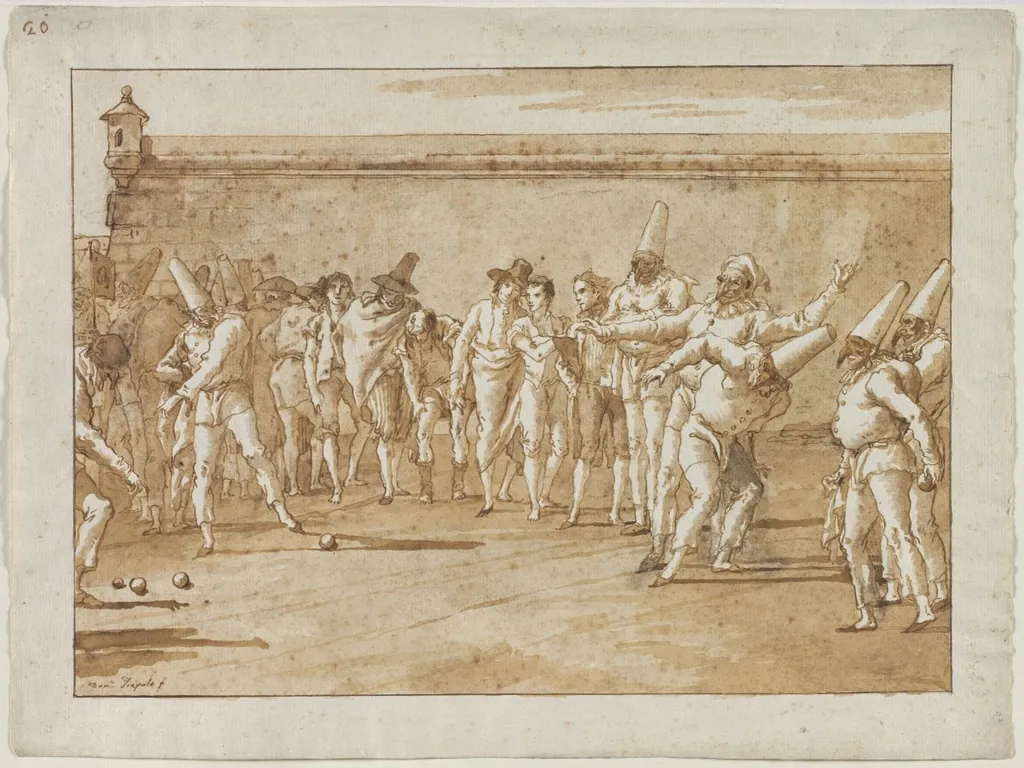
The Game of Bowls is a drawing by the Romanticist artist Giovanni Domenico Tiepolo. It dates from 1800 and is held in the collection of the Cleveland Museum of Art.
- Accession no.
- 1937.571
- Credit line
- Purchase from the J. H. Wade Fund
About this work
Overview
Though seemingly informal, the composition carries subtle tensions between freedom and constraint, reflecting the political climate of late 18th-century Venice.
This ink and wash drawing depicts a casual game of bocce played on an open lawn, with ordinary Venetian men engaged in sport alongside small, masked figures known as Punchinellos. The scene balances lighthearted motion with an imposing architectural presence in the background. Though seemingly informal, the composition carries subtle tensions between freedom and constraint, reflecting the political climate of late 18th-century Venice.
Subject & Meaning
The Punchinellos, traditional comic figures from Italian theater, are shown interacting with real-life players in a game of bocce. Their presence evokes the popular commedia dell’arte tradition, while their diminutive scale and exaggerated gestures contrast with the grounded, serious demeanor of the human players. The looming prison behind them introduces a quiet unease, suggesting the suppression of public expression under foreign rule after Venice’s 1797 occupation.
Technique & Style
The artist employs fluid ink lines and graded washes to define form and atmosphere. The figures are rendered with expressive, almost caricatured energy, while the fortress is rendered in darker, heavier strokes, creating a visual weight that anchors the composition. The contrast between the sunlit lawn and the shadowed structure demonstrates a deliberate use of chiaroscuro to guide emotional tone rather than merely depict light.
History & Provenance
The drawing was created shortly after Venice lost its independence to Napoleon’s forces in 1797, a time when commedia dell’arte performances were banned. The artist’s father, a known designer of Punchinello masks, had helped popularize these figures in Venetian culture. This work may have been a personal response to the cultural erasure, embedding symbolic resistance within a seemingly innocent scene.
Context
In the wake of French occupation, Venice’s public life was tightly regulated, and traditional entertainments were suppressed. The Punchinello, once a vehicle for satire and social commentary, became a symbol of lost autonomy. This drawing, created in private, quietly preserves the memory of a culture under threat, using the familiar imagery of play to evoke absence and control.
Legacy
The drawing stands as a quiet testament to the endurance of cultural memory under political repression. It influenced later artists interested in the intersection of folk tradition and historical trauma. Though not widely exhibited in its time, its layered symbolism has since been recognized as a nuanced record of Venetian identity during a period of profound transition.
Artist & collection
Artist
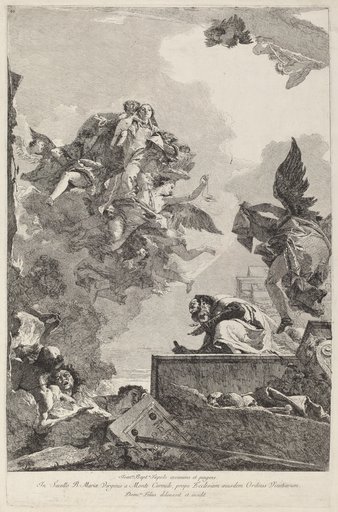
Giovanni Domenico Tiepolo (August 30, 1727 – March 3, 1804) was an Italian painter and printmaker in etching. He was the son of artist Giovanni Battista Tiepolo and elder brother of Lorenzo Baldissera Tiepolo.

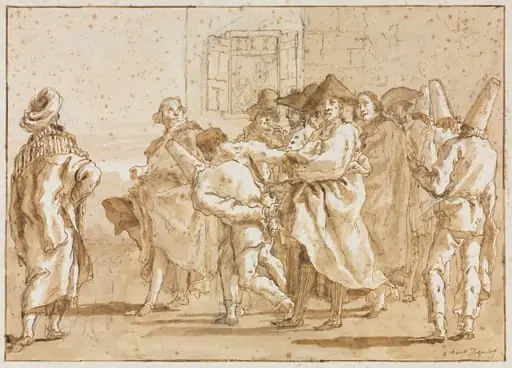 Punchinello Arrested
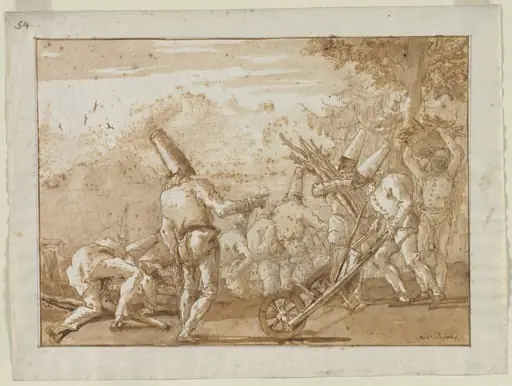 Gathering Wood
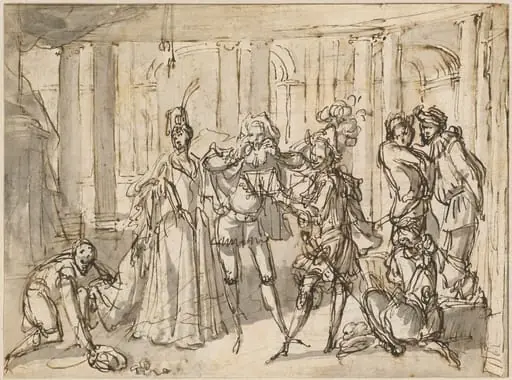 A Performance by the Commedia dell'Arte
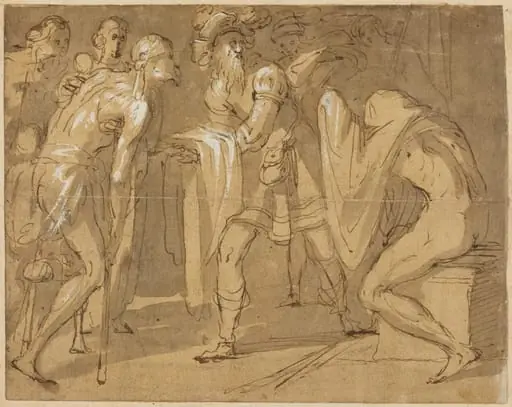 Saint Homobono
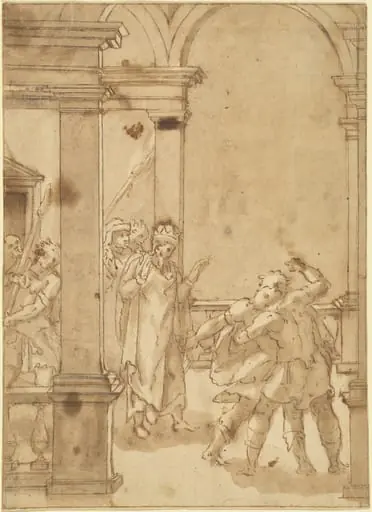 Two Figures Struggling before a King
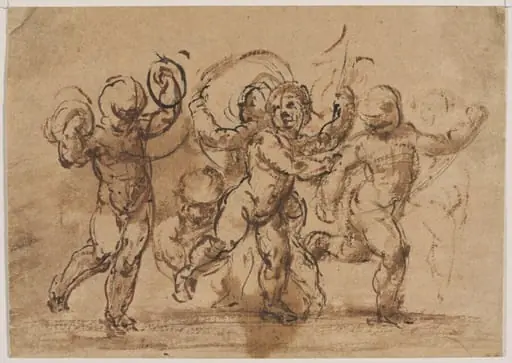 Boys running
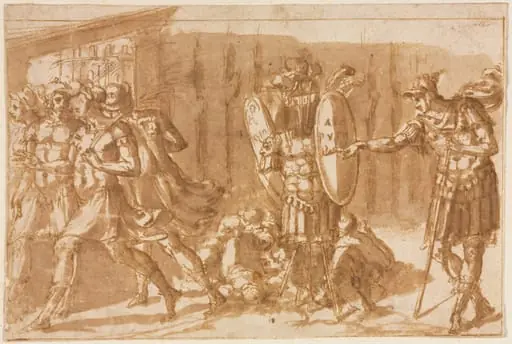 Victorious Soldiers with Trophy
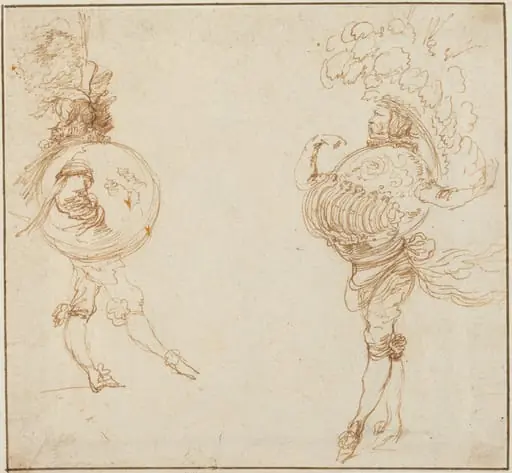 Two Men in Masquerade Costumes: The Earth and a Parade Helmet
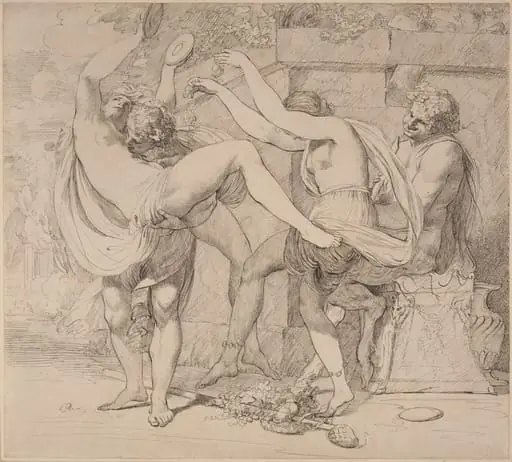 Bacchanal
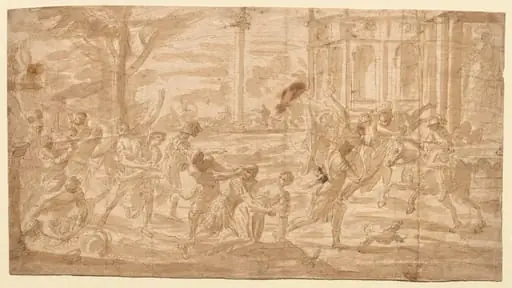 Rape of the Sabines
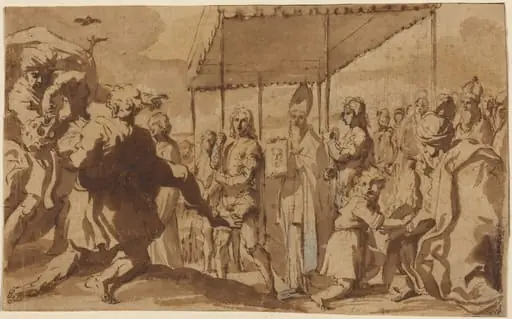 The Healing of the Possessed Boy in a Procession of the Volto Santo
- Punchinello's Farewell to Venice