Artwork
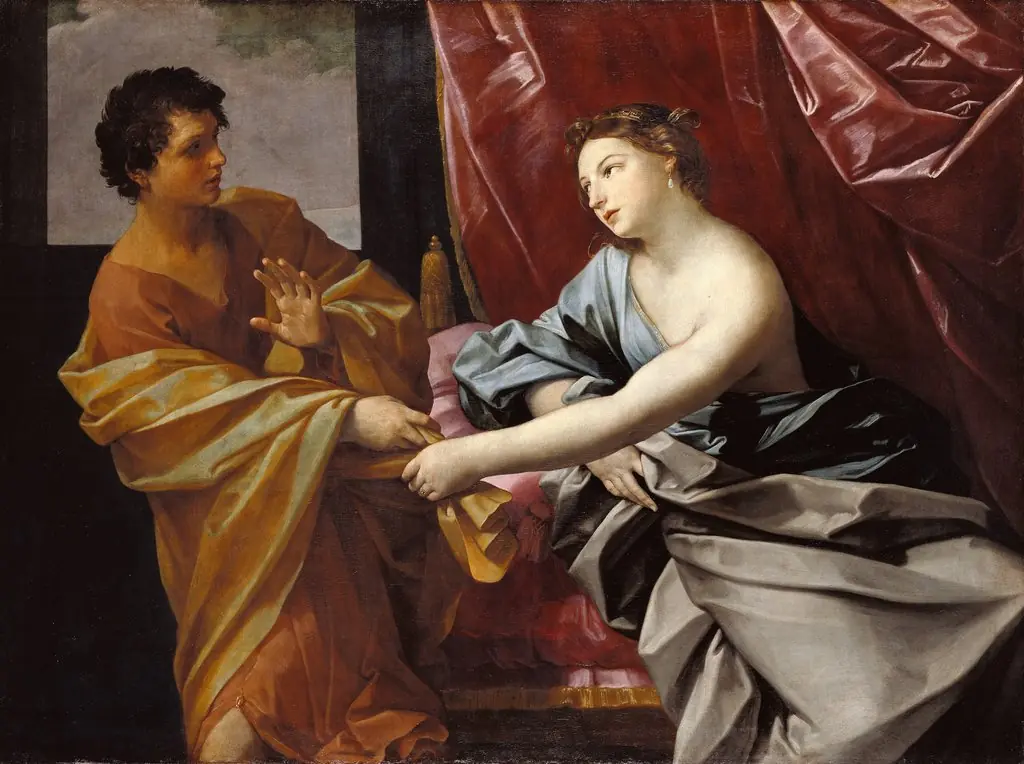
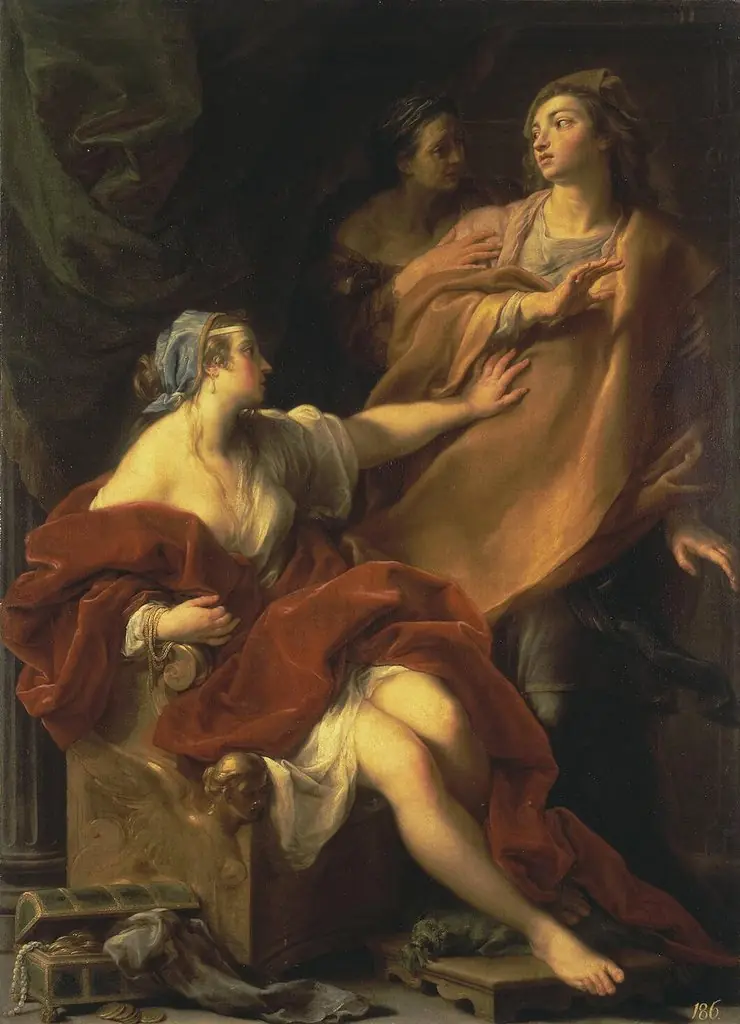
Jozef en de vrouw van Potifar
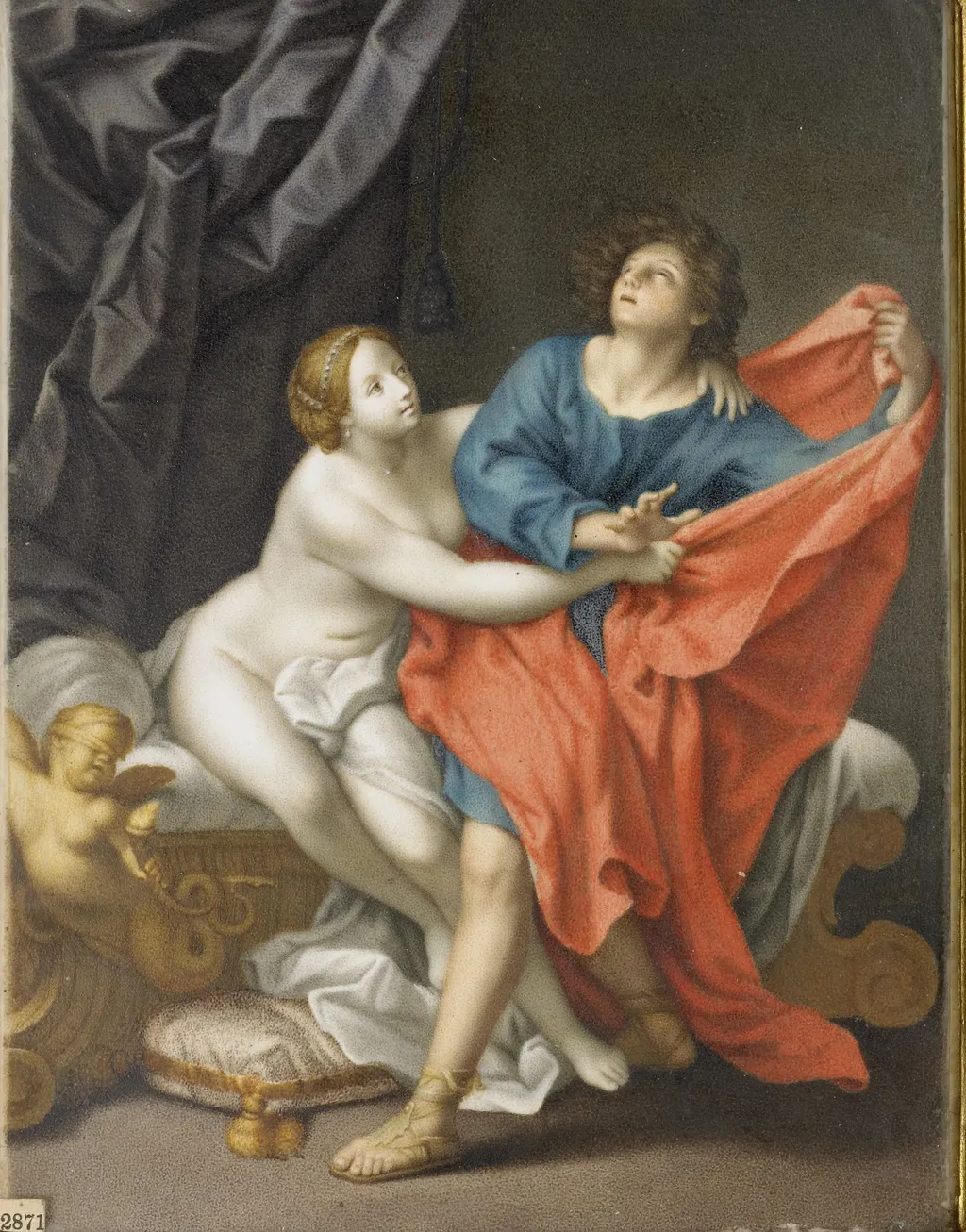
Jozef en de vrouw van Potifar is an ivory painting by the Rococo painting artist Giovanni Felice Ramelli. It dates from 1726 and is held in the collection of the Rijksmuseum.
About this work
Subject & Meaning
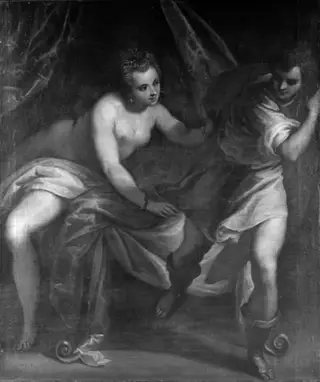
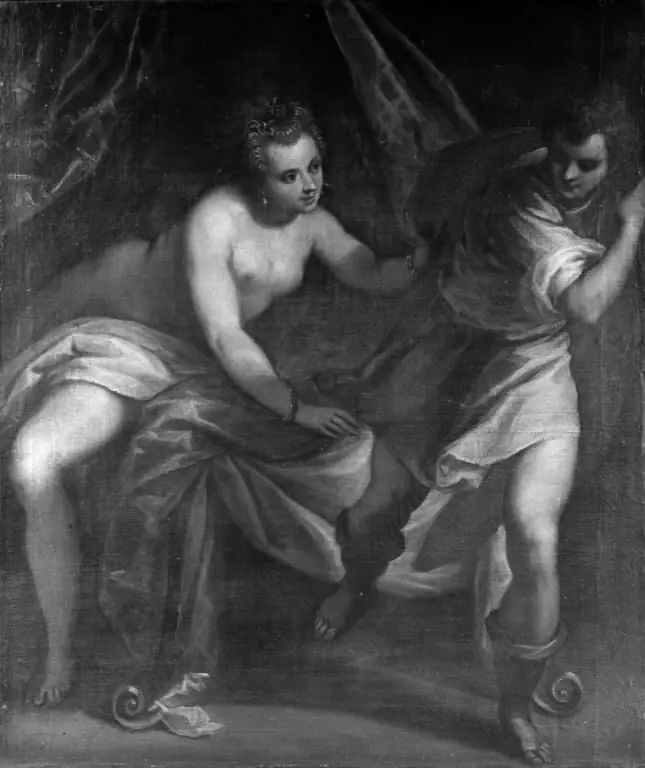
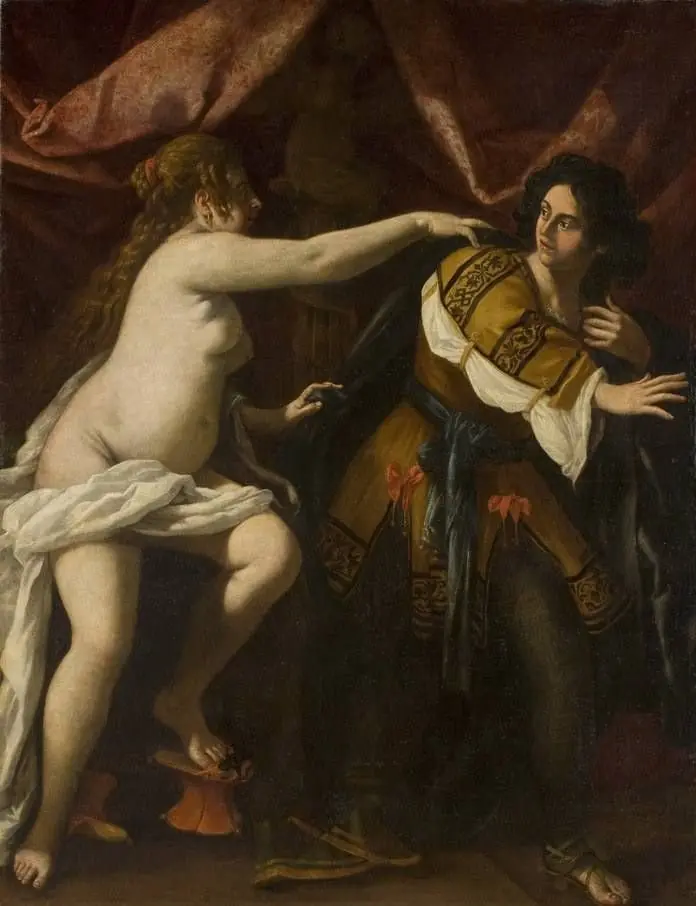
The painting portrays Zulaikha, the wife of Potiphar, in the biblical narrative where Joseph resists her advances. This subject draws on the Old Testament story of Joseph and Potiphar's wife, a theme often used to explore moral temptation and virtue. The work is classified as a miniature painting created on ivory, reflecting the delicate scale typical of such artworks in the 18th century.
Technique & Style
The painting is executed on a thin ivory panel, a support commonly used for small devotional works in the early 18th century.
The painting is executed on a thin ivory panel, a support commonly used for small devotional works in the early 18th century. Giovanni Felice Ramelli rendered the scene with fine brushwork that emphasizes delicate tonal transitions and precise detailing characteristic of Dutch-inspired miniature painting. The composition depicts Zulaikha, the wife of Potiphar, in a moment of moral tension, rendered with a restrained palette and careful handling of light to convey texture on the ivory surface.
The work measures 19.5 cm in height and 15.2 cm in width, reflecting the modest scale typical of such pieces.
Formal stylistic analysis highlights the influence of Dutch engraving traditions in the linear precision of the figures and the subtle gradation of shading, adapted to the limitations and luminous quality of the ivory medium.
History & Provenance
The miniature painting _Jozef en de vrouw van Potifar_ by Giovanni Felice Ramelli is dated 1726, as recorded in both the work’s internal documentation and its Wikidata entry.
It is executed in ivory and depicts the biblical scene of Potiphar’s wife with Joseph, aligning with Ramelli’s known subject matter in miniature format. The painting entered the collection of the Rijksmuseum, where it is currently held.
The ivory miniature Jozef en de vrouw van Potifar by Giovanni Felice Ramelli is held in the collection of the Rijksmuseum in Amsterdam. The work, created in 1726, is classified as a painting and miniature within the museum's holdings. While specific inventory or accession numbers are not provided in the available records, the piece is documented as part of the Rijksmuseum's permanent collection. No exhibition history is recorded in the provided sources.
Context
The painting is part of the Rijksmuseum collection and is classified as a miniature created in 1726 on ivory. It depicts Zulaikha, the wife of Potiphar, within the biblical narrative of Joseph. Giovanni Felice Ramelli's specialization in small devotional subjects is reflected in this work, which aligns with his broader output during the early 18th century.
The piece is recognized as a significant example of Dutch Golden Age miniature painting, noted for its technical precision and narrative detail.
Legacy
The miniature painting by Giovanni Felice Ramelli depicting the biblical scene of Joseph and Potiphar's wife has been part of the Rijksmuseum's collection since its acquisition, ensuring its visibility within the museum's holdings of Dutch Golden Age works. As a notable example of 18th-century ivory painting, it contributes to scholarly understanding of small-scale devotional art and the interpretation of biblical narratives in visual culture. Its presence in a major national collection has facilitated continued study of Ramelli's technique and the thematic treatment of this particular story in art history.
Overview
Giovanni Felice Ramelli, an Italian painter and Augustinian abbot active in early 18th‑century Rome, executed a small ivory painting in 1726 that is now part of the Rijksmuseum’s collection. The work belongs to the Rococo period and portrays a moment from the biblical narrative of Joseph and Potiphar’s wife.
Own this work as a print
Artist & collection

Artist
Giovanni Felice Ramelli (1666–1740) was an Italian painter of the Baroque period, active mainly in Rome. He also became an abbot of the Augustinian order of Canons Regular of the Lateran.