Artwork
Angelica and Medoro
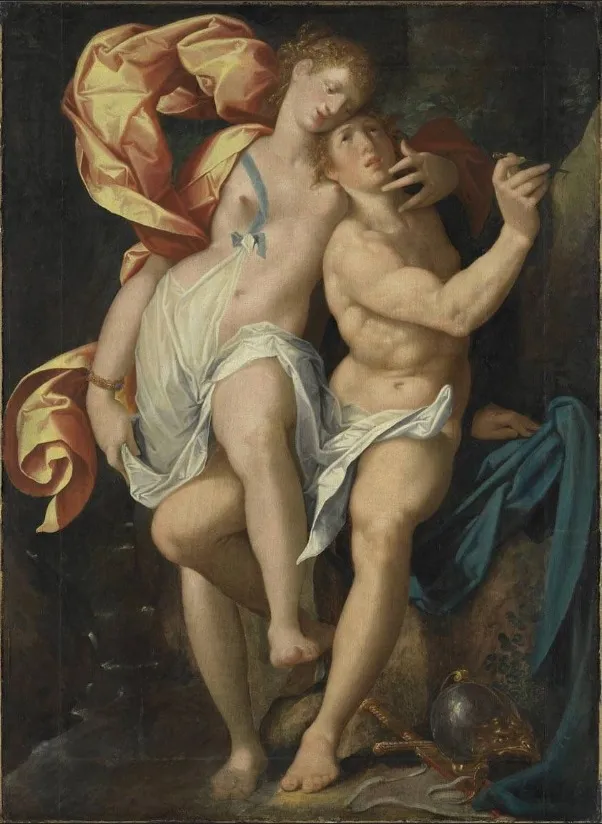
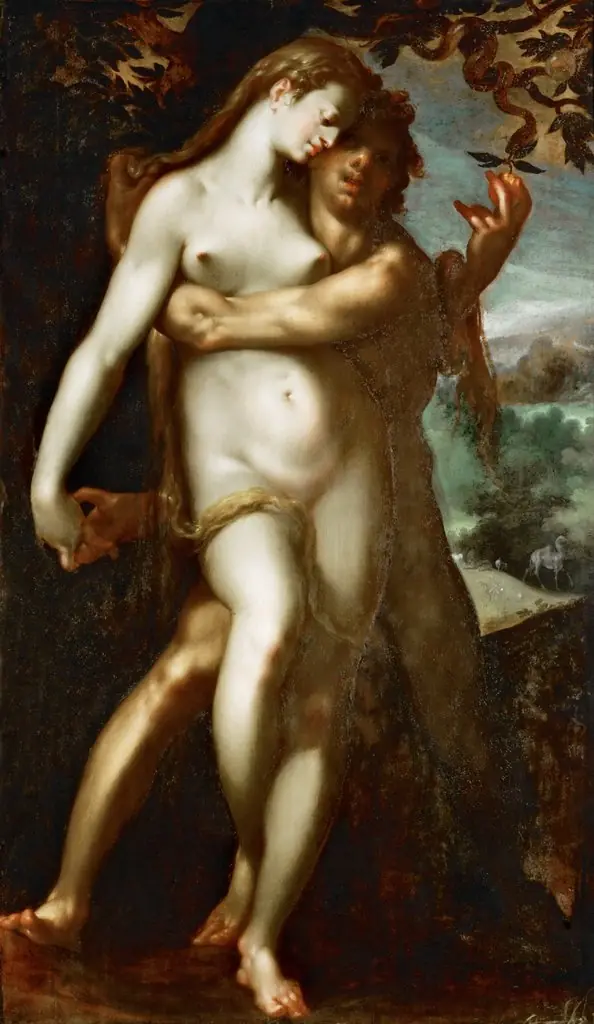
Angelica and Medoro is a color painting by the Mannerist artist Bartholomeus Spranger. It dates from 1600 and is held in the collection of the Bavarian State Painting Collections.
About this work
Subject & Meaning
The painting depicts an episode from Ludovico Ariosto's chivalric poem Orlando furioso, showing Angelica, princess of Cathay, and Medoro, a Saracen soldier.
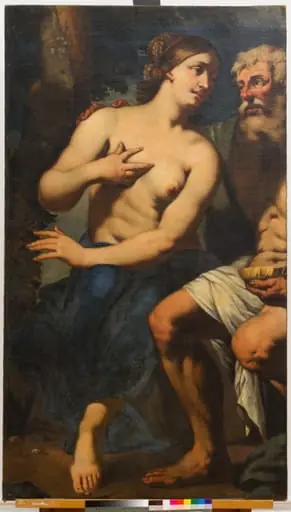
The painting depicts an episode from Ludovico Ariosto's chivalric poem Orlando furioso, showing Angelica, princess of Cathay, and Medoro, a Saracen soldier. Medoro is shown carving their names into a tree trunk to seal their love, a gesture that combines erotic and pastoral themes. In the lower right, beneath the tree trunk, lie Medoro's sword and helmet.
Angelica wears a bracelet on her wrist, an object she later gives to the shepherds who had hosted the couple. Mannerist elements include Medoro's muscular physique, his twisted body, and the positioning of the two figures.
Technique & Style
Executed in oil on canvas, the painting measures 107.5 by 79.5 cm. Spranger’s handling emphasizes elongated, muscular figures and pronounced contrapposto: Medoro’s body twists dynamically as he carves the lovers’ names into a tree trunk, while Angelica’s pose complements the spiraling motion. The scene’s erotic-pastoral character is underscored by the discarded helmet and sword at lower right and Angelica’s visible bracelet, a detail drawn from Ariosto’s poem. Color is deployed in cool, silvery tones, heightening the artificial elegance typical of late Mannerism.
History & Provenance
The painting Angelica and Medoro by Bartholomeus Spranger was created around the year 1600, though some accounts suggest a broader timeframe between 1580 and 1600. The work depicts a scene from Ludovico Ariosto's Orlando furioso, focusing on the romantic episode between Angelica and Medoro. It is currently held by the Bavarian State Painting Collections at the Alte Pinakothek in Munich.
The museum acquired the canvas in 1935. The painting is executed in color on canvas and measures 107.5 cm in height by 79.5 cm in width.
The painting Angelica and Medoro by Bartholomeus Spranger is held in the collection of the Bavarian State Painting Collections, specifically located at the Alte Pinakothek in Munich. The museum acquired the work in 1935. Created around the turn of the 17th century, with dates cited between 1580 and 1600, the piece is executed in color on canvas.
While the work is a noted example of Mannerist art depicting characters from Ludovico Ariosto's Orlando Furioso, the provided records do not list specific past exhibitions or an inventory accession number beyond its institutional location.
Context
The painting Angelica and Medoro by Bartholomeus Spranger depicts a scene from Ludovico Ariosto's epic poem Orlando furioso, showing Angelica and the Saracen soldier Medoro inscribing their names on a tree to seal their love. This subject, blending erotic and pastoral elements, was widely adopted by Renaissance artists. The work features mannerist characteristics such as Medoro's muscular form, the dynamic twist of his body, and Angelica's wrist bracelet, which later symbolized a gift to shepherds who sheltered the lovers.
The composition was acquired by the Bavarian State Painting Collections and has been housed in the Alte Pinakothek in Munich since 1935.
Scholarly attention to the painting emphasizes its role within Spranger's oeuvre and the broader context of Northern Mannerism, as discussed in studies on German and Dutch painting between the Renaissance and Baroque periods.
Critical reception has highlighted the work's intricate narrative detail and its embodiment of late Renaissance erotic themes, contributing to ongoing discussions of Spranger's influence on subsequent artists.
Legacy
The painting has inspired numerous subsequent artists who treated the same mythological love scene, particularly during the Baroque and later periods when the Orlando furioso narrative remained a popular source of subject matter. Its composition, emphasizing Medoro’s musculature, the twisting pose, and the subtle details such as Angelica’s bracelet, was studied by artists copying motifs from the Bavarian State Painting Collections’ holdings. The work’s presence in a major public collection helped cement Spranger’s reputation as a Northern Mannerist capable of blending erotic and pastoral themes, influencing later painters who reproduced the episode in prints and small-scale canvases. Contemporary scholarship continues to reference the piece when discussing the diffusion of Ariosto‑derived subjects across European art.
Overview
Bartholomeus Spranger’s Angelica and Meduro (1600) is an oil painting executed in vivid colour. The composition presents two nude figures amid a stark, rocky landscape, illuminated by a deep, shadowy background that accentuates their pale skin and a striking red drapery. The woman leans toward the man, who cradles a helmet, suggesting an intimate yet narrative moment.
Artist & collection
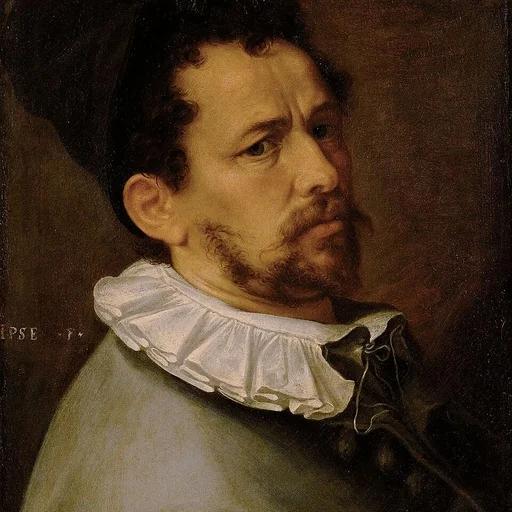
Artist
Bartholomeus Spranger or Bartholomaeus Spranger (21 March 1546 – 27 June 1611) was a Flemish painter, draughtsman, sculptor, and designer of prints.