Artwork
Disparate pobre (Poor Folly)
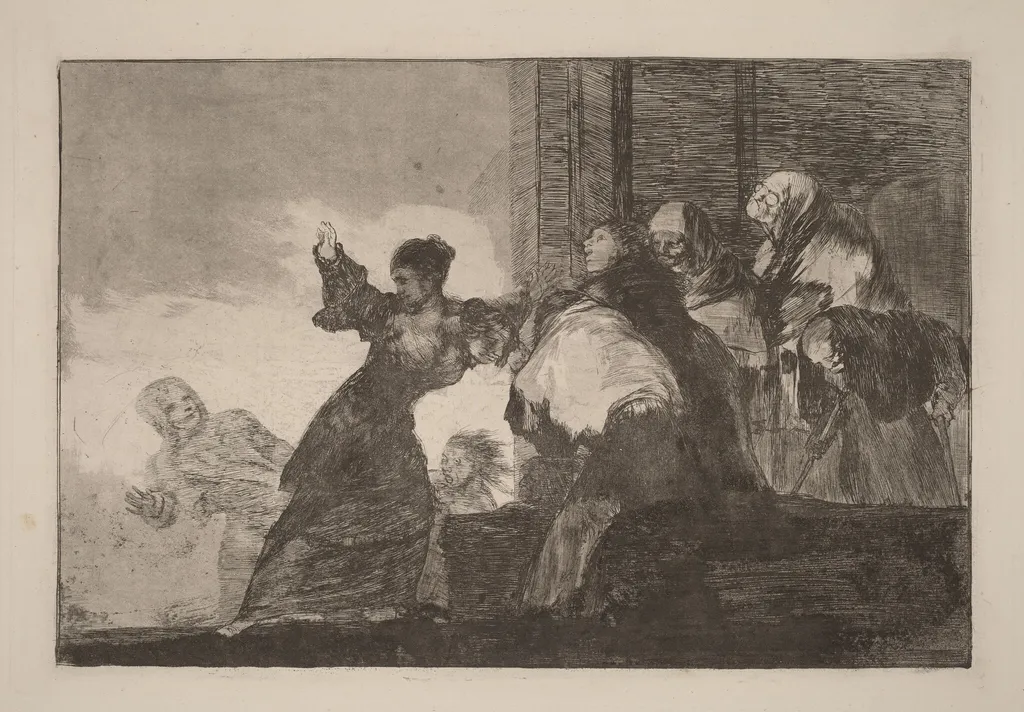
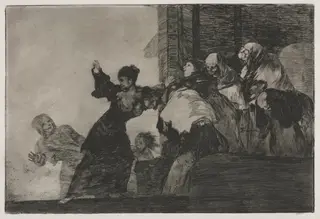
Disparate pobre (Poor Folly) is an ink print by the Romanticist artist Francisco de Goya. It dates from 1816 and is held in the collection of the National Gallery of Art. Disparate pobre, executed in 1816, is a mixed‑media intaglio print that combines etching, burnished aquatint, drypoint and burin work.
About this work
Overview
Though the original plate was made by Francisco de Goya, the surviving trial proof was printed after his death, sometime between 1854 and 1863.
Disparate pobre, executed in 1816, is a mixed‑media intaglio print that combines etching, burnished aquatint, drypoint and burin work. Though the original plate was made by Francisco de Goya, the surviving trial proof was printed after his death, sometime between 1854 and 1863. The image belongs to the later group of Goya’s Disparates series, which are noted for their ambiguous, often unsettling subjects.
Subject & Meaning
The composition presents a cramped urban street populated by five loosely rendered figures in ragged attire. At the centre, a woman clutches her head and stretches her arms outward, while two older women lean from a window, gesturing or shouting. A child crouches near a barrel, and a fifth figure on the left raises his arms. The scene’s disorder and exaggerated gestures suggest a moment of collective panic or irrationality.
Technique & Style
Goya employed a layered intaglio process: the primary outlines were drawn in drypoint, deeper shadows were built up with burnished aquatint, and finer details were incised with a burin. The resulting tonal range, from deep black to delicate grays, creates a stark contrast that heightens the sense of urgency. Scratchy, uneven lines give the figures a frantic, almost sketch‑like quality, emphasizing emotion over precise form.
History & Provenance
The plate was completed during Goya’s final years, a period marked by personal illness and political disillusionment. Although the work was not printed in his lifetime, a trial proof emerged in the mid‑19th century, likely from the artist’s studio inventory. The print has since entered public collections, documented in catalogues of Goya’s posthumous prints.
Context
Disparate pobre is part of the Disparates (or Los Proverbios) series, a body of work that Goya began after the traumatic events of the Peninsular War and his own severe hearing loss. The series reflects a broader turn in early‑19th‑century European art toward expressing inner turmoil and the irrational aspects of human behavior, moving away from the polished academic standards of the previous century.
Own this work as a print
Artist & collection
Artist
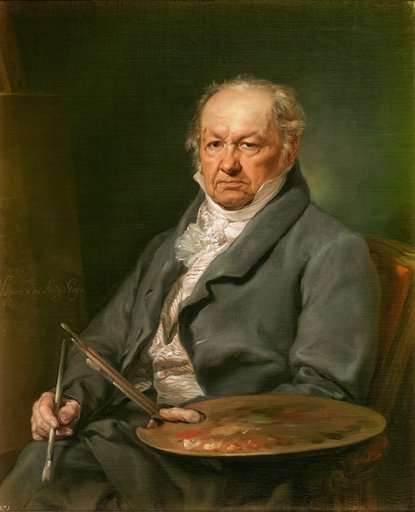
Francisco José de Goya y Lucientes was a Spanish romantic painter and printmaker.

- Disparate desordenado (Disorderly Folly)
 The Proverbs: Poor Folly
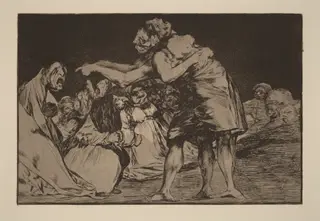 Disparate desordenado (Disorderly Folly)
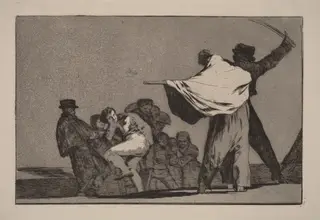 Disparate conocido (Well-Known Folly)
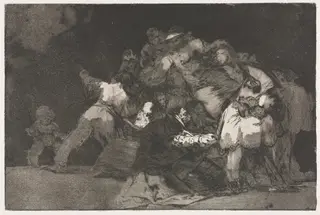 The Proverbs: General Folly
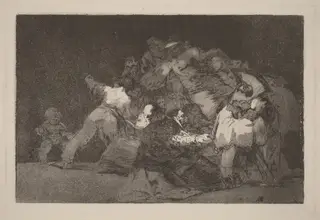 Disparate general (General Folly)
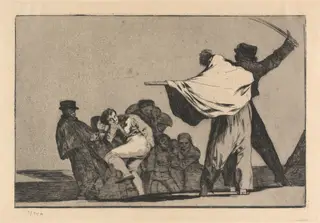 Disparate conocido (Well-Known Folly)
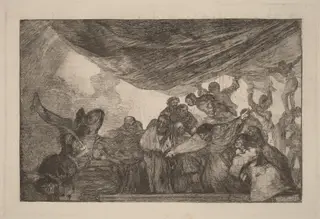 Disparate claro (Clear Folly)
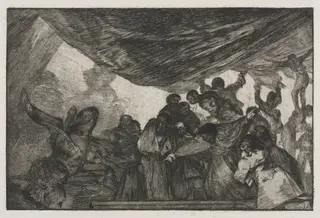 The Proverbs: Clear Folly
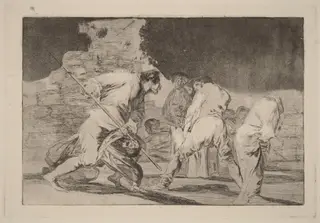 Disparate furioso (Furious Folly)
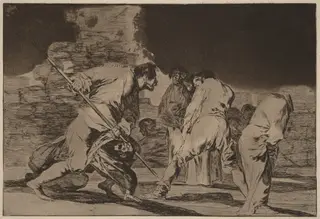 Disparate furioso (Furious Folly)
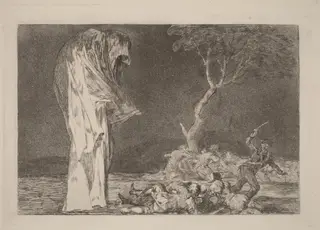 Disparate de miedo (Folly of Fear)