Artwork
The Jester Barbarroja
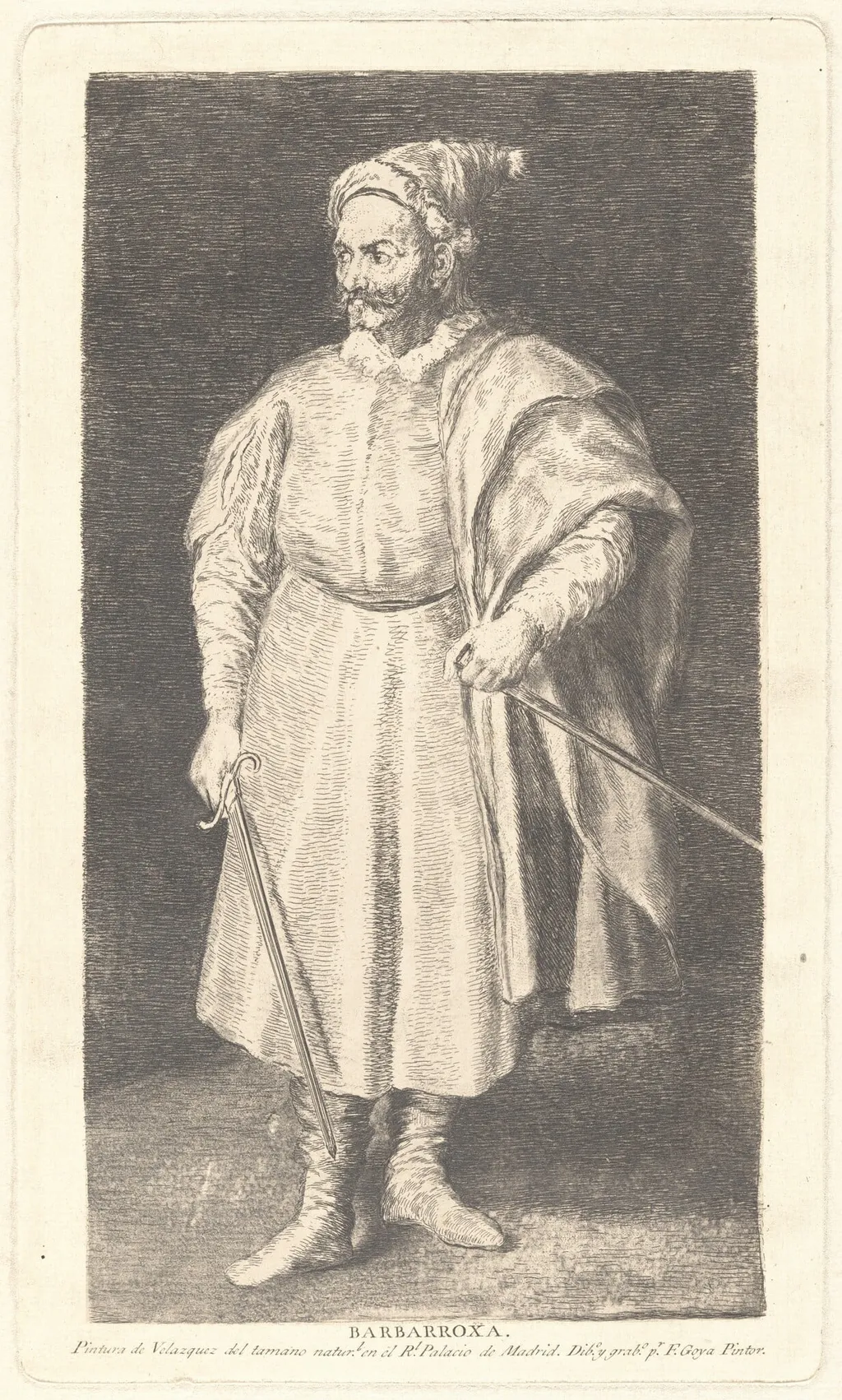
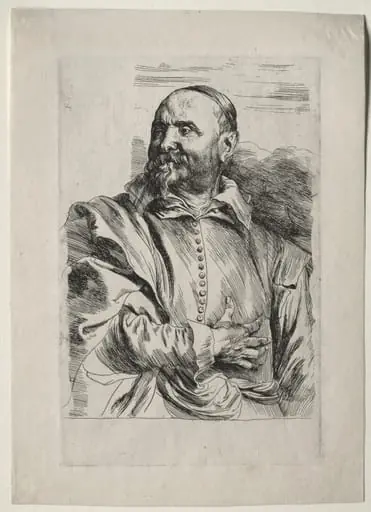
The Jester Barbarroja is an ink print by the Romanticist artist Francisco de Goya. It dates from 1778 and is held in the collection of the National Gallery of Art.
- Inscription
- Inscribed:recto: in plate, below image, at center: BARBARROXA. / Pintura de Velazquez del tamano natur.l en el R.l Palacio de Madrid. Dib.o y Grab.o p.r F. Goya Pintor; verso: at upper left in later hand in graphite 200 [indecipherable] and 21 [circled]
- Markings
- Marked:recto: none; verso: National Gallery of Art
About this work
Overview
The Jester Barbarroja is a print by Francisco de Goya, created around 1778 using various techniques on laid paper. It is a portrait of a man, identified by the printed name below the image.
Subject & Meaning
The subject is a man dressed in a long, fur-lined coat and turban, holding a curved walking stick. His serious expression and distinctive mustache and beard are notable. The name 'Barbarroja' may be a nickname, and the image could be a satirical representation, consistent with Goya's practice of critiquing human folly.
Technique & Style
Goya employed a range of techniques, including etching, aquatint, burin, and roulette, to create the image. The combination of shading and line work achieves a sense of depth, characteristic of Goya's expressive graphic style.
Own this work as a print
Artist & collection
Artist
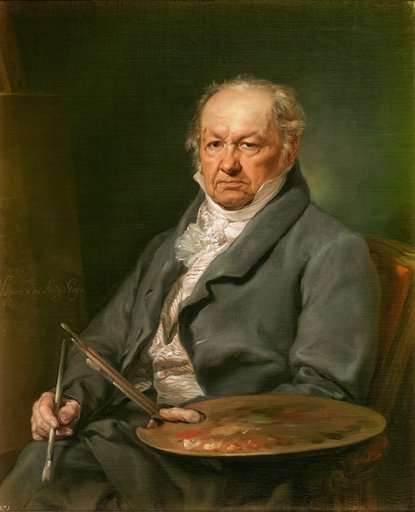
Francisco José de Goya y Lucientes was a Spanish romantic painter and printmaker.