Artwork
Saint Peter freed by an Angel
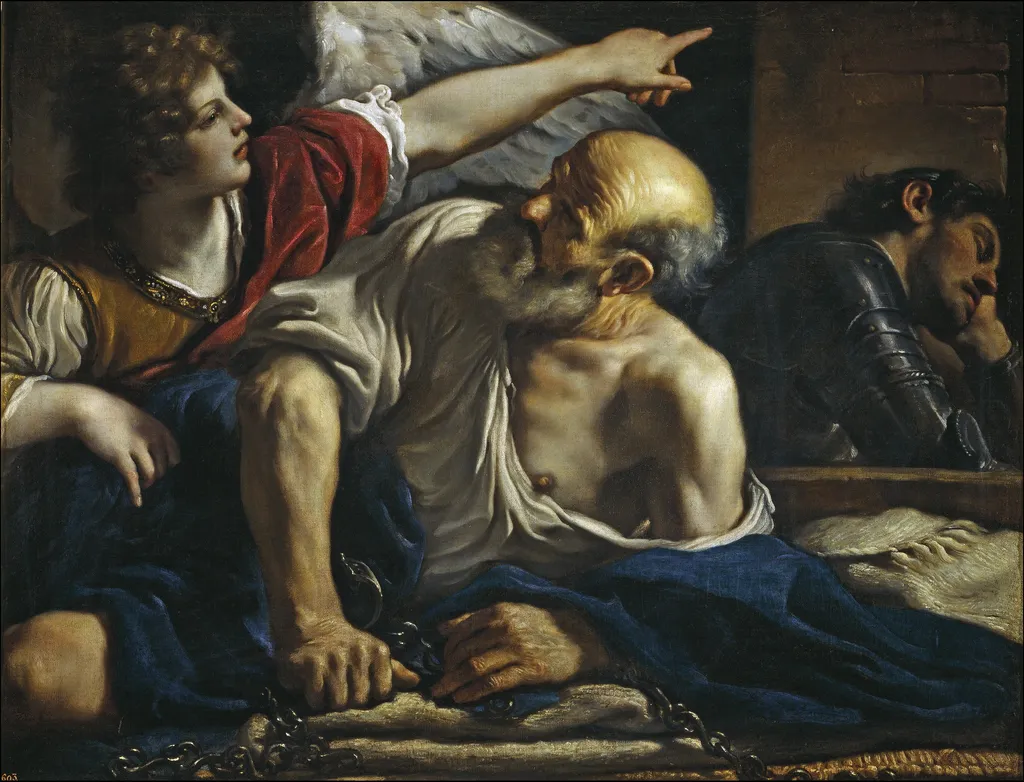
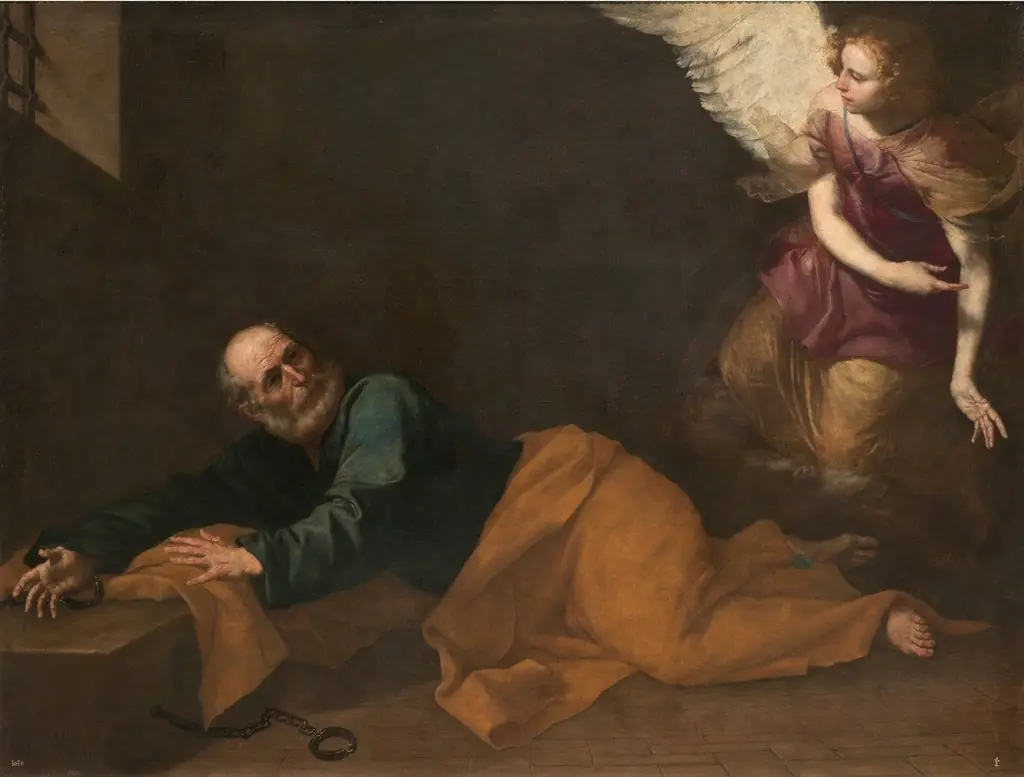
Saint Peter freed by an Angel is an oil painting by the Early Baroque Italian artist Guercino. It dates from 1622 and is held in the collection of the Museo del Prado. Created in 1622, this oil on canvas portrays the biblical episode in which an angel liberates Saint Peter from his prison.
About this work
Subject & Meaning
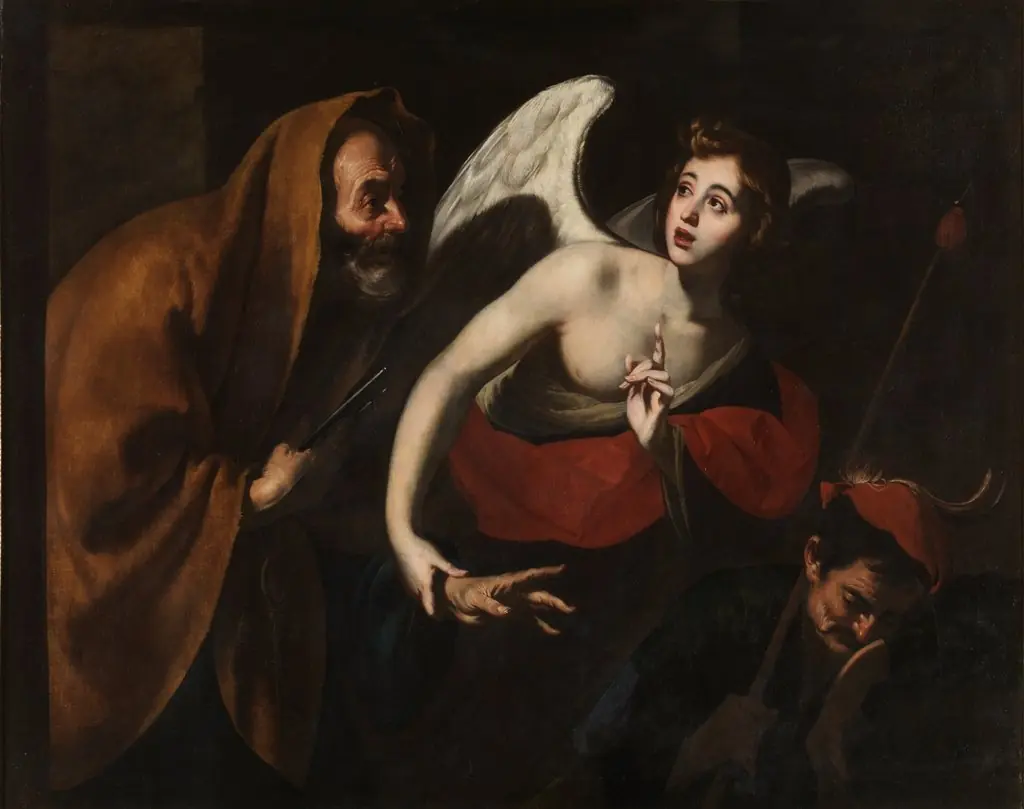
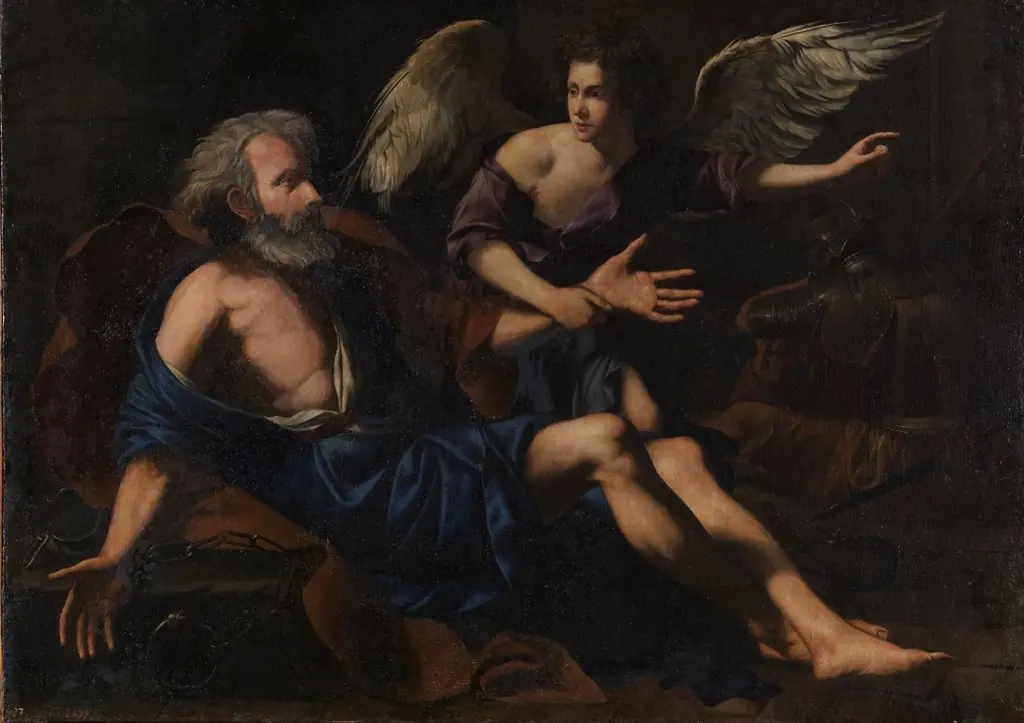
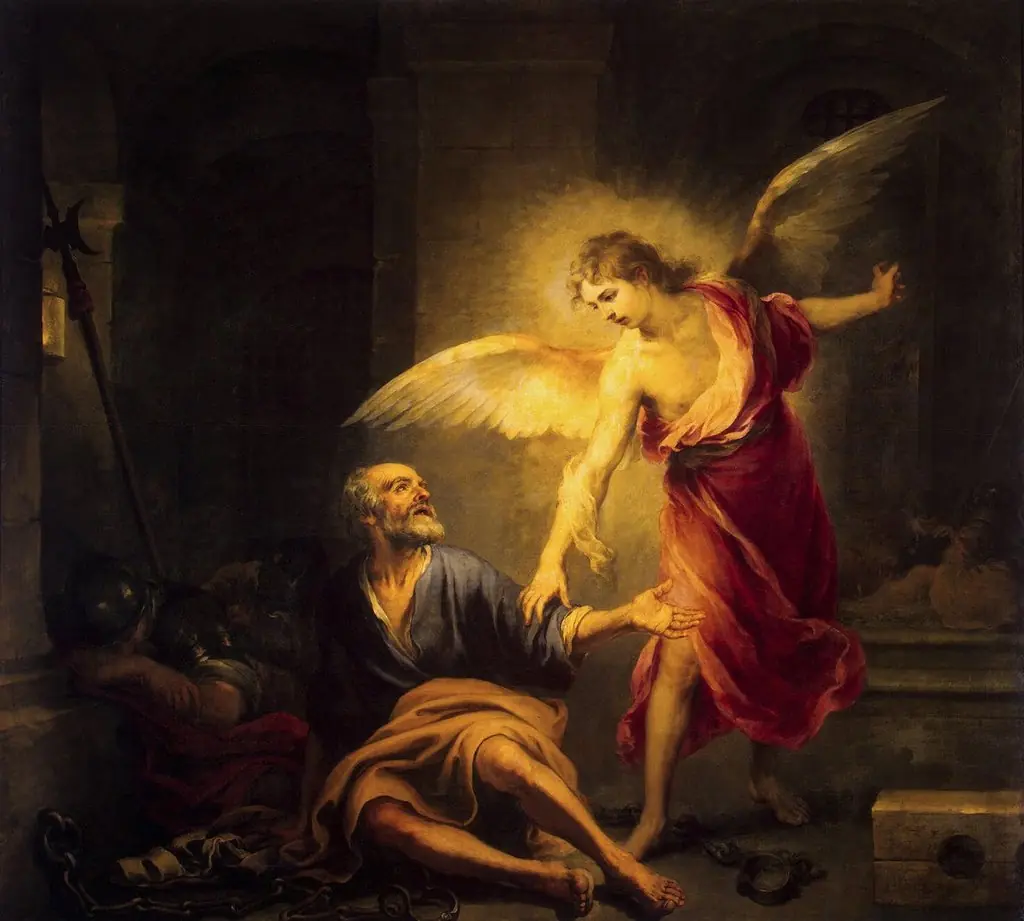
The painting illustrates the episode from the Acts of the Apostles (12:6–11) in which an angel frees Saint Peter from prison during the night, causing his chains to fall and guiding him toward escape while the guards sleep. Saint Peter is shown chained to the floor of his cell, lying on a straw mat, and being roused by a youthful angel who points the way to freedom; the sleeping jailer echoes the slumbering soldiers in Raphael's earlier Liberation of Saint Peter.
The work is read as one of Guercino's artistic high points, marked by a counter-light that envelops the apostle's face and, along an arc formed by arms and shoulders, meets the angel's femininely modeled profile struck by a raking beam. According to Denis Mahon, the picture abandons the fleeting caprices and atmospheric feeling of Guercino's earlier painting in favor of a more solid, measured rendering of the figures, reflecting a new compositional and luministic discipline shaped by meditation on Caravaggio and by classical theory.
Technique & Style
The composition centers on Saint Peter, recumbent and chained, whose form is rendered with solid, measured volumes.
Executed in oil on canvas in 1622, the work measures 105 by 136 cm.
The handling is characterized by sharply defined lighting and compact shadows, reflecting Guercino’s assimilation of Caravaggio’s chiaroscuro while integrating classical principles associated with monsignor Agucchi and Domenichino. The composition centers on Saint Peter, recumbent and chained, whose form is rendered with solid, measured volumes. An angel, bathed in a glancing ray of light, guides the apostle toward escape; the sleepless guard embodies the dramatic contrast between revelation and oblivion.
The palette is cooler and more restrained than in contemporaneous works such as Saint Matthew and the Angel, suggesting a deliberate shift toward clarity and formal discipline.
A sanguina drawing in the Albertina, Vienna, has been linked to both this composition and Saint Matthew and the Angel, indicating preparatory study for the arrangement of figures and the play of light.
History & Provenance
Created by Giovanni Francesco Barbieri, known as Guercino, around 1622, the oil-on-canvas painting Saint Peter freed by an Angel is dated to the artist's Roman period. Scholars associate its execution with the same timeframe as the Saint Matthew and the Angel and the Saint Petronilla altarpiece, citing stylistic parallels in form and lighting. Regarding commission, Massimo Pulini hypothesizes that the administrators of the Basilica of San Pietro in Vincoli in Rome may have commissioned this work alongside a proposed Saint Augustine altarpiece.
The documented ownership chain begins in 1768, when the painting passed from the collection of the Marquis de la Ensenada to King Charles III of Spain. It was subsequently recorded in the catalogs of the Royal Palace of Madrid in 1772, 1794, and 1814. Prior to 1843, the work entered the collections of the Museo del Prado in Madrid.
The painting is held in the Museo del Prado, Madrid, with inventory number P001205. It entered the Prado’s collection before 1843, having previously belonged to the Spanish royal collections. The work is first documented in 1768 when it passed from the marquis de la Ensenada to Charles III of Spain, and it is recorded in inventories of the Royal Palace of Madrid in 1772, 1794, and 1814.
No exhibition history beyond its permanent display at the Museo del Prado is provided in the cited sources.
Context
Painted around 1622 during Guercino's Roman period, Saint Peter freed by an Angel is widely regarded as a high point of the artist's career. Denis Mahon argued that in this canvas Guercino moved away from the fleeting caprices and atmospheric sensibility of his earlier work toward a more solid, measured treatment of form, linking the painting to the monumental altarpiece of the Burial and Glory of Saint Petronilla, executed in the same period. Enrico Ghetti emphasized the artist's meditation on Caravaggio, visible in the compact shadows and the homage to the Vatican Pinacoteca's Deposition, alongside his assimilation of the classical theory of Monsignor Agucchi and the example of Domenichino, yielding figures of greater compositional and luministic discipline.
Most scholars date the work close to the Saint Matthew and the Angel in the Pinacoteca Capitolina on the basis of their close formal analogy. The painting was first recorded in 1768 in the collection of the Marqués de la Ensenada before passing to Charles III of Spain, and it entered the Museo del Prado before 1843, having been published by Pérez Sánchez in 1965 and later by Salerno.
Overview
Created in 1622, this oil on canvas portrays the biblical episode in which an angel liberates Saint Peter from his prison. The composition centers on a bound, bearded figure in a white garment, a startled woman in a red cloak, and a looming soldier, all set against a darkened interior that heightens the moment of divine intervention.
Own this work as a print
Artist & collection
Artist
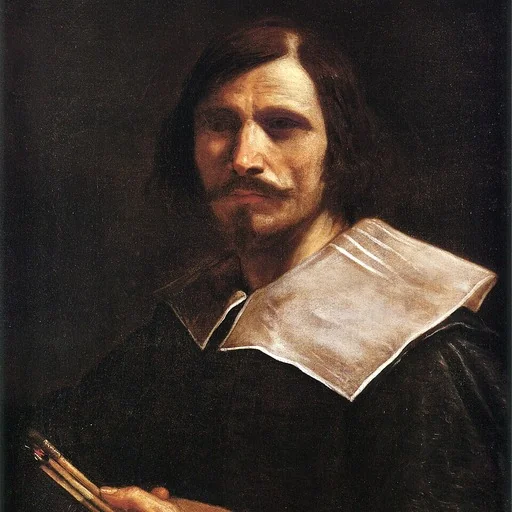
Giovanni Francesco Barbieri (8 February 1591 – 22 December 1666), better known as (il) Guercino (Italian pronunciation: ), was an Italian Baroque painter and draftsman from Cento in the Emilia region, who was active in Rome and Bologna.