Artwork
Rest on the Flight into Egypt
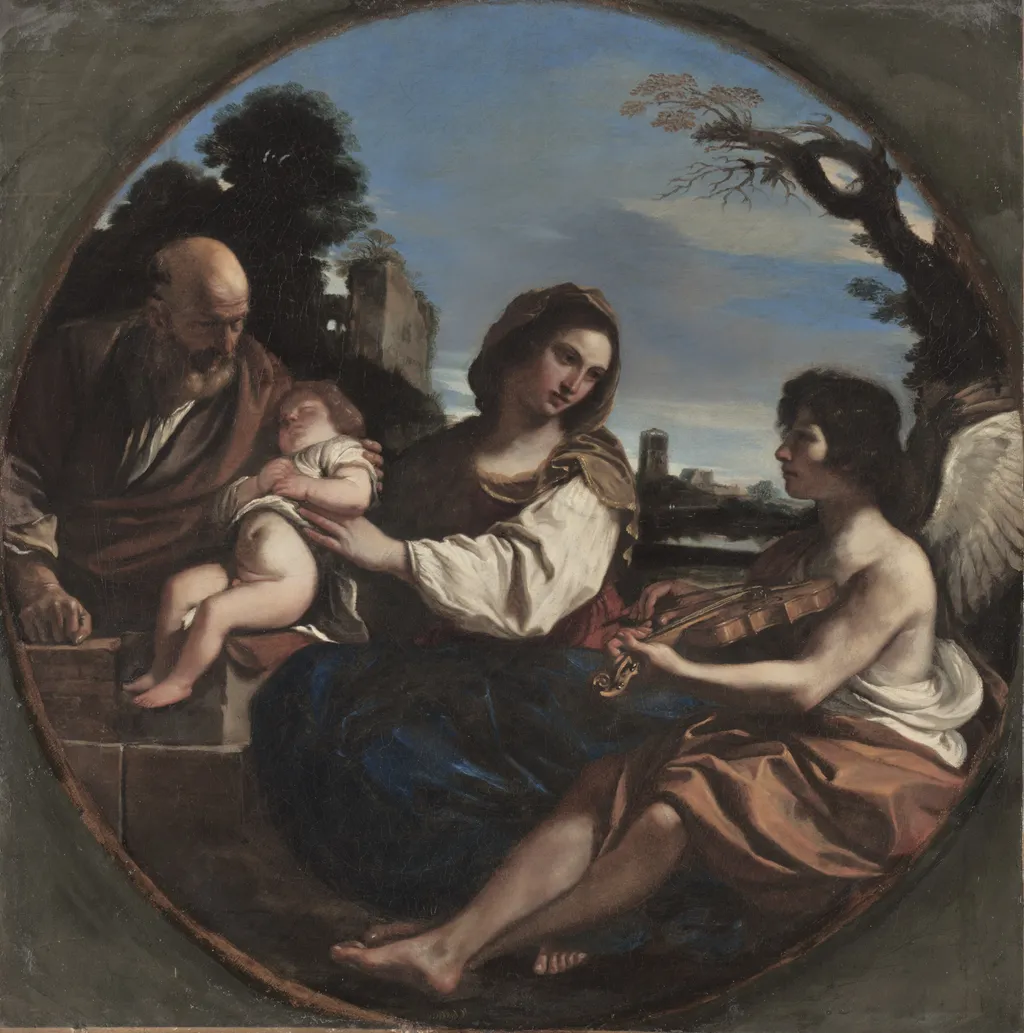
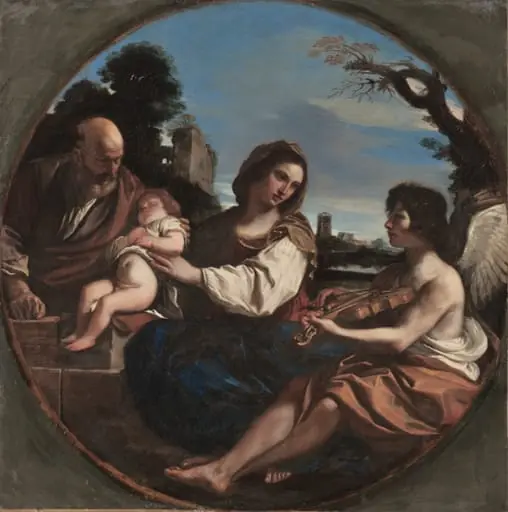
Rest on the Flight into Egypt is an oil painting by the Early Baroque Italian artist Guercino. It dates from 1624 and is held in the collection of the Cleveland Museum of Art.
About this work
Subject & Meaning
The figures are arranged along the inner curve of the circular format, set against a landscape featuring distant ruins and buildings under a luminous sky.
The artwork depicts the Holy Family during their biblical flight to Egypt, a moment of respite characterized by intimacy and contemplation. Central to the composition is the Virgin Mary, who supports the sleeping Christ Child, while Saint Joseph appears on the left as an elderly figure leaning forward with a gesture of care. A distinctive iconographic element is the seated angel on the right playing a violin, an addition that introduces a sense of quiet harmony to the sacred narrative.
The figures are arranged along the inner curve of the circular format, set against a landscape featuring distant ruins and buildings under a luminous sky. This arrangement emphasizes a balanced, centripetal composition that reflects a shift toward classical ideals in the artist's style. The scene represents a theological pause in the journey, focusing on the tender interaction between the divine figures and the peaceful atmosphere surrounding them.
Technique & Style
Rest on the Flight into Egypt is an oil painting on canvas executed by Guercino around 1624, distinguished by its circular format with a diameter of 69.5 cm, the only tondo the artist is recorded to have produced in his career. The figures are arranged along the inner curve of the support, following a centripetal, strongly centralized composition that exploits the formal demands of the roundel rather than passively adapting to them. The Holy Family is set within an open landscape animated by ruins and distant buildings, with a wind-bent tree on the right reinforcing the circular sweep of the design.
Stylistically, the work reflects a marked shift in Guercino's approach around 1624: the balanced, classically inflected equilibrium of the figures and their measured gestures replaces the more dynamic, centrifugal compositions of his earlier years. The intimate, contemplative tone, restrained action, and quiet interplay of glances underscore this new formal control, which Denis Mahon linked to a direct engagement with Renaissance models.
History & Provenance
The tondo was commissioned by the Roman patron Tiberio Lancellotti and is first recorded in Carlo Cesare Malvasia's Felsina pittrice (1678) as a circular work depicting the Virgin with the Christ Child, Saint Joseph, and a playing angel.
By 1804 it had been purchased in Rome for the collector William Buchanan by the dealer Irvine, who identified its location as Palazzo Lancellotti. After Buchanan's dispersal, the painting appeared in the 1844 sale of Jeremiah Harman in London, described as a circular Virgin supporting the sleeping Infant with an angel playing the violin and distant ruins. It later entered the collection associated with the Duke of Cleveland before re-emerging on the London art market in 1965 from a private English collection.
The Cleveland Museum of Art acquired it in 1967 through the William H. Marlatt Fund.
The painting is held in the collection of the Cleveland Museum of Art, having been acquired in 1967 through the Mr. and Mrs. William H. Marlatt Fund. Its accession number is 1967.123. The work's provenance traces back to a commission for Tiberio Lancellotti in Rome, later entering the collections of William Buchanan and Jeremiah Harman before appearing in an 1844 sale.
Following ownership by the Duke of Cleveland and a period in a private English collection, it was purchased by the museum in 1967.
Regarding its exhibition history, the artwork was displayed in a 1968 show under the title Holy Family. This presentation highlighted the piece as a significant example of the artist's stylistic evolution toward classical balance during the mid-1620s.
Context
Scholars identify this 1624 tondo as a pivotal moment in Guercino's career, marking a decisive shift from his earlier dynamic style toward a more rigorous, classical equilibrium. Art historian Denis Mahon highlights the work as the artist's only circular painting, noting how Guercino actively utilized the format's constraints to create a centralized, centripetal composition rather than merely adapting figures to fit the shape. This structural control suggests a new engagement with Renaissance models, potentially inspired by works the artist may have encountered at the Lancellotti Palace in Rome, where the painting was originally commissioned.
First recorded by Carlo Cesare Malvasia in the 17th century, the piece has served as an emblematic example for interpreting Guercino's stylistic evolution during the mid-1620s. Its exhibition history, including a notable 1968 showing titled 'Holy Family,' further underscores its status as a key reference point for understanding the painter's move toward compositional balance and spatial clarity.
Legacy
Acquired by the Cleveland Museum of Art in 1967 through the William H. Marlatt Fund, the painting has been part of the museum's permanent collection, giving it ongoing public visibility. Scholars have highlighted its distinctive circular format as a pivotal moment in Guercino's oeuvre, noting that it is the only work by the artist executed in this shape and that the composition demonstrates a deliberate, classically balanced use of space. This assessment has contributed to a reassessment of Guercino's late style and positioned the work as a reference point for studies of Baroque composition and the evolution of devotional imagery.
Overview
Guercino's 1624 oil painting, "Rest on the Flight into Egypt," exemplifies early Italian Baroque religious art. It depicts a serene moment during the Holy Family's journey, a popular theme drawn from apocryphal texts. The work showcases the artist's characteristic naturalism and dramatic use of light, reflecting his prominence as a painter from Cento.
Own this work as a print
Artist & collection
Artist
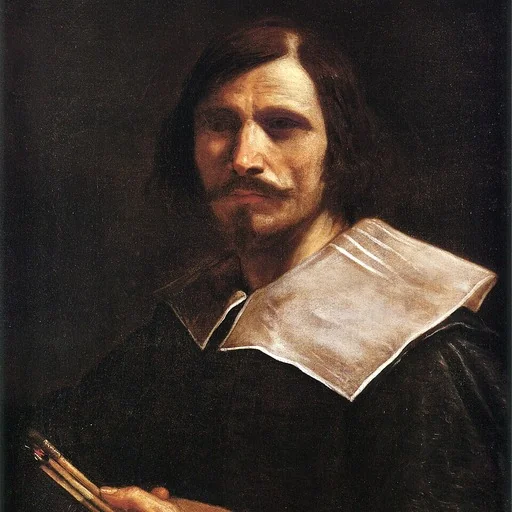
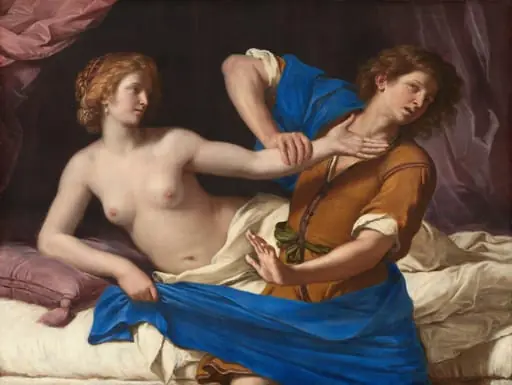
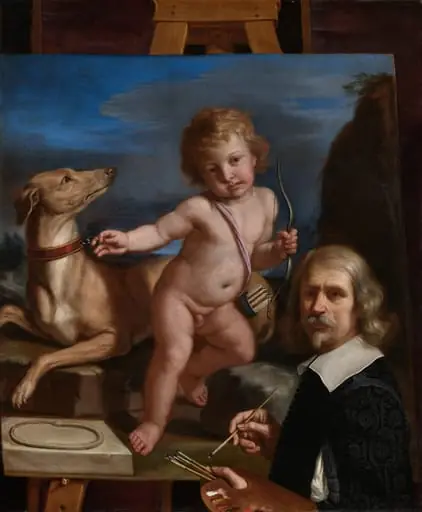
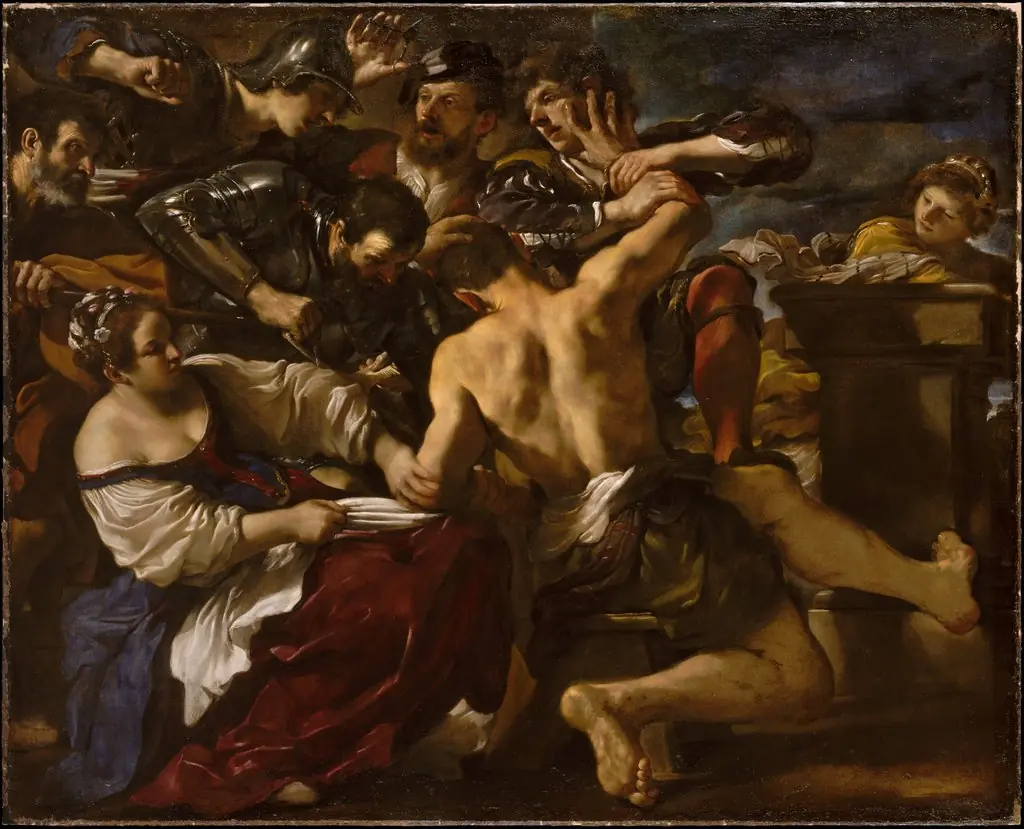
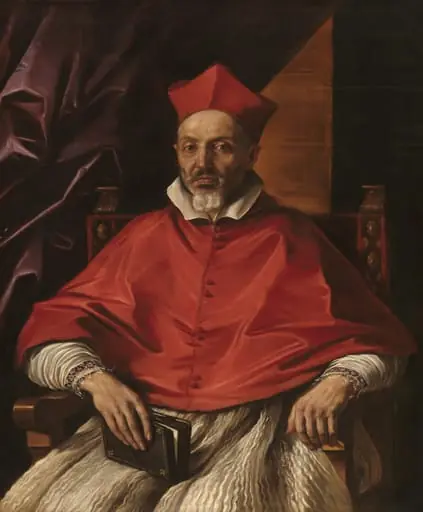
Giovanni Francesco Barbieri (8 February 1591 – 22 December 1666), better known as (il) Guercino (Italian pronunciation: ), was an Italian Baroque painter and draftsman from Cento in the Emilia region, who was active in Rome and Bologna.

- Rest on the Flight into Egypt
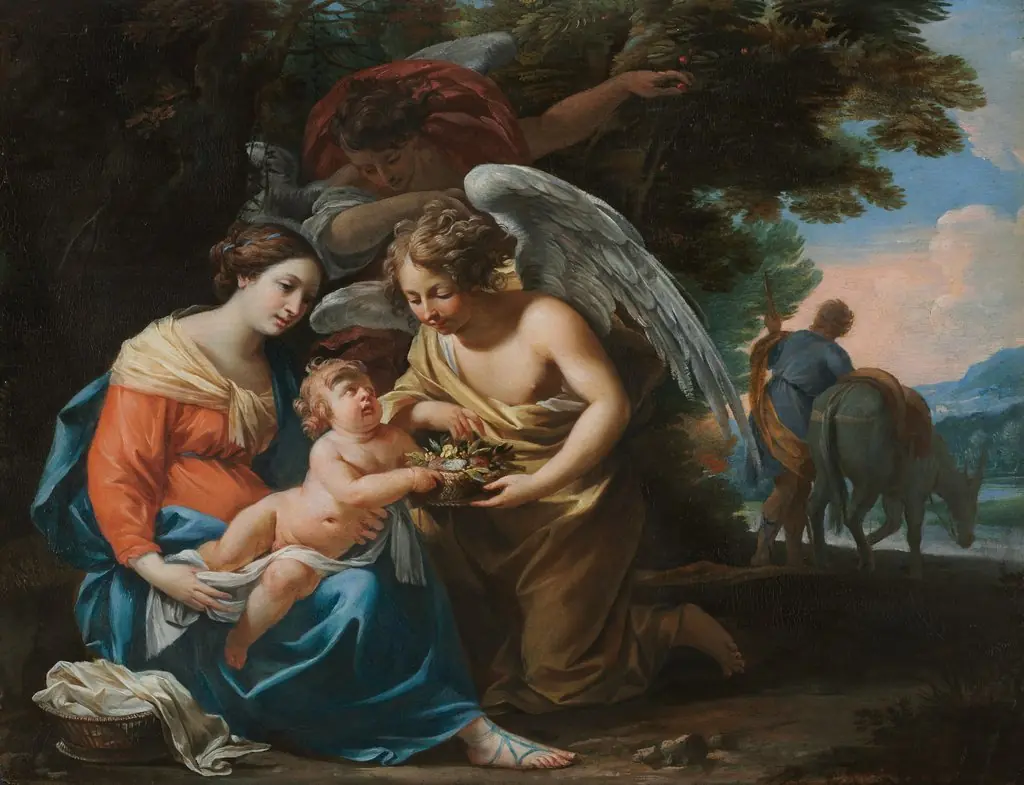 Rest on the Flight into Egypt
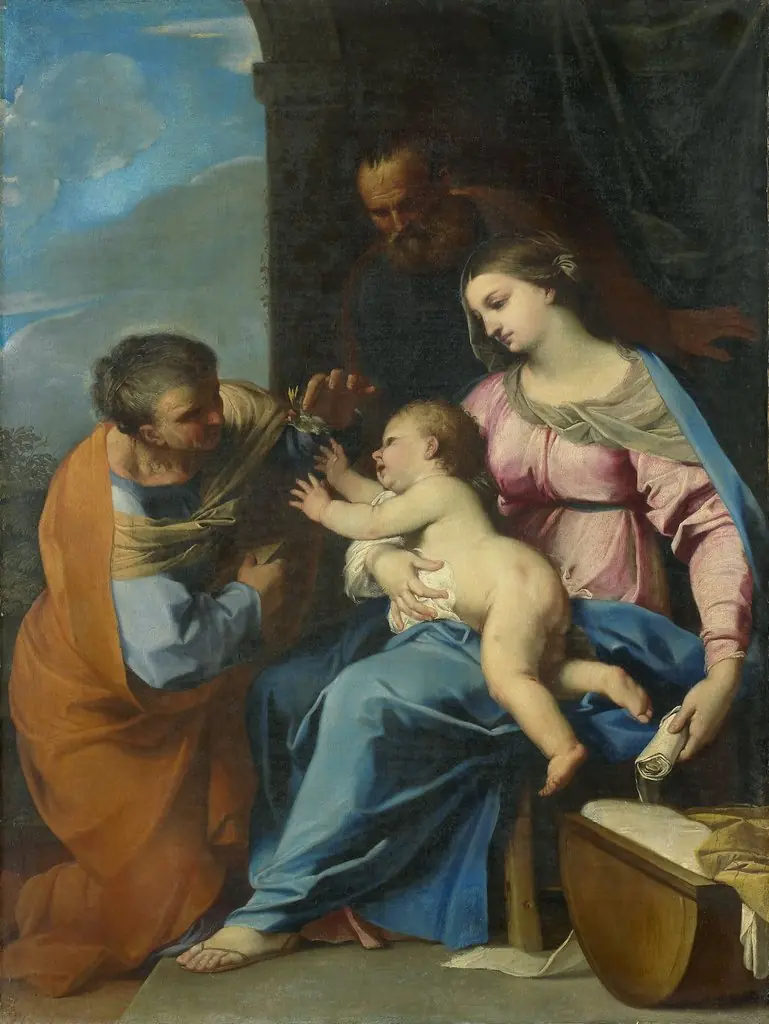 Holy Family
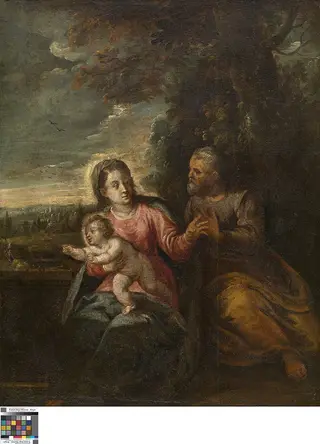 Rest on the Flight into Egypt
 Rest on the Flight into Egypt
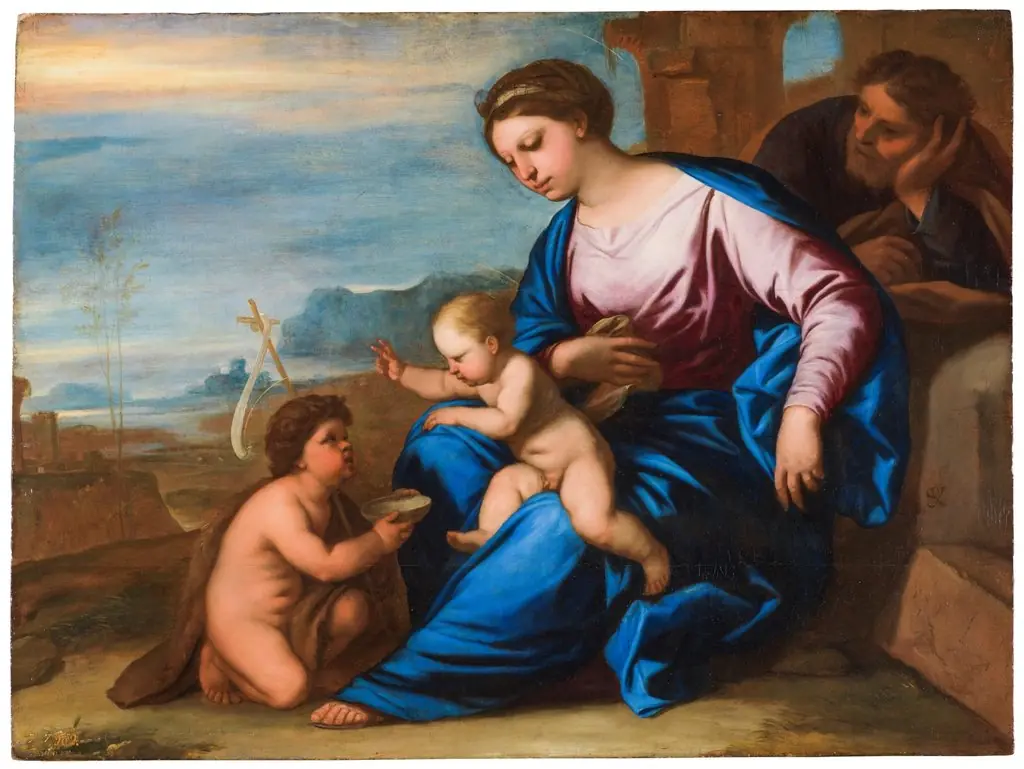 Sagrada Familia con San Juanito
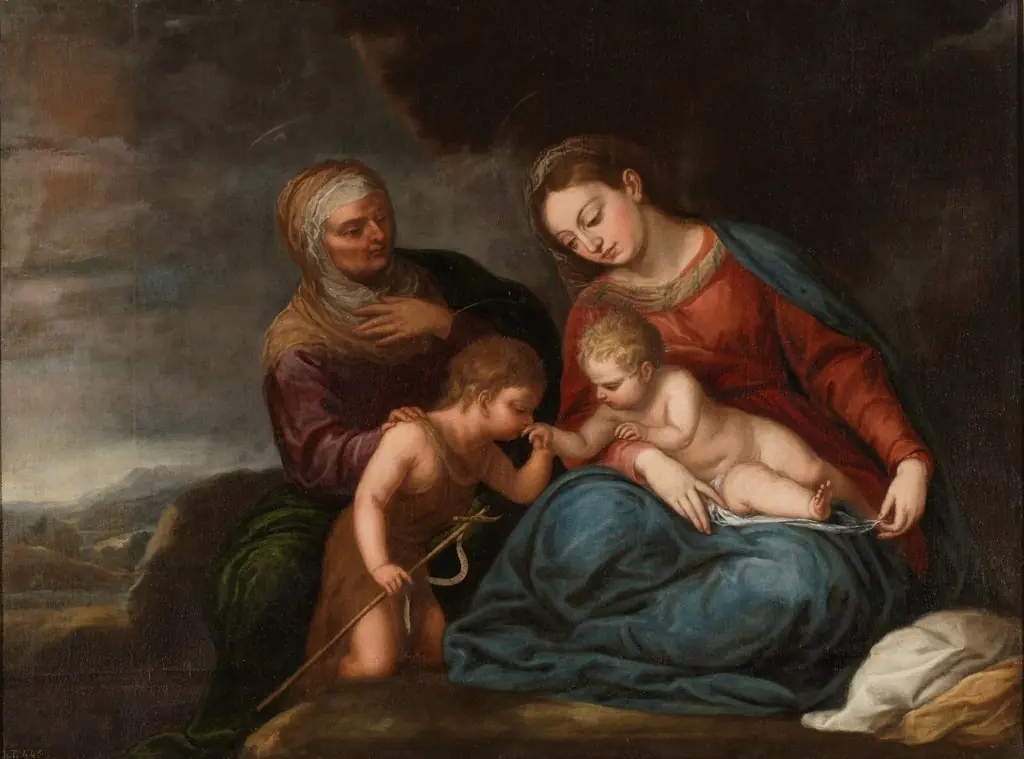 The Virgin and Child with Saints Elizabeth and John
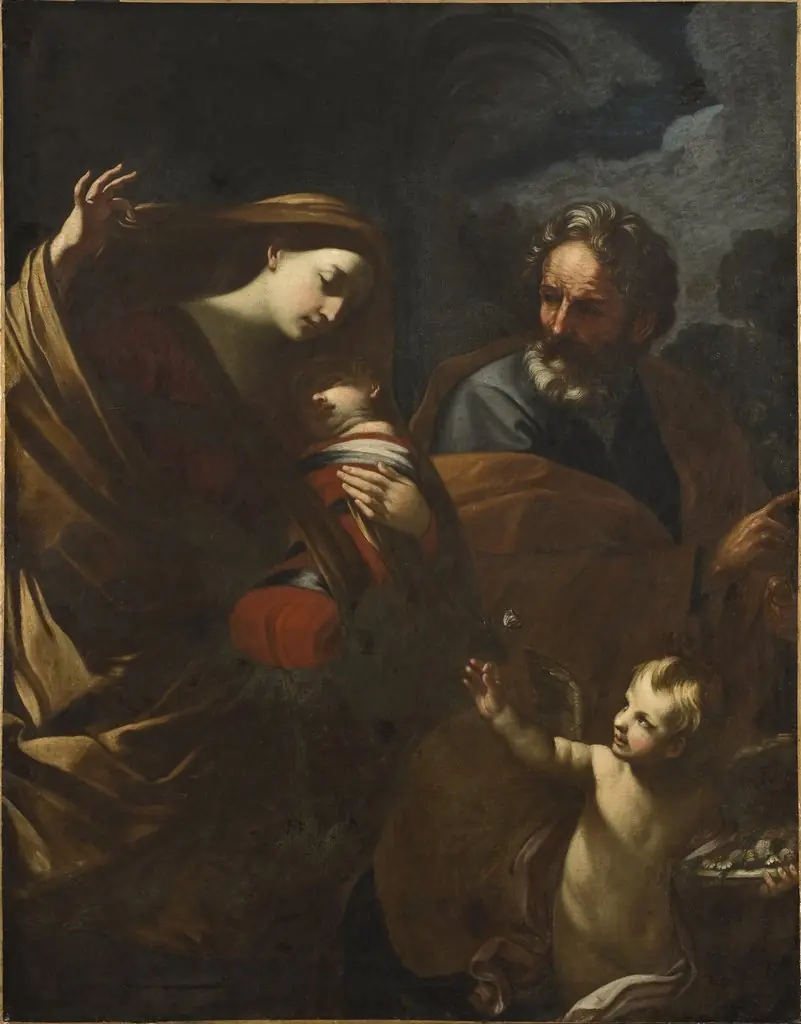 The Flight into Egypt
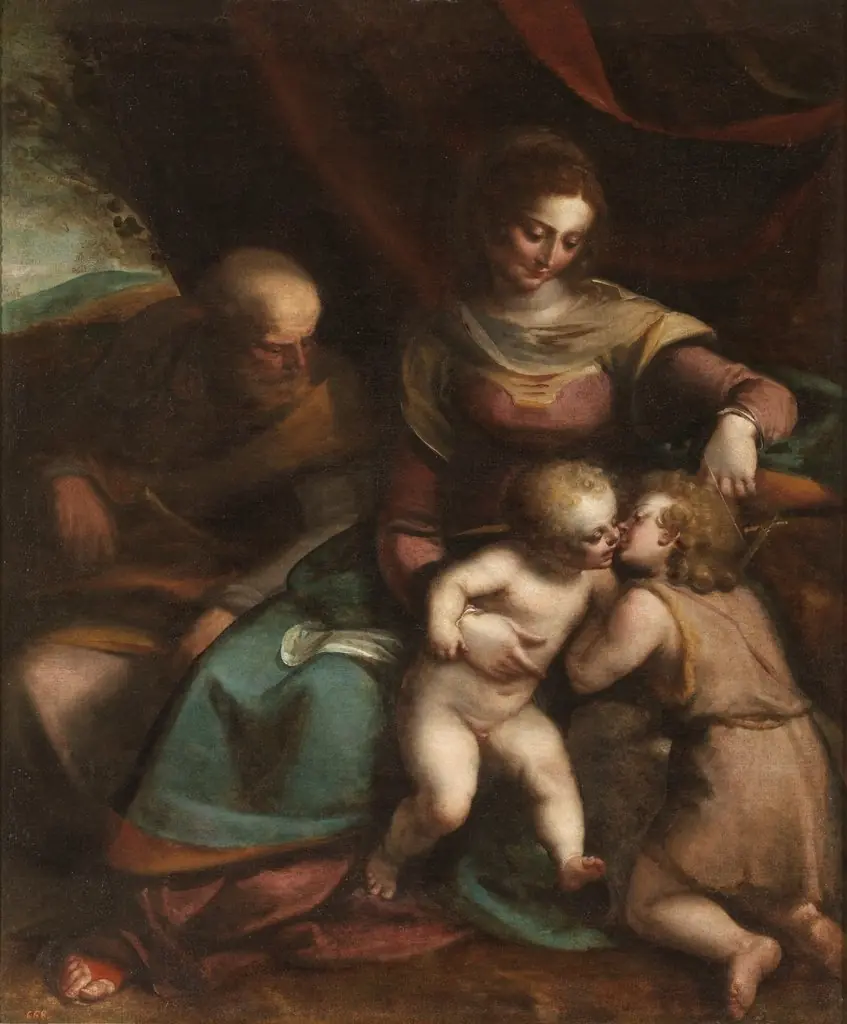 The Holy Family
 The Rest on the Flight into Egypt
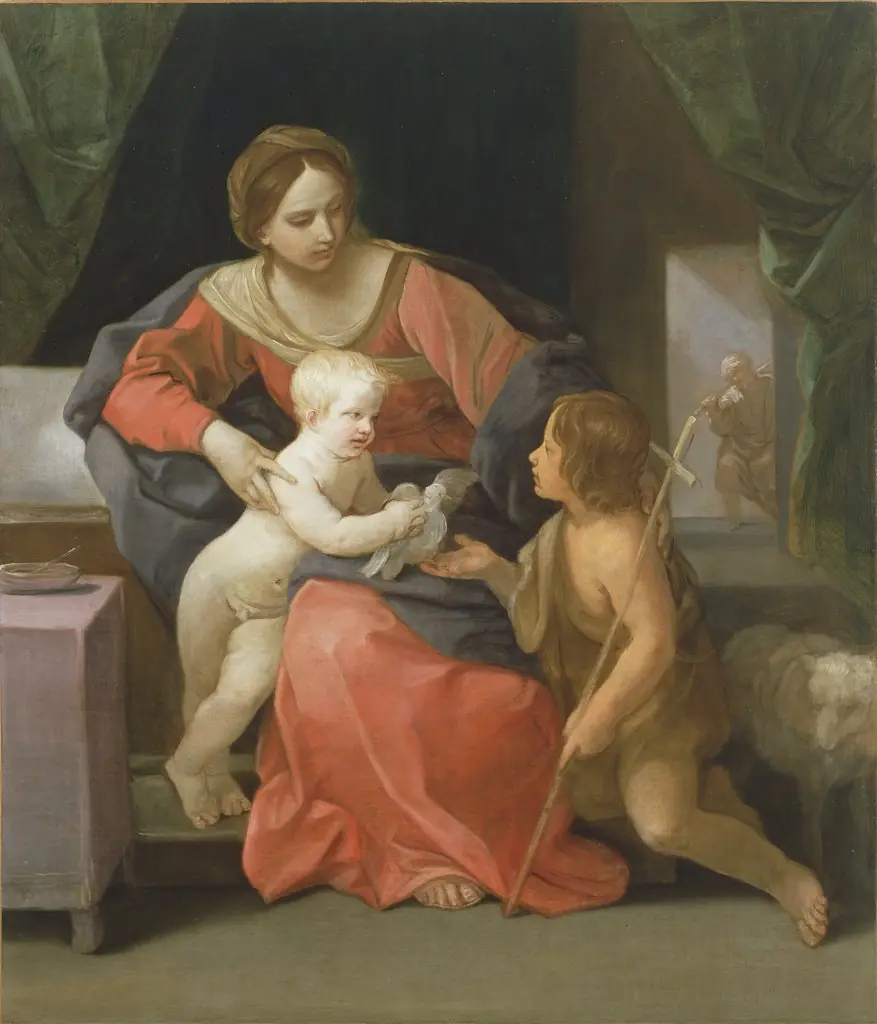 Virgin and Child with Saint John the Baptist
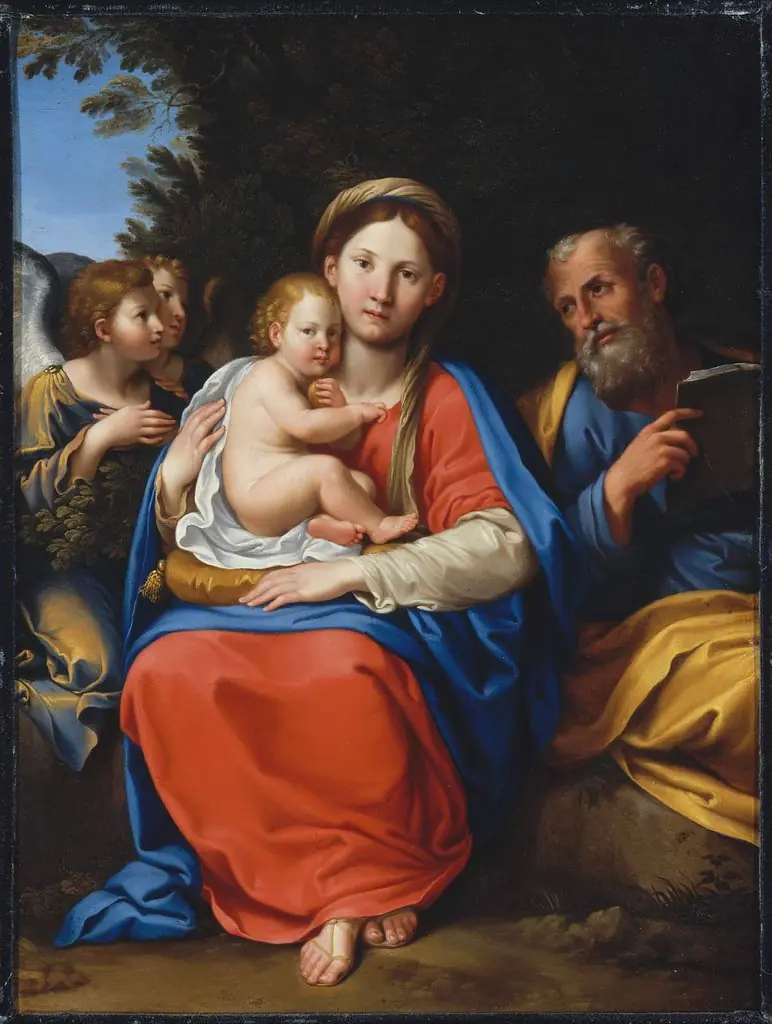 Holy Family with Angels