Artwork
Samson Captured by the Philistines
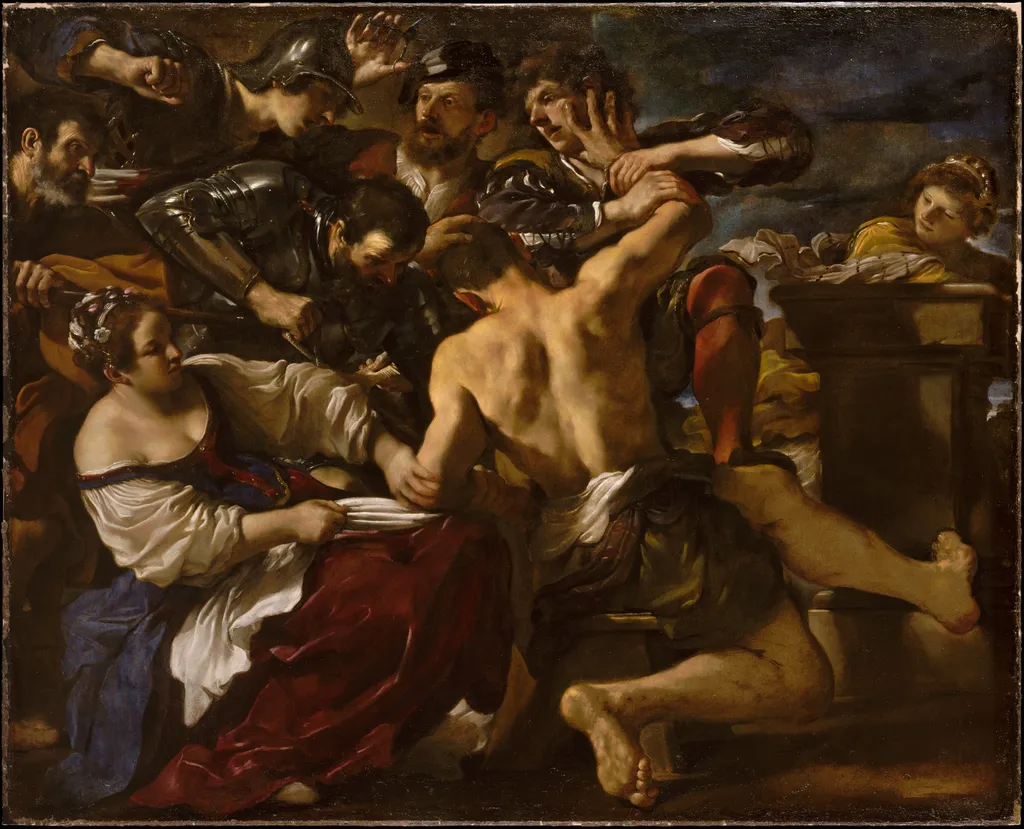
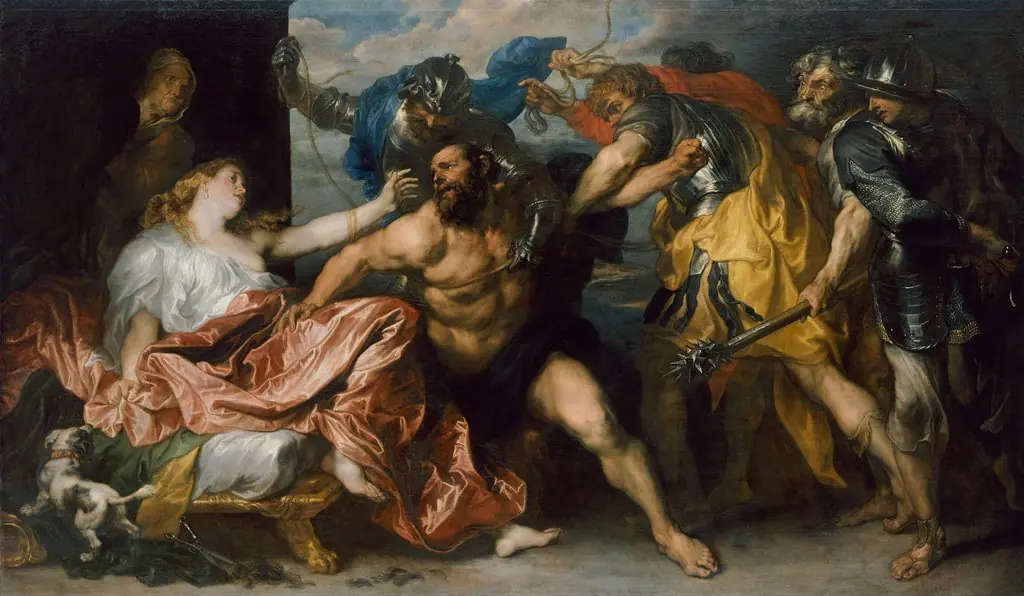
Samson Captured by the Philistines is an oil painting by the Early Baroque Italian artist Guercino. It dates from 1619 and is held in the collection of the Metropolitan Museum of Art.
About this work
Subject & Meaning
This iconography emphasizes the loss of divine power and the betrayal that leads to his capture, a theme tied to notions of vulnerability and hubris.
The work illustrates the biblical episode in which Samson is seized by the Philistines after Delilah cuts his hair, the source of his strength. In the composition Samson is shown from behind, overwhelmed by armed men, while Delilah, seated to the left, holds a lock of cut hair; a young woman watches from a balcony on the right. This iconography emphasizes the loss of divine power and the betrayal that leads to his capture, a theme tied to notions of vulnerability and hubris. The painting was created by Guercino in 1619 and is housed in the Metropolitan Museum of Art.
Technique & Style
Executed in 1619, this work is an oil painting on canvas measuring 191.1 by 236.9 centimeters. The composition is characterized by a tightly packed arrangement of figures and dramatic, high-contrast lighting that intensifies the scene's violence. Stylistically, the piece exhibits an energy and complexity reminiscent of Peter Paul Rubens, particularly in the dynamic struggle depicted.
The central figure of Samson is viewed from behind, straining against multiple armed captors, while Delilah sits to the left holding his shorn hair. A young woman observes the event from a parapet in the background. Scholars identify this as a masterpiece of Guercino's early period, noting its sophisticated handling of light and movement.
History & Provenance
The painting was executed in 1619 by Giovanni Francesco Barbieri, known as Guercino, for Cardinal Giacomo Serra, as recorded by Malvasia. It is an oil on canvas measuring 191.1 × 236.9 cm and is held in the Metropolitan Museum of Art under accession number 1984.374. The commission entered the Serra family collection, passing to his heirs and later to Naples before being inherited by Maria Teresa Serra di Cassano, who married Alfred Bey Sursock and moved the painting to the Palais Sursock in Beirut.
Denis Mahon identified it as an autograph Guercino in 1981. Charles and Jayne Wrightsman acquired the work, through London's Leggatt Brothers, and gave it to the Met in 1984.
Context
Scholars identify Samson Captured by the Philistines as a pivotal early work within Guercino's oeuvre, often cited as a masterpiece of his first period. Denis Mahon highlighted the painting's autograph status in 1981, situating it within the artist's evolving engagement with dramatic narrative and strong chiaroscuro effects. David Stone later emphasized its Rubensian resonance, comparing its energetic composition to Rubens's Rape of the Daughters of Leucippus, though noting Guercino likely drew indirectly through Roman or Genoese collections.
The canvas was commissioned by Cardinal Giacomo Serra, reflecting the period's taste for dynamic religious imagery. Its later inclusion in the Sursock family's Beirut collection and subsequent acquisition by the Wrightsmans for the Metropolitan Museum underscored its rediscovery and reintegration into broader art-historical narratives.
Legacy
The work's reputation evolved significantly over centuries, transitioning from a documented commission for Cardinal Giacomo Serra in 1619 to a celebrated masterpiece of Guercino's early career. Art historian David Stone later characterized it as perhaps the artist's supreme achievement from this period, noting its compositional energy and complexity as comparable to works by Peter Paul Rubens. The painting's legacy was further solidified when scholar Denis Mahon identified it as an autograph work in 1981 while viewing it at the Palais Sursock in Beirut.
Its journey from the Serra family collection to the Sursock Palace in Lebanon, and finally to the United States, underscores its enduring value among connoisseurs. Following its acquisition by Charles and Jayne Wrightsman, the painting entered the permanent collection of the Metropolitan Museum of Art in 1984, securing its status as a key example of Baroque religious art in a major public institution.
Overview
Guercino's Samson Captured by the Philistines, painted in 1619, is an oil painting that exemplifies the early Italian Baroque style. This work by Giovanni Francesco Barbieri, known as Guercino, vividly portrays the biblical account of Samson's subjugation by his enemies. The artist, a prominent figure from Cento, was recognized for his energetic and expressive approach. The painting is now part of the collection at The Metropolitan Museum of Art.
Own this work as a print
Artist & collection
Artist
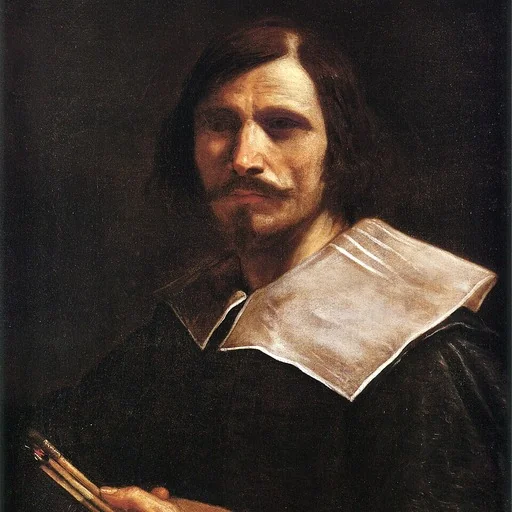
Giovanni Francesco Barbieri (8 February 1591 – 22 December 1666), better known as (il) Guercino (Italian pronunciation: ), was an Italian Baroque painter and draftsman from Cento in the Emilia region, who was active in Rome and Bologna.