Artwork
Ancient Greece and Ancient Egypt
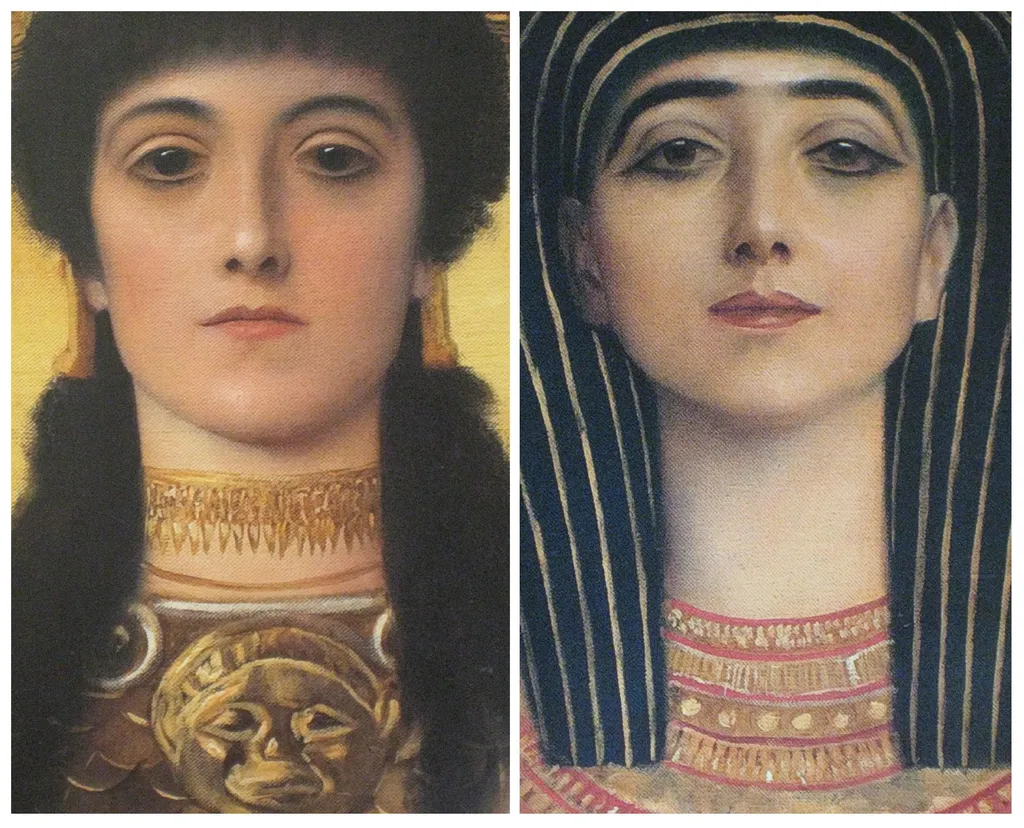
Ancient Greece and Ancient Egypt is an unspecified painting by the Biedermeier artist Gustav Klimt. It dates from 1850 and is held in the collection of the Kunsthistorisches Museum.
About this work
Subject & Meaning
A vulture with spread wings appears above her head, an anomalous detail since the vulture typically symbolizes the goddess Nekhbet rather than Isis.
The mural is an allegory of ancient Greece and Egypt, personified by the goddesses Athena and Isis respectively. Athena appears in the left spandrel as a fully clothed warrior deity, bearing her traditional attributes: scale armor with the Gorgon's head, spear, Nike statuette, and golden round shield. She is paired with the "Girl from Tanagra" in the adjacent intercolumnium, who holds a laurel branch near a marble parapet displaying a bronze Aphrodite statuette.
Isis stands nude in the Egyptian spandrel, her body accentuated by hip sway and lowered eyelids. She holds an ankh in her right hand and an unidentifiable rectangular fantasy object in her left, likely substituting for the expected sistrum. A vulture with spread wings appears above her head, an anomalous detail since the vulture typically symbolizes the goddess Nekhbet rather than Isis. The Egyptian intercolumnium displays funerary objects including painted anthropomorphic sarcophagi, a canopic chest, and ushebtis.
The composition creates deliberate parallels: both patron goddesses stand upright while their intercolumnium figures bend forward; Athena's modest dress contrasts with Isis's nudity, which links her to the Aphrodite figure and amplifies the erotic charge. This provocative depiction of Isis signals Klimt's stylistic innovation beyond historicist conventions.
Technique & Style
Gustav Klimt executed Ancient Greece and Ancient Egypt as a mural in a spandrel and intercolumniation pair on the north wall (center) of the staircase in the Kunsthistorisches Museum, Vienna. The work was completed in 1891. Klimt employed oil painting for this architectural integration, fitting the composition to the curved spandrel and rectangular intercolumnium spaces.
The Greek antiquity spandrel depicts Pallas Athena in a red gown against an ornamented gray background, wearing a scale armor with Medusa head, holding a spear and a Nike statue, with a golden shield resembling a tondo behind her. The adjacent intercolumnium shows the Girl from Tanagra with a laurel branch, before a marble balustrade with an antique vase and a bronze Aphrodite statuette. Both female figures assume a bent posture with sidelong glances.
The Egyptian spandrel presents Isis nude except for jewelry, with bent left knee and hip sway, before a richly decorated red wall with cavetto cornice and round molding. She holds an ankh sign and an indeterminate rectangular object. The intercolumnium beside her contains painted anthropomorphic wooden sarcophagi of Titenese, a canopic chest, a small box, and three ushabtis.
Athena and Isis are composed as symmetrical counterparts, with Athene clothed and Isis nude, a contrast that heightens the eroticism of the Egyptian goddess and signals Klimt's stylistic innovation beyond historicist conventions.
History & Provenance
The artwork is held in the Kunsthistorisches Museum in Vienna, where it is listed under the museum's collection and displayed in the stairwell's north wall niche pair. It was created in 1891 as part of Klimt's decorative program for the museum's staircase, specifically in a central niche pair on the north wall. The work forms part of a series of allegorical paintings depicting ancient Greece and Egypt, with the Egyptian section featuring the goddess Isis in the left niche and a secondary Egyptian scene in the adjacent niche.
The piece is part of a larger decorative scheme that includes other historical art motifs in the same stairwell.
Context
Gustav Klimt's 1891 mural for the Kunsthistorisches Museum staircase marks a pivotal transition in his style. While the figure of Athena reflects traditional Historism, the nude, eroticized depiction of Isis anticipates his later Nuda Veritas works, prioritizing sensuality over truth-seeking. Klimt deliberately subverted Egyptian iconography to provoke the viewer, replacing Isis's traditional sistrum with a fantasy object and pairing her with a vulture, a symbol of the goddess Nekhbet, creating an intentional historical dissonance.
Due to the inaccessibility of the Viennese Egyptian collection during the museum's relocation, Klimt sourced motifs from illustrated volumes by Auguste Mariette, Émile Prisse d'Avesnes, and Édouard Naville. He adapted a ram-headed pendant from Saqqara's Serapeum into the vulture motif and based the geometric object in Isis's hand on amulets from the Bulaq Museum album.
Overview
Ancient Greece and Ancient Egypt is a painting by Gustav Klimt, created around 1890 (not c. 1850, as Klimt was born in 1862). It is held at the Kunsthistorisches Museum.
Own this work as a print
Artist & collection
Artist
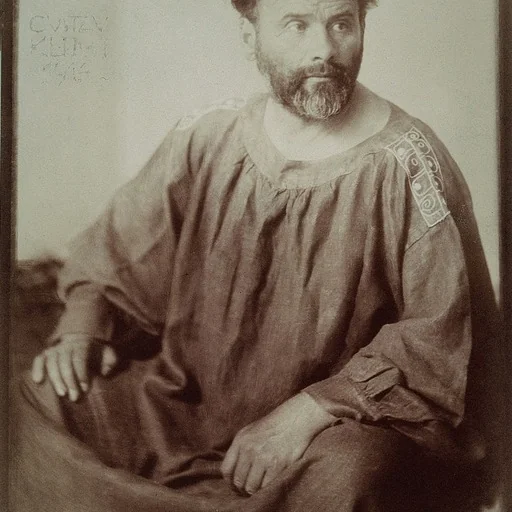
Gustav Klimt was an Austrian symbolist painter and a founding member of the Vienna Secession movement.

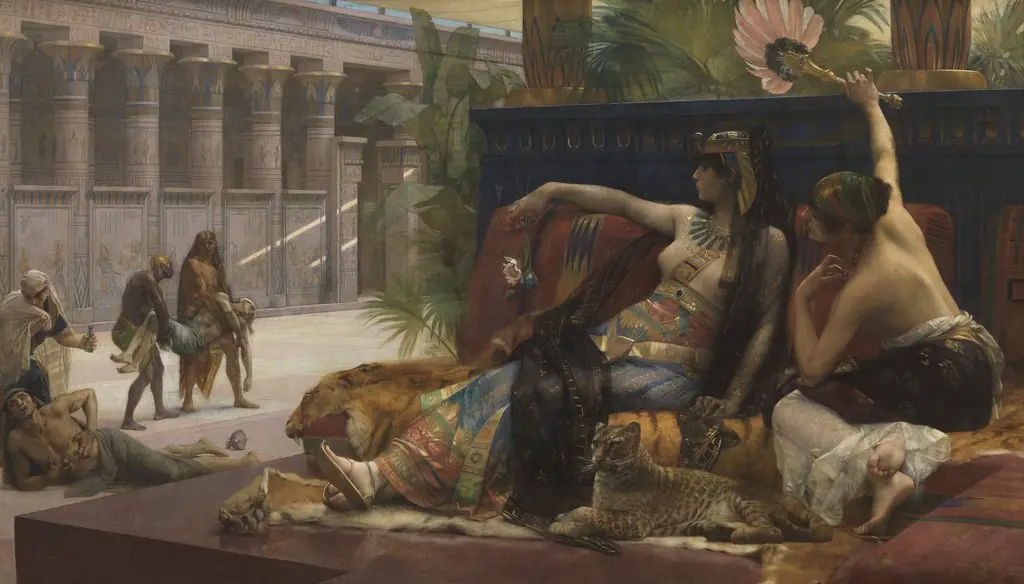
- Cleopatra Testing Poisons on Condemned Prisoners
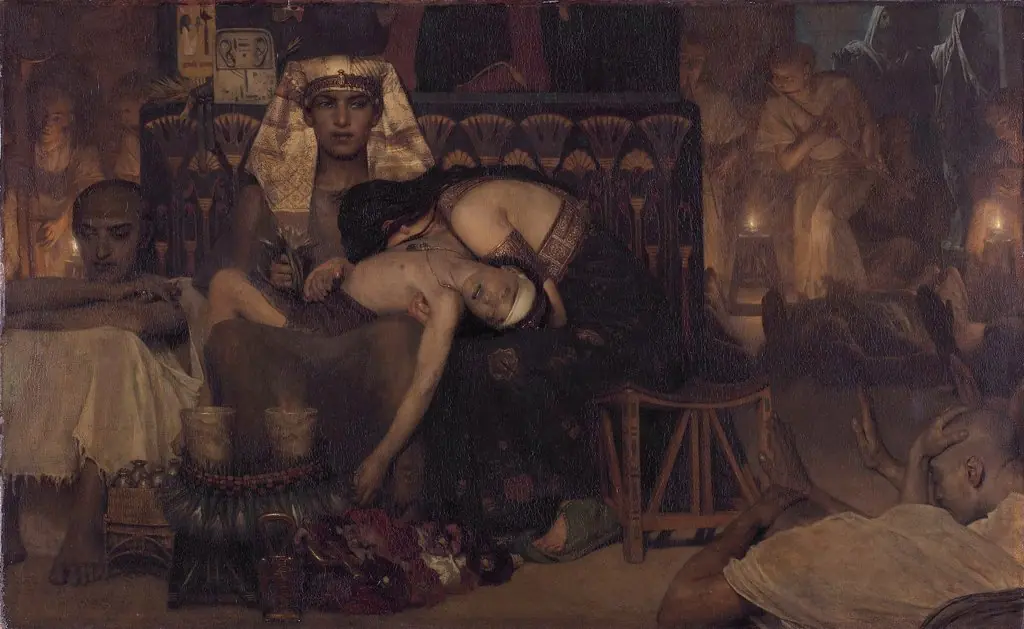 Death of the Pharaoh's Firstborn Son
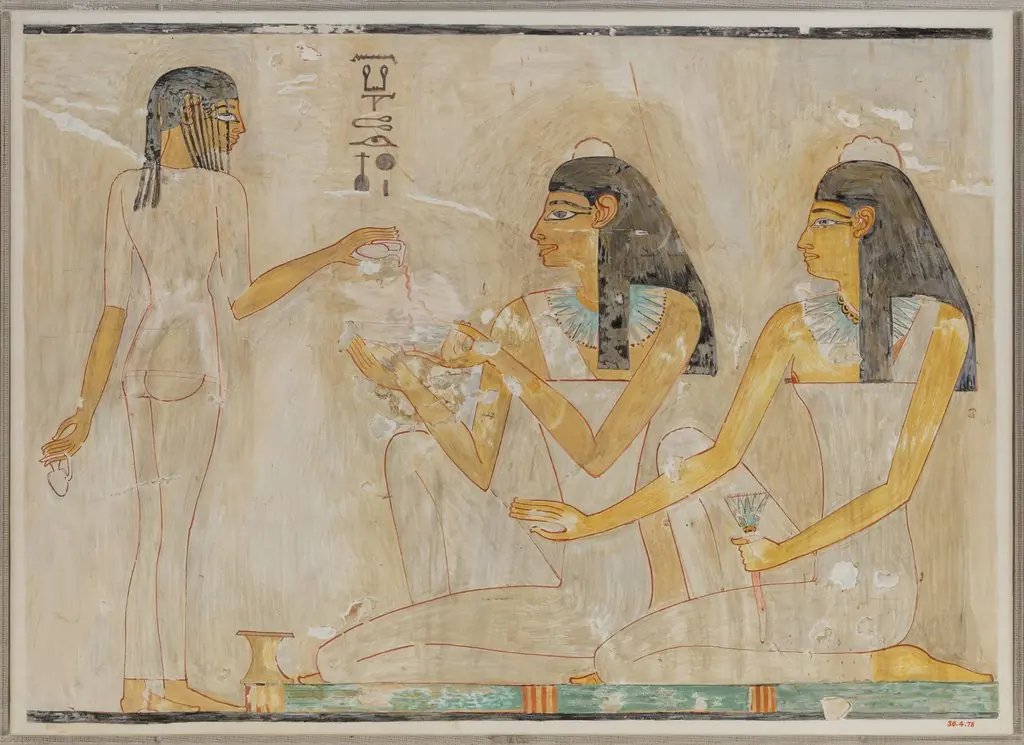 Women at a Banquet
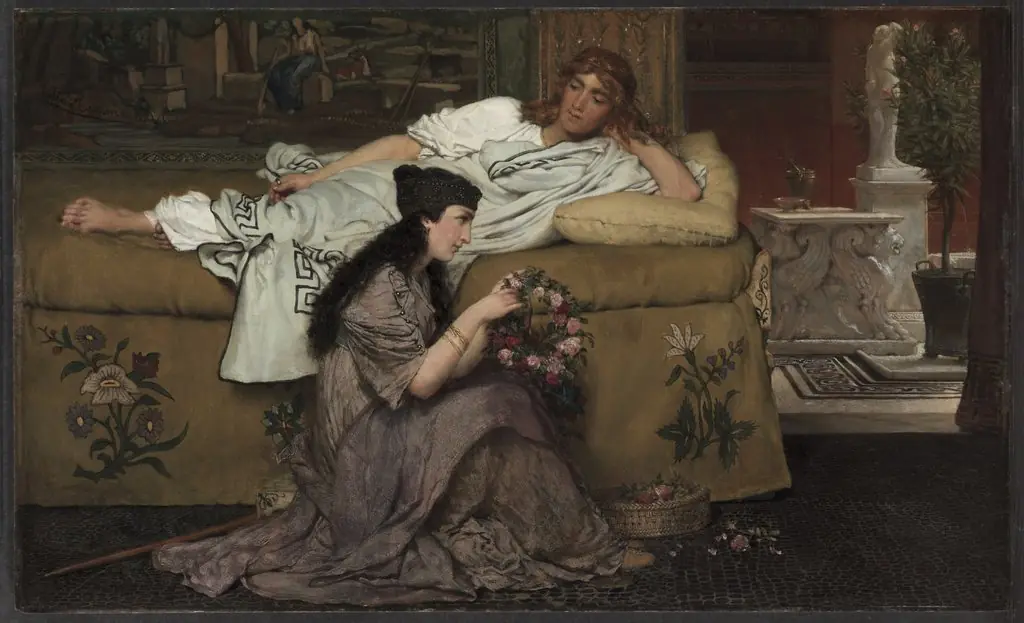 Glaucus and Nydia
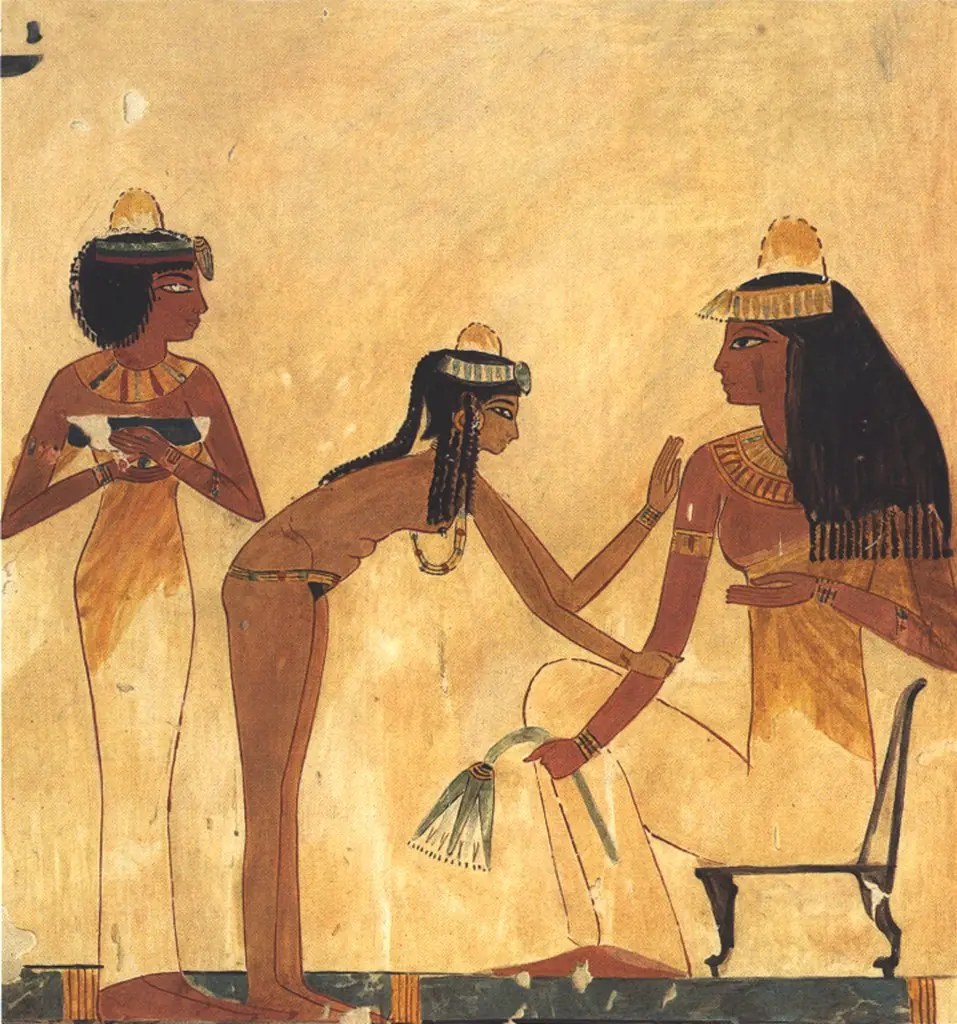 Seated woman with Two Female Servants
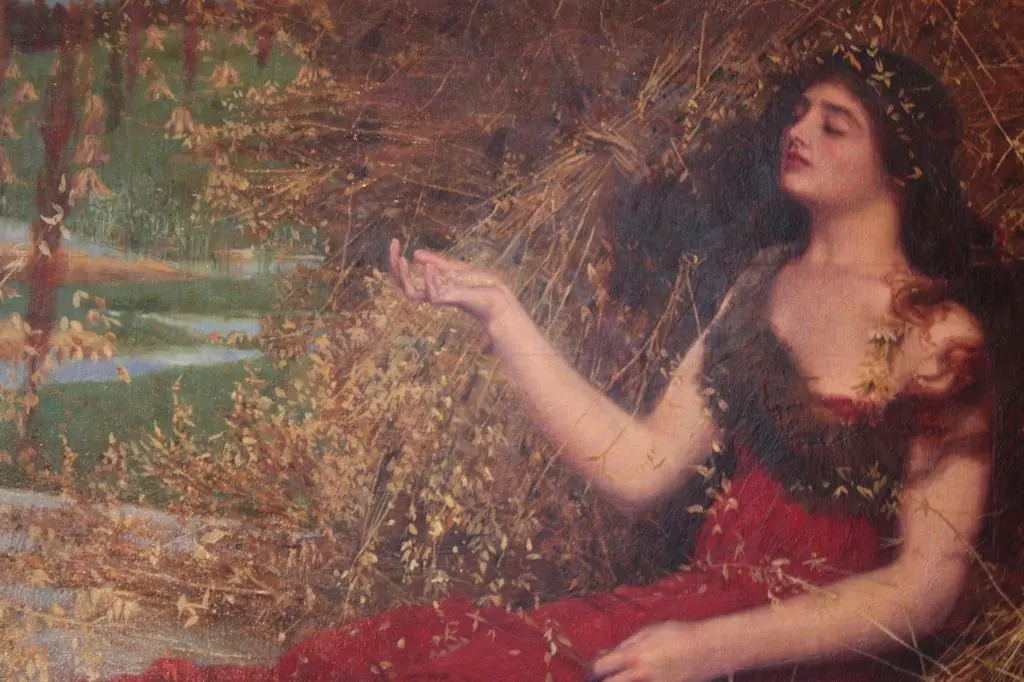 Autumn
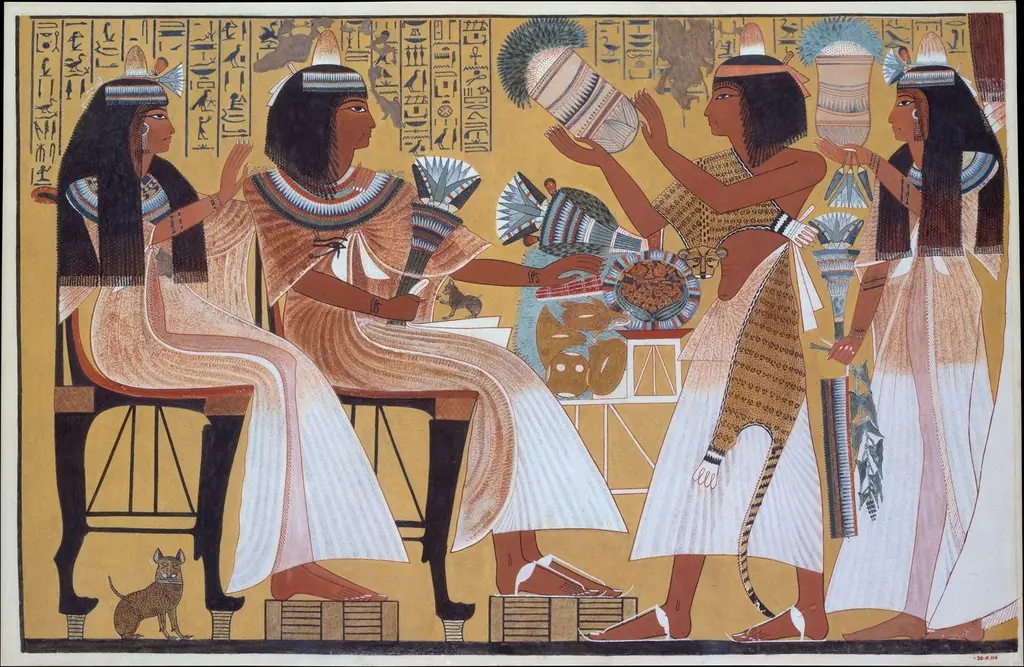 Ipuy and Wife Receive Offerings from Their Children (substantially restored)
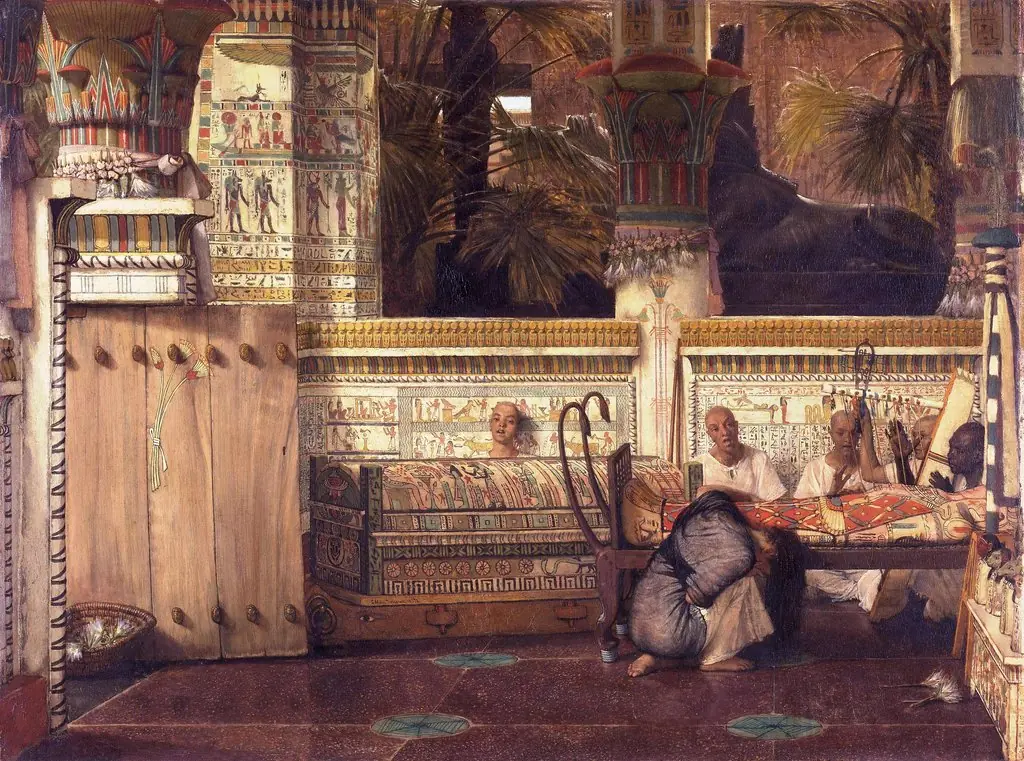 The Egyptian Widow
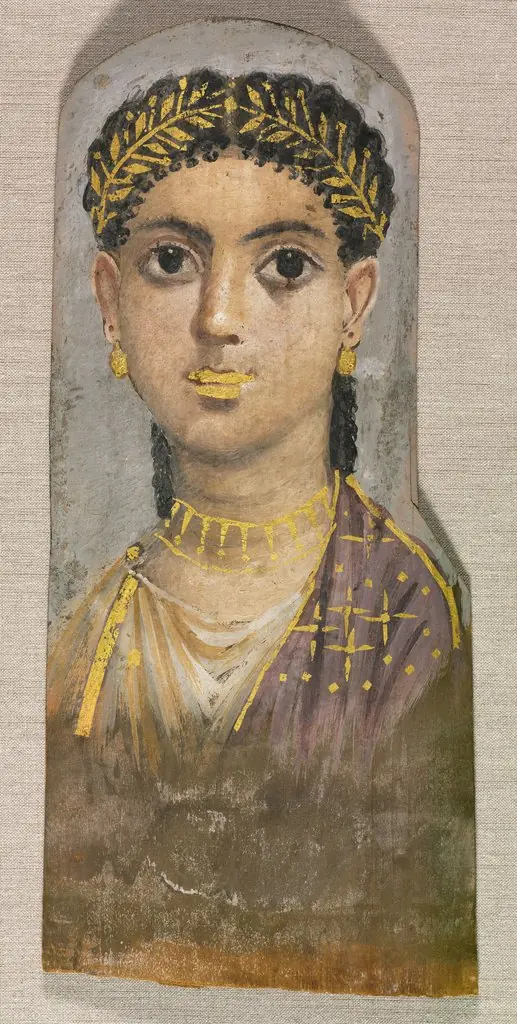 Funerary Portrait of a Young Girl
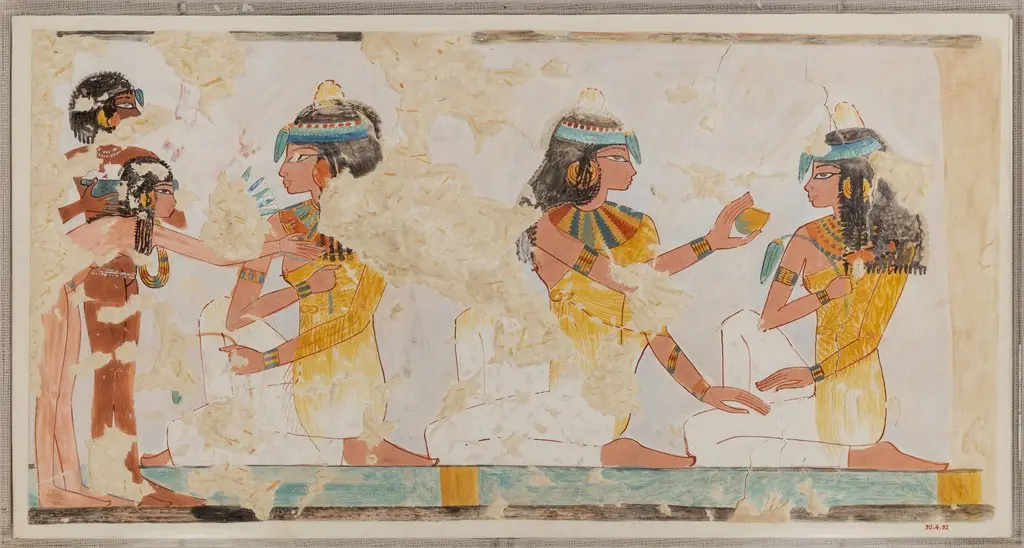 Women at a Banquet
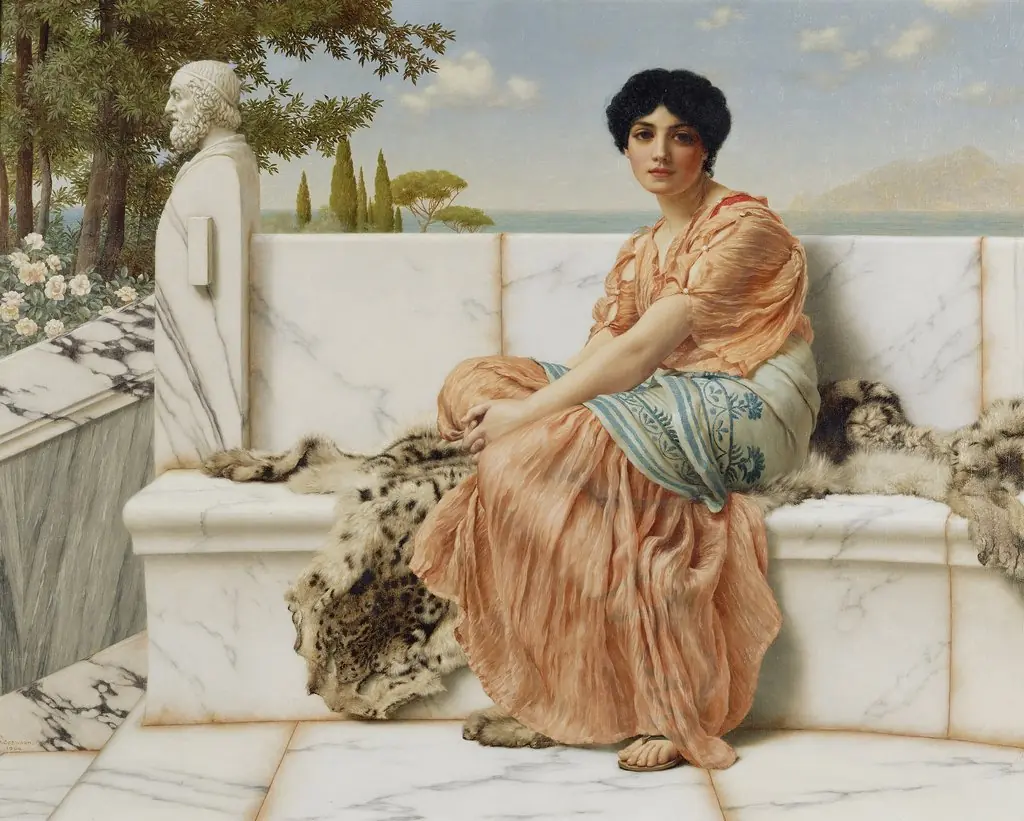 Reverie
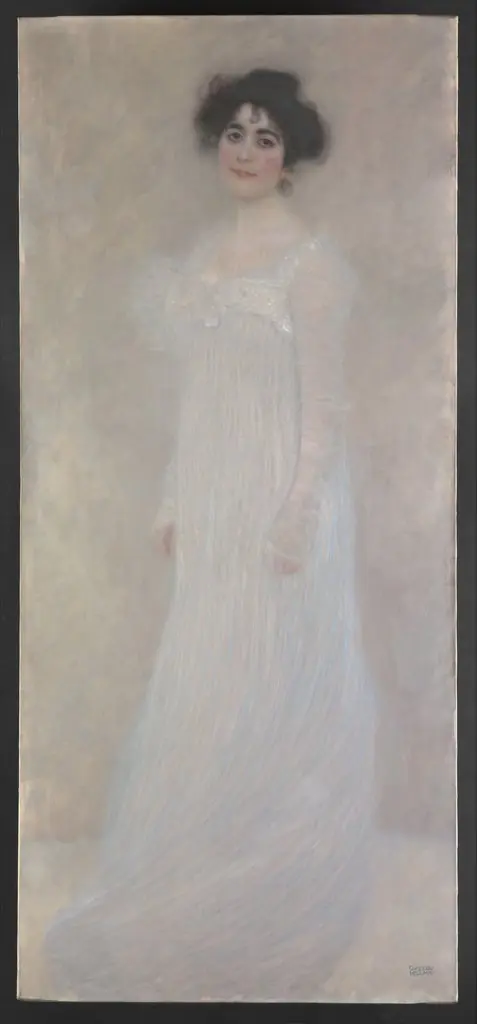
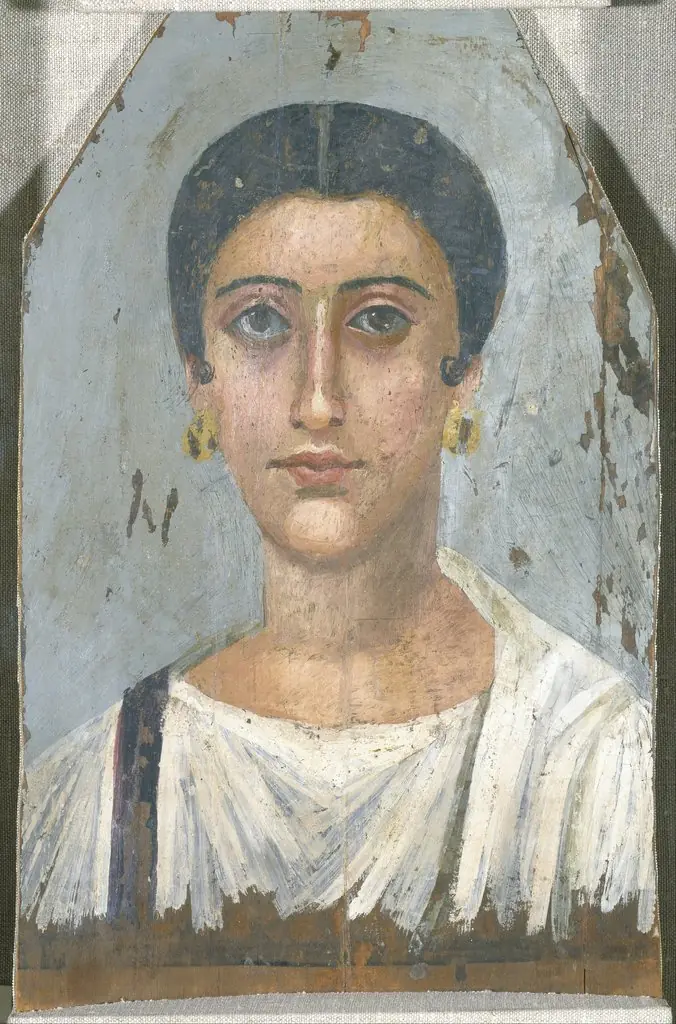 Portrait of a Noblewoman