Artwork
Reverie
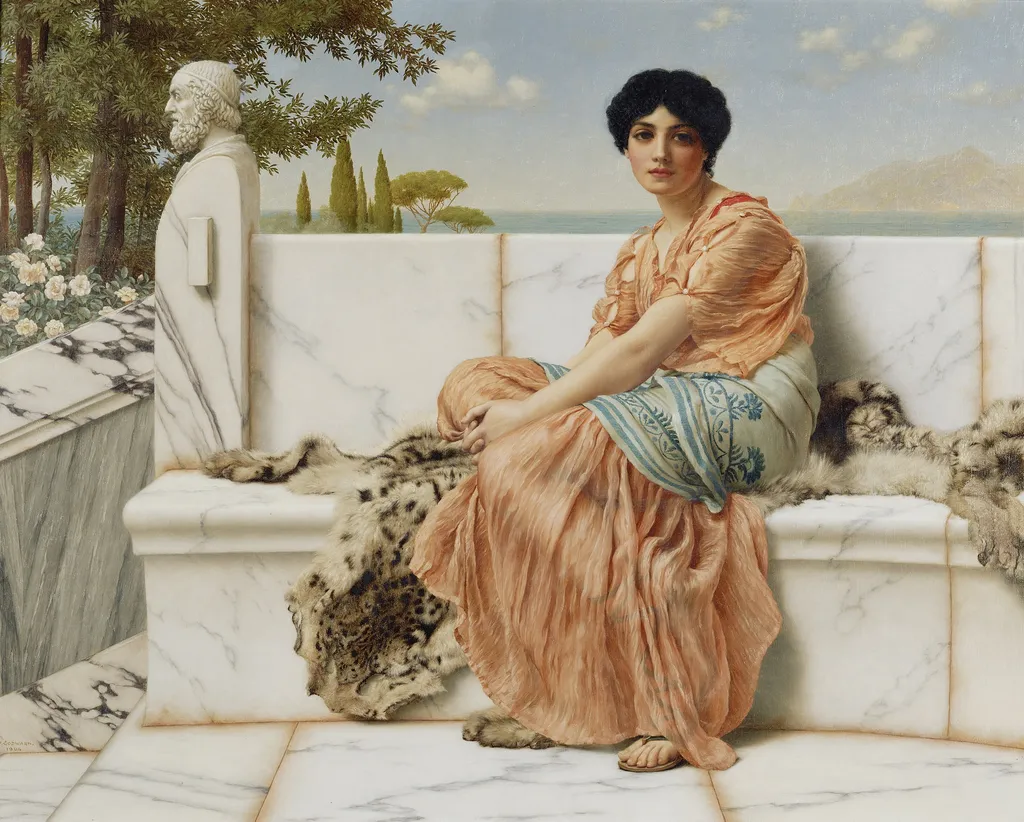
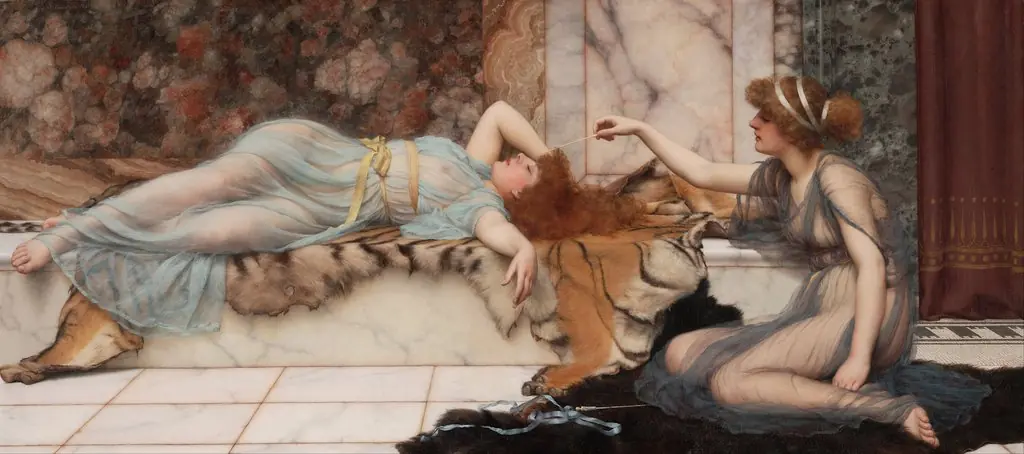
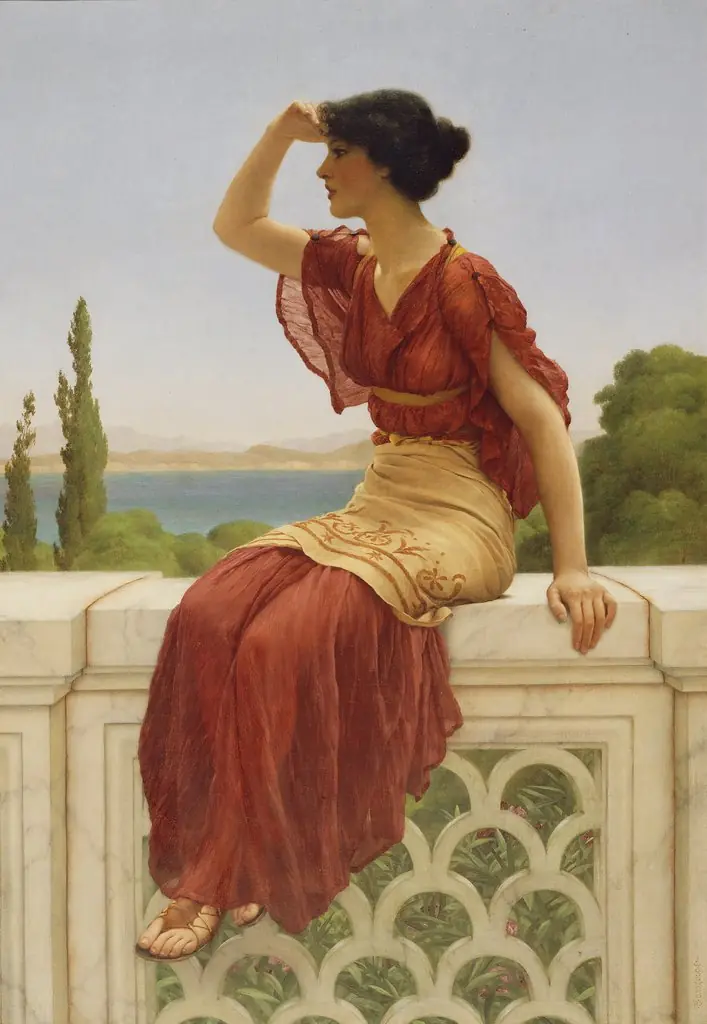
Reverie is an oil painting by the Neo-Impressionist artist John William Godward. It dates from 1904 and is held in the collection of the J. Paul Getty Museum.
About this work
Subject & Meaning
The composition includes a draped figure, a flower, a leopard‑skin pattern and a sandal, all rendered in a neo‑Pompeian style that recalls classical antiquity.
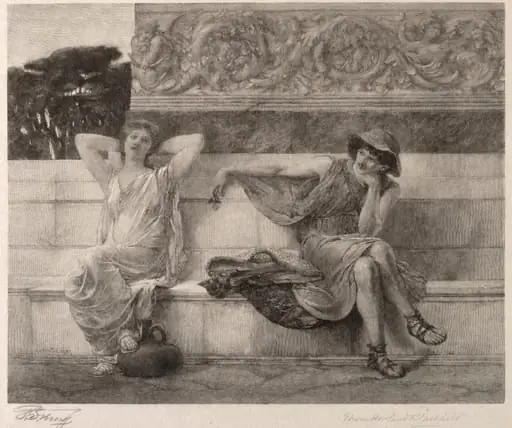
John William Godward’s 1904 oil on canvas titled Reverie shows the ancient Greek poet Sappho seated on a marble bench, gazing outward toward sea and sky. The composition includes a draped figure, a flower, a leopard‑skin pattern and a sandal, all rendered in a neo‑Pompeian style that recalls classical antiquity. These details suggest a moment of poetic reverie, linking Sappho’s lyrical voice to a visual meditation on beauty and contemplation.
The work is housed in the J. Paul Getty Museum, where it is classified as a genre scene within the broader movement of neo‑Pompeian art.
Technique & Style
Reverie is an oil painting executed on canvas, a support noted in the work’s technical data. The composition depicts the poet Sappho seated on a bench, rendered with smooth brushwork and delicate attention to drapery, marble furnishings, and translucent clothing, characteristic of Godward’s neo‑Pompeian aesthetic. The figure’s gaze meets the viewer while surrounding elements such as a leopard‑patterned sandal, a flower, and a tree are subtly integrated into the scene.
Measured at 58.5 cm in height and 73.5 cm in width, the canvas supports a refined, classical rendering that emphasizes idealized form and meticulous surface finish.
History & Provenance
John William Godward created the oil painting Reverie in 1904. The work depicts the figure of Sappho seated on a bench within a neo-Pompeian setting, characterized by elements such as marble, drapery, and a seascape backdrop. Currently, the painting is held in the collection of the J. Paul Getty Museum. The canvas measures 58.5 cm in height and 73.5 cm in width.
Reverie is housed in the collection of the J. Paul Getty Museum in Los Angeles. The work is recorded in the museum’s inventory, though the accession number is not specified in the available documentation. Its dimensions are 58.5 cm by 73.5 cm, and it was created in 1904 using oil on canvas.
The painting belongs to the neo‑Pompeian movement and depicts a figure of Sappho in a dreamlike setting. No exhibition history is documented in the sources consulted.
Overview
John William Godward, an English painter, completed Reverie in 1904. This oil painting exemplifies the late Neo-Classicist style, featuring a solitary figure in classical attire. The work captures a moment of quiet contemplation, set against a backdrop suggesting antiquity.
It is presently part of the collection at the J. Paul Getty Museum, representing a key aspect of Godward's artistic output.
Own this work as a print
Artist & collection
Artist
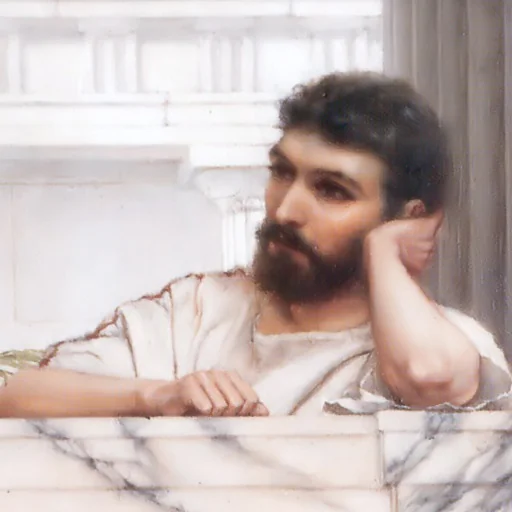
John William Godward (9 August 1861 – 13 December 1922) was an English painter from the end of the Neo-Classicist era. He was a protégé of Sir Lawrence Alma-Tadema, but his style of painting fell out of favour with the rise of modern art.