Artwork
Harlech (No.2)
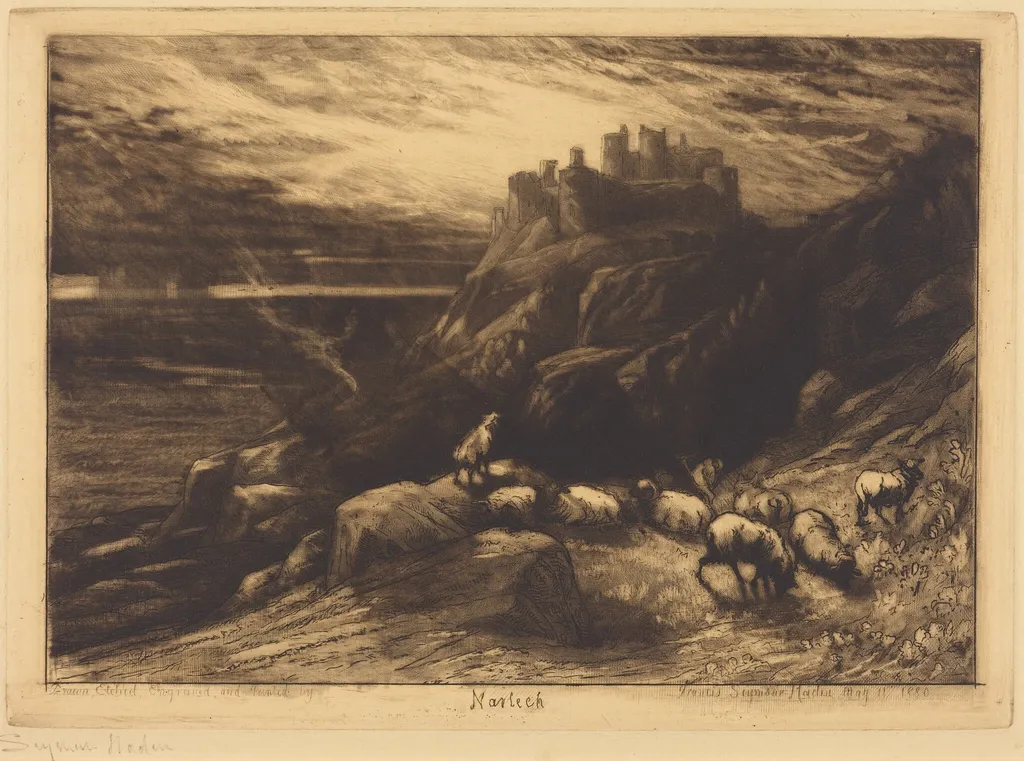
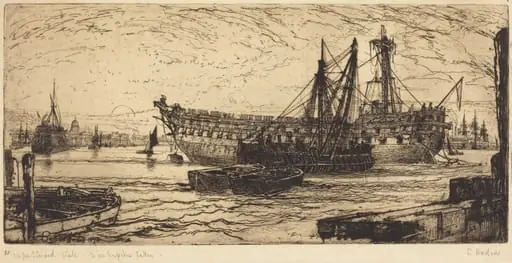
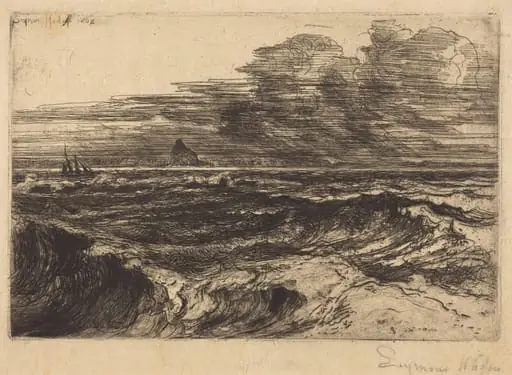
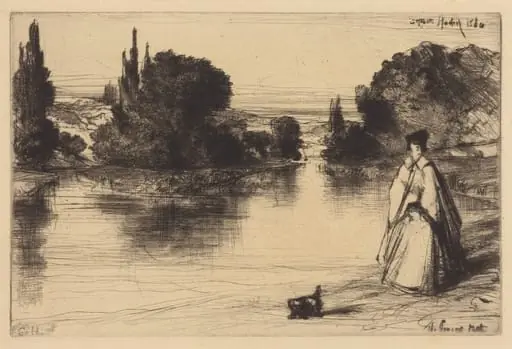
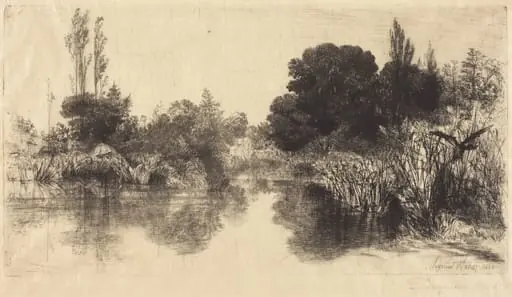
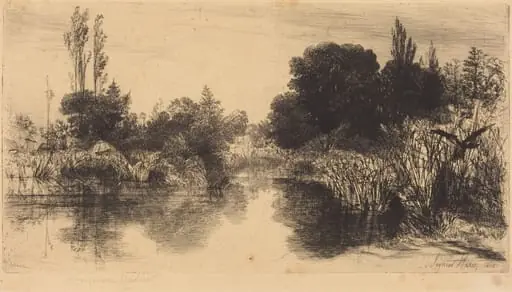
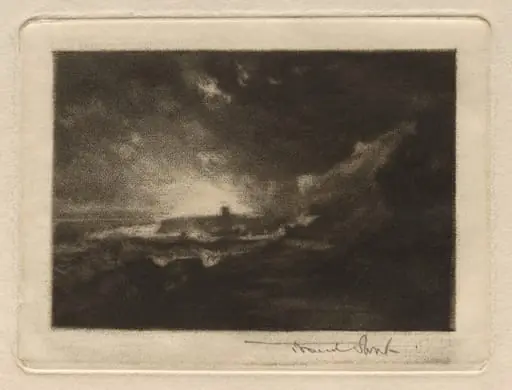
Harlech (No.2) is an ink print by the Impressionist artist Francis Seymour Haden. It dates from 1880 and is held in the collection of the National Gallery of Art. Harlech (No.
About this work
Overview
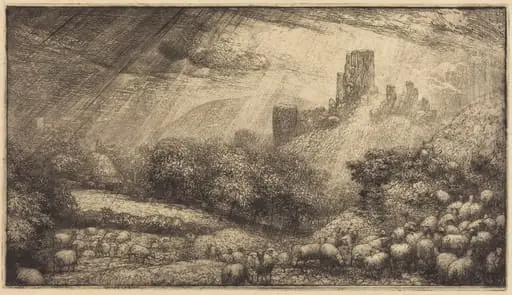
Harlech (No.2) is a mezzotint print, combining etching and drypoint techniques on copper, executed by Francis Seymour Haden in 1880. The work depicts a dramatic Welsh landscape.
Subject & Meaning
The print captures a serene flock of sheep in the foreground, set against the imposing silhouette of Harlech Castle atop a steep cliff. The contrast between the peaceful animals and the turbulent, darkened sky conveys a sense of solemnity and natural power.
Technique & Style
Haden utilized a blend of mezzotint, etching, and drypoint to achieve rich, deep browns and blacks. The interplay of these techniques renders intricate textures, notably in the rocky landscape and cloud formations, while simpler lines define the sheep and castle, prioritizing atmospheric depth over intricate detail.
History & Provenance
Created in 1880 by Francis Seymour Haden, specific provenance details are not provided in the available information.
Context
Harlech (No.2) reflects Haden's engagement with the British landscape tradition, emphasizing the interaction between natural and architectural elements. The use of monochrome enhances the emotional and contemplative aspects of the scene.
Legacy
While specific legacy details of Harlech (No.2) are not provided, the piece exemplifies Haden's contribution to the development of mezzotint and mixed-technique printmaking in the late 19th century.
Own this work as a print
Artist & collection