Artwork
Terminus, the Device of Erasmus
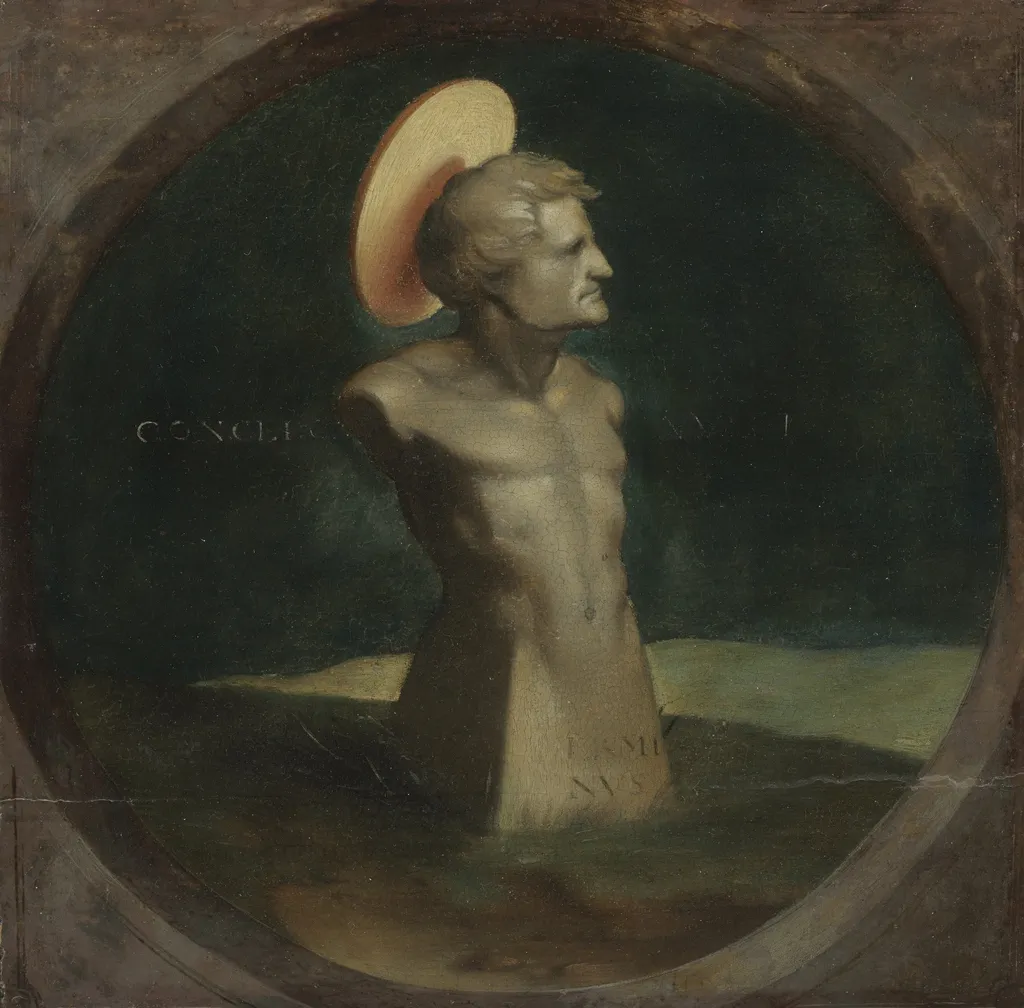
Terminus, the Device of Erasmus is an oil painting by the Northern Renaissance artist Hans Holbein the Younger. It dates from 1532 and is held in the collection of the Cleveland Museum of Art.
About this work
Subject & Meaning
The work merges classical iconography with Northern Renaissance humanist themes, using precise visual attributes to convey a personal and philosophical message.
Terminus, the Device of Erasmus, painted by Hans Holbein the Younger in 1532, depicts Terminus, the Roman god of boundaries, who served as the personal device or emblem of the humanist scholar Erasmus of Rotterdam. The figure was associated with Erasmus's motto and with the idea of death as the final boundary that no one escapes. The work merges classical iconography with Northern Renaissance humanist themes, using precise visual attributes to convey a personal and philosophical message.
Its small scale and intricate detail invite close contemplation of Erasmus's intellectual identity, and the device reflects Holbein's broader practice of embedding allegorical meaning within emblematic objects, in keeping with Renaissance humanist interests in the intersection of art, philosophy, and material culture.
Technique & Style
Terminus, the Device of Erasmus is executed in oil paint on panel, a support typical of Northern Renaissance cabinet pictures of this scale. The work is a small square painting, measuring 21.6 cm on each side, consistent with an intimate emblematic object rather than a large altarpiece.
Stylistically, the painting belongs to Hans Holbein the Younger's mature period, produced in 1532 in Germany. Its modest dimensions and precise handling reflect the Northern tradition of finely detailed oil-on-panel technique, suited to the careful rendering of allegorical devices. The work is held in the collection of the Cleveland Museum of Art.
History & Provenance
Terminus, the Device of Erasmus was created in 1532 by Hans Holbein the Younger. The work is an oil painting on panel, measuring 21.6 cm by 21.6 cm, and was produced in Germany during the artist's active period. The piece is held in the collection of the Cleveland Museum of Art in Cleveland, Ohio, where it is cataloged under the accession number 1971.166.
No specific details regarding the original commission, the identity of the initial patron, or the intermediate steps in its ownership chain prior to the museum's acquisition are provided in the available records. The painting was featured in the exhibition "German Paintings from the Cleveland Museum of Art," held at the Cleveland Museum of Art from January 15 to March 31, 1972.
Context
Holbein's 1532 work Terminus, the Device of Erasmus reflects Northern Renaissance engagement with allegorical personifications of abstract concepts. The painting's compact scale and emblematic use of the boundary god Terminus underscore Renaissance humanist fascination with classical antiquity reinterpreted through contemporary intellectual and theological concerns. Its precise emblematic language resonates with Holbein's broader oeuvre, including portraits such as The Ambassadors (1533), where visual rhetoric conveys complex moral and philosophical meaning.
The piece occupies a notable position in art-historical discourse as an early example of emblematic painting that bridges Northern Renaissance realism with humanist intellectual currents.
Overview
Created in 1532, Terminus, the Device of Erasmus is an oil painting by Hans Holbein the Younger. The work is part of the Cleveland Museum of Art’s collection and exemplifies Holbein’s activity during the Northern Renaissance, a period in which he was celebrated for portraiture as well as for contributions to religious imagery and book design.
Own this work as a print
Artist & collection
Artist
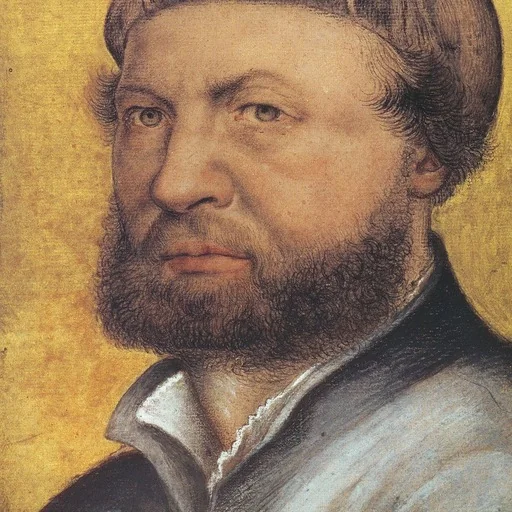
Hans Holbein the Younger (UK: HOL-byne, US: HOHL-byne, HAWL-; German: Hans Holbein der Jüngere; c.

 Roman Orator
 Cabeza de San Pablo
 King David in a Landscape
 Kulturens herredømme
 Figurstudie av sittande man
 Apollo charging the Parcae to visit Ceres, who has fled from the Earth
 Apollo charging the Parcae to visit Ceres, who has fled from the Earth
 Nourmahal
 Samson in Chains
 Istoria desenului
 Apollo with his Lyre
- Terminus, the Device of Erasmus