Artwork
Venus and Cupid
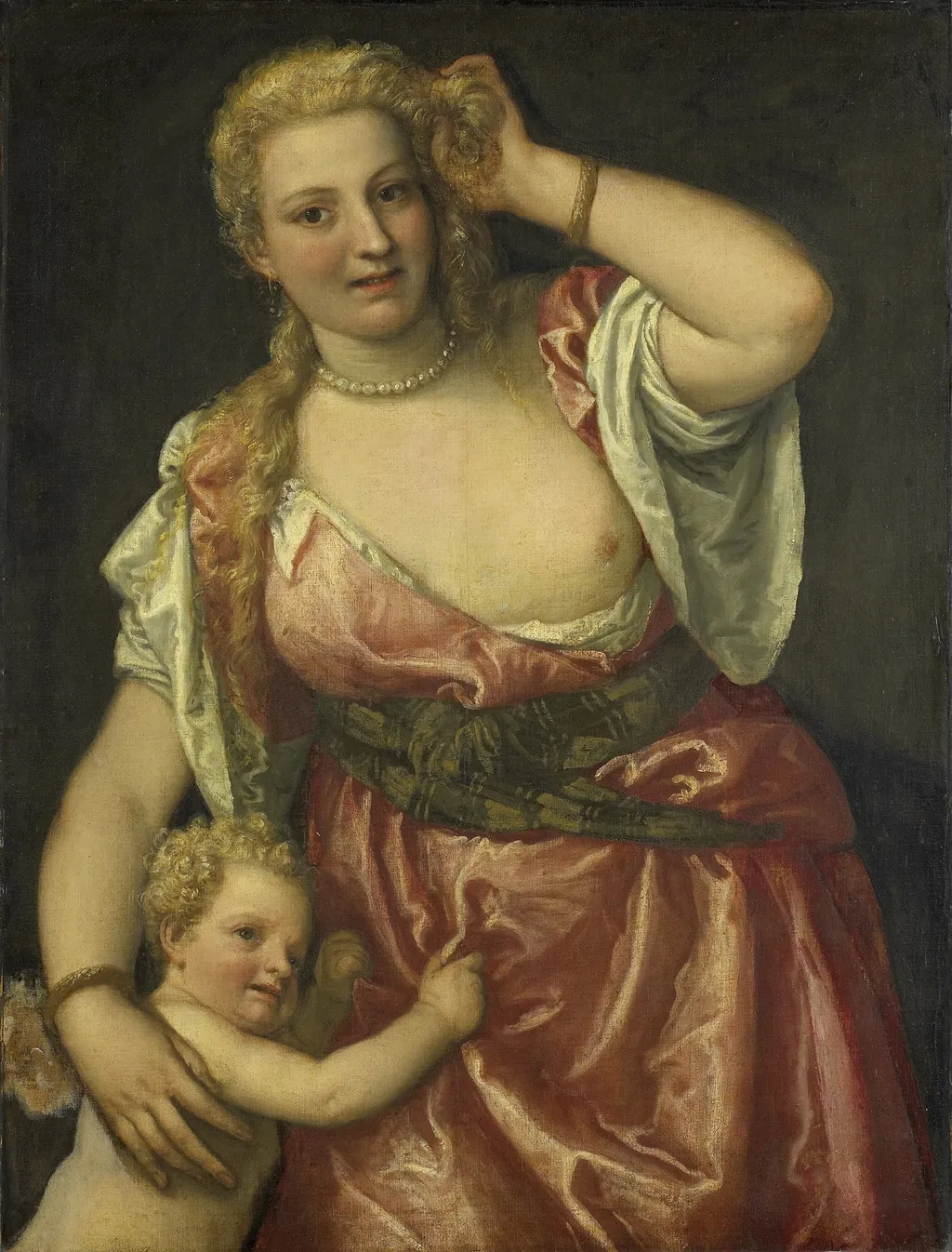
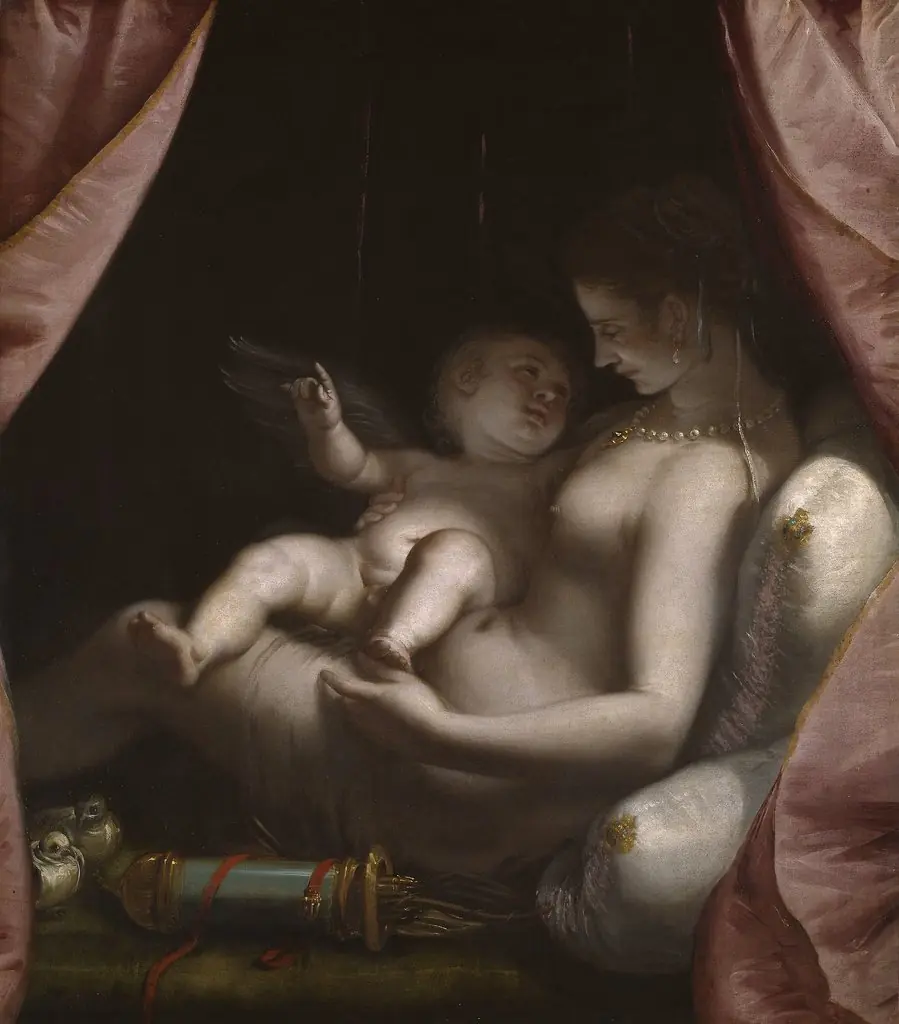
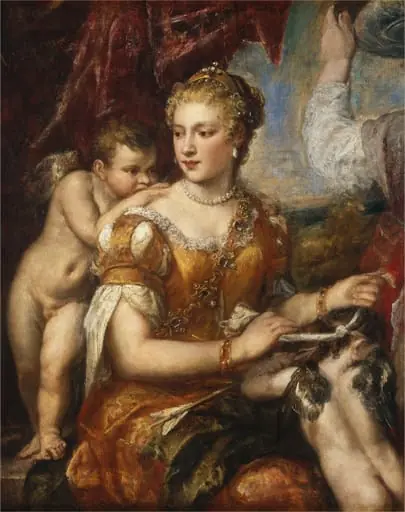
Venus and Cupid is an oil painting by the Mannerist artist Benedetto Caliari. It dates from 1592 and is held in the collection of the Rijksmuseum.
About this work
Technique & Style
The work, painted in oil on canvas, measures 97 cm by 71 cm and exemplifies mythological painting through its graceful composition and delicate rendering of Venus and Cupid. The formal treatment emphasizes soft modelling of flesh and a harmonious colour palette, while the handling of the brushwork conveys a refined, almost lyrical surface quality.
History & Provenance
By the early 20th century the painting was housed in the Rijksmuseum in Amsterdam, where it is recorded as part of the museum’s Grand ducal collection holdings.
Venus and Cupid is an oil painting on canvas created in 1582 by Benedetto Caliari, a member of the Veronese family of artists. The work entered the collection of Peter II, Grand Duke of Oldenburg, and remained in the Oldenburg ducal collection through subsequent generations, including Frederick Augustus II. By the early 20th century the painting was housed in the Rijksmuseum in Amsterdam, where it is recorded as part of the museum’s Grand ducal collection holdings.
The attribution to Caliari is documented in the Rijksmuseum’s catalogue and confirmed by its presence in the museum’s online collection database.
The painting Venus and Cupid is held in the collection of the Rijksmuseum, specifically within the Augusteum location. The work was previously part of the Grand ducal collection of Oldenburg, having been owned by Frederick Augustus II and Peter II, Grand Dukes of Oldenburg. While the artwork dates to 1582, the provided records do not list specific inventory numbers or detail any public exhibition history for the piece.
Overview
Benedetto Caliari’s Venus and Cupid (1592) is an oil painting that presents a mythological scene. Executed in the late‑sixteenth century, the work portrays the Roman goddess Venus together with her son Cupid, rendered in a mannerist idiom typical of the artist’s Veronese background. The painting is part of the Rijksmuseum’s collection.
Subject & Meaning
The composition shows a reclining female figure with pale skin and loose blond hair, clasping a small child who looks upward while holding an unidentified object. The woman’s low‑cut red dress and pearl necklace emphasize her status as a deity, while the intimate gesture between mother and son suggests themes of love, fertility, and the protective role of Venus over Cupid.
Context
Caliari, the younger brother of the more famous Paolo Caliari (Veronese), worked within a family workshop that specialized in mythological and religious subjects. This painting reflects the late Renaissance fascination with classical antiquity, adapting the idealized forms of ancient deities to the sensibilities of a courtly audience.
Own this work as a print
Artist & collection
Artist
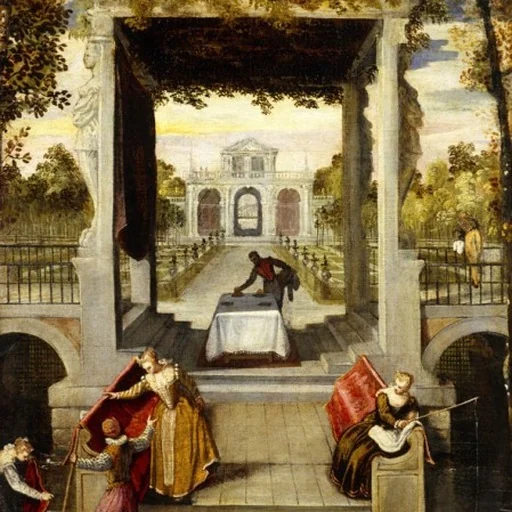
Benedetto Caliari (1538–1598) was an Italian painter who was born into a family of artists. Benedetto's father Gabriele Caliari was a stonecutter. Benedetto's brother Paolo Caliari was the renowned painter Veronese.