Artwork
The Sleeping Gypsy
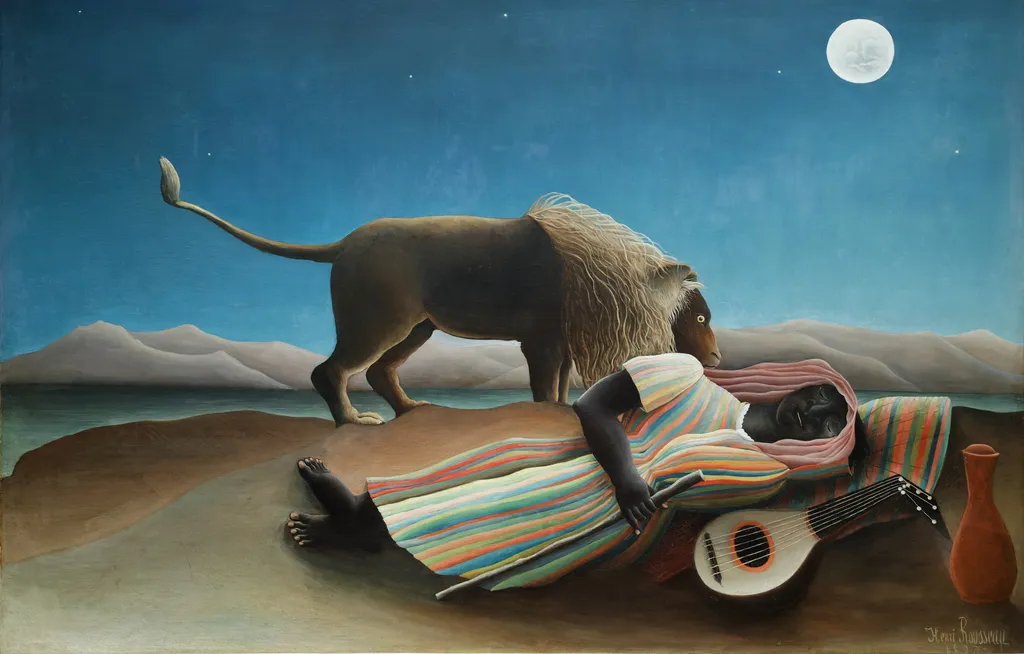
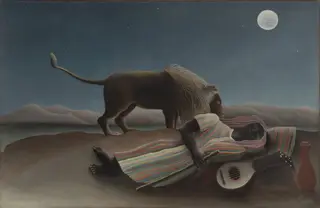
The Sleeping Gypsy is an oil painting by the Naïve art artist Henri Rousseau. It dates from 1899 and is held in the collection of the Museum of Modern Art.
About this work
In the MoMA galleries it sits beside Vincent van Gogh’s The Starry Night, offering a gentle contrast between two very different styles.
The Sleeping Gypsy is an oil painting from 1897 by the French naïve artist Henri Rousseau. It shows a quiet, moonlit scene with a lion and a sleeping woman.
The work was donated to the Museum of Modern Art in 1939 by Olga Guggenheim. In the MoMA galleries it sits beside Vincent van Gogh’s The Starry Night, offering a gentle contrast between two very different styles.
If you’re curious to learn more, check out museum: Museum of Modern Art.
Overview
The Sleeping Gypsy, created in 1897 by French Naïve artist Henri Rousseau, is an oil on canvas painting depicting a serene, moonlit scene featuring a lion and a sleeping woman.
Subject & Meaning
The painting presents a fantastical and tranquil night scene where a lion contemplates a sleeping gypsy woman, evoking a sense of peaceful coexistence between the natural world and humanity.
Technique & Style
Characterized by Rousseau's naïve style, the work exhibits a distinctive approach to perspective, proportion, and detail, contributing to its dreamlike quality.
History & Provenance
Donated by Olga Guggenheim in 1939, the painting is part of the Museum of Modern Art (MoMA) in New York City, where it is displayed alongside Vincent van Gogh's The Starry Night.
Context
Placed beside The Starry Night at MoMA, the painting highlights the contrast between Rousseau's naïvety and van Gogh's expressive post-Impressionism, showcasing diverse artistic responses to nocturnal themes.
Own this work as a print
Artist & collection

Artist
Henri Julien Félix Rousseau (French: ; 21 May 1844 – 2 September 1910) was a French post-Impressionist painter in the Naïve or Primitive manner.