Artwork
Untitled
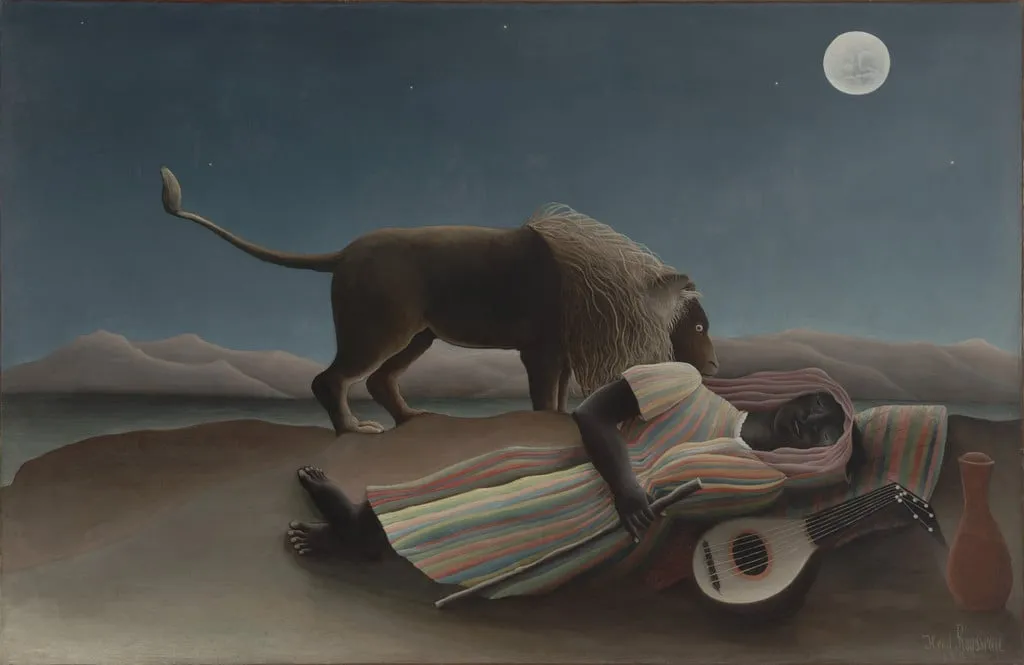
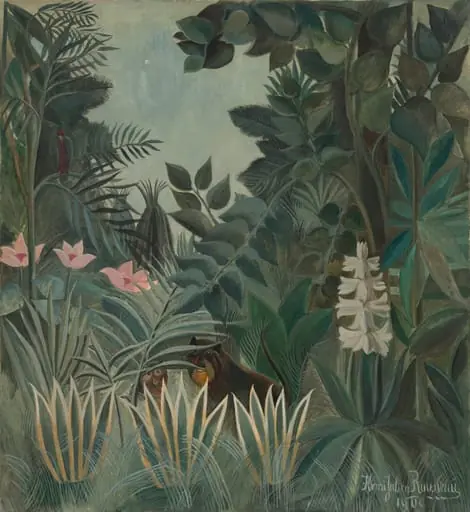
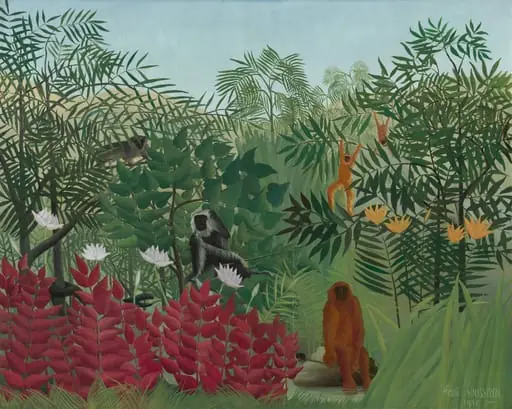
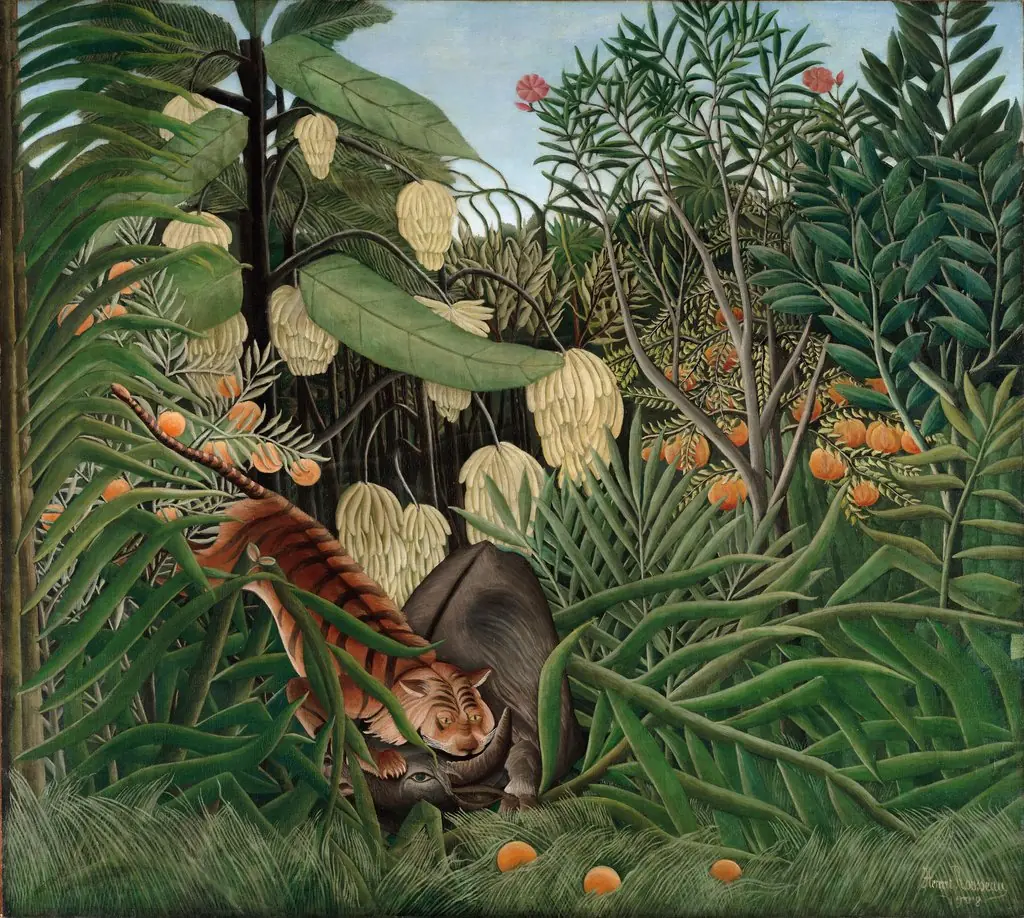
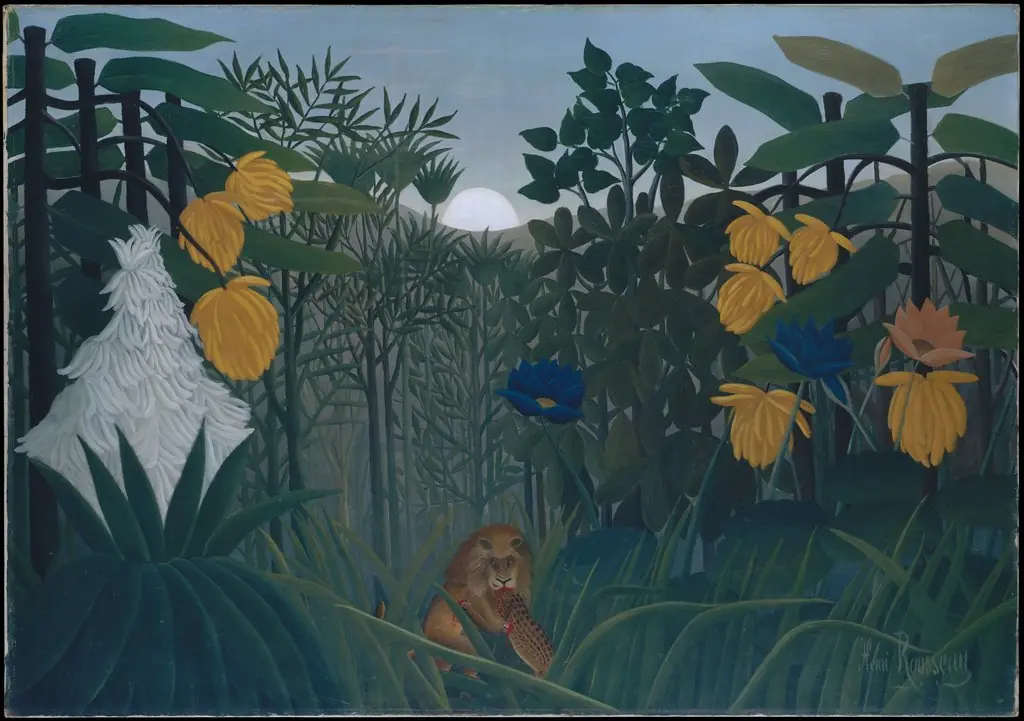
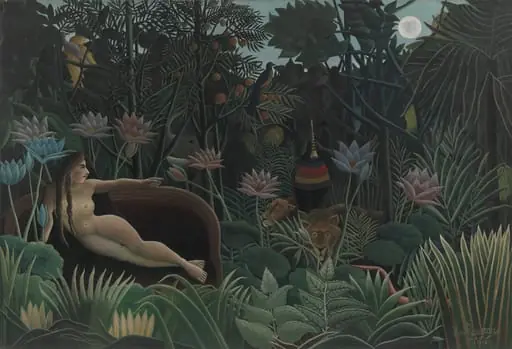
Untitled is an oil painting by the Impressionist artist Henri Rousseau. It dates from 1897 and is held in the collection of the Museum of Modern Art.
About this work
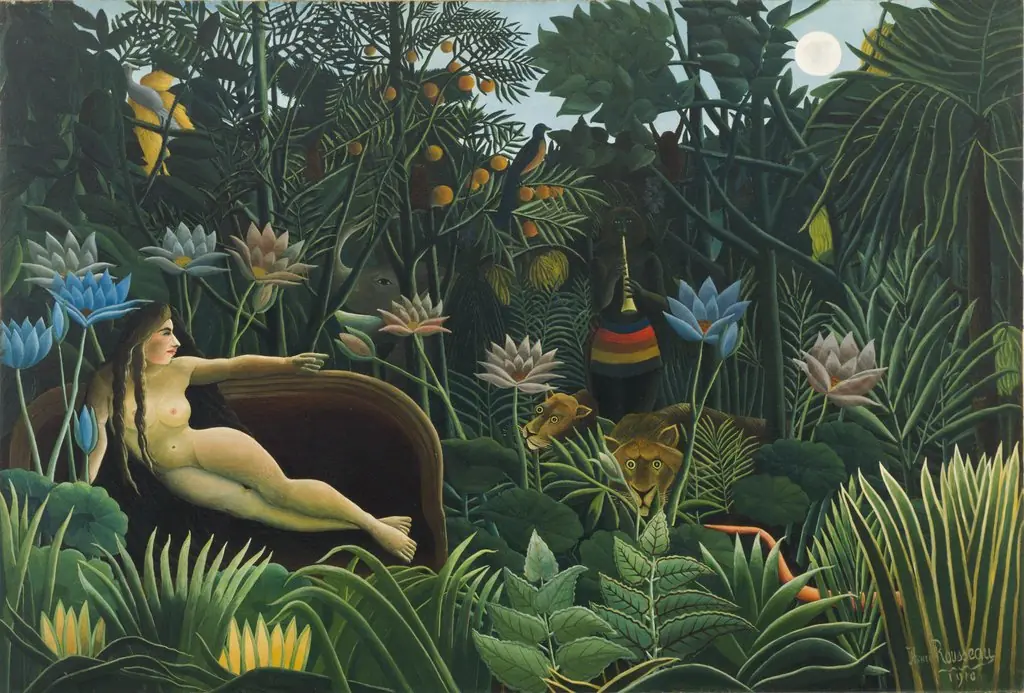
This painting shows a person lying on the ground under a bright moon, playing a small guitar.
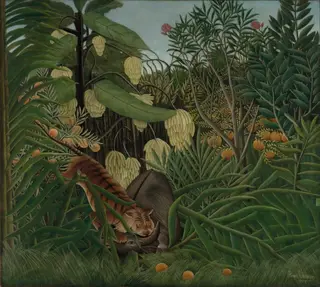
This painting shows a person lying on the ground under a bright moon, playing a small guitar. Next to them is a lion standing calmly, almost like it’s part of the scene. The person is wrapped in a striped blanket, and there’s a red vase nearby. The background has a dark blue sky with mountains and a quiet sea.
The lion and the person seem oddly at peace, which stands out. The artist painted this in 1897, when most people didn’t mix animals and humans like this.
If you like this strange, dreamy style, check out Henri Rousseau.
Overview
Painted in 1897, this oil on canvas work emerged from Henri Rousseau’s post-retirement commitment to art. Having no formal training, he developed a unique visual language characterized by precise detail and flattened perspective. The painting belongs to the broader Post-Impressionist movement but diverges through its dreamlike, unorthodox composition. Its quiet, surreal atmosphere distinguishes it from the prevailing trends of the time.
Subject & Meaning
A solitary figure lies beneath a full moon, strumming a guitar while a lion rests nearby, serene and unthreatening. The presence of a red vase and a striped blanket adds domestic intimacy to the scene. The pairing of human and wild animal in tranquil coexistence suggests a symbolic harmony between civilization and nature, or perhaps an inner psychological state rendered visible. The scene resists clear narrative, inviting contemplation rather than interpretation.
Technique & Style
Rousseau applied oil paint with methodical care, rendering each element, grass, fur, fabric, with equal attention regardless of scale or conventional importance. His use of flat planes, unnatural proportions, and unnerving clarity creates a sense of stillness. The dark blue sky, distant mountains, and calm sea are rendered without atmospheric perspective, reinforcing the painting’s otherworldly, stage-like quality.
History & Provenance
Created during Rousseau’s most productive period, this work was made in relative isolation from the Parisian avant-garde. Though initially met with skepticism or ridicule, it was later acquired by collectors who recognized its originality. The painting remained in private hands for decades before entering a public collection, where its quiet strangeness gradually gained scholarly attention.
Context
In late 19th-century France, most artists pursued realism or impressionism, often emphasizing movement and light. Rousseau’s refusal to conform, depicting impossible harmonies between humans and animals, and rendering nature with childlike precision, set him apart. His work was dismissed by critics but quietly admired by younger artists seeking alternatives to academic norms.
Legacy
This painting, like others by Rousseau, influenced early 20th-century modernists drawn to its unmediated vision. Surrealists later cited his work as a precursor to dream imagery, valuing its emotional logic over rational structure. Though never widely exhibited in his lifetime, his distinctive style became a touchstone for artists exploring the boundaries between reality and imagination.
Artist & collection

Artist
Henri Julien Félix Rousseau (French: ; 21 May 1844 – 2 September 1910) was a French post-Impressionist painter in the Naïve or Primitive manner.