Artwork
Woods Scene
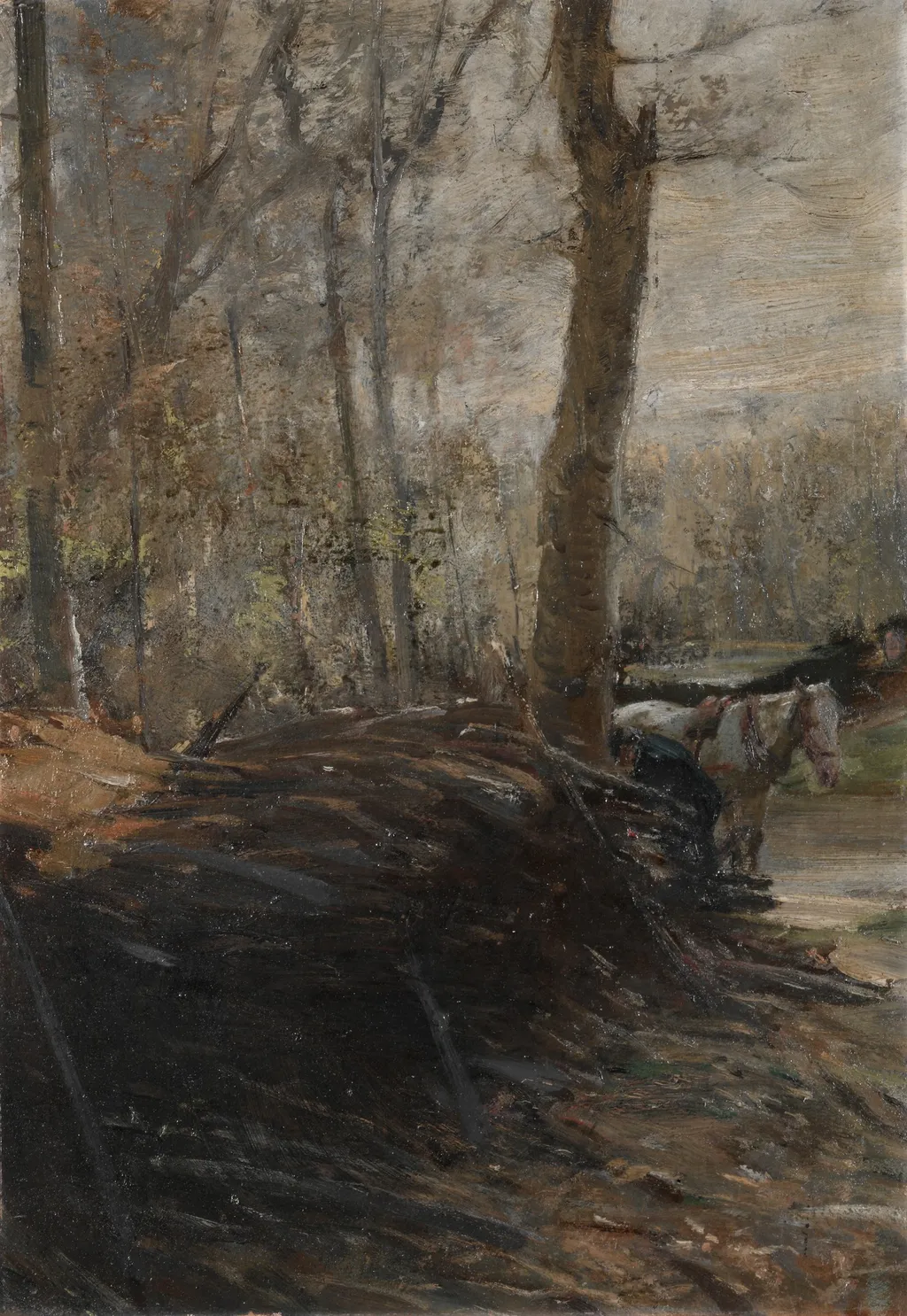
Woods Scene is an oil painting by the American Impressionist artist Henry Keller. It dates from 1901 and is held in the collection of the Cleveland Museum of Art.
About this work
Technique & Style
Henry Keller's Woods Scene is an oil painting executed on canvas in 1901. The work measures 48.0 cm in height and 33.4 cm in width. Created in Cleveland, the piece utilizes oil paint as its primary medium applied to a canvas support.
As a classified painting from the early 20th century, the work represents Keller's engagement with landscape subjects during that period.
History & Provenance
The museum maintains the piece as part of its American art collection, preserving it as a significant example of Keller's early 20th-century output.
Henry Keller created the oil painting Woods Scene in 1901 while working in Cleveland. The work, executed on canvas, measures 48.0 cm in height and 33.4 cm in width. It entered the collection of the Cleveland Museum of Art in 1955, identified by the accession number 1955.542. No specific commission details or earlier ownership records are provided in the available documentation.
Henry Keller's painting Woods Scene is held in the permanent collection of the Cleveland Museum of Art in Cleveland, Ohio. The work entered the museum's holdings under the accession number 1955.542. Created in 1901, the oil on canvas painting was executed in Cleveland and depicts a wooded landscape.
The museum maintains the piece as part of its American art collection, preserving it as a significant example of Keller's early 20th-century output.
Overview
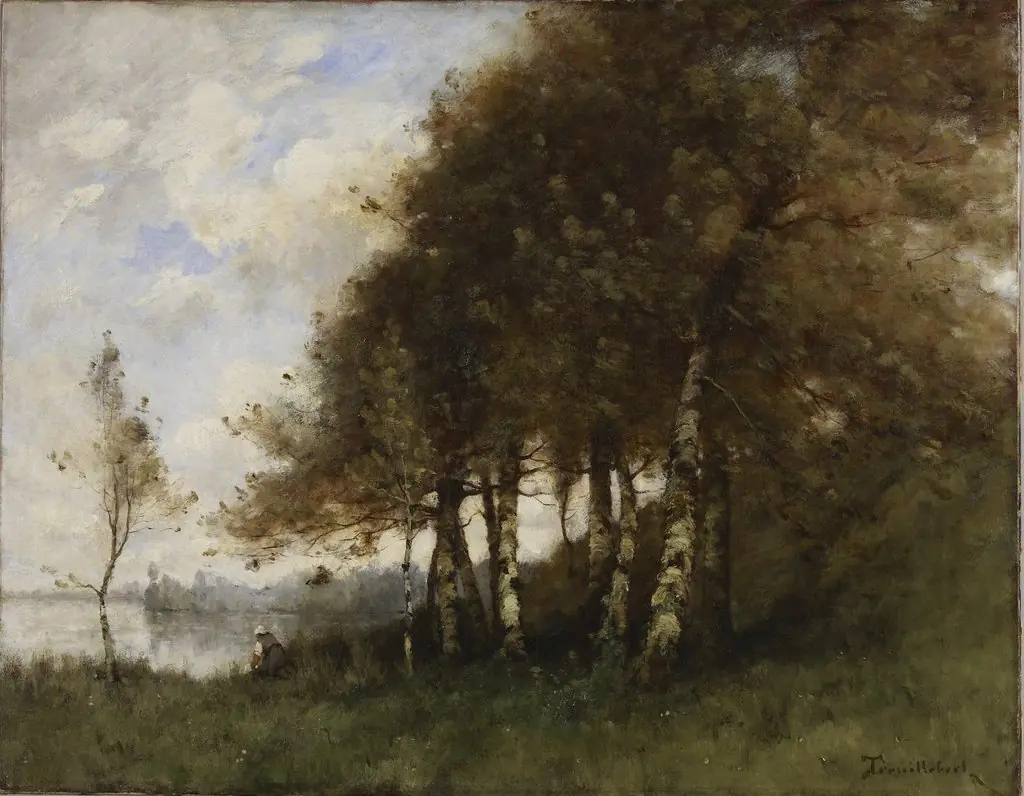
Created in 1901, Woods Scene is an oil painting by Henry Keller that exemplifies the American Impressionist approach to landscape. The work presents a densely wooded area rendered with a focus on atmospheric effects, employing a palette and handling that convey the play of light within a shadow‑filled forest.
Subject & Meaning
The composition centers on a tangled stand of trees whose gnarled trunks rise into a dark canopy, while the forest floor is a mixture of muddy browns, deep blacks, and faint green highlights where limited light penetrates. The stark, almost foreboding setting invites contemplation of nature’s raw, untamed character.
Context
At the turn of the century, American Impressionism adapted European ideas about light and color to local subjects. Keller’s forest study aligns with this trend, translating the movement’s emphasis on atmospheric perception to a distinctly American woodland environment.
Own this work as a print
Artist & collection
Artist
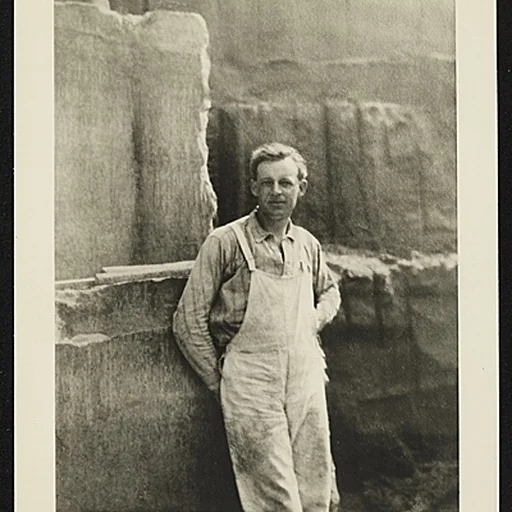
Henry George Keller (April 3, 1869 – August 3, 1949) was an American artist who led a generation of Ohio watercolor painters of the Cleveland School.