Artwork
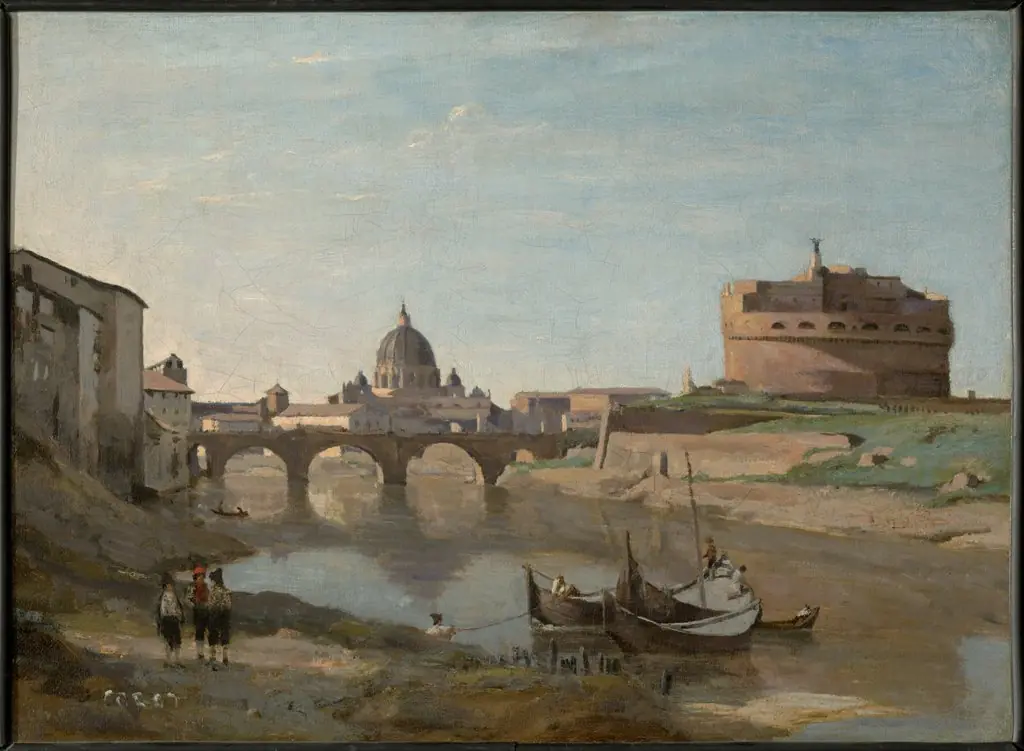
Castel Sant'Angelo in Rome
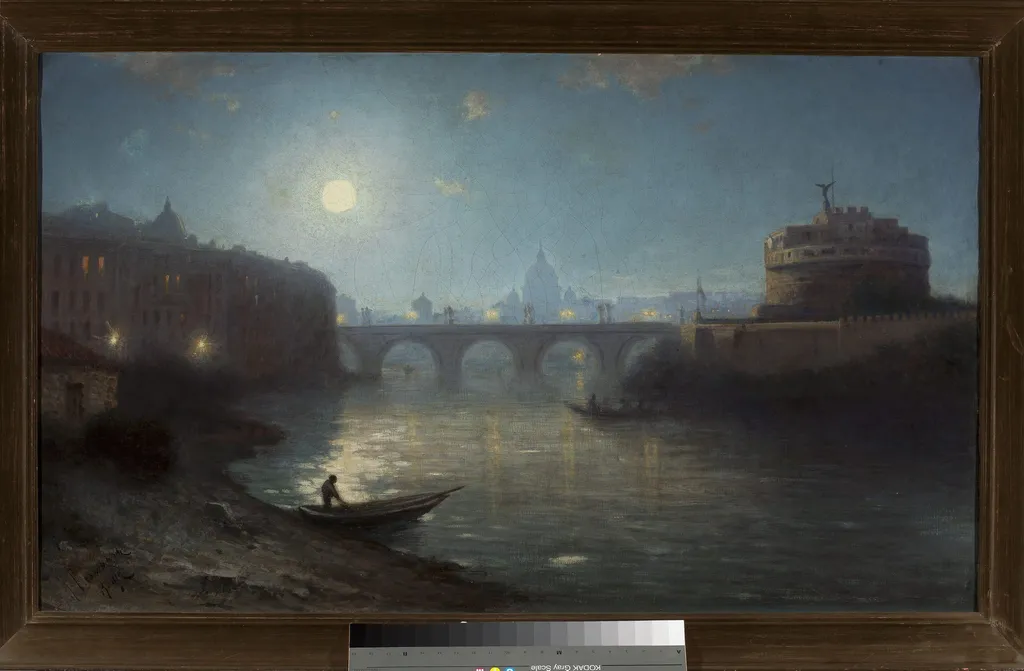
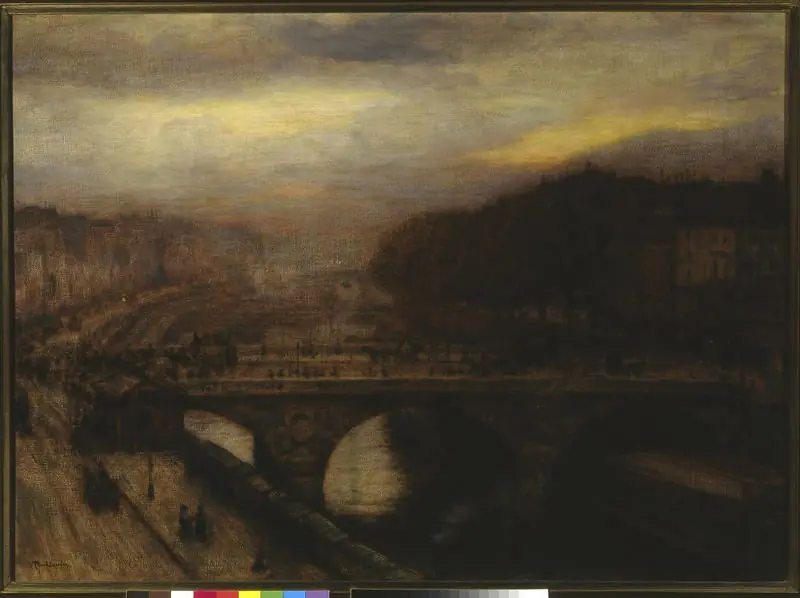
Castel Sant'Angelo in Rome is an oil painting by Henryk Cieszkowski. It dates from 1875 and is held in the collection of the National Museum in Warsaw.
About this work
Overview
Painted around 1875 by Polish artist Henryk Cieszkowski, this oil on canvas depicts Castel Sant'Angelo at night. Cieszkowski, who resided in Rome from 1858 until his death in 1895, often turned his attention to the city’s architectural landmarks. The work is part of the National Museum in Warsaw’s collection, reflecting his enduring connection to both his homeland and his adopted city.
Subject & Meaning
The painting centers on Castel Sant'Angelo, a historic fortress on the Tiber’s banks, framed by the Ponte Sant'Angelo and a solitary rowboat. The quiet, nocturnal setting suggests solitude and contemplation. The illuminated structure and reflective water imply a calm interplay between human history and natural light, without overt narrative, offering a meditative view rather than a dramatic one.
Technique & Style
Cieszkowski employed a restrained palette dominated by deep blues and grays, with subtle highlights from moonlight on the water and stone. Brushwork is precise yet soft, capturing the glow on the castle’s surfaces and the shimmering ripples of the river. The composition directs attention to the castle’s silhouette, balancing architectural solidity with the fluidity of the night scene.
History & Provenance
Created during Cieszkowski’s decades-long stay in Rome, the painting emerged from his sustained engagement with Italian topography. It entered the National Museum in Warsaw’s collection, likely through acquisition or donation after his death. Its presence there underscores the museum’s interest in 19th-century Polish artists who worked abroad and documented European landscapes.
Context
In the late 19th century, many Polish artists lived in Rome as part of a broader diaspora seeking artistic training and inspiration. Cieszkowski’s focus on Roman monuments aligned with a trend among expatriates to capture the city’s timeless character. His work, though less known than contemporaries, reflects a quiet, personal response to Italy’s architectural heritage.
Legacy
Cieszkowski’s Castel Sant'Angelo in Rome remains a representative example of his lifelong dedication to landscape and architectural observation. While not widely exhibited, it contributes to the understanding of Polish artists’ role in 19th-century European art. The painting endures as a quiet testament to his sustained presence in Rome and his sensitivity to atmospheric effects.
Own this work as a print
Artist & collection
Artist
Henryk Cieszkowski (born 1835 in Płock, died 1895 in Rome) was a Polish painter. Henryk Cieszkowski completed his secondary education in Lublin, between the years of 1848 to 1856 he studied at the Schools of Fine Arts…