Artwork
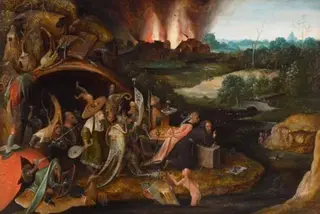
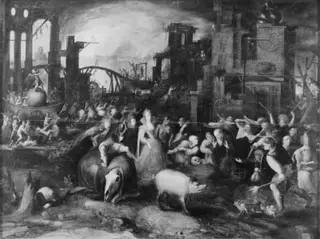
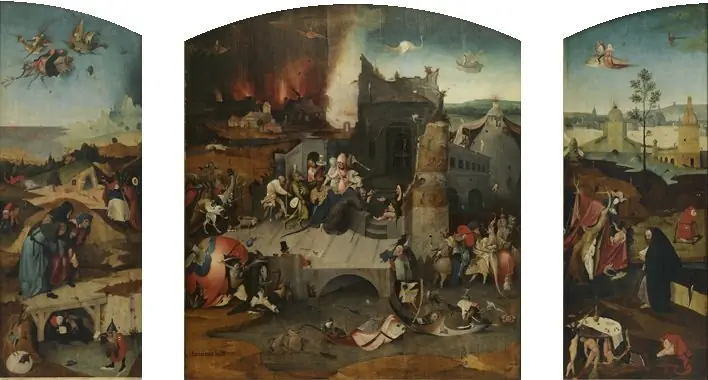
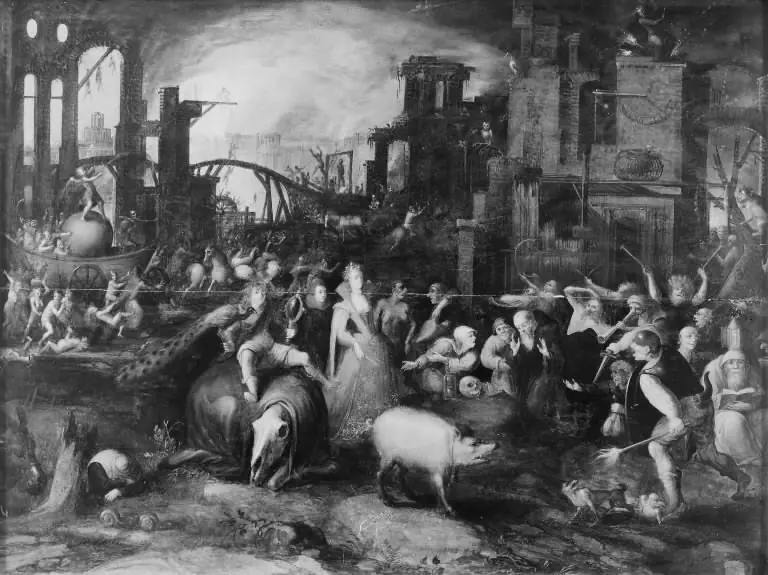
The temptation of St Antony
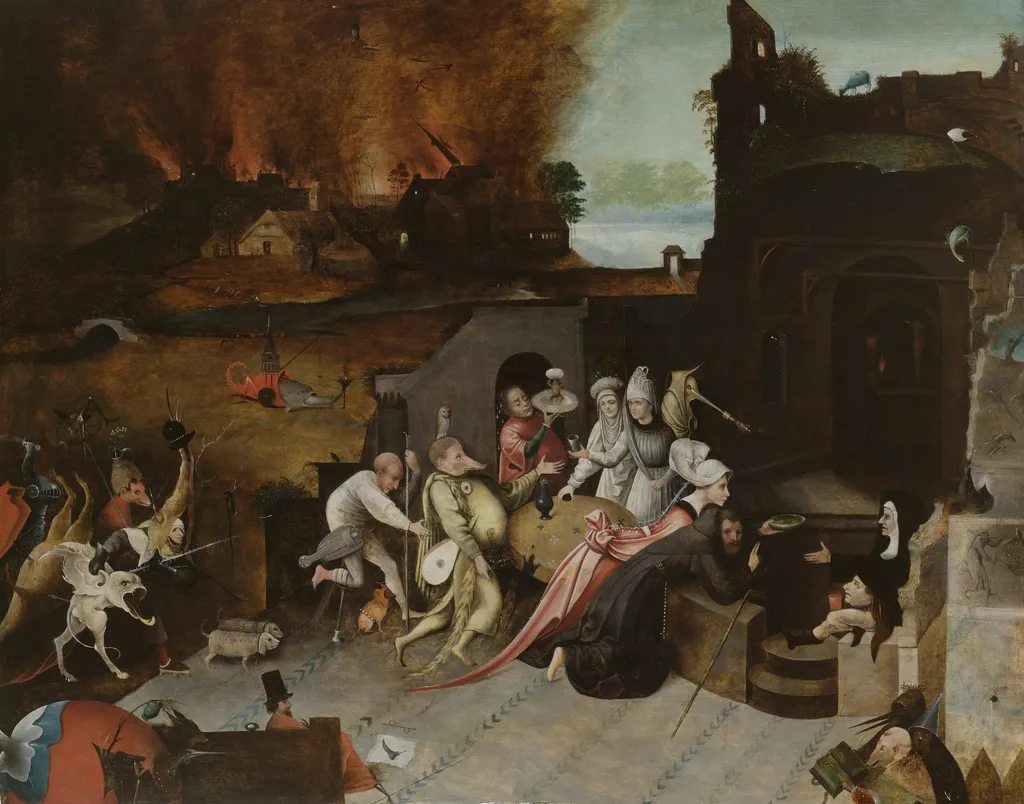
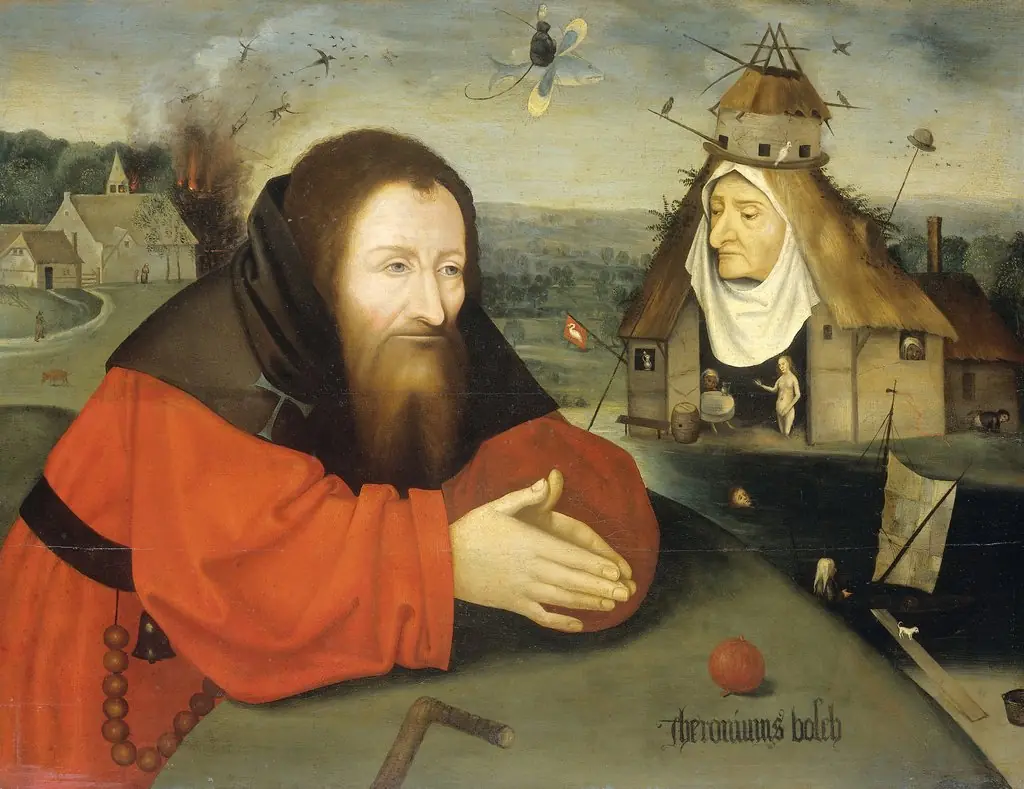
The temptation of St Antony is an oil painting by the Northern Renaissance artist Hieronymus Bosch. It is held in the collection of the Rijksmuseum.
About this work
Subject & Meaning
The work depicts Anthony the Great, focusing specifically on the temptations faced by the saint.
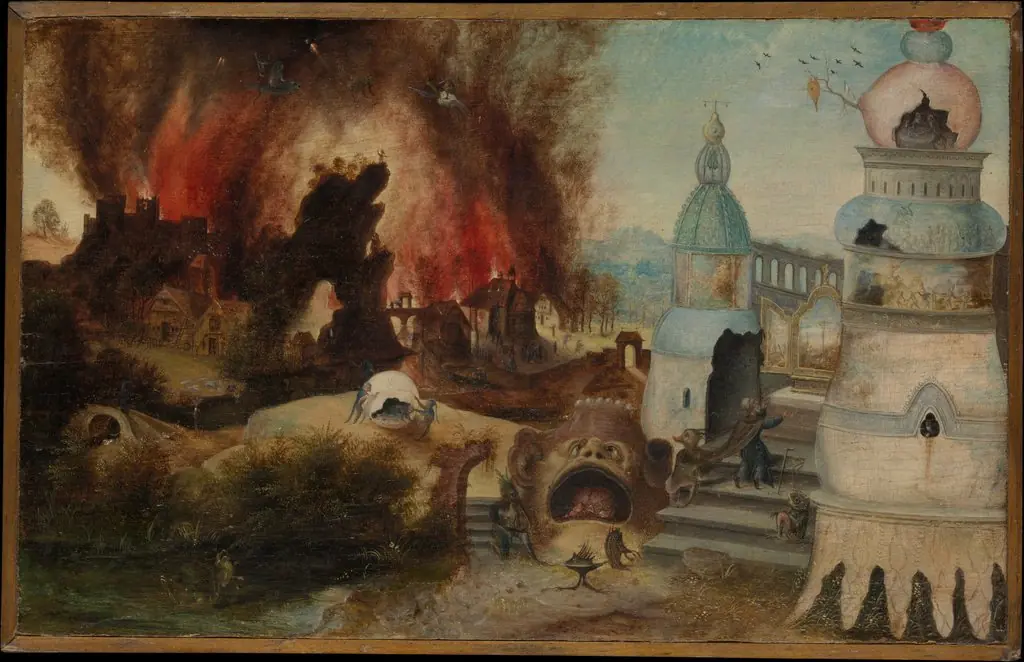
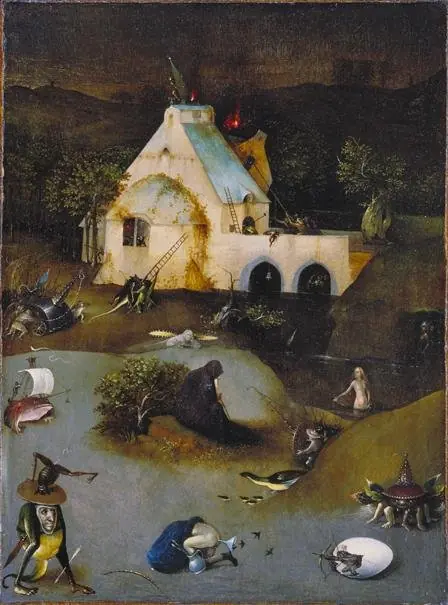
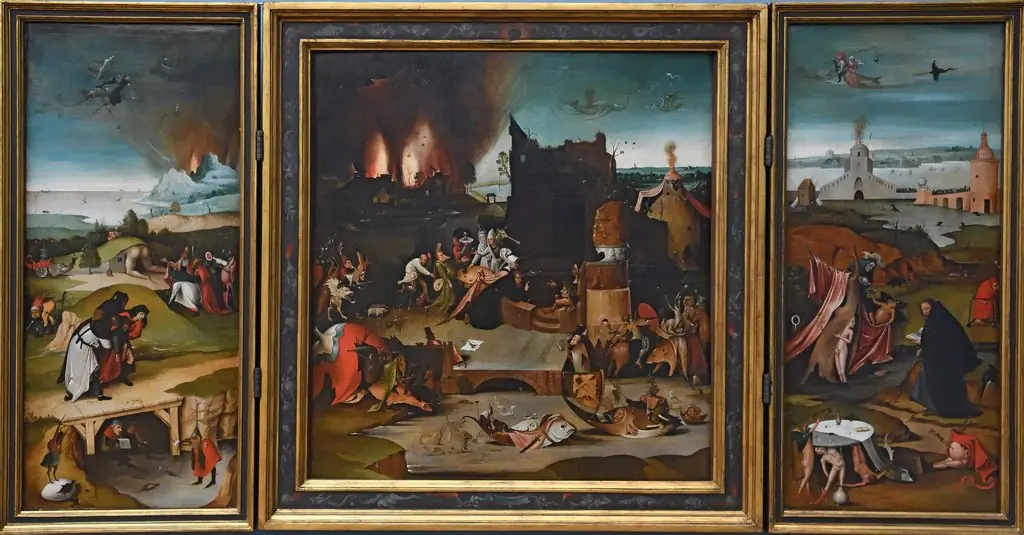
The work depicts Anthony the Great, focusing specifically on the temptations faced by the saint. As a piece of religious art within the Early Netherlandish painting movement, the image centers on the spiritual trials associated with this hagiographic subject. The composition serves as a visual representation of the main subject, the Temptations of Saint Anthony, illustrating the conflicts between holy devotion and demonic allure.
Executed in oil paint on panel, the artwork functions as a devotional object that engages with the traditional iconography of the saint's struggles in the desert.
Technique & Style
The work is executed in oil paint on wooden panel, characteristic of Early Netherlandish practice. The surface bears the subtle sheen and fine brushwork of the medium, while the handling of light and texture conveys the surreal temptations confronting Saint Anthony. Formal elements include a tightly composed spatial arrangement, meticulous detail, and a muted palette that heightens the psychological tension of the scene.
History & Provenance
The work titled The temptation of St Antony was created by Hieronymus Bosch in 1568 using oil paint on panel. It measures 68.7 cm in height and 86.9 cm in width. The painting belongs to the Early Netherlandish tradition and depicts scenes of the temptations of Saint Anthony.
Its provenance includes ownership by the Noordbrabants Museum in 's-Hertogenbosch, with additional holdings recorded at the Rijksmuseum and the Bonnefanten Museum. The inception of the work is recorded as 1600, though the creation date attributed to Bosch is 1568.
The painting is held by the Noordbrabants Museum in 's-Hertogenbosch, Netherlands. It is associated with the collections of the Rijksmuseum and the Bonnefanten Museum, as well as the Noordbrabants Museum itself.
The provided sources do not specify an inventory or accession number for the work, nor do they document any exhibition history.
Overview
Hieronymus Bosch, a Brabantian painter associated with the Early Netherlandish tradition, produced an oil painting titled The Temptation of St Antony around the turn of the 17th century. The work presents a densely populated tableau of bizarre figures surrounding a kneeling saint, rendered in the muted palette typical of Bosch’s later compositions. It is part of the Rijksmuseum’s permanent collection.
Context
The Temptation of St Antony belongs to the Northern Renaissance, a cultural moment that emphasized detailed narrative and symbolic complexity in religious art. Bosch’s work stands alongside other contemporary depictions of Anthony’s trials, yet his approach diverges through the inclusion of fantastical hybrids and a carnival-like atmosphere, reflecting a uniquely Netherlandish fascination with the grotesque and the moral didactic.
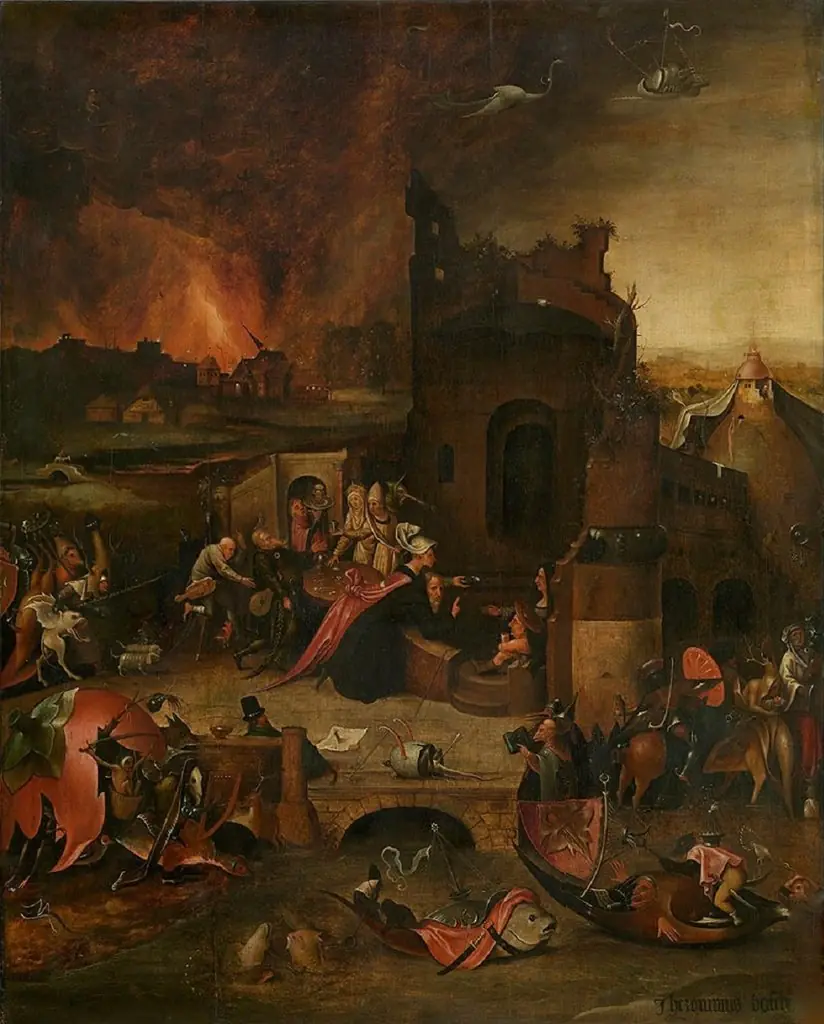
Own this work as a print
Artist & collection
Artist
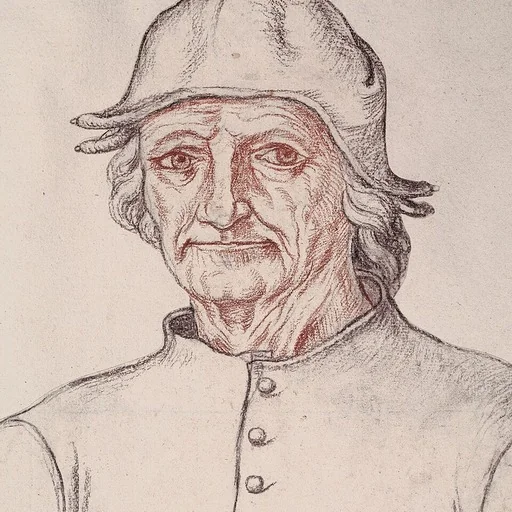
Hieronymus Bosch (; Dutch:; born Jheronimus van Aken; c. 1450 – 9 August 1516) was a Dutch painter from Brabant. He is one of the most notable representatives of the Early Netherlandish painting school. His work,…