Artwork
Adoration of the Magi
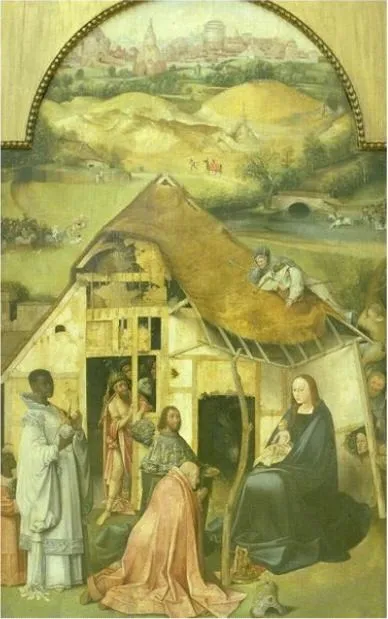
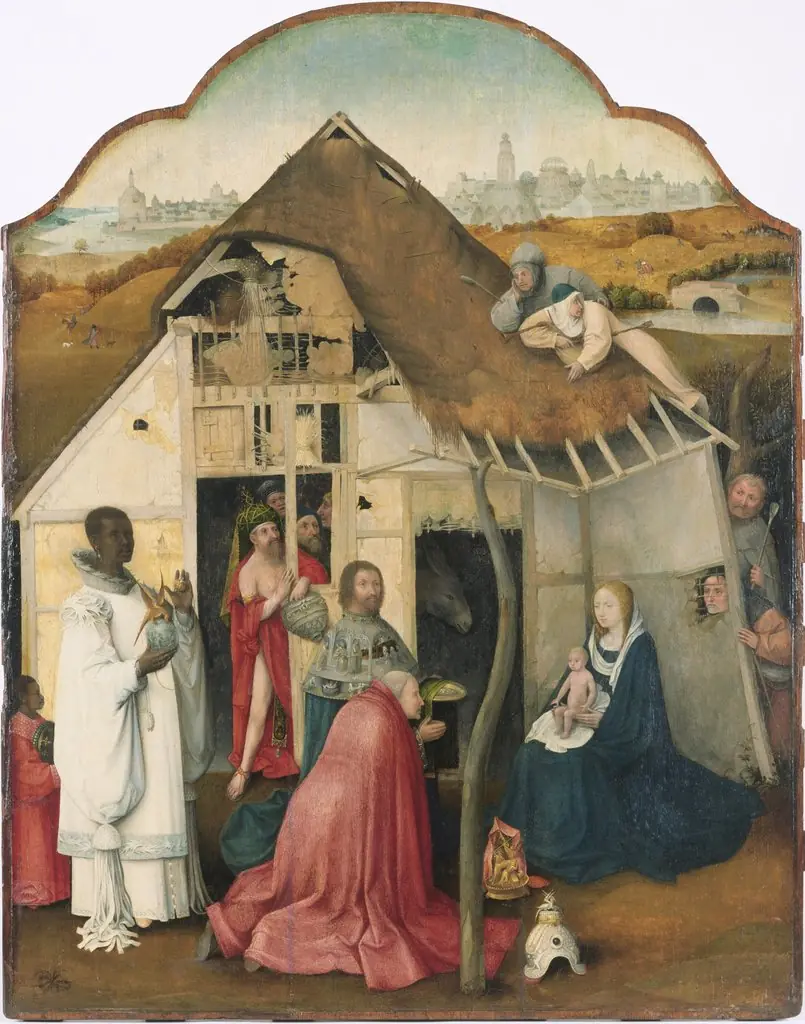
Adoration of the Magi is a paint painting by the Northern Renaissance artist Hieronymus Bosch. It is held in the collection of the Gemäldegalerie Berlin.
About this work
Subject & Meaning
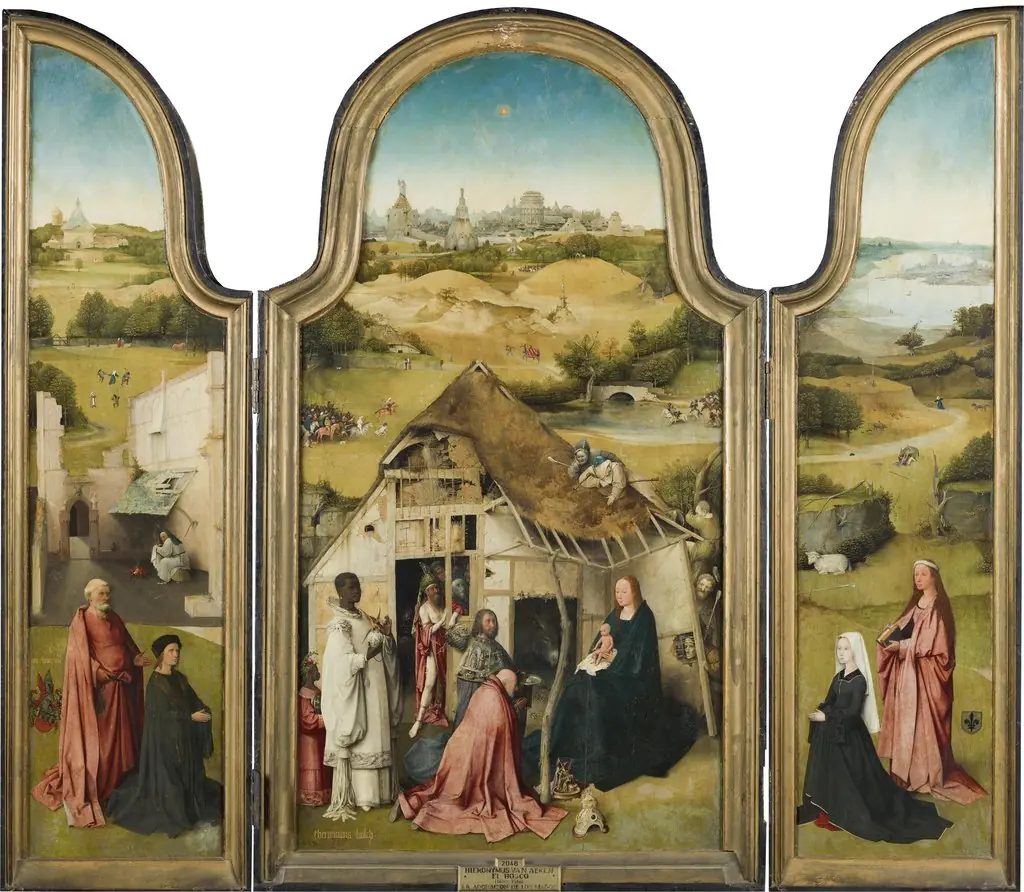
The composition features the Christ Child and Mary as the central figures, attended by the three Biblical Magi identified as Melchior, Caspar, and Balthazar.
The work illustrates the biblical episode of the Adoration of the Magi, a standard subject within religious art. The composition features the Christ Child and Mary as the central figures, attended by the three Biblical Magi identified as Melchior, Caspar, and Balthazar. These figures are shown presenting gifts, an act that symbolizes the recognition of Jesus's divinity by the gentile world.
As a depiction of this specific gospel narrative, the painting serves as a visual representation of the Epiphany, emphasizing the homage paid to the newborn savior by the royal visitors.
Technique & Style
This religious panel painting, attributed to Hieronymus Bosch and dated to 1540, is executed in paint on an oak support. The work depicts the Adoration of the Magi, featuring the Christ Child, Mary, and the three kings, Melchior, Caspar, and Balthazar, presenting their gifts. Physically, the panel measures approximately 114 to 118 centimeters in height and 71 to 72 centimeters in width.
Currently held in the collection of the Gemäldegalerie in Berlin, the piece represents a later work associated with the artist's oeuvre, utilizing traditional materials of the Northern Renaissance period.
Overview
Hieronymus Bosch’s Adoration of the Magi is an oil painting dating to 1540. The composition centers on the Virgin Mary seated with the infant Jesus, while the three Magi present their gifts. Set against a modest thatched structure and a distant landscape of hills and a bridge, the work conveys a quiet, reverent atmosphere through its subdued brown and green tones.
History & Provenance
The painting is part of the collection of the Gemäldegalerie in Berlin. It entered the museum’s holdings through the institution’s acquisitions of Netherlandish works, representing an example of Bosch’s later output within the early Netherlandish tradition.
Context
Created during the Northern Renaissance, the Adoration aligns with contemporary Northern European depictions of the Magi, which often combined devotional narrative with detailed domestic settings. Bosch’s approach reflects the period’s interest in integrating biblical stories into familiar, local environments.
Artist & collection
Artist
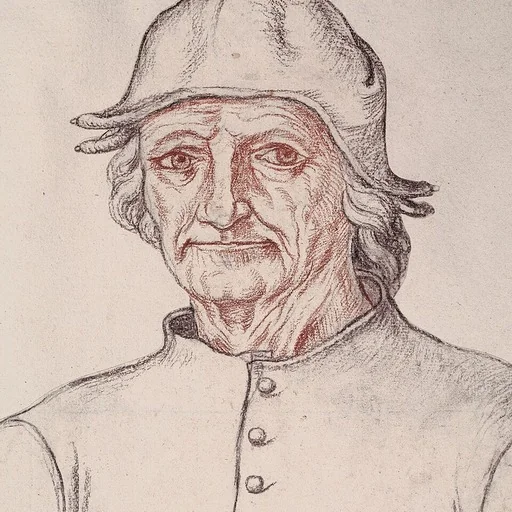
Hieronymus Bosch (; Dutch:; born Jheronimus van Aken; c. 1450 – 9 August 1516) was a Dutch painter from Brabant. He is one of the most notable representatives of the Early Netherlandish painting school. His work,…

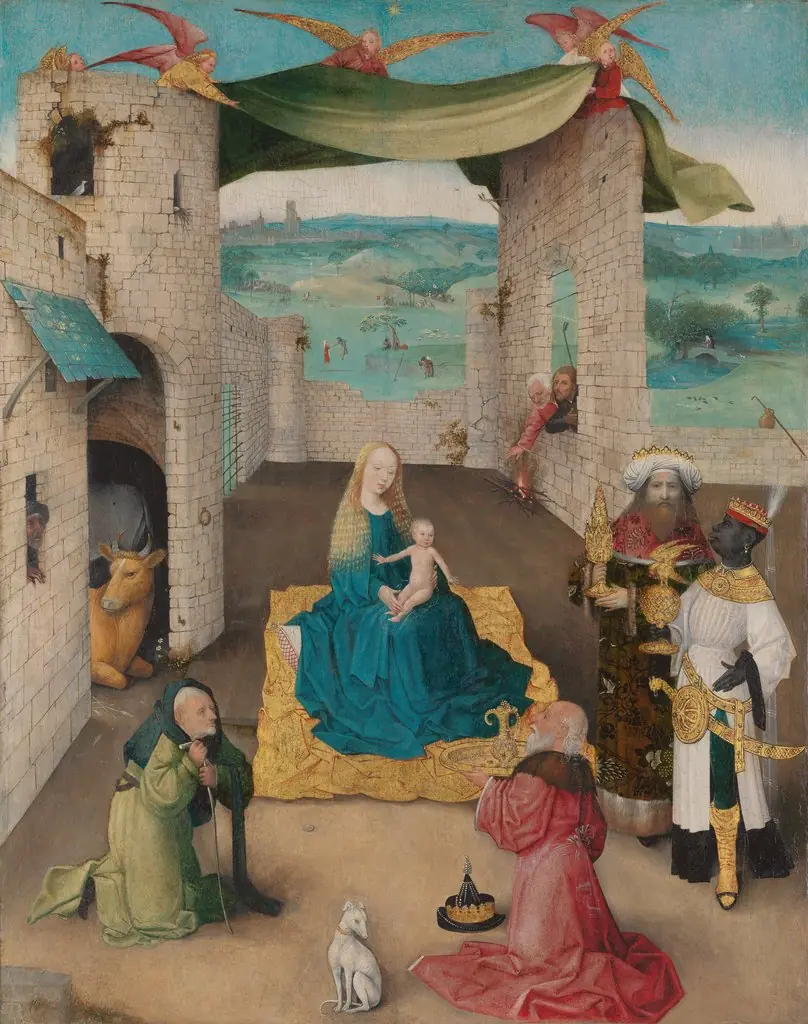
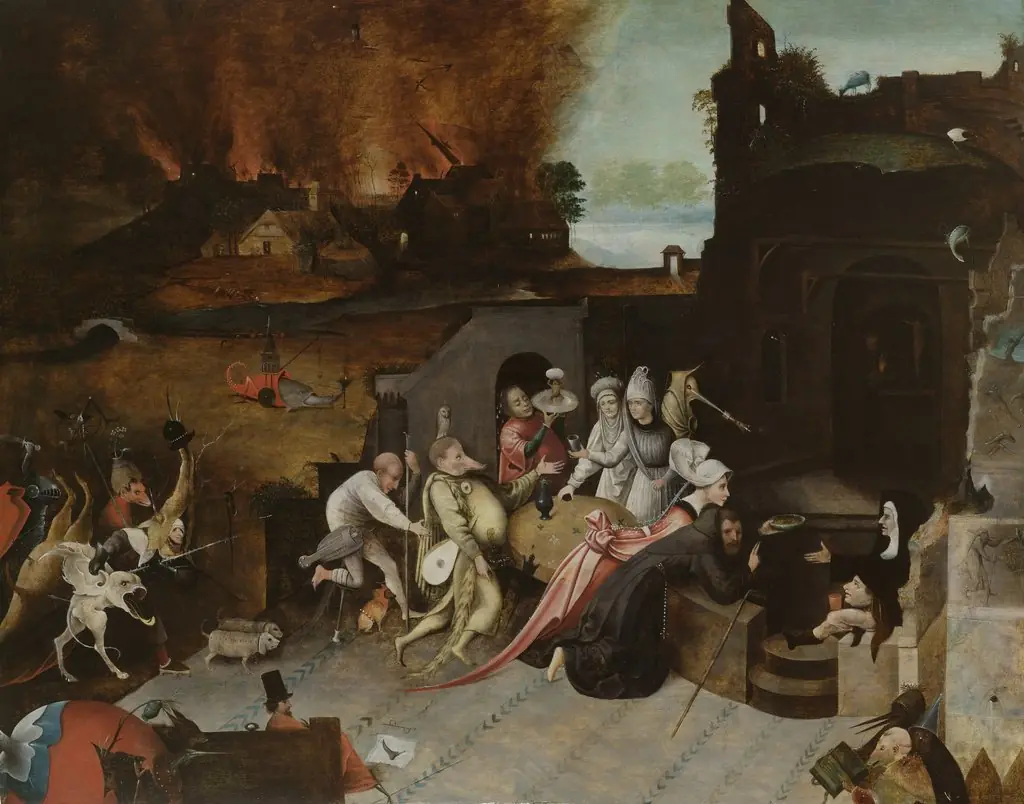
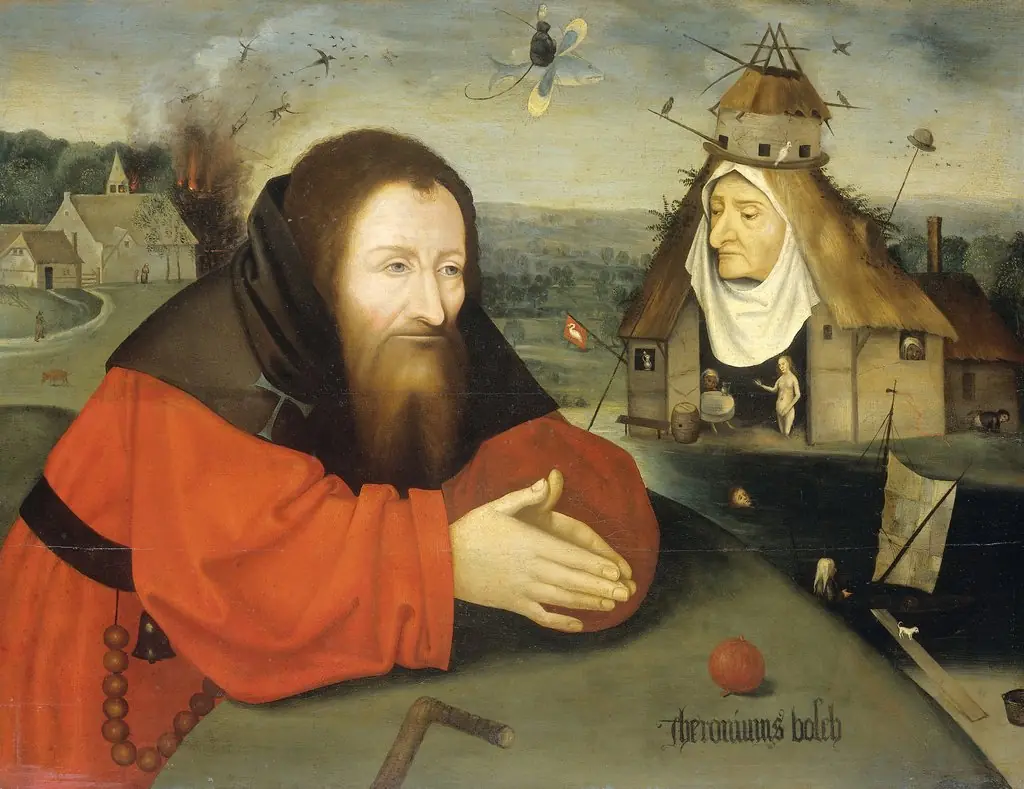
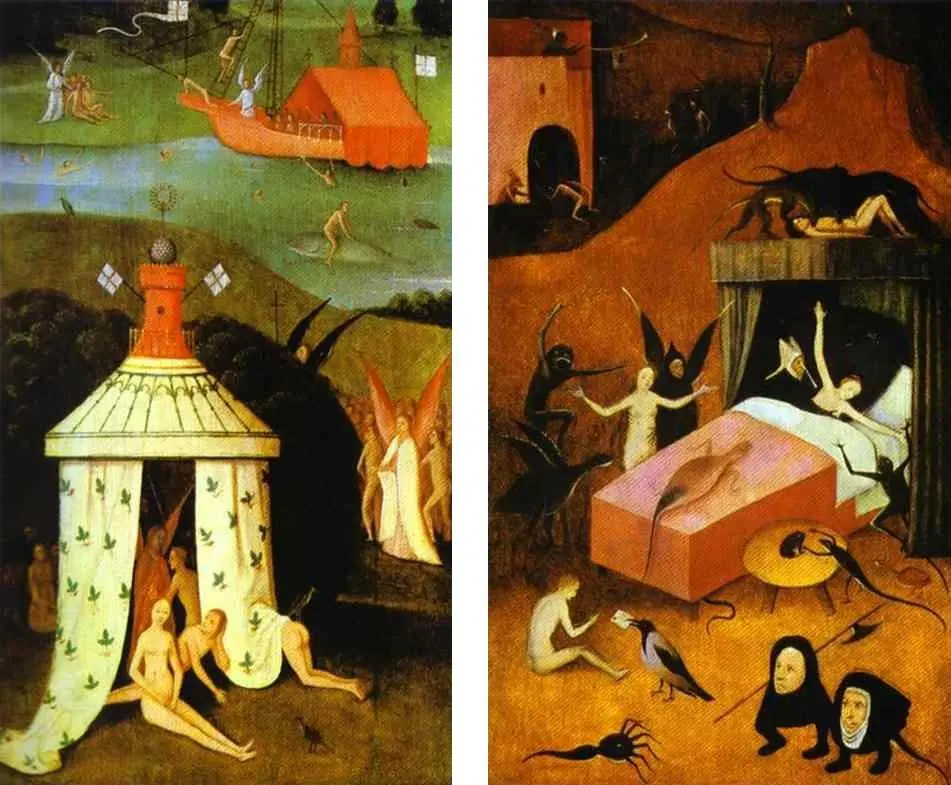
- Adoration of the Magi
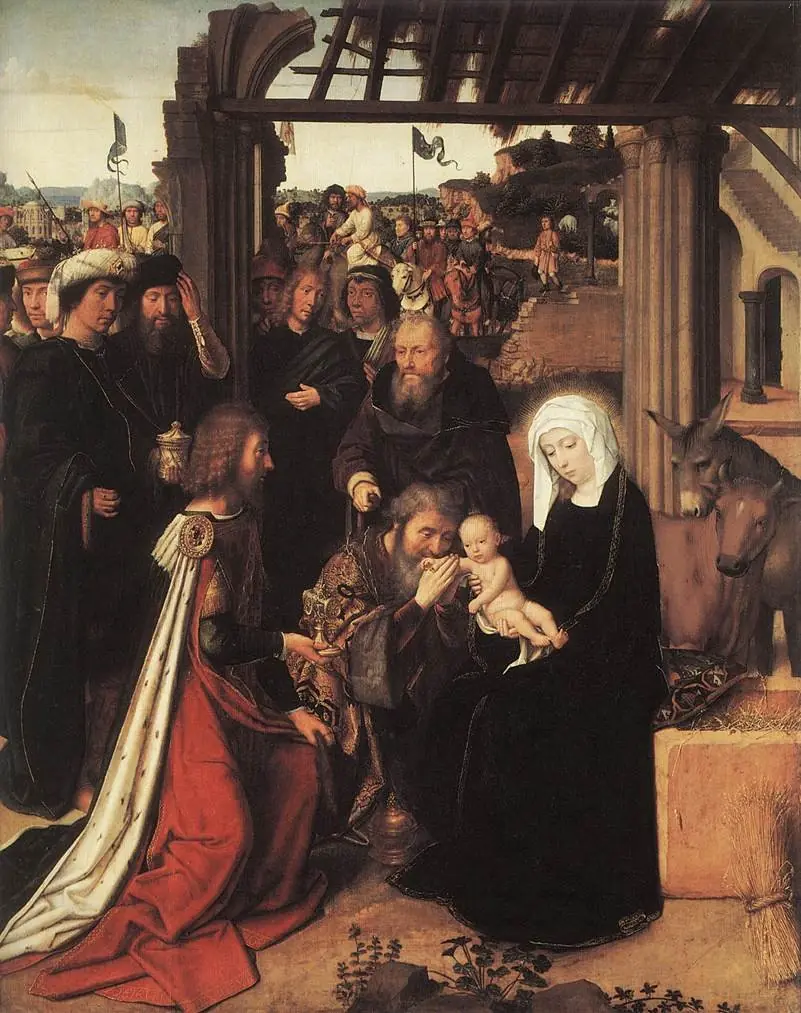 Adoration of the Magi
 The Adoration of the Magi
 De H. Maagschap
 The Small Adoration of the Magi
 Christ driving the money-changers from the Temple
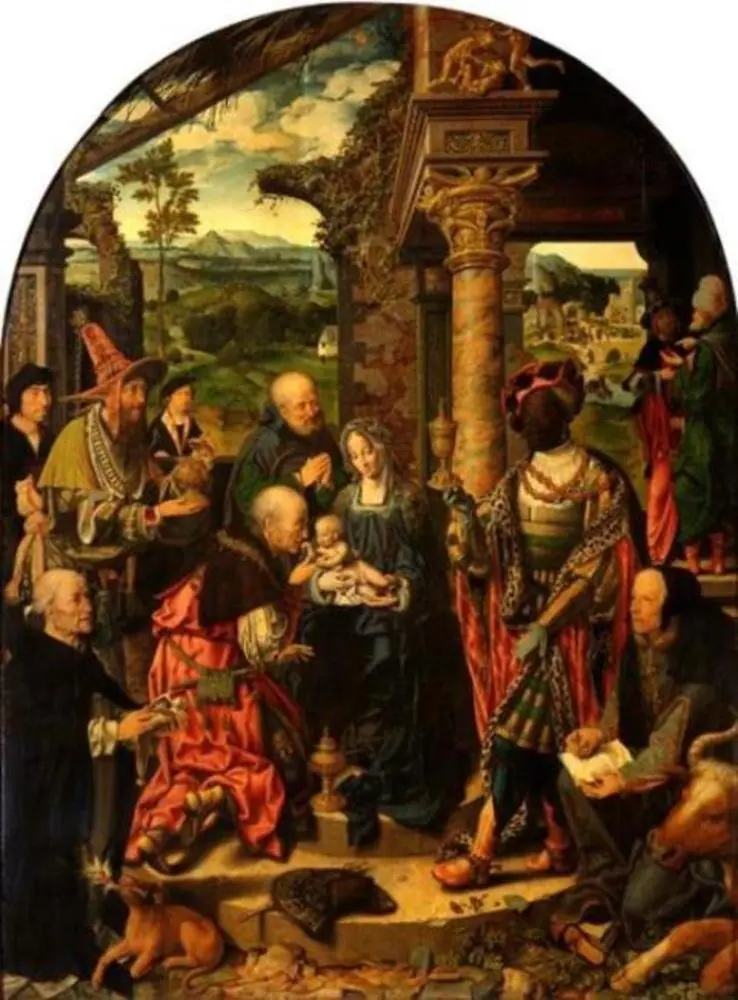 The large Adoration of the Kings
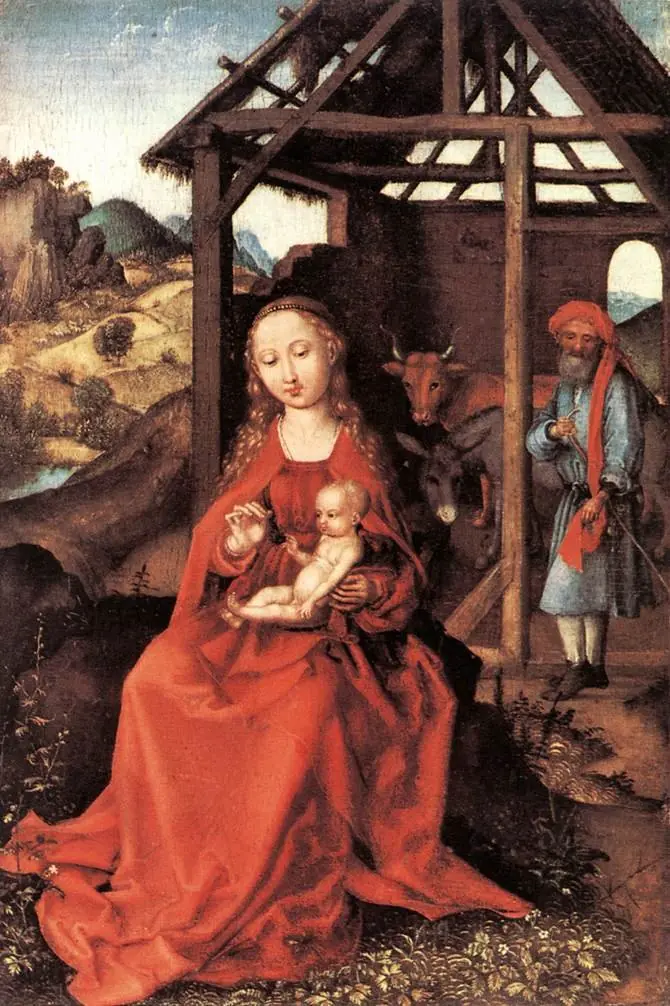 The Holy Family
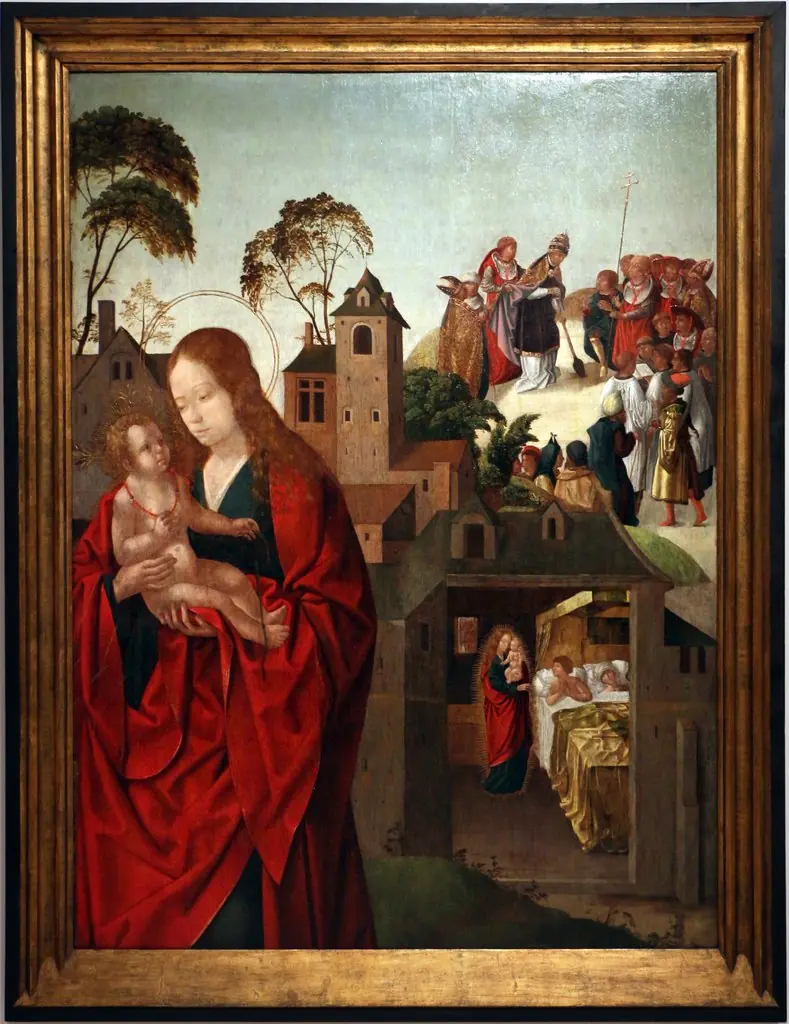 Our Lady of the Snows
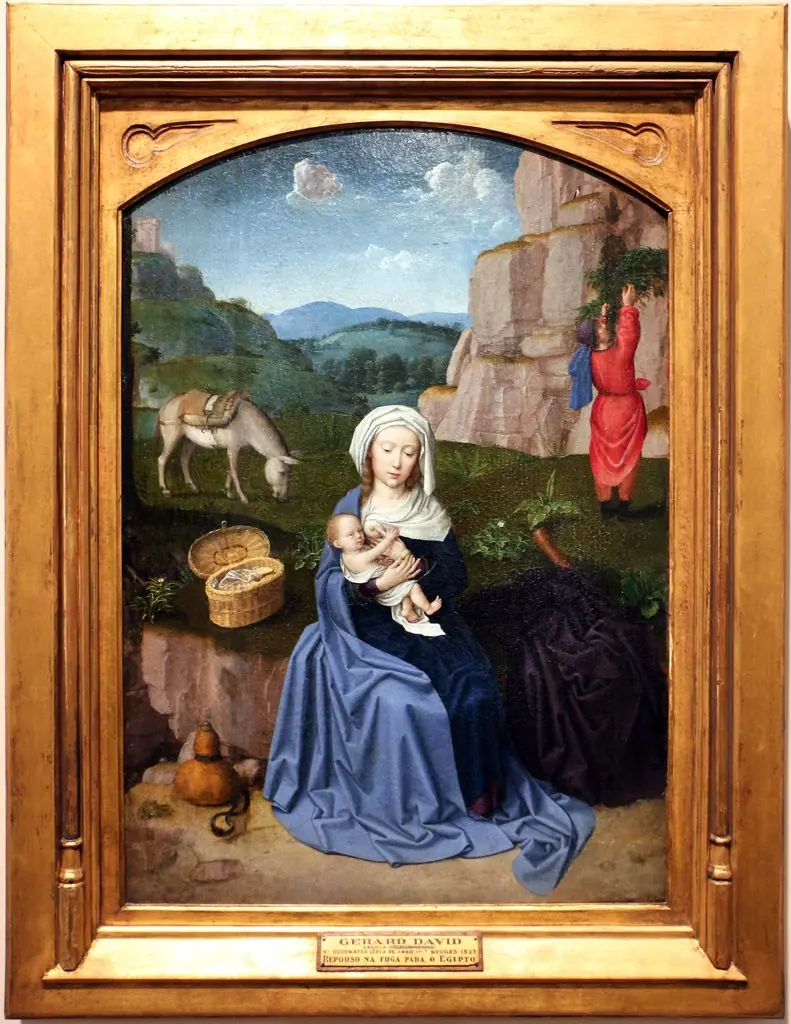 Rest on the Flight into Egypt
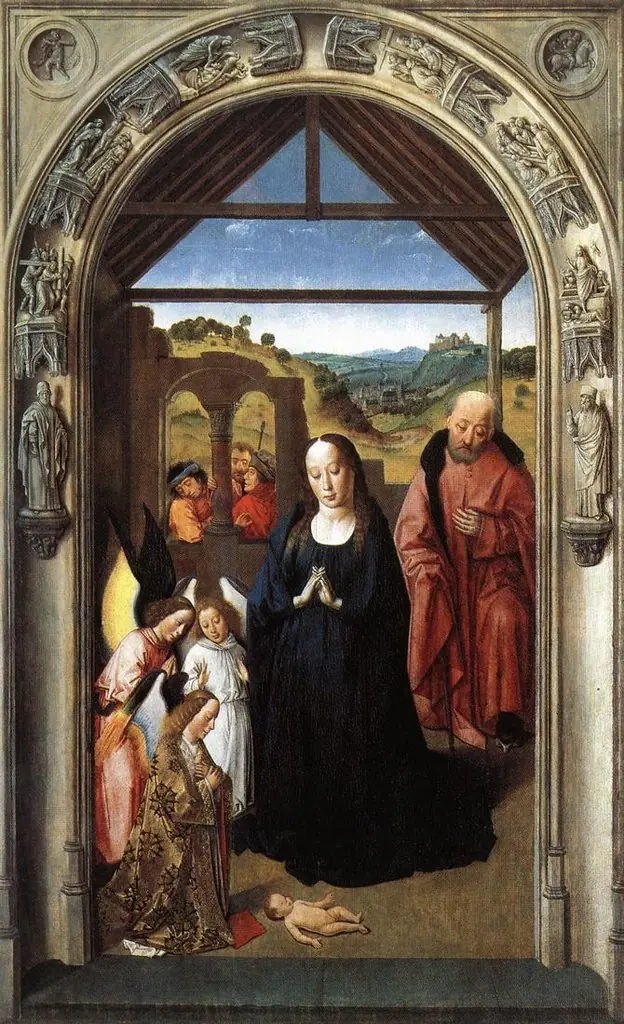 Nativity
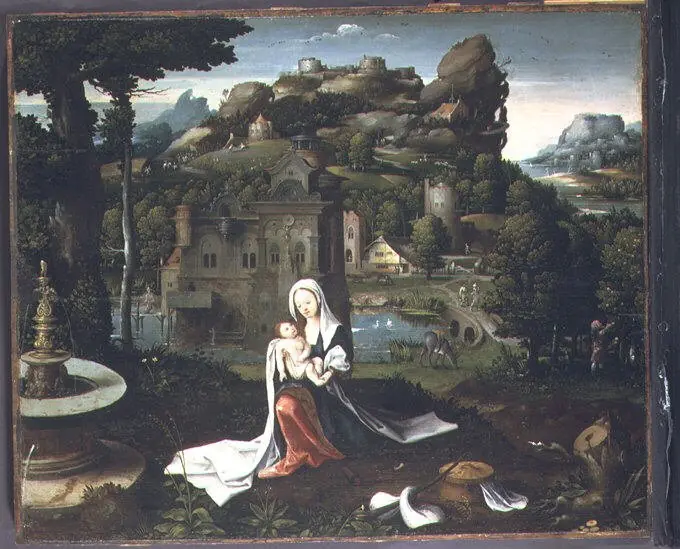 The Rest on the Flight into Egypt