Artwork
Last Judgement
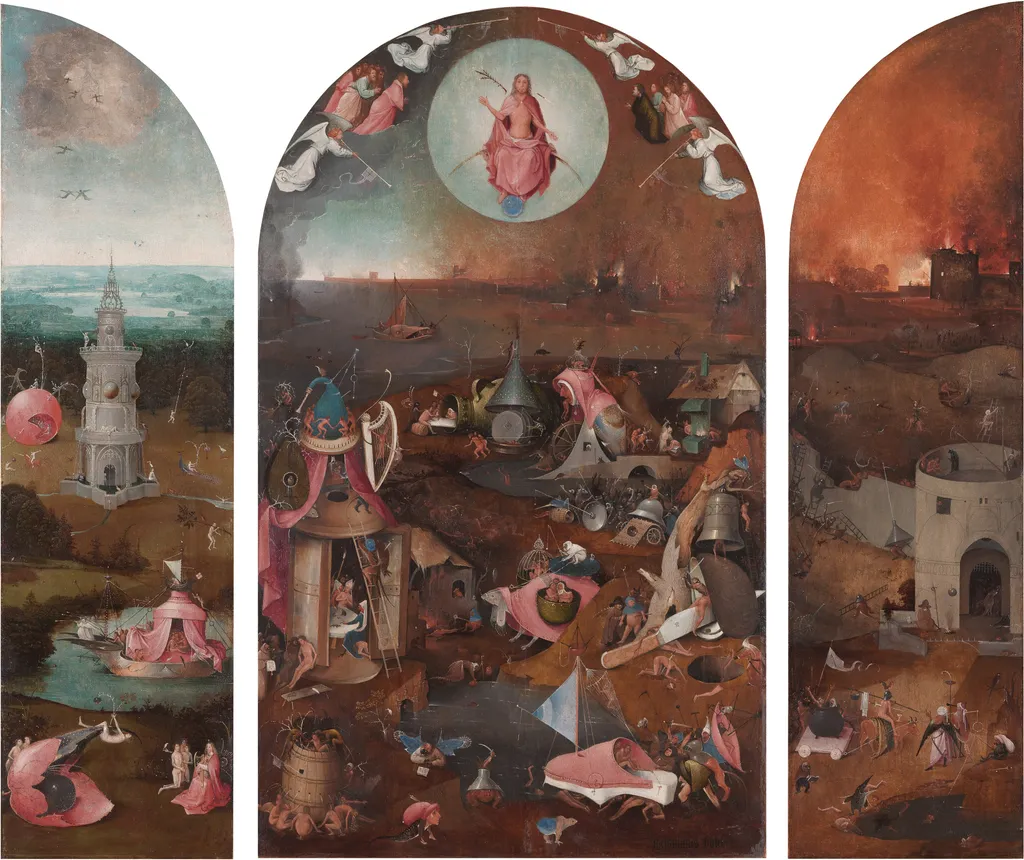
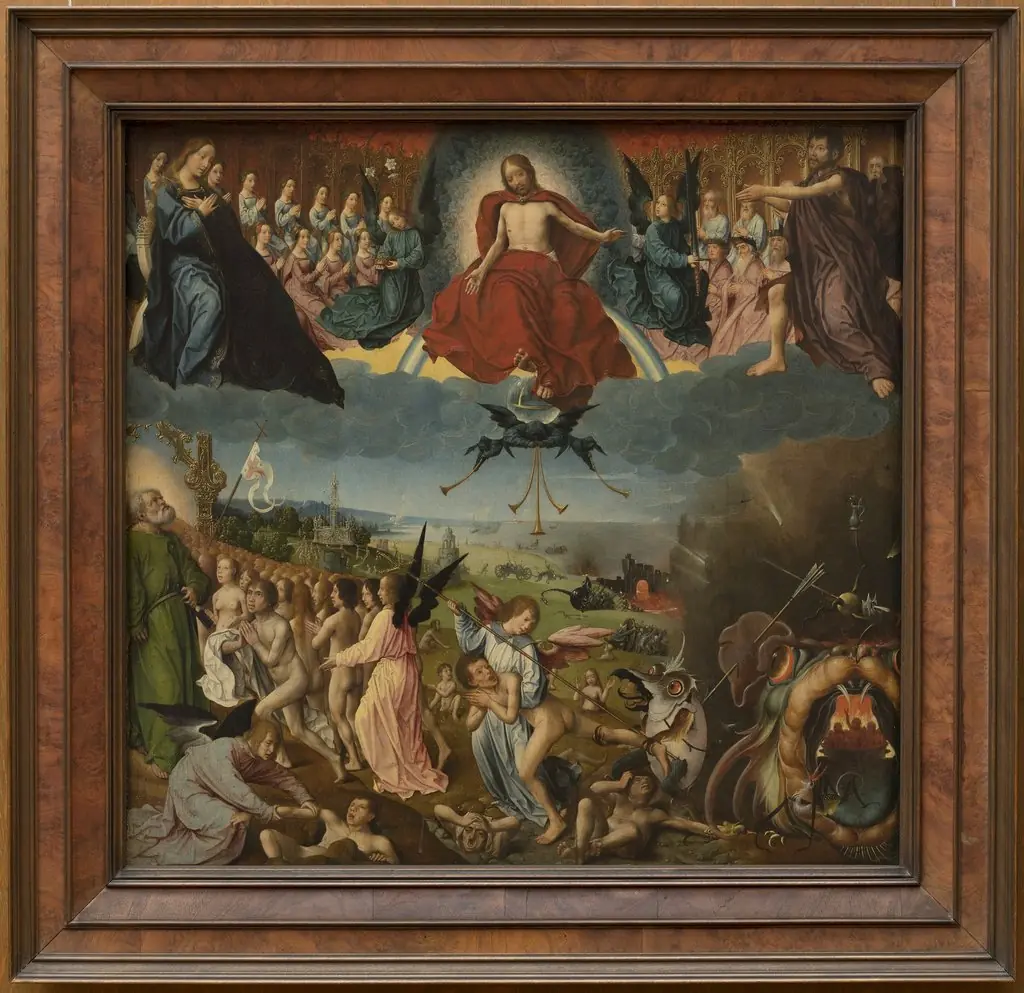
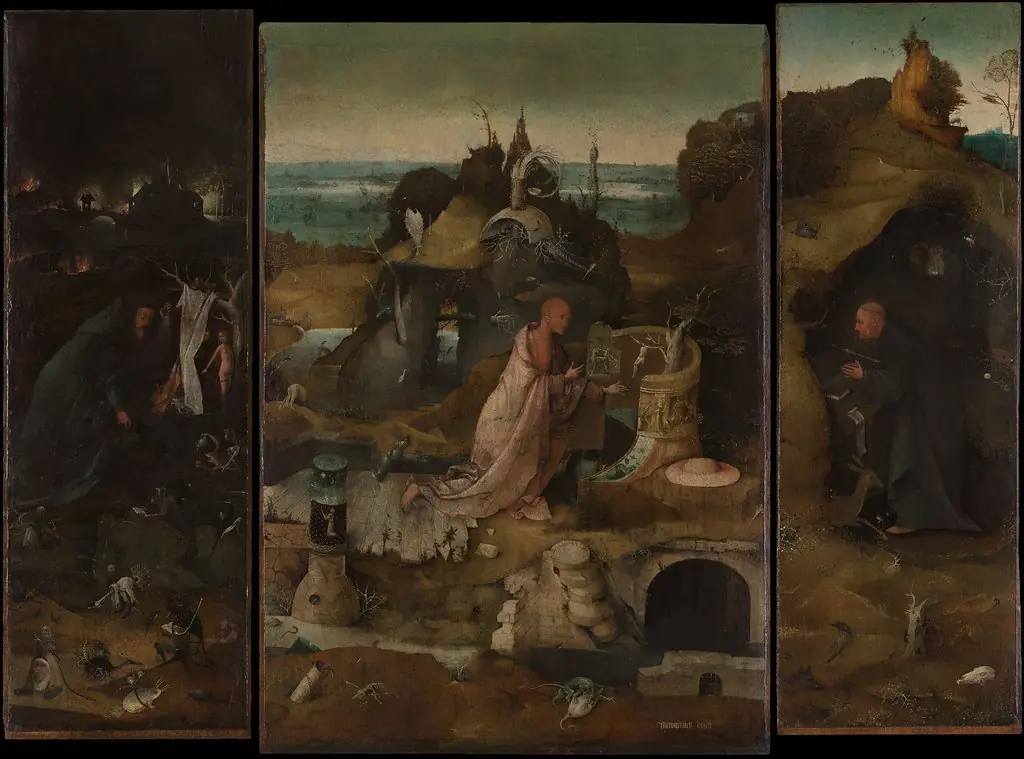
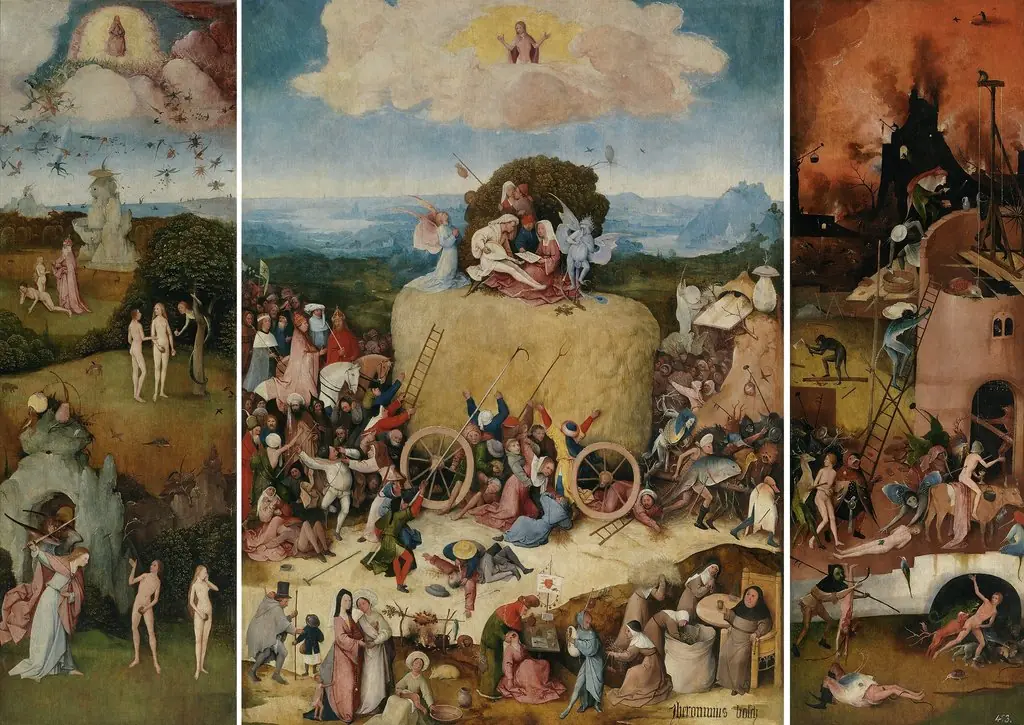
Last Judgement is an oil painting by the High Renaissance artist Hieronymus Bosch. It dates from 1500 and is held in the collection of the Groeningemuseum. The work is a three‑panel oil painting created sometime after 1486, now displayed in the Groeningemuseum in Bruges.
About this work
Subject & Meaning
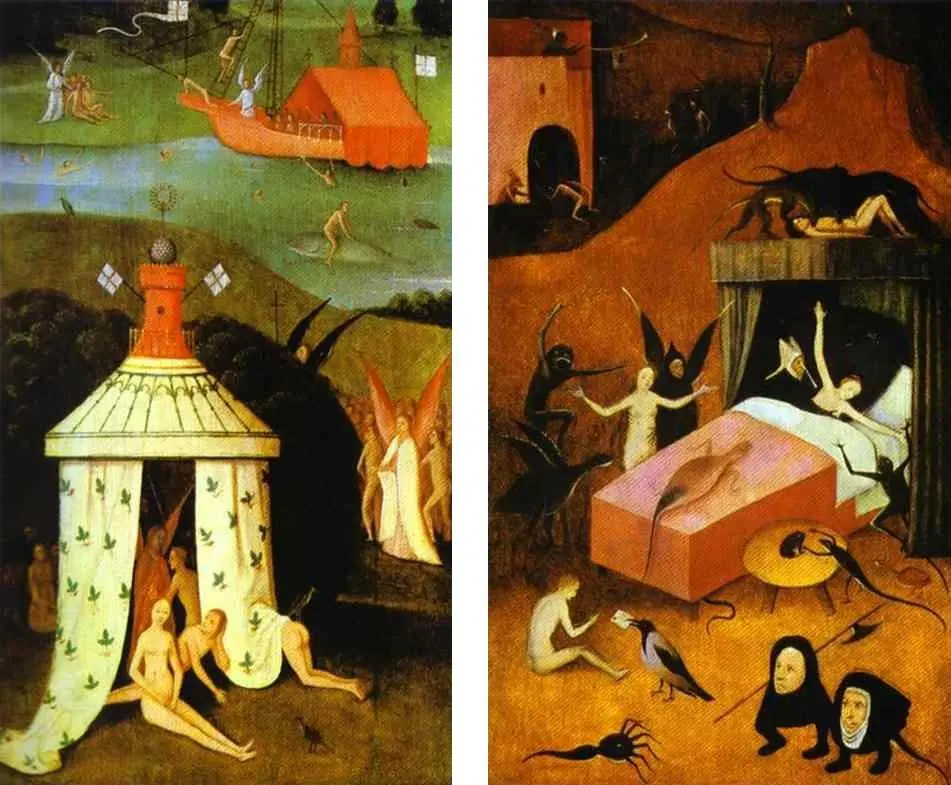
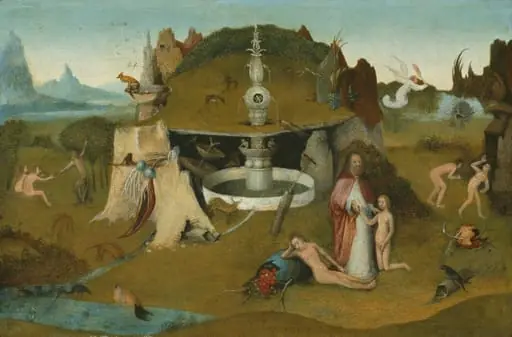
The left wing shows a serene Paradise where elected souls are conveyed by boat to a fountain of youth, a motif linked to earthly and heavenly realms.
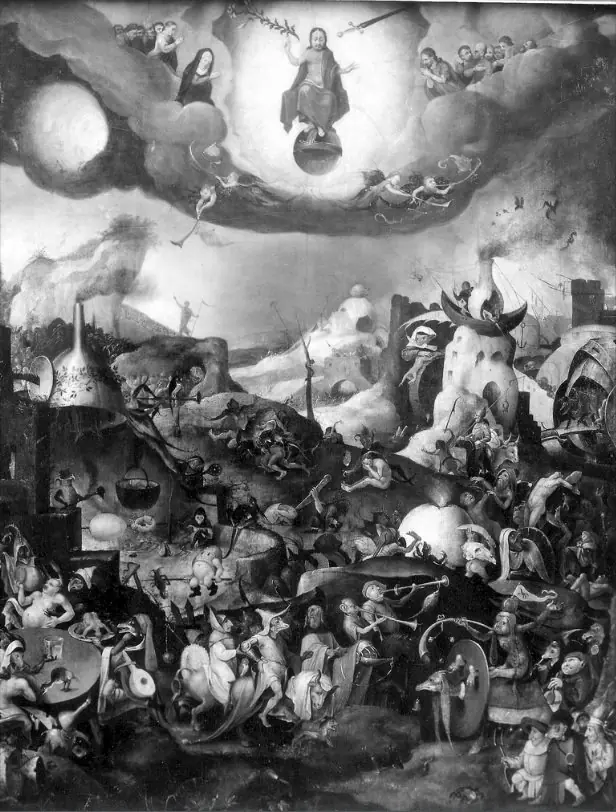
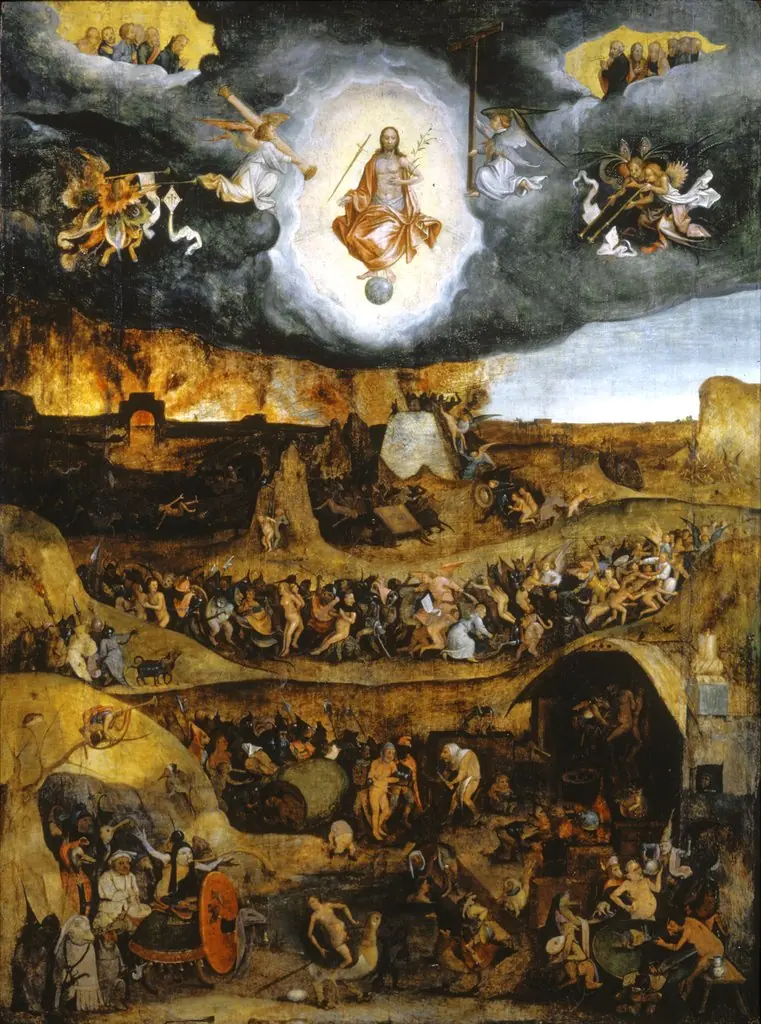
The Bruges Last Judgment depicts the Christian doctrine of final judgment through a triptych structure. The left wing shows a serene Paradise where elected souls are conveyed by boat to a fountain of youth, a motif linked to earthly and heavenly realms. The central panel presents Christ enthroned in celestial glory, flanked by trumpet-bearing angels and apostles, judging humanity below.
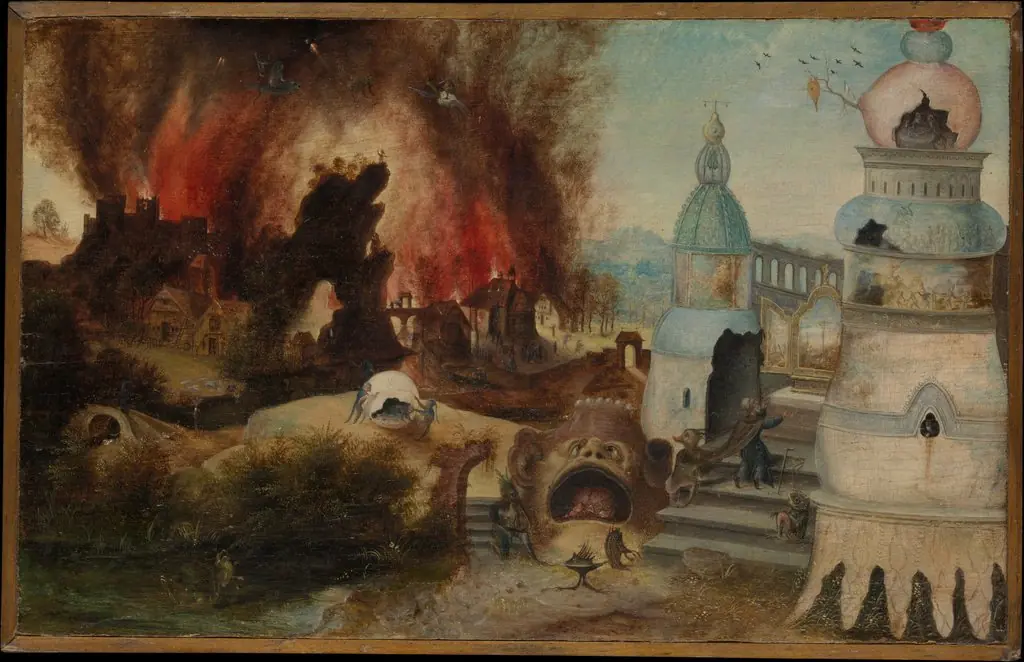
Below him, a ruined earth is filled with grotesque insect-like demons meting punishments aligned with Netherlandish proverbs, gluttonous sinners fed foul food, others crushed in mechanical contraptions, while the right wing continues torment in a besieged infernal city ablaze in the distance.
Symbolically, Bosch diverges from traditional depictions by omitting the resurrection of the dead, instead visualizing sin and its immediate earthly consequences. The fountain of youth in Paradise and the infernal machinery echo Bosch’s broader moralizing, translating textual sources like Dirc van Delf’s late-medieval treatise into painted allegory, emphasizing purification through apocalyptic fire and divine justice.
Technique & Style
The triptych is executed in oil paint on oak panels, with the external shutters painted in grisaille monochrome, a common convention for Netherlandish polyptychs of the period. The central and inner-wing panels employ a luminous oil technique, building up translucent glazes that render celestial and infernal effects. The composition is structured across three hinged oak supports, each measuring approximately 99 cm in height; when closed, the wings reduce the work to about 60.5 cm in width.
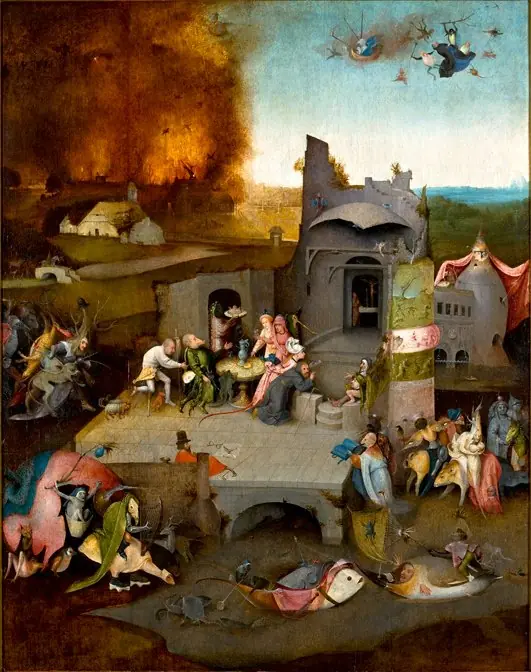
Condition reports note earlier restorations in 1936 and 1959, during which the grisaille exterior was revealed though damaged, and the painting above the inner frames was found to be lost. The grisaille exterior depicts a Coronation of Thorns in subdued tones, while the interior presents a vivid contrast between the serene left-wing Paradise and the fiery, chaotic right-wing Hell.
History & Provenance
Created between 1486 and 1505, this triptych by Hieronymus Bosch and his workshop is executed in oil on oak panel. Dendrochronological analysis confirms the wood dates to no earlier than 1486, with most scholars placing the work in the late 15th or early 16th century. The painting was originally part of the collection of Cardinal Domenico Grimani in Venice by the 1520s before passing to the Spanish Cardinal Antonio Despuig y Dameto in the early 19th century.
During the first half of the 1800s, the panels were temporarily reassembled into a single canvas, a configuration later reversed. By the late 19th century, the work entered the Paris collection of Émile Gavet. It was sold at auction in May 1906 to a buyer named Ducrey, then acquired in 1907 by Auguste Beernaert, who immediately donated it to the city of Bruges. The triptych has undergone cleaning in 1936 and restoration in 1959 and 2014.
The triptych is held in the collection of the Groeningemuseum in Bruges, Belgium. Its acquisition followed a sale at the Drouot auction house in Paris in May 1906, where it was purchased under the title 'Diableries.' In 1907, the former head of government Auguste Beernaert acquired the work from the Parisian dealer Seligmann and immediately donated it to the city of Bruges.
Prior to this, the painting belonged to the collections of Émile Gavet and, earlier, Cardinal Antonio Despuig y Dameto.
The work underwent cleaning in 1936 and further restoration in 1959, which revealed damaged grisaille paintings on the external shutters. More recently, a restoration and new framing project took place between 2014 and 2015. The triptych was exhibited in Bruges in 1907 as part of the 'Toison d'or' exhibition and was later featured in the 'Jheronimus Bosch - Visions of genius' exhibition.
Legacy
The Last Judgement triptych was collected by Emile Gavet before being acquired by the city of Bruges in 1907, and it remains in the Groeningemuseum collection today. Its later influence stemmed from repeated scholarly attention: dendrochronological dating placed its creation after 1486, and 20th‑century restorations revealed a grisaille Coronation with Thorns on the reverse of the shutters, confirming its original function as a portable devotional object. The work was featured in the 2008 film In Bruges, bringing the painting to a wider audience, and it has been cited in art‑historical literature as a key example for studying Bosch’s use of Netherlandish proverbs and his development of a distinct visual vocabulary for Heaven, Purgatory and Hell.
Overview
The work is a three‑panel oil painting created sometime after 1486, now displayed in the Groeningemuseum in Bruges. Its outer wings are rendered in a monochrome grisaille, while the interior panels feature full‑color oil on wood. The piece belongs to the limited group of eight surviving triptychs attributed to the early Netherlandish painter Hieronymus Bosch or his workshop.
Context
Created in the final decade of the 15th century, the work reflects contemporary preoccupations with eschatology and moral reckoning. Its complex iconography aligns with other Bosch triptychs that blend biblical themes with vivid, often grotesque, visual allegories to convey the consequences of earthly behavior.
Own this work as a print
Artist & collection
Artist
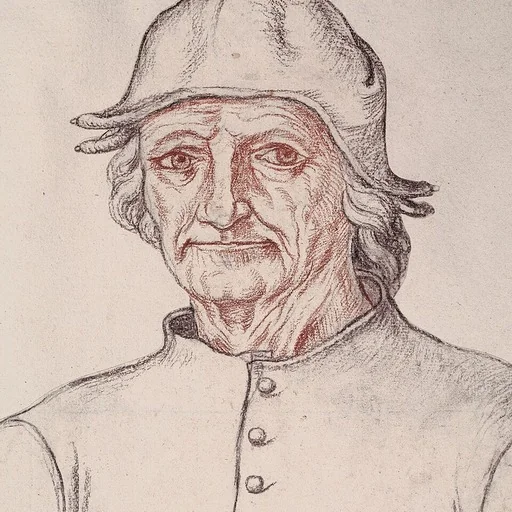
Hieronymus Bosch (; Dutch:; born Jheronimus van Aken; c. 1450 – 9 August 1516) was a Dutch painter from Brabant. He is one of the most notable representatives of the Early Netherlandish painting school. His work,…