Artwork
The Third-Class Carriage
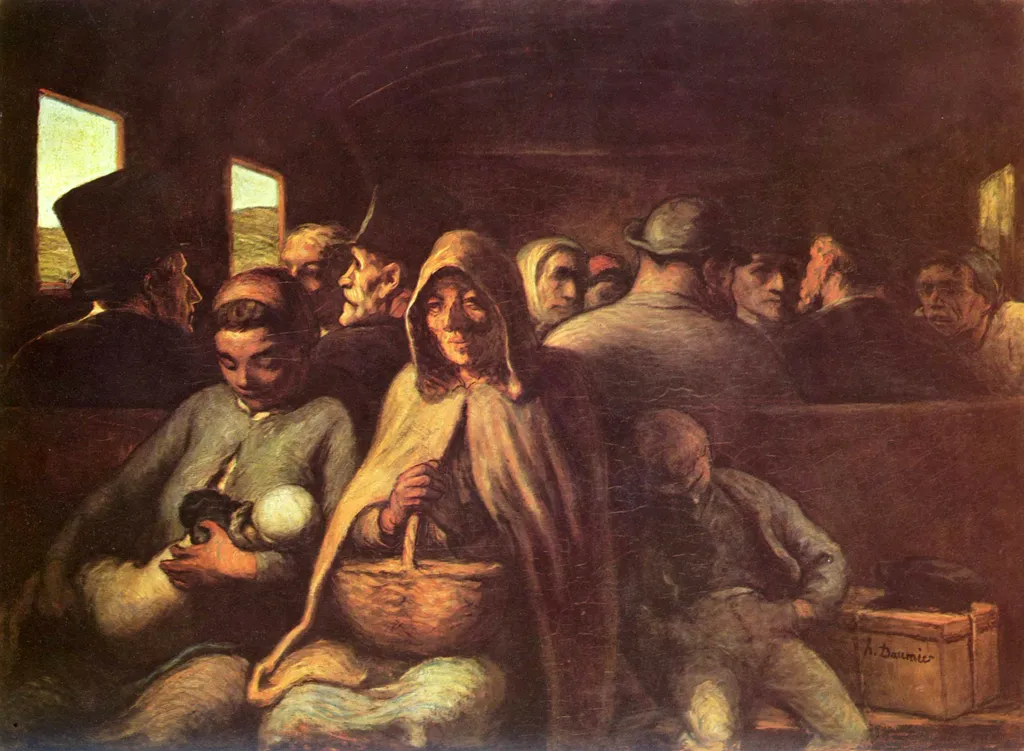
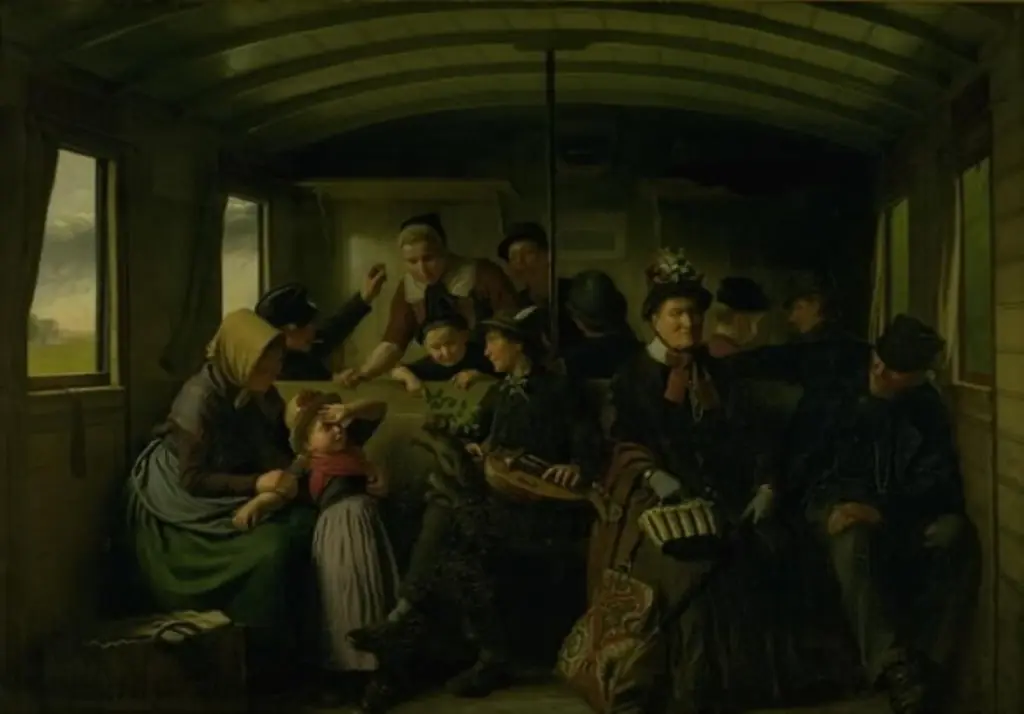
The Third-Class Carriage is an oil painting by the Realist artist Honoré Daumier. It dates from 1863 and is held in the collection of the National Gallery of Canada.
About this work
Overview
This work stands as a definitive example of his mature style, capturing the mundane yet profound dignity of the urban poor during the mid-19th century.
The Third-Class Carriage is a genre scene by Honoré Daumier depicting the daily reality of working-class travelers in a French railway carriage. Created circa 1863, the work exists in multiple versions, with a prominent oil-on-canvas iteration dated c. 1862–1864 held by the Metropolitan Museum of Art and a completed version from c. 1863–1865 in the National Gallery of Canada. Daumier portrays a crowded interior where passengers of various ages and genders are seated or standing, their faces illuminated by the dim light filtering through the carriage windows.
The composition focuses on the physical proximity and shared exhaustion of the figures, emphasizing their poverty and fortitude without romanticizing their condition. A woman in the foreground clutches a basket, flanked by a seated man and a standing figure behind them, creating a triangular arrangement that anchors the scene. Executed with Daumier's characteristic loose brushwork and somber palette, the painting reflects his lifelong commitment to social realism and his critique of class disparities.
This work stands as a definitive example of his mature style, capturing the mundane yet profound dignity of the urban poor during the mid-19th century.
Subject & Meaning
The work focuses on ordinary passengers of the lower‑class rail service, highlighting the social stratification of mid‑nineteenth‑century France. A woman clutching a basket occupies the foreground, flanked by a seated man and a standing figure behind them, suggesting a collective endurance of travel hardships and the anonymity of public transport.
Technique & Style
Daumier employs a restrained palette of grays and browns, using chiaroscuro to model the figures and give the interior a palpable depth. Broad, energetic brushstrokes convey the texture of clothing and the worn wood of the carriage, while the contrast of light and shadow emphasizes the central group amid the surrounding crowd.
History & Provenance
Painted during a period when Daumier turned his attention to contemporary urban life, The Third‑Class Carriage was later acquired by the National Gallery of Canada. Its inclusion in the museum’s holdings reflects the artist’s enduring reputation for documenting everyday scenes with both social insight and painterly vigor.

Own this work as a print
Artist & collection
Artist
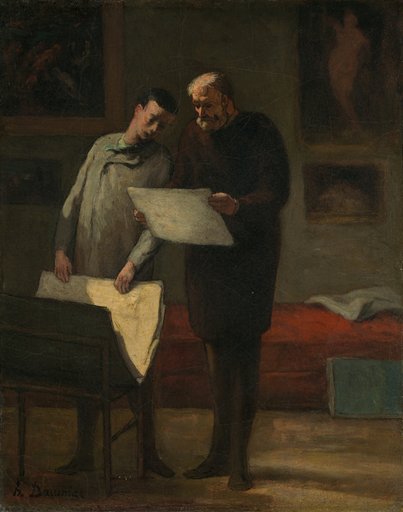
Honoré-Victorin Daumier (French: ; 26 February 1808 – 10 or 11 February 1879) was a French painter, sculptor, and printmaker, whose many works offer commentary on the social and political life in France, from the…








![Interieur d'un omnibus [bottom half], by Charles Maurand](https://artifactworldgallery.com/img/charles-maurand--interieur-d-un-omnibus-bottom-half--56e13655b1da7619-w320.webp)