Artwork
Bladelin Triptych
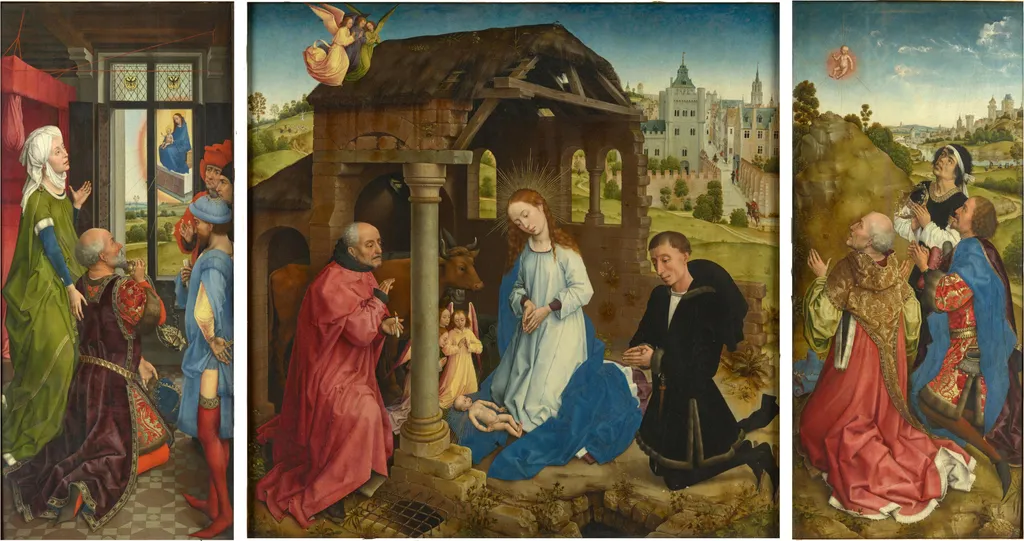
Bladelin Triptych is an oil painting by the Northern Renaissance artist Rogier van der Weyden. It dates from 1446 and is held in the collection of the Gemäldegalerie Berlin.
About this work
This triptych by Rogier van der Weyden shows three panels about Jesus’ birth. It’s painted in oil around 1450. The work is kept in Berlin.
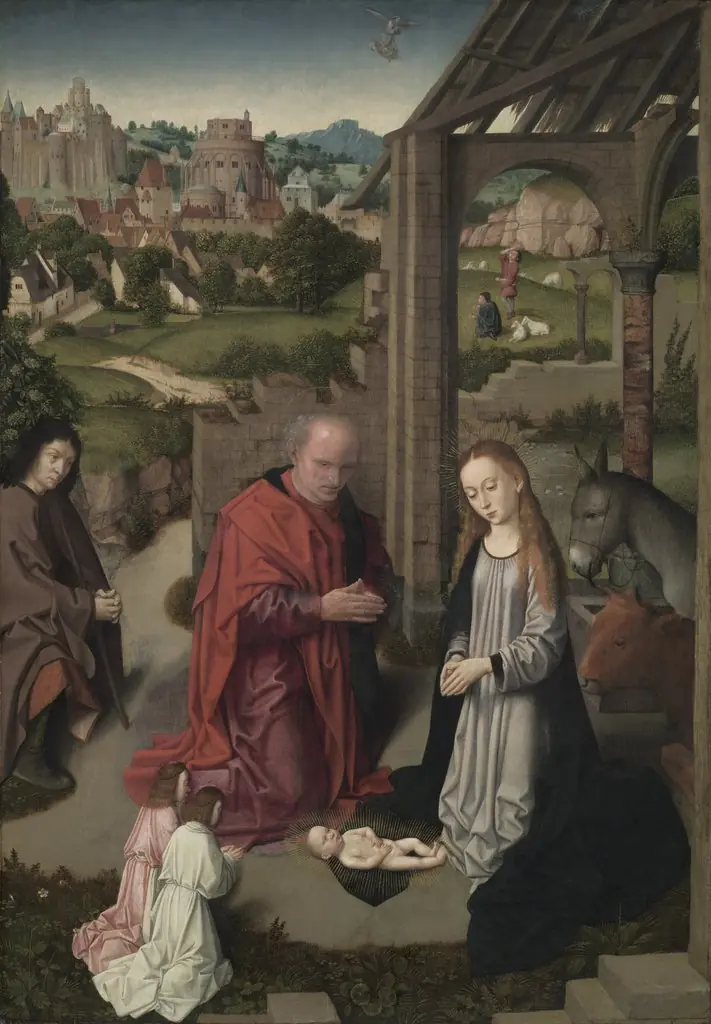
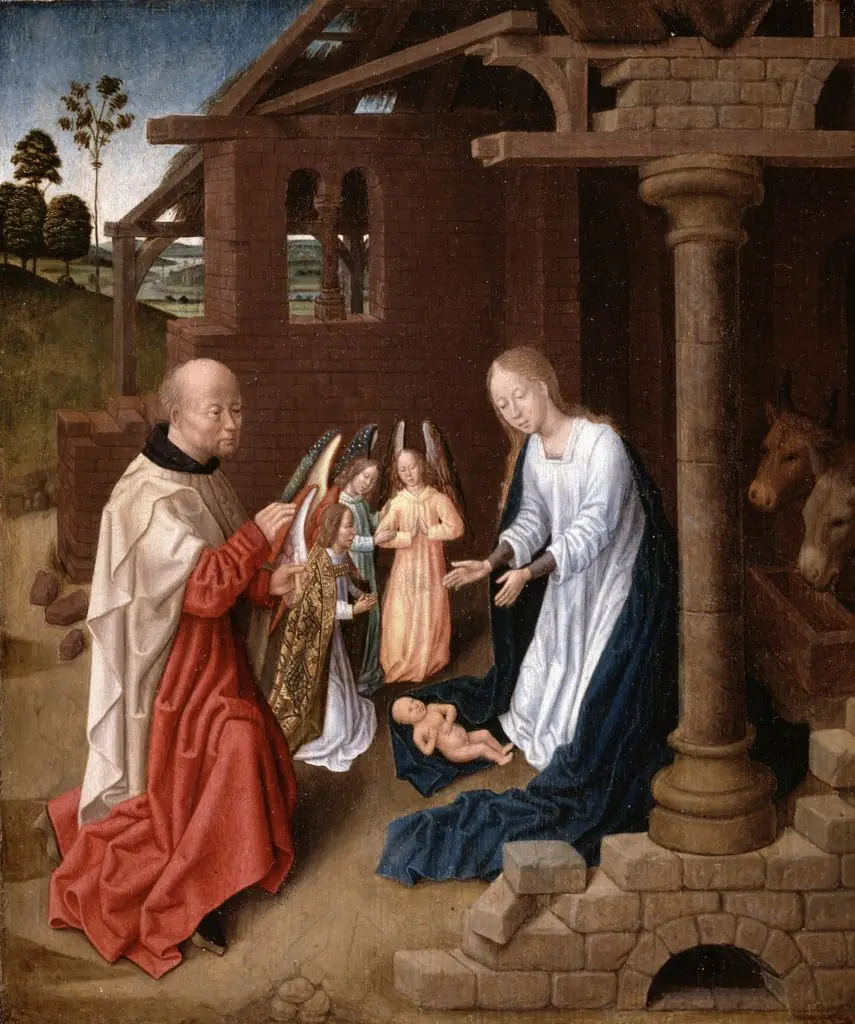
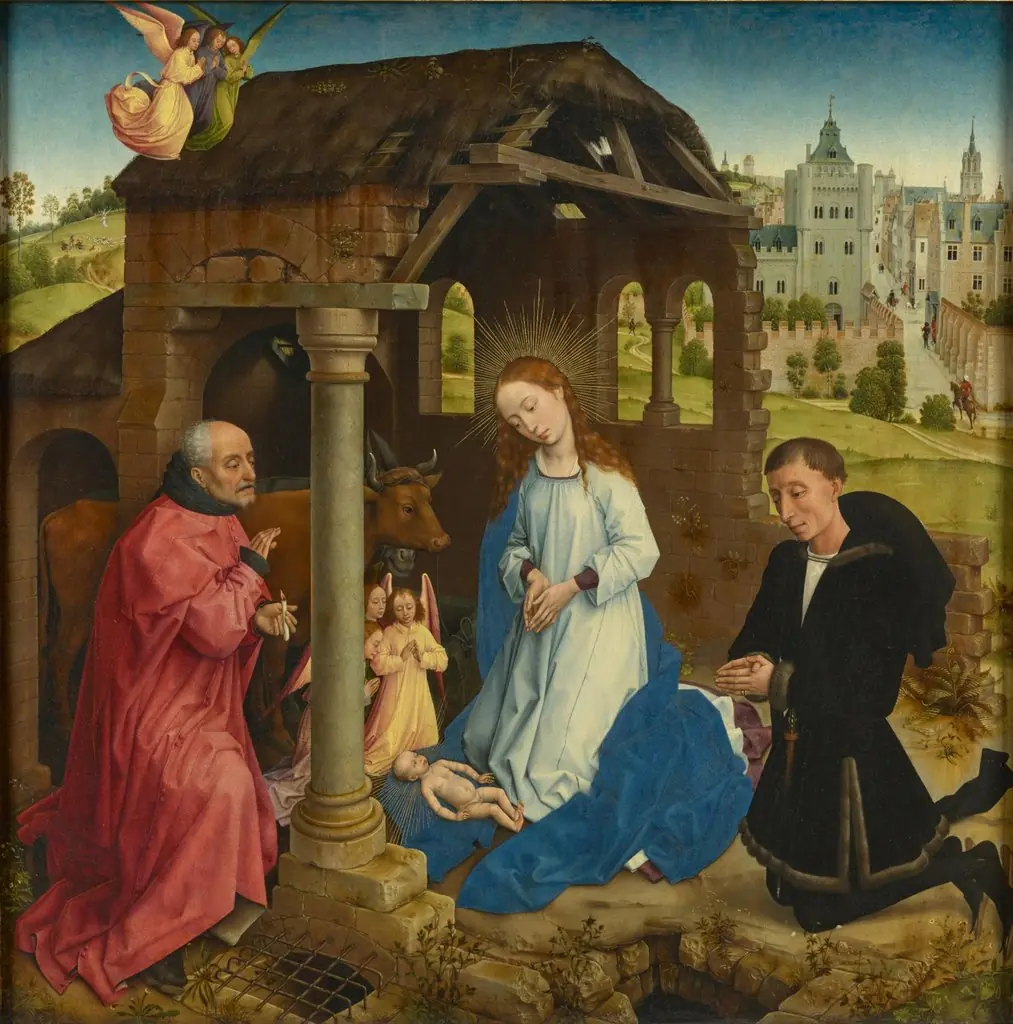
The center panel shows a nighttime Nativity with Mary, Joseph, and the baby. This is the only nativity scene we know for sure is by van der Weyden.
Look for another painting by Rogier van der Weyden next.
Subject & Meaning
The side panels expand this narrative to universal significance, representing the entire world's recognition of Christ's coming.
The Bladelin Triptych depicts the Nativity of Jesus as its central subject, with the birth and adoration of Christ in a half-ruined Romanesque stable at Bethlehem. The composition draws from visionary texts by Pseudo-Bonaventura and Saint Birgitta of Sweden, notably symbolizing Christ's divine light through Joseph's extinguished candle, rendered obsolete by the infant's radiance.
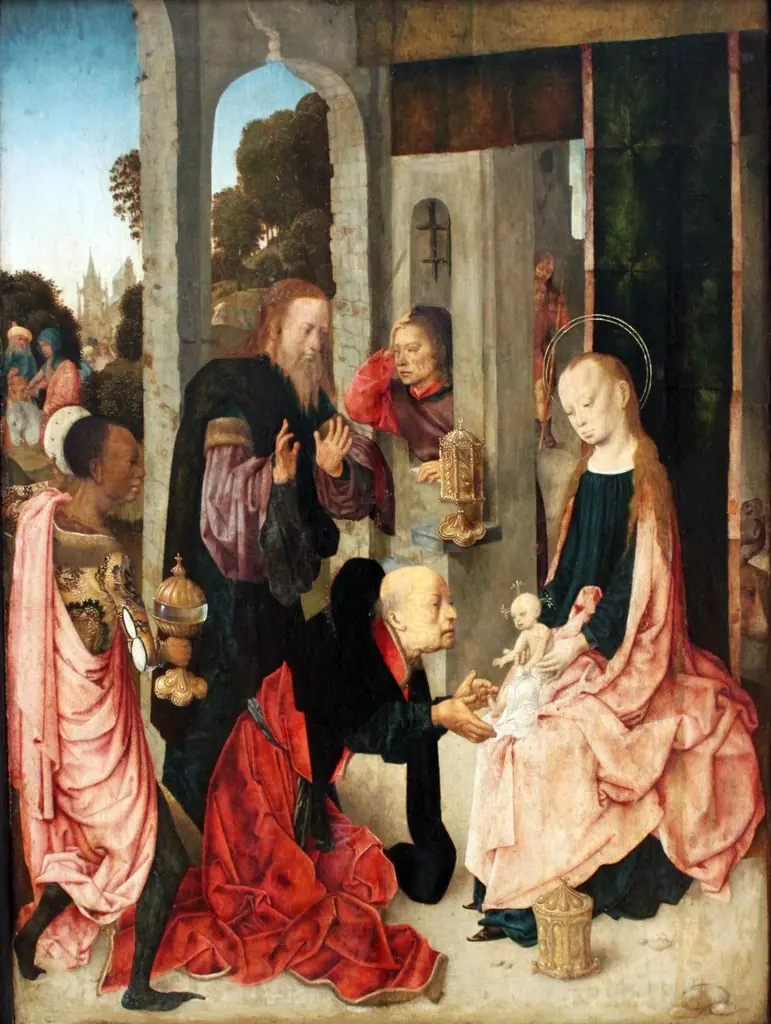
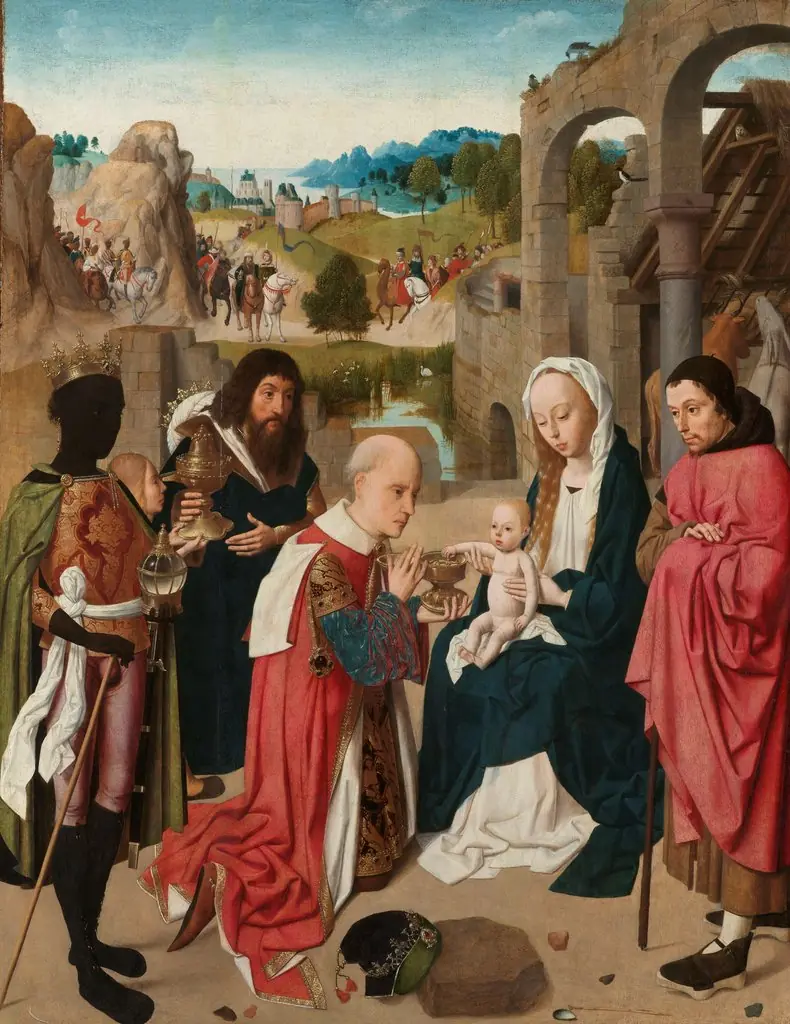
The side panels expand this narrative to universal significance, representing the entire world's recognition of Christ's coming. The left wing shows Emperor Augustus consulting the Tiburtine Sibyl, who reveals a vision of the Virgin and Child; the emperor kneels in submission of his worldly power. The right wing depicts the three Magi arriving in Bethlehem to offer their worship. Together, these scenes present earthly and pagan authorities acknowledging heavenly sovereignty.
The exterior grisaille panels display the Annunciation, with Gabriel's scroll bearing "AVE GRAZIA PLENA." The donor, possibly Pieter Bladelin, appears kneeling in the central panel, integrated into the sacred event in the place typically reserved for shepherds or kings, symbolizing Burgundian court patronage of this new world order.
Technique & Style
The Bladelin Triptych is executed in oil paint on oak panel, a typical support for Early Netherlandish altarpieces. The central panel measures 93.5 by 92 centimeters, with the left wing 93.5 by 41.8 cm and the right wing 93.5 by 41.5 cm. The outer surfaces of the wings were later overpainted in grisaille with an Annunciation scene, showing the Virgin Mary to the left holding a lily and the Angel Gabriel to the right bearing the inscription “AVE GRAZIA PLENA”. The interior panels depict the Nativity of Jesus, the vision of Augustus and the Sibyl, and the arrival of the Magi, all rendered with naturalistic detail and complex spatial perspective.
The composition draws on Robert Campin’s Nativity and incorporates motifs from the Speculum Humanae Salvationis and the Legenda Aurea, linking the birth of Christ to imperial prophecy and universal salvation. The work was created around 1450 for the church of Saints Peter and Paul in Middelburg, likely commissioned by Pieter Bladelin, and has been housed in the Gemäldegalerie, Berlin, since 1834.
History & Provenance
The Bladelin Triptych was created by Rogier van der Weyden around 1450, with one source also recording a date of 1446. It was likely commissioned by Pieter Bladelin (c. 1410–1472), treasurer of Philip the Good, Duke of Burgundy, who founded the town of Middelburg in Flanders in 1450 and devoted himself to its construction. The work was intended for the new Saints Peter and Paul church there, which was consecrated by Bishop Jean Chevrot shortly before his death in 1460, and the altarpiece was donated to that church, possibly by Bladelin himself, in 1460.
The identification rests in part on a detailed depiction of a castle in the central panel, identified with Middelburg and later reused as an illustration of the town in Antonius Sanderus' Flandra illustrata of 1541. Around 1630 the triptych was recorded in the Bruges residence of the Countess of Izegem, heiress of Middelburg, when a copy was made that remains in the local church. The work has belonged to the Gemäldegalerie in Berlin since 1834, having been purchased in Brussels that year.
Doubts about Bladelin's patronage persist because the altarpiece shows only a single male donor in Burgundian court dress, whereas custom would have expected him to appear alongside his wife, Margerite van de Vageviere.
The Bladelin Triptych has been held in the collection of the Gemäldegalerie in Berlin since 1834, having been acquired in Brussels that same year. It is currently displayed in Room IV of the museum's painting gallery. While the work was originally donated to the church of Saints Peter and Paul in Middelburg around 1460, it was recorded in the Bruges residence of the Countess of Izegem by approximately 1630.
A copy of the altarpiece remains in the Middelburg church today. The sources do not list specific temporary exhibition loans or modern show histories beyond its permanent installation.
Context
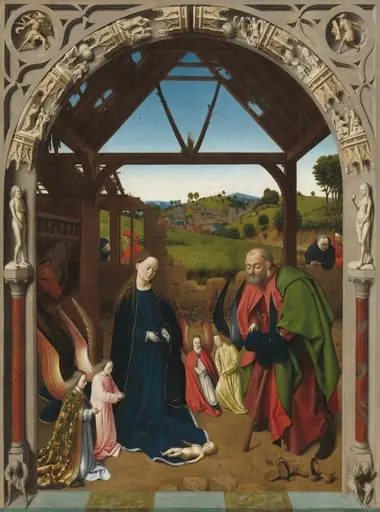
Created around 1450 near the end of Rogier van der Weyden's career, the Bladelin Triptych stands as the only nativity scene definitively attributed to the artist. The work represents a significant evolution from van der Weyden's training under Robert Campin; while the composition draws heavily on Campin's 1420 Dijon Nativity, van der Weyden modernized the perspective and relocated parallel narratives to the side panels to create a less crowded central image.
Scholars note the triptych's unique iconographic synthesis, which combines mystical texts by Pseudo-Bonaventura and visions of Saint Birgitta of Sweden with legends from the Legenda Aurea. This combination creates a universal scope, depicting the entire world from east to west acknowledging the new divine order. Although traditionally linked to Pieter Bladelin, the absence of a donor portrait for his wife has generated debate regarding the commission's specific origins.
Overview
The Bladelin Triptych, also known as the Middelburg Altarpiece, is an oil-painted three‑panel work dating to roughly 1450. Executed by Rogier van der Weyden near the end of his career, the central panel presents a nocturnal Nativity scene featuring Mary, Joseph, and the infant Christ. The altarpiece is presently housed in Berlin.
Artist & collection
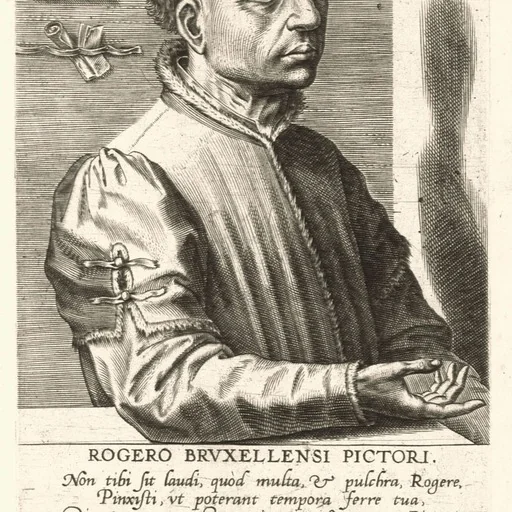
Artist
Rogier van der Weyden (Dutch:; 1399 or 1400 – 18 June 1464), initially known as Roger de la Pasture (French: ), was an early Netherlandish painter whose surviving works consist mainly of religious triptychs,…