Artwork
The Annunciation
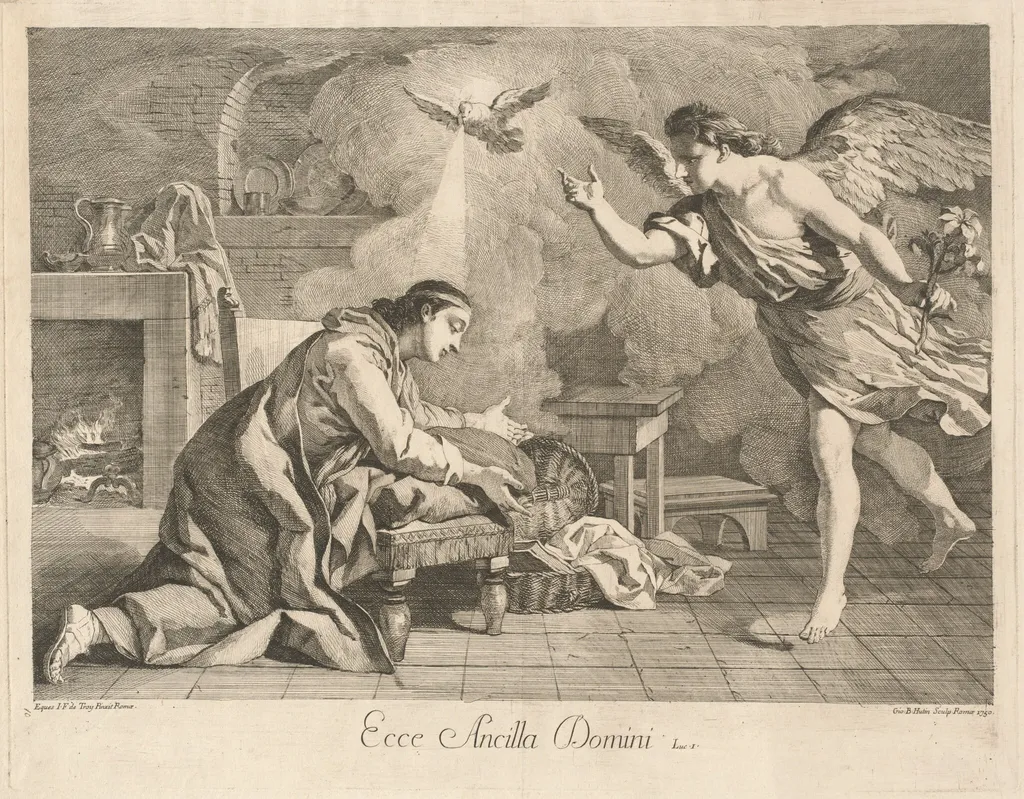
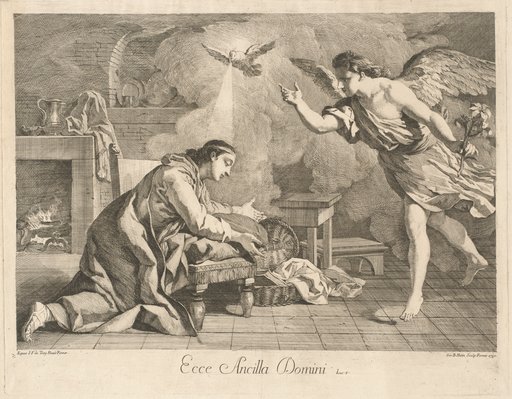
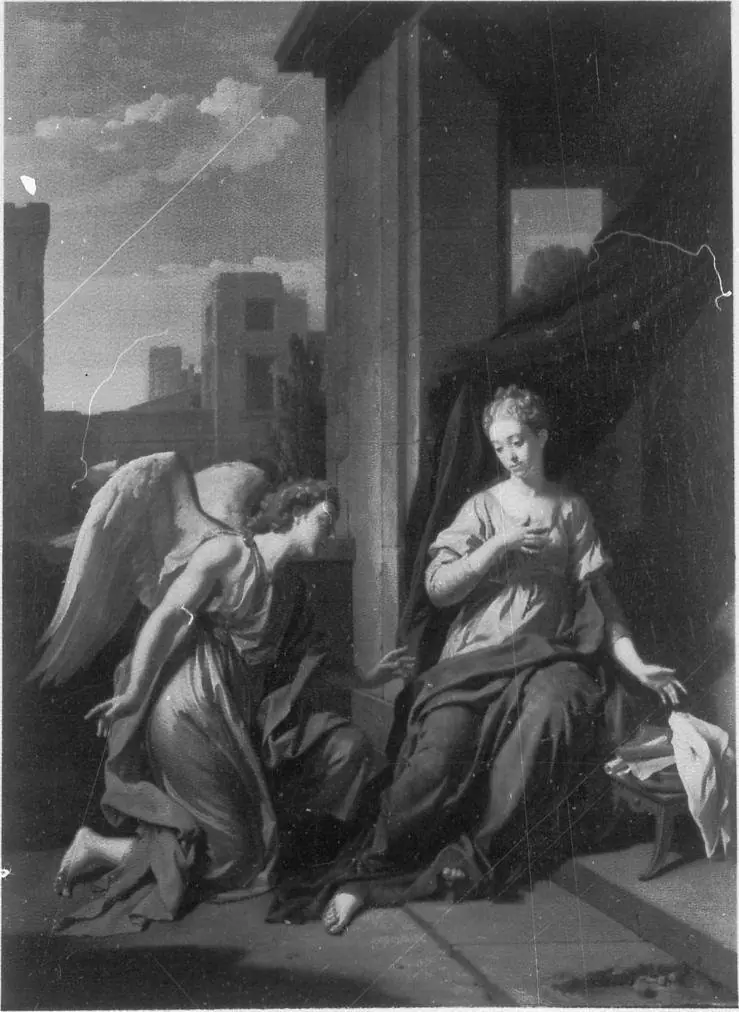
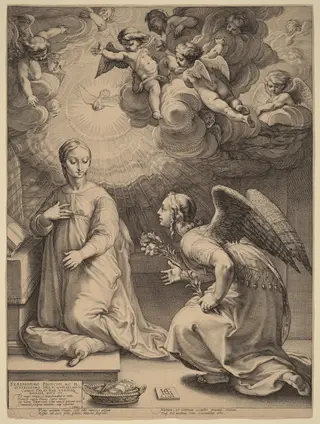
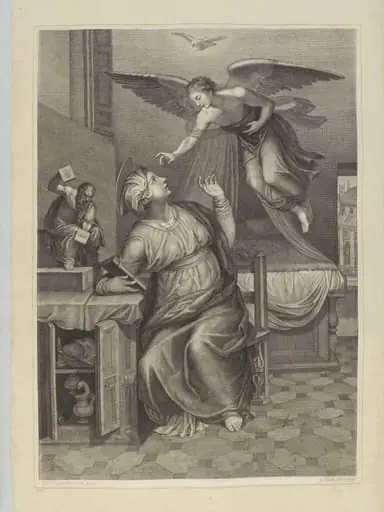
The Annunciation is an ink print by the Romanticist artist Jean-Baptiste Hutin. It dates from 1750 and is held in the collection of the National Gallery of Art.
- Inscription
- Inscribed:lower left in plate: Eques I.F. de Troy Pinxit Romae.;lower center in plate: Ecce Ancilla Domini Luc I.; lower right in plate: Gio. B Hutin Scul Romae 1750.; by later hand, lower left in pen and ink: 10
About this work
Overview
The composition centers on Mary’s kneeling figure and the hovering angel, framed by modest domestic details.
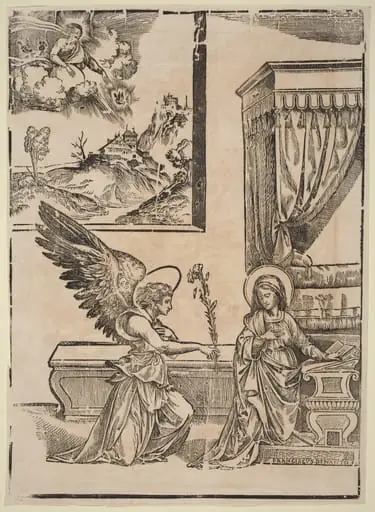
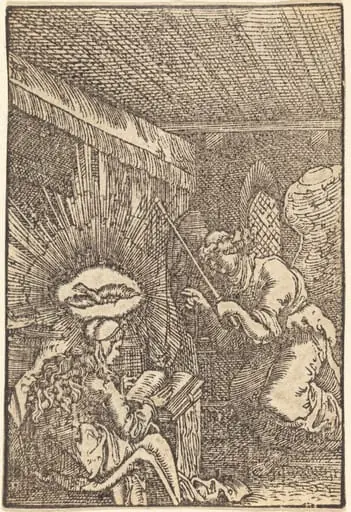
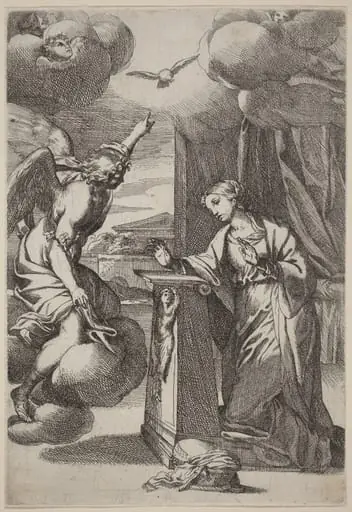
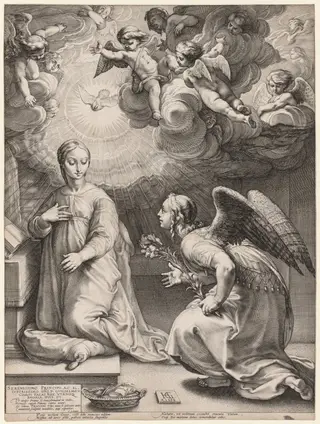
Created in 1750, this etching by Jean-Baptiste Hutin depicts the biblical Annunciation, a moment when the angel Gabriel announces to the Virgin Mary that she will bear the Son of God. Rendered in monochrome on laid paper, the print captures the scene with delicate linework and quiet intimacy, emphasizing spiritual gravity over dramatic flourish. The composition centers on Mary’s kneeling figure and the hovering angel, framed by modest domestic details.
Subject & Meaning
The scene illustrates Mary’s acceptance of divine will, as expressed in the Latin inscription beneath: 'Ecce Ancilla Domini', 'Behold the handmaid of the Lord.' She kneels beside a bed, holding the infant Jesus, while the angel, wings spread, gestures toward heaven. The presence of the child suggests the Incarnation is already realized, merging the moment of announcement with its spiritual consequence. The scattered garments and simple furnishings ground the sacred in the everyday.
Technique & Style
Hutin employed etching to achieve fine, controlled lines that define form without heavy shading. The paper’s laid texture subtly enhances the tactile quality of the image, while the contrast between the delicate angelic form and the heavier outlines of the room’s objects creates visual rhythm. The composition is tightly framed, focusing attention on the figures and their interaction, with minimal background detail to preserve emotional clarity.
History & Provenance
The print was produced in mid-18th-century France, during a period when religious imagery remained prevalent in print culture despite growing secular trends. Hutin, trained in Paris and active in royal artistic circles, likely created this work for private devotion or as part of a devotional series. No documented early ownership records survive, but its survival in institutional collections suggests continued interest in modest, devotional prints of the era.
Context
In 18th-century France, religious prints like this one served as tools for personal piety, especially among the educated middle class. While grand altarpieces dominated public churches, smaller etchings allowed private contemplation. Hutin’s restrained style reflects a broader trend toward intimate, emotionally resonant depictions of sacred moments, moving away from Baroque theatricality toward quiet reverence.
Legacy
Though not widely known today, Hutin’s etching exemplifies the quiet endurance of devotional printmaking in the Enlightenment era. Its preservation in museum collections underscores its value as a record of domestic religious practice. The work contributes to a broader understanding of how sacred narratives were rendered accessible through accessible media, bridging art and personal faith in a changing cultural landscape.
Own this work as a print
Artist & collection