Artwork
The snake, hidden in a basket of flowers, reveals himself to the Raja who has just sent away his wife, from a Tuti-nama (Tales of a Parrot): Forty-third Night
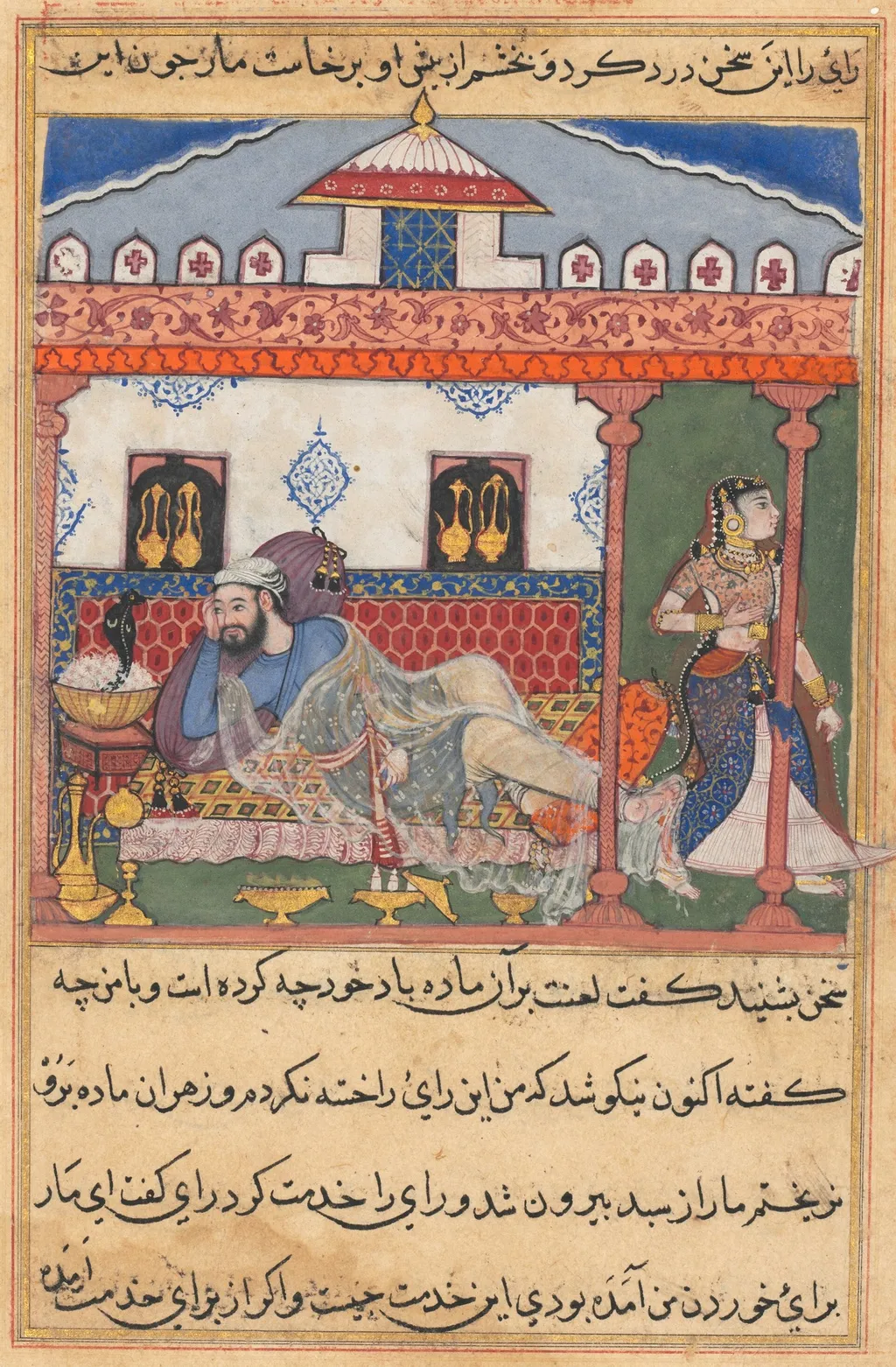
The snake, hidden in a basket of flowers, reveals himself to the Raja who has just sent away his wife, from a Tuti-nama (Tales of a Parrot): Forty-third Night is an unspecified painting. It dates from 1560 and is held in the collection of the Cleveland Museum of Art.
About this work
History & Provenance
The painting was created in 1560 in the Mughal Empire and entered the collection of the Cleveland Museum of Art.
The painting was created in 1560 in the Mughal Empire and entered the collection of the Cleveland Museum of Art. It is attributed to an unknown artist and forms part of the Tuti-nama manuscript series, specifically the forty-third night folio, which depicts a snake concealed in a floral basket revealing itself to a Raja who has recently dismissed his queen. It is catalogued under accession number 1962.279.278.b, dated to 1560, and classified as a miniature painting. No specific exhibition history is recorded in the available sources.
Context
The painting exemplifies Mughal court artistry, depicting narrative complexity within a single compositional frame. Its compositional device lies in the serpentine reveal motif, where the hidden snake functions as both visual surprise and symbolic element, reflecting the Tuti-nama's moral storytelling tradition. The work demonstrates the spatial layering and color characteristic of 16th-century Persianate painting workshops in India.
Overview
The work depicts a well‑dressed man reclining on a plush seat, his head supported by his hand, while a woman in patterned attire stands nearby holding a fan. A snake emerges from a basket of flowers on the floor, its coil winding toward the man's feet. The interior is richly decorated with ornate carpets, gold detailing, and arched windows framed in red‑and‑blue motifs.
Subject & Meaning
The scene illustrates a moment from the forty‑third night of the Tuti‑nama (Tales of a Parrot), a narrative in which a snake reveals itself to a raja after he has dismissed his wife. The juxtaposition of the serpent with the luxurious setting underscores themes of deception, hidden danger, and the moral lessons conveyed through animal characters in the literary tradition.
Technique & Style
Executed in the miniature painting tradition of Persian and Indian manuscripts, the composition employs vivid pigments and intricate patterning. Fine brushwork renders the textiles and architectural elements with precise detail, while gold leaf accents enhance the opulent atmosphere. The use of bright, contrasting colors and delicate line work reflects the aesthetic conventions of courtly illustration.
Artist & collection

- The snake, hidden in a basket of flowers, reveals himself to the Raja who has just sent away his wife, from a Tuti-nama (Tales of a Parrot): Forty-third Night
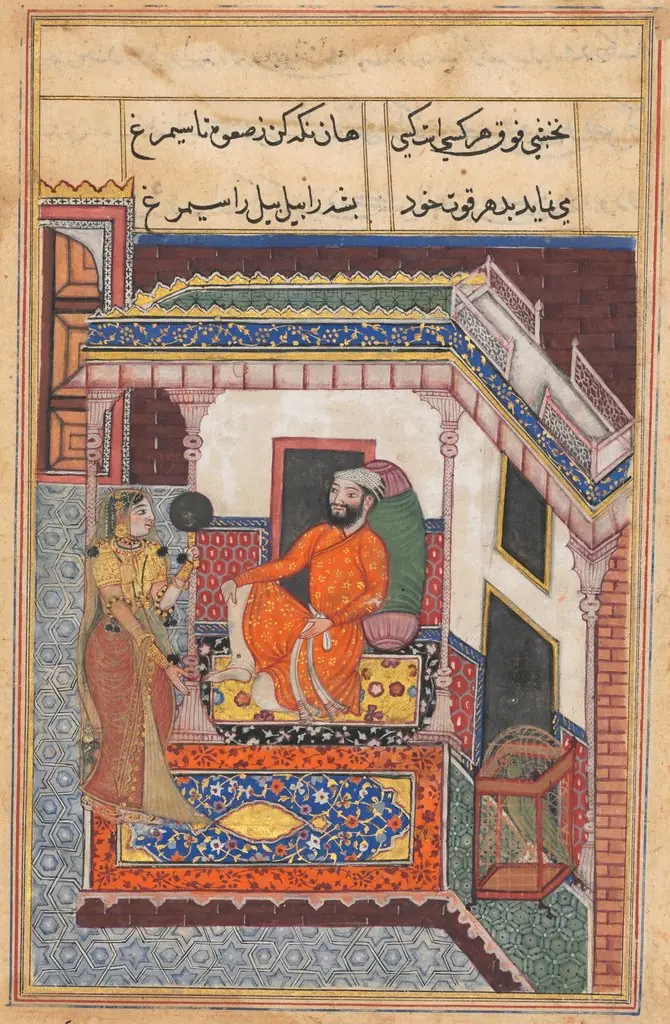 The parrot laughs on hearing the Raja of Ujjain’s wife admire her beauty in a mirror, from a Tuti-nama (Tales of a Parrot: Forty-sixth Night
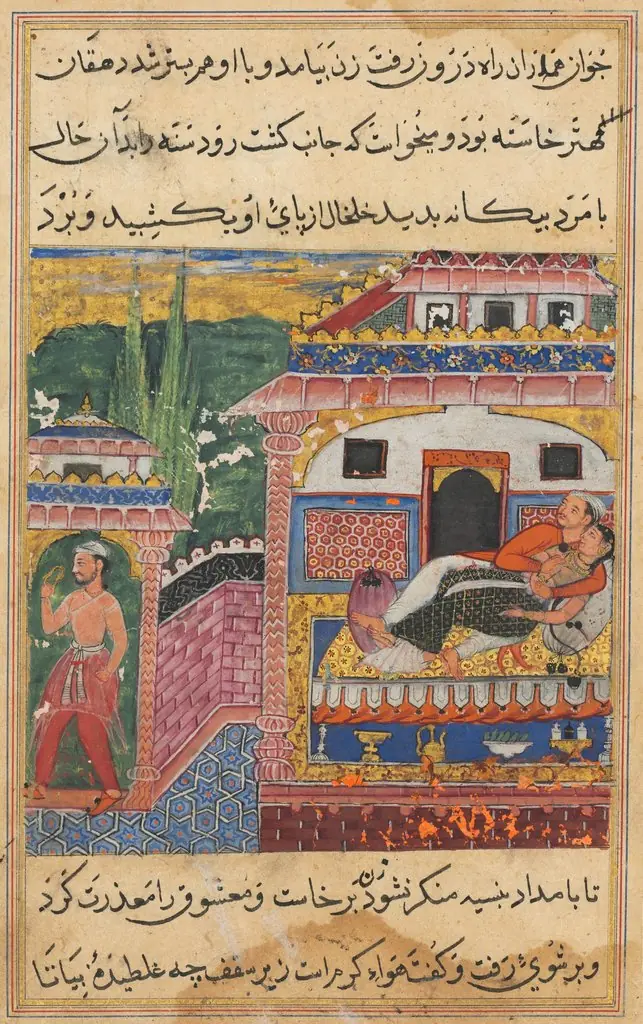 The farmer, father of the son with the deceitful wife, steals away with her anklet while she is in bed with her lover, from a Tuti-nama (Tales of a Parrot): Eighth Night
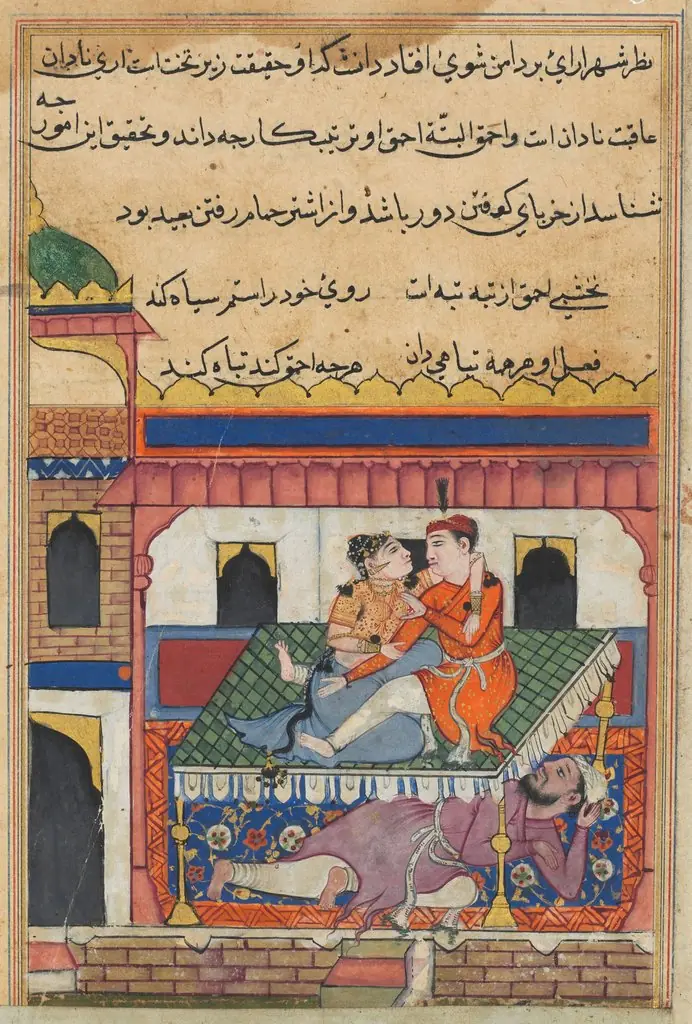 Shahr-Arai and her lover dallying on a bed beneath which is concealed her husband, from a Tuti-nama (Tales of a Parrot): Fortieth Night
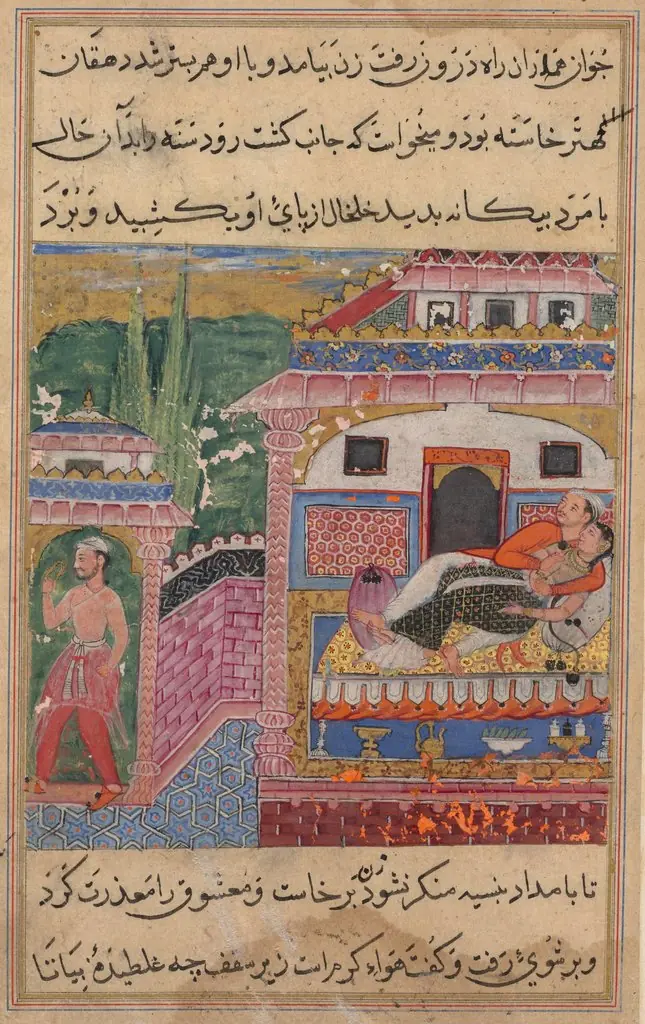
 The farmer, father of the son with the deceitful wife, steals away with her anklet while she is in bed with her lover, from a Tuti-nama (Tales of a Parrot): Eighth Night
 The deceitful wife persuades her husband to sleep in the same place where she had previously slept with her lover, from a Tuti-nama (Tales of a Parrot): Eighth Night
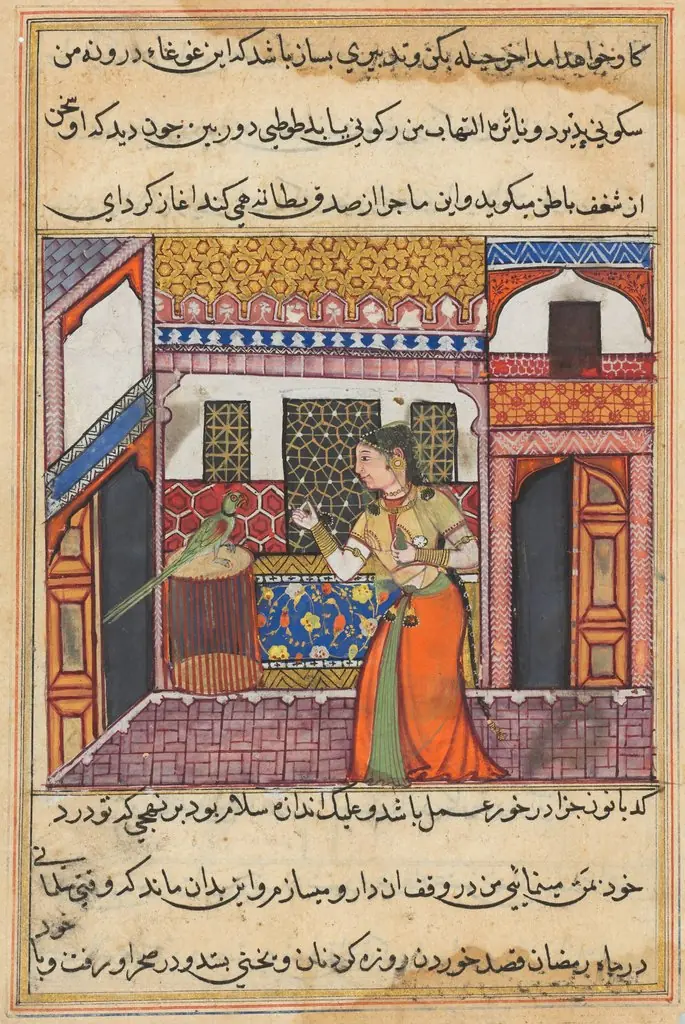 The parrot addresses Khujasta at the beginning of the forty-third night, from a Tuti-nama (Tales of a Parrot)
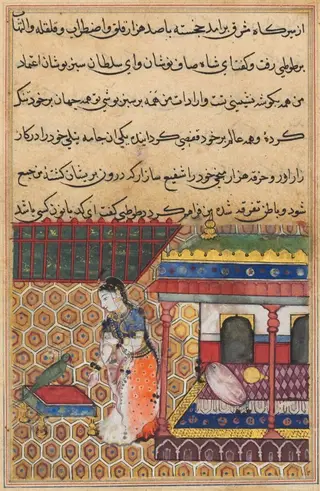 The parrot addresses Khujasta at the beginning of the thirty-eighth night, from a Tuti-nama (Tales of a Parrot)
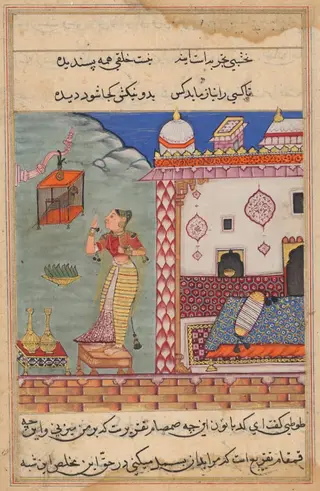 The Parrot Addresses Khujasta at the Beginning of the Twenty-seventh Night, form a Tuti-nama (Tales of a Parrot)
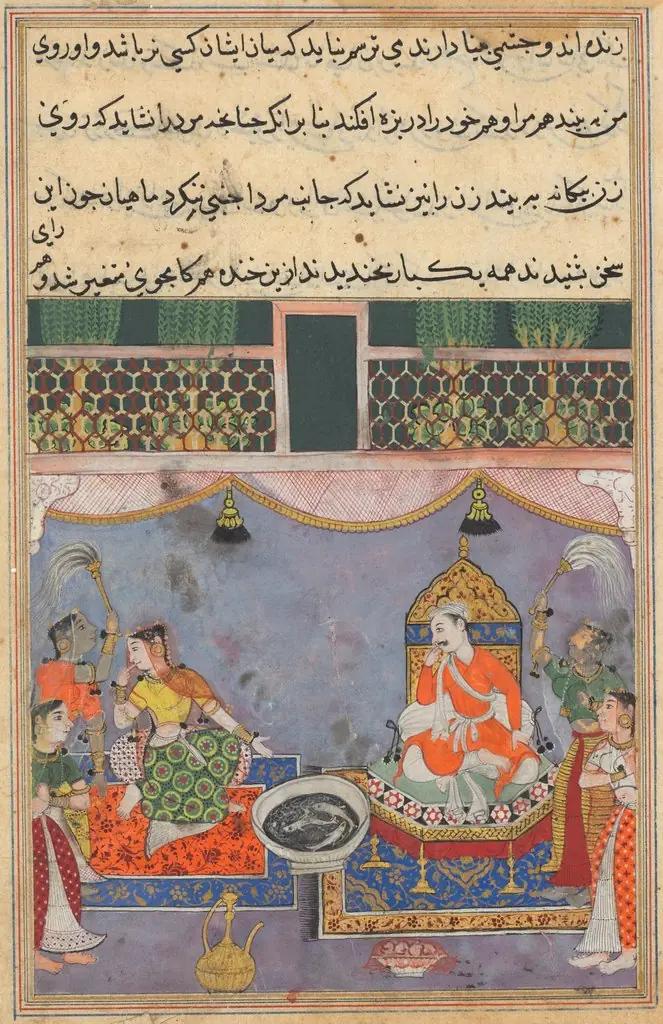 Kamjuy, the wife of the Raja, averts her face from the fishes, from a Tuti-nama (Tales of a Parrot): Twenty-third Night
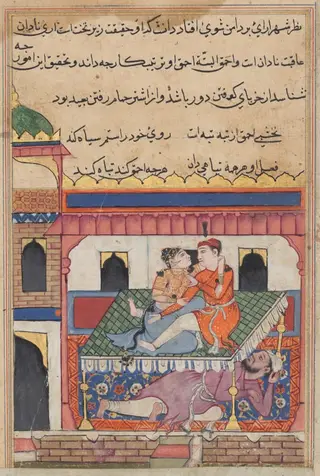 Shahr-Arai and her lover dallying on a bed beneath which is concealed her husband, from a Tuti-nama (Tales of a Parrot): Fortieth Night
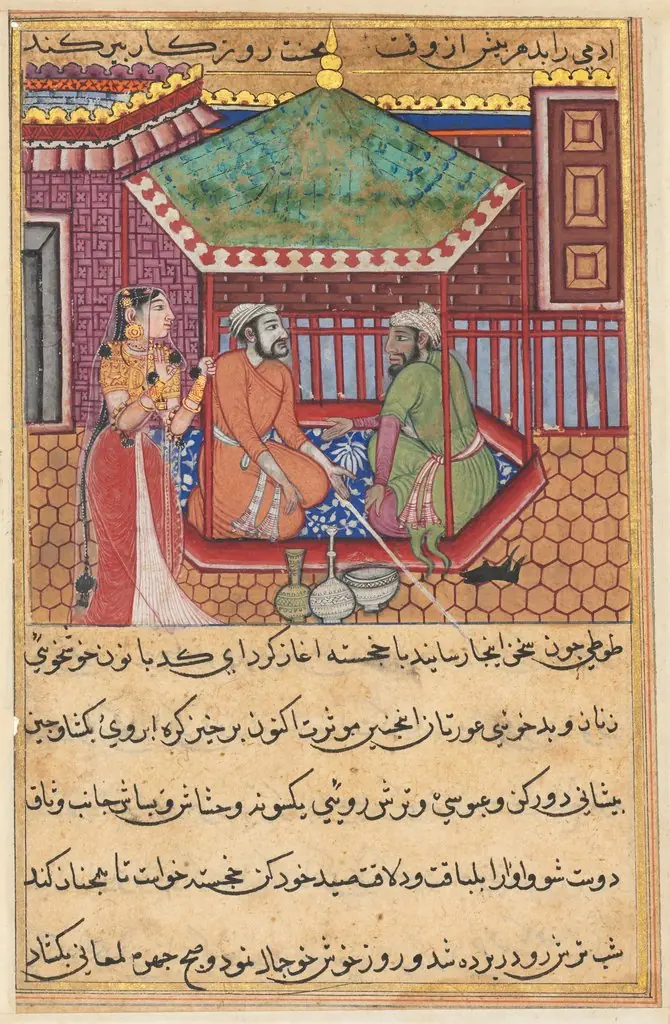 The eldest brother explains the reason for his youthful appearance, from a Tuti-nama (Tales of a Parrot): Forty-ninth Night
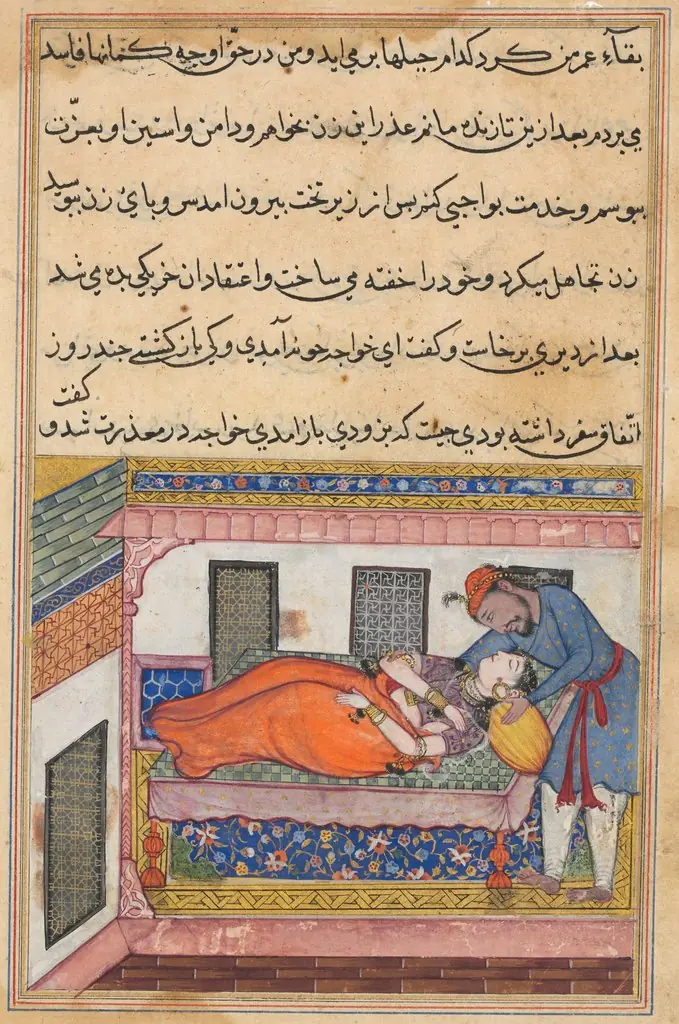 Shahr-Arai’s husband bends to kiss his wife who feigns sleep, from a Tuti-nama (Tales of a Parrot): Fortieth Night
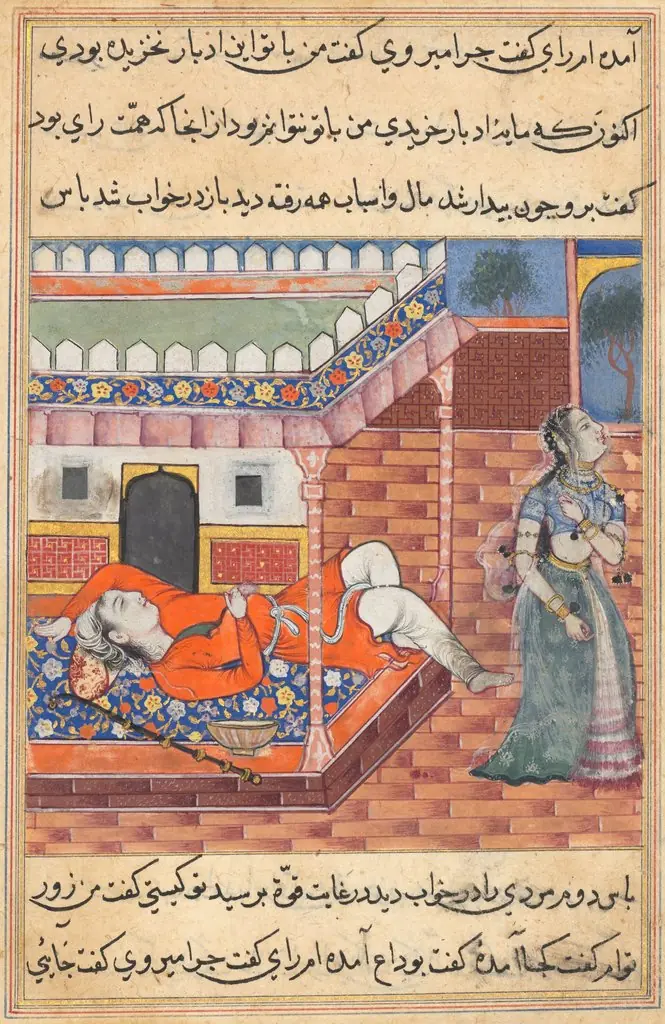 The king dreams of a lady, the personification of wealth, departing from him on account of his purchasing a bowl and a staff from a yogi, from a Tuti-nama (Tales of a Parrot): Thirty-sixth Night
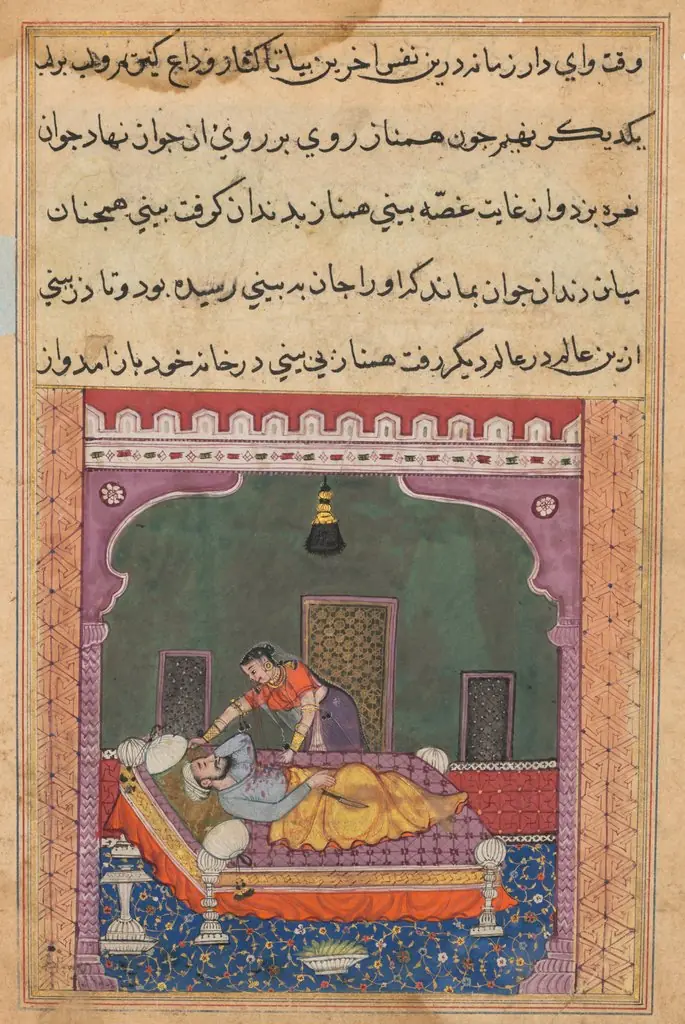 In order to falsely implicate her husband, Hamnaz places a knife by his side and lets the blood dripping from her nose stain his clothes, from a Tuti-nama (Tales of a Parrot): Twenty-fifth Night
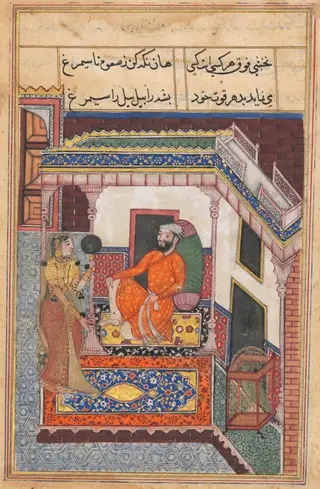 The parrot laughs on hearing the Raja of Ujjain’s wife admire her beauty in a mirror, from a Tuti-nama (Tales of a Parrot: Forty-sixth Night
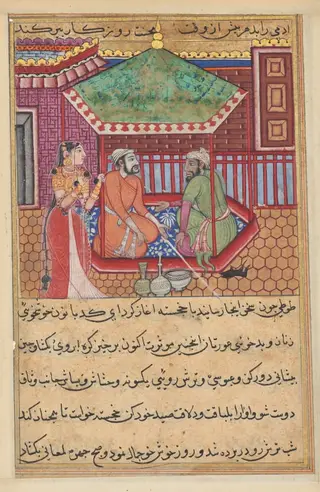 The eldest brother explains the reason for his youthful appearance, from a Tuti-nama (Tales of a Parrot): Forty-ninth Night